Saturday Morning Tea

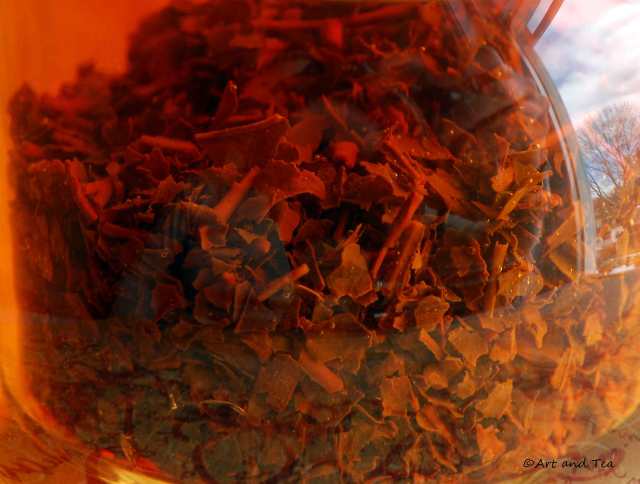
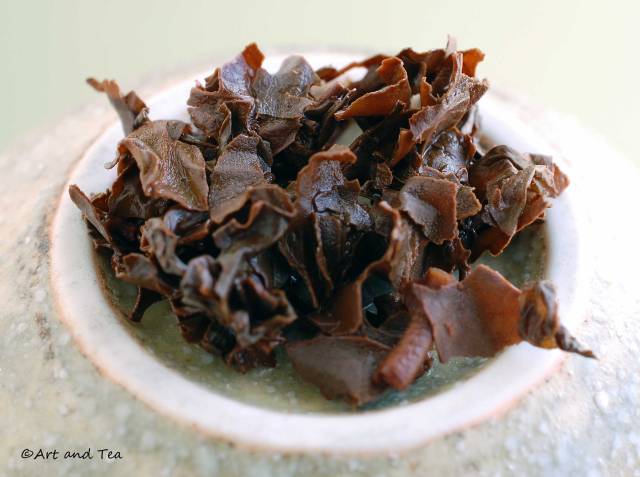
Marionbarie Est Dry Leaf 03-29-14

Good morning, dear tea friends! I’m very excited to introduce to you the first 2014 tea in my cup this year. It’s not a Darjeeling but a first flush offering from the Marionbarie Estate, located in the foothills of the Himalayan mountains in a belt of land called Terai. I’ve read that Terai, which translates to foothills, is a place of forests, savannas and grasslands, which extends into both Nepal and India.
Marionbarie Est Steep 03-29-14

At an elevation of 900 feet above sea level, the Marionbarie Estate was first planted in 1901. From their website:

The Garden is situated very closed to Mahananda wild-life sanctuary and wild animals such as Elephant, Leopard, Dear, Peacock, Wild Boar, Pythons, etc. are frequently seen in and around the plantation area. The Workers are educated to respect the ecology and the wildlife by the Management by doing seminars.
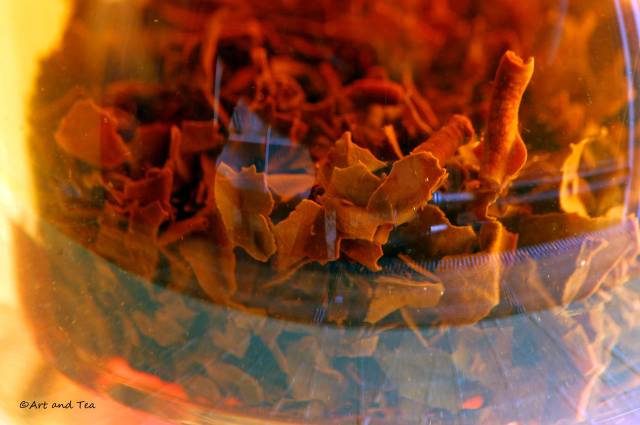
Marionbarie Est Wet 03-29-14

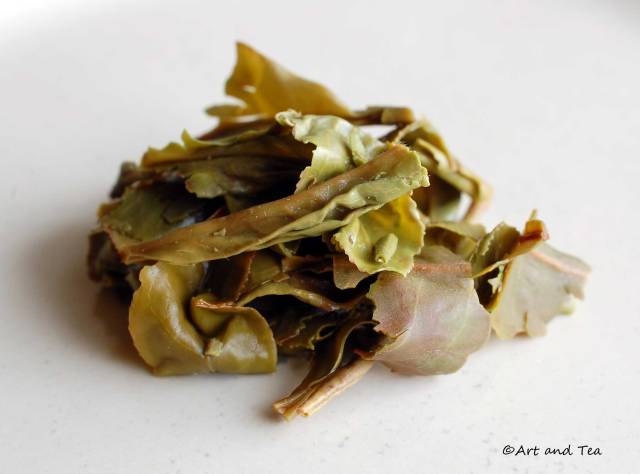
As you can see, the leaf is quite green even though it was processed as a black tea. This is common in first flush teas from that area.

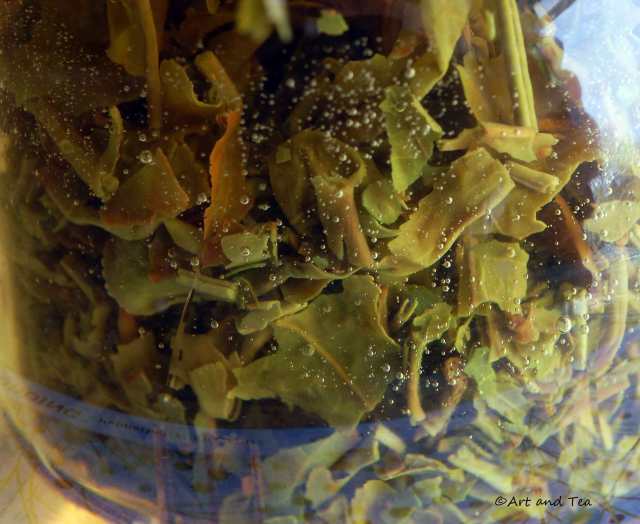
I steeped the leaf for 3 minutes in boiling point (212F) water.

The fragrant aroma smells like early spring vegetation, sweet and vegetal, with notes of delicate flowers.
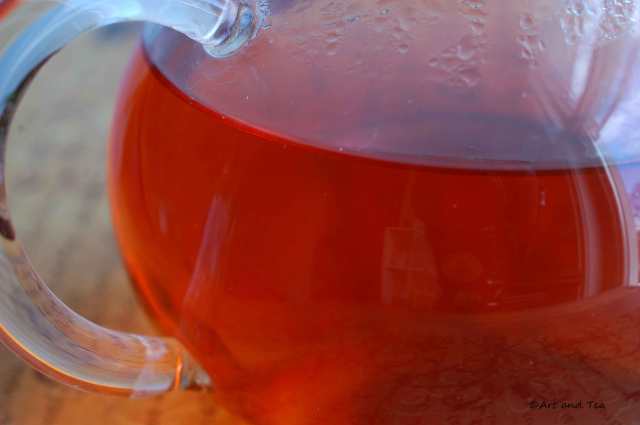
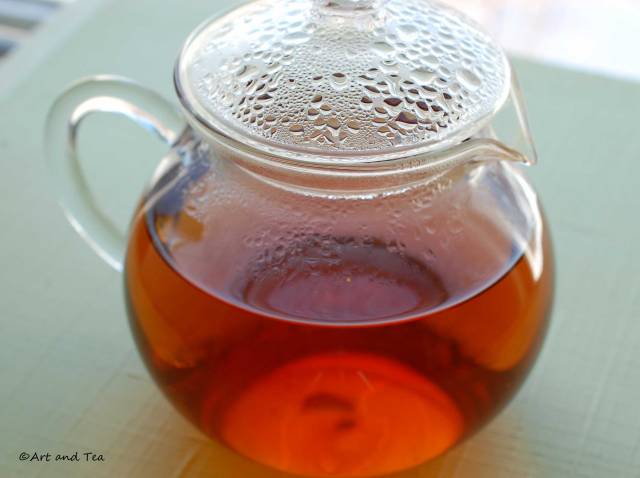
Marionbarie Est Teapot 03-29-14

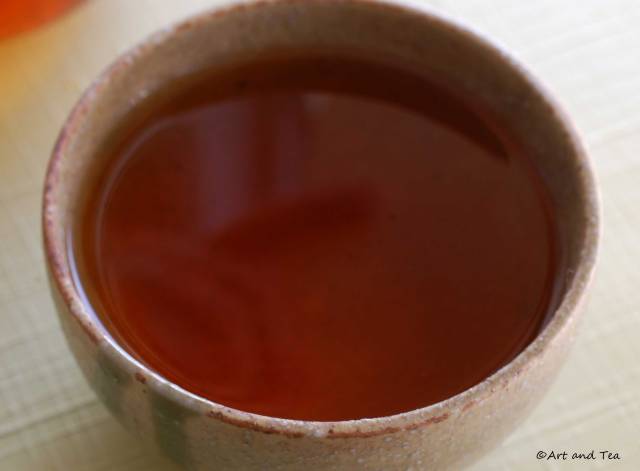
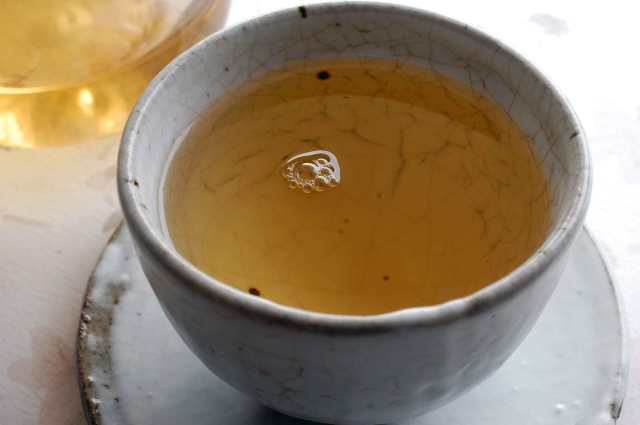
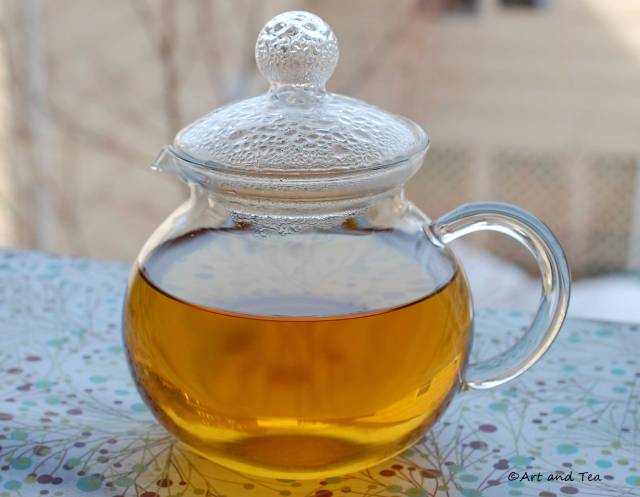
The tea liquor is a golden apple juice color with a very fresh, light flavor. A whisper of sugar cookie sweetens the tangy floral notes, which linger into the finish.
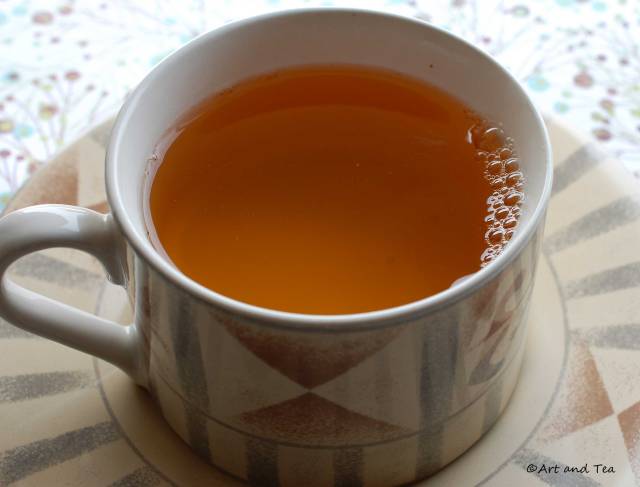
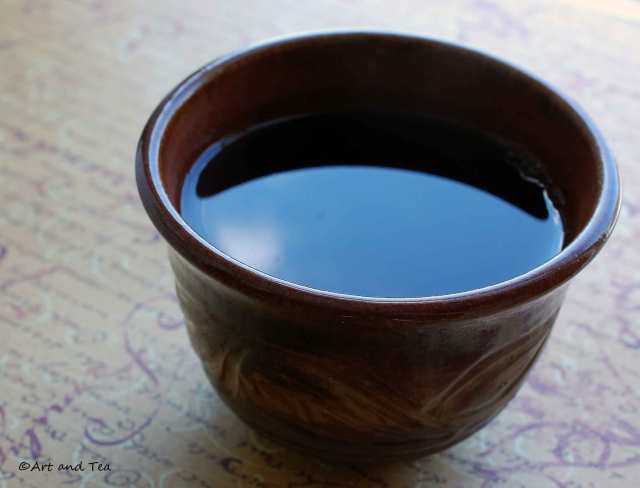
Marionbarie Est Teacup 03-29-14

I feel like I’ve been encased in a white, frigid world for so long. Sipping the fresh flavor of this first flush tea is melting the ice and bringing me back to life. It is the new growth of spring. It is rebirth. It is hope.

“Hope is the thing with feathers 
That perches in the soul 
And sings the tune without the words 
And never stops at all.”

~Emily Dickinson


Saturday Morning Tea

Nilgiri BOP Dry Leaf 03-15-14

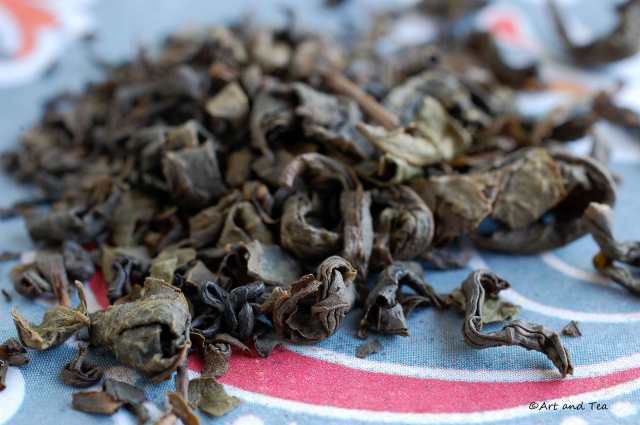
Good morning, dear tea friends! I’m enjoying another Nilgiri black tea in my cup on this almost spring, blue sky morning. It’s a blend of teas from that district in southern India and is called Nilgiri BOP, or Nilgiri Broken Orange Pekoe, meaning a broken leaf tea, as you can see in the picture above.

Nilgiri BOP Steep 03-15-14

I have read that the majority of tea produced in the Nilgiri district in Tamil Nadu state in southern India is from small, independent growers. After the leaf is plucked, they then sell the leaf to the processing factories owned by the larger tea gardens, or plantations, as they are called. Over 50% of the tea produced is exported, mostly sold at auction.

I steeped the leaves for 3 1/2 minutes in boiling point (212F) water.

Nilgiri BOP Wet Leaf 03-15-14

The steeping hasn’t changed the look of the leaf at all except for perhaps the beautiful blue sky reflections patched on the russet bits of leaf.

Their ideal climate allows for year-round plucking and processing, making a higher yielding crop than in Darjeeling. That said, the highest quality teas are produced during the cooler months – late November to mid February.

I have read that Nilgiri teas do not cloud when iced.  Does anyone have any experience with that? I’ll have to try it.

Nilgiri BOP Teapot 03-15-14

As I lifted the infuser from my glass teapot, I was greeted by the aroma of warm sugar and toast with a hint of citrus.

The flavor is silky smooth and lightly sweet with notes of mellow toastiness and a whisper of tangy citrus and honey.

Nilgiri BOP Tea Bowl 03-15-14

It would be fun to experiment and push the steeping time on this tea. How long do you brew it for?

It’s been a long, brutal winter here in New England. Here it is the middle of March and it was 13 degrees when I left for work yesterday morning. Ugh. But there’s hope for us….the huge piles of snow are slowly but surely diminishing, helped along by today’s 50 degree temps. I’m looking forward to getting outside for a walk and some deep breaths of fresh, warmer air.

Until the next time we share a cuppa, Happy Spring to all! I’ve heard whispers of some first flush teas on their way to us…

“No matter how long the winter, spring is sure to follow.”   ~Proverb 

Saturday Morning Tea

Iyerpadi Estate Nilgiri Dry Leaf 03-01-14

Good morning, dear tea friends! Happy month of spring! March is arriving in true lion style with frigid temps here in New England, despite the sun shining in a deep blue sky. The days are getting longer though and filled with hope for warmer weather soon.

I’m continuing my exploration of teas from the Nilgiri Mountains in southern India. In my cup today is an organic black tea from the Iyerpadi Estate.

Iyerpadi Estate Nilgiri Steep 03-01-14

In the first half of the 19th century, South India was focused on growing coffee. Then, between 1860 and 1890, the Coffee Blight wiped out the whole crop completely in the Nilgiris (translation: “Blue Mountains”) and the Anamallais. The tea plant had been introduced in the early 19th century in that area but it wasn’t until the coffee crop was gone that the focus turned to tea.

I steeped the chocolate brown leaves for 4 minutes in boiling point (212F) water.

Iyerpadi Estate Nilgiri Wet Leaf 03-01-14

Iyerpadi Estate, located on the slopes of the Anamallais (translation: “Hill of the Elephants”), was opened around the birth of the 20th century. One of the original owners was a Coimbatore barrister by the name of Narasiyer, and his nephew, Meenachi Iyer, who some say was the first Indian planter, became the estate manager. I’ve also read that the estate is in the area of the Indira Gandhi Wildlife Sanctuary, the largest and well preserved sanctuary in Tamil Nadu state.

Iyerpadi Estate Nilgiri Teapot 03-01-14

The deep amber liquor has a sweet aroma with brisk hints and toasty mellowness. The flavor is silky smooth with medium body and creamy lemon notes. This tea reminds me of a Ceylon tea, however, it has a deeper, smoother flavor. I think it would stand up to a drop of milk if steeped at a minute or so longer, however, it’s plenty sweet on its own. With its brisk, citrus character, it would make a fabulous iced tea.

Iyerpadi Estate Nilgiri Tea Bowl 03-01-14

It’s a wonderful feeling when you try something for the first time and find it quite delicious.

This weekend my company is having a tea tasting at the 185th Massachusetts Camellia show being held at the Tower Hill Botanic Garden in Boylston, MA. I’ll be there tomorrow from 12-3pm serving tea. So, if you’re in the area, please stop by and enjoy some tea and lovely flowers!

Have a wonderful week, dear tea friends, and hopefully, the next time we meet and enjoy tea together here, spring will be in the air.

“Spring drew on . . . and a greenness grew over those brown [garden] beds, which, freshening daily, suggested the thought that Hope traversed them at night, and left each morning brighter traces of her steps.”

~Charlotte Bronte, Jane Eyre

Saturday Morning Tea

Japanese Oolong Dry Leaf 02-01-14

Good morning, dear tea friends! The sun is throwing watery light through my windows as I brew up my morning tea today. I’ve chosen an unusual selection, one I’ve never tried before – an organic Japanese Oolong tea. I haven’t been able to find out much about this tea beyond the fact that it’s rare and only produced in limited quantity by a few Japanese organic tea growers. I love trying a new tea so let’s get started!

Japanese Oolong Steep 02-01-14

The leaf is quite large and looks like it’s been pan fried instead of steamed like Japanese green teas, to halt oxidation. Pan frying is common with Oolong teas. I steeped the leaves for 3 1/2 minutes in 190F water. Because the leaves aren’t fully oxidized like a black tea, it’s always a good idea to steep Oolong teas with water below the boiling point. When the water is too hot, the leaves stew and don’t steep properly, giving you a resulting brew that has a bitter note and doesn’t represent the true flavor of the tea at all.

Japanese Oolong Wet Leaf 02-01-14

Wow, look at this large intact leaf. The leaves unfolded their accordion-like pleating as they steeped.

A warm, toasty aroma wafted up from my glass teapot as  I lifted up the infuser. I could also detect a nutty fragrance, like chestnuts.

Japanese Oolong Teapot 02-01-14

The light amber tea liquor is quite smooth with a pronounced chestnut flavor note and toasty nuances. As I sipped my tea, light fruity nuances revealed themselves in the cup.

This is a great choice for someone who would like to expand out from their Japanese green tea drinking to explore another type of tea from that country. I heartily recommend trying something new!

Japanese Oolong Teabowl 02-01-14

Well, so far things are working out well with my laptop and the Adobe Elements software. I’m still working on the trial and, after using Photoshop for years, this feels very familiar to me. Familiar is good when I’m trying to fit everything in to my weekend!

Have any of you recently tried a tea for the first time? I’d love to hear your story. Until next time, enjoy your tea!

“We keep moving forward, opening new doors, and doing new things, because we’re curious and curiosity keeps leading us down new paths.”

~Walt Disney

Saturday Morning Tea

Green Puerh Tuo Cha Dry 01-25-14

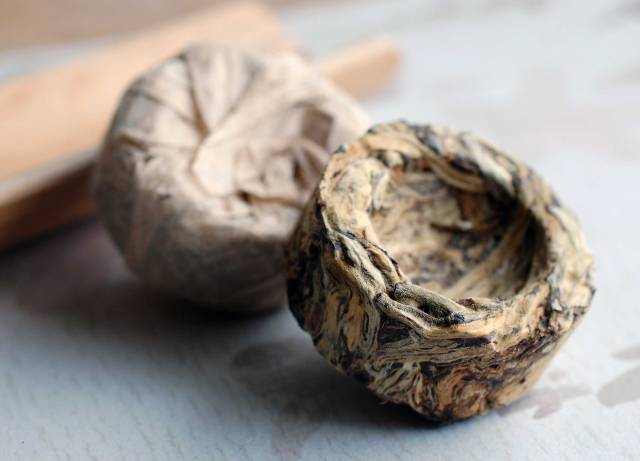
Good morning, dear tea friends! It has been bitterly cold this past week in New England and we were visited once again by the white stuff. Thank goodness for our hot tea to keep us warm and cozy! This morning’s tea is an interesting shape, don’t you think? Compressed into the shape of a small bowl, its name is Ancient Green Pu-Erh Tuo Cha Organic.

Green Puerh Tuo Cha Steep 01-25-14

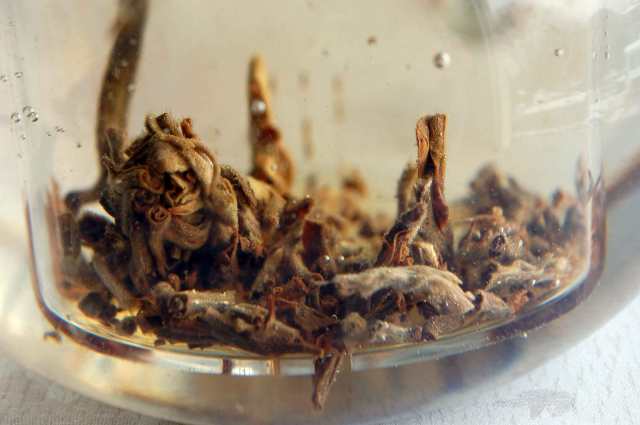
Traditionally, Pu-erh teas are created from leaves harvested in the ancient tea forests of Yunnan province in China. There are two different kinds of Pu-erh tea, raw (Sheng) and cooked (Shou). This Pu-erh is of the raw green variety. The leaves are sun dried and then compressed into small tuo cha shapes. I broke the tuo cha in half and then crumbled the half a bit for steeping purposes. That’s the way I like to do it.

Green Puerh Tuo Cha Steep2 01-25-14

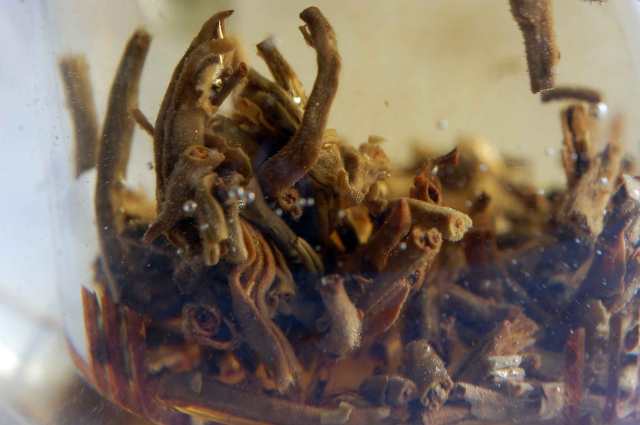
As the compressed leaf pieces steep for 3 minutes in 180F water, they loosen up and release to reveal the individual leaves. This is an excellent tea for resteeping.

Green Puerh Tuo Cha Teapot 01-25-14

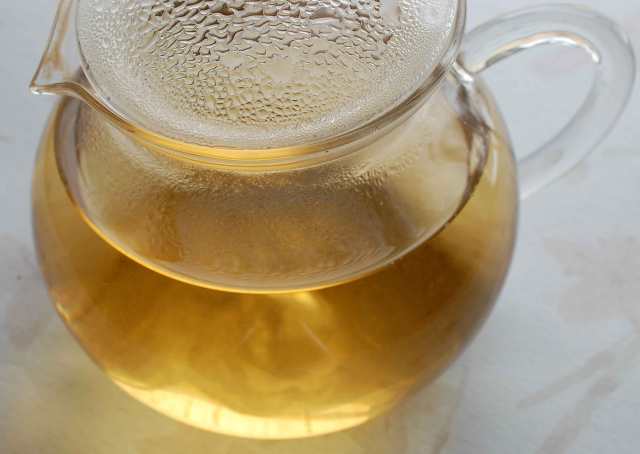
The tea liquor is a pale yellow straw color with a delicate herbaceous aroma that has underlying fruity tones. The flavor is light and delicate yet flavorful with notes of melon and sugar cookie, very much like a white tea.

Green Puerh Tuo Cha Teabowl 01-25-14

The wind is howling around the eaves outside. I’m so glad to be tucked into my little nook, snug and warm, sipping my tea gently to enjoy its delicate character. Time seems to stop for awhile in my world…

Have a wonderful and warm tea-filled week!

“A cold wind was blowing from the north, and it made the trees rustle like living things.”  

~George R.R. Martin, A Game of Thrones