Saturday Morning Tea

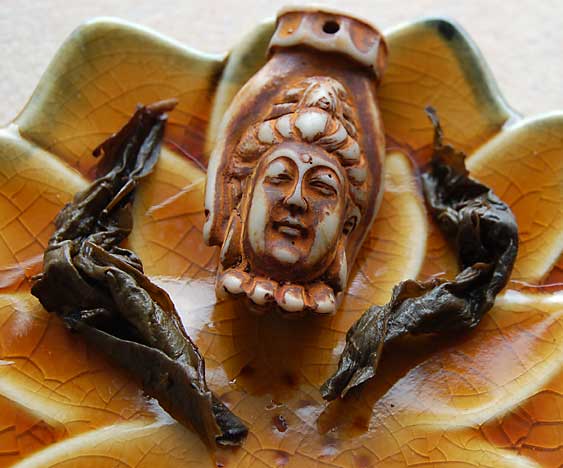
This morning’s tea, a special grade of the legendary Tieguanyin Oolong, was grown in southern Fujian province in China. This type of Oolong tea is named after the Chinese Goddess of Mercy, Guan Yin or Kuan Yin, believed to be the female incarnation of the compassionate Buddha. This tea is aptly called Buddha’s Palm, a lovely name for a beautiful tea.
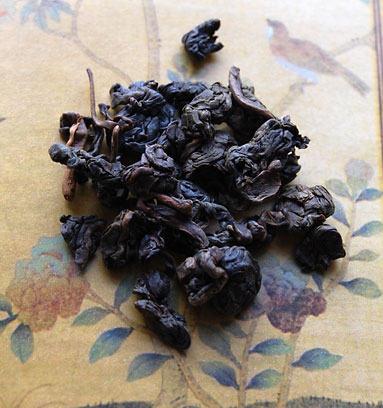
Tieguanyin Oolong undergoes an amazing 18-step processing which includes withering, sun-drying several times, bruising, rattling and tumbling of the leaf, rolling the leaf in cloth for shaping and, the most important, the final drying in either baskets over charcoal or special tea-firing ovens. The temperature of these ovens is most critical as it is that temperature which will either strengthen or ruin the flavor of the tea. The tea master will carefully control the amount and intensity of the heat during this final step.

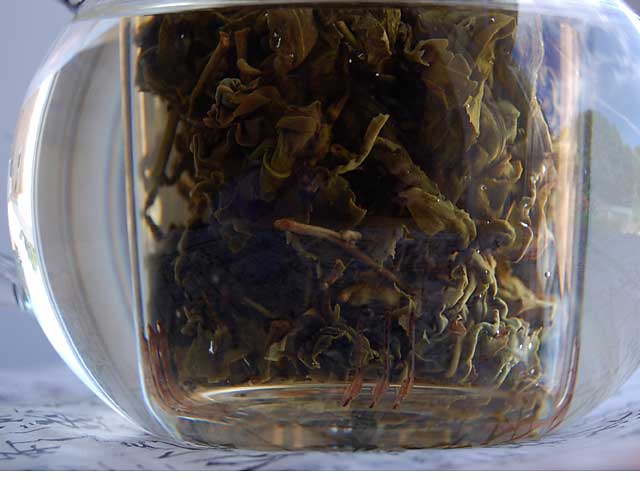
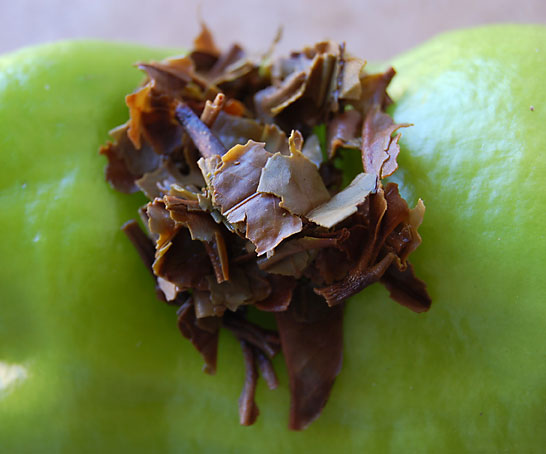
Steeped Tieguanyin Oolong leaf is recognizable for its russet-brown color and the crimson edging on the leaf. There are special Tieguanyin cultivars (subspecies of the camellia sinensis tea plant) grown in the mountains near Anxi, the best known being Red Heart Kuan Yin.
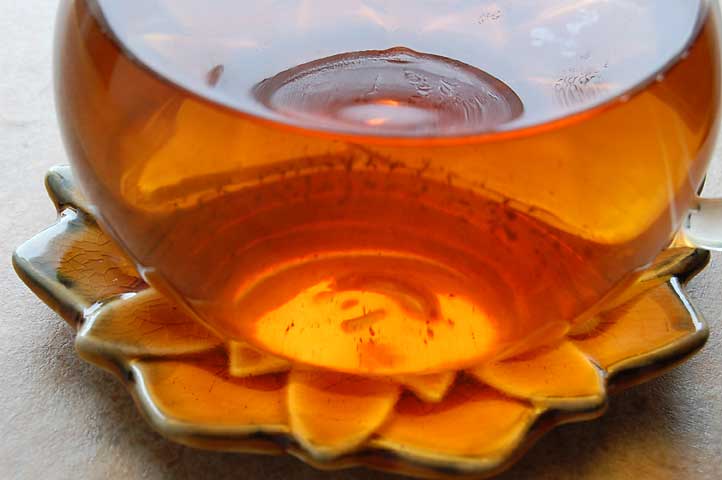
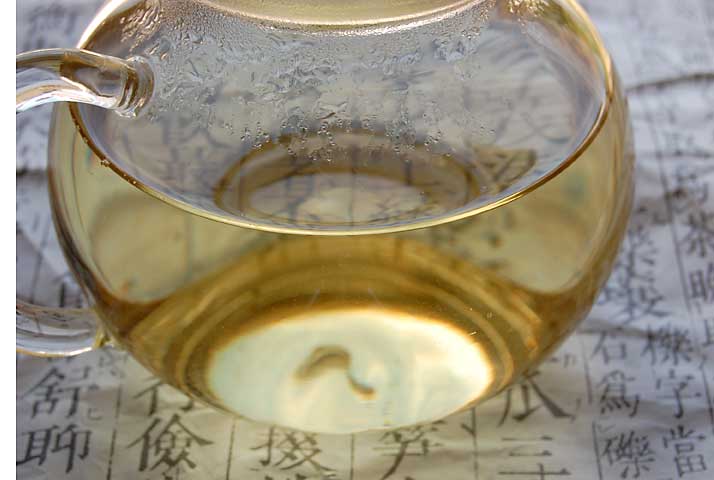
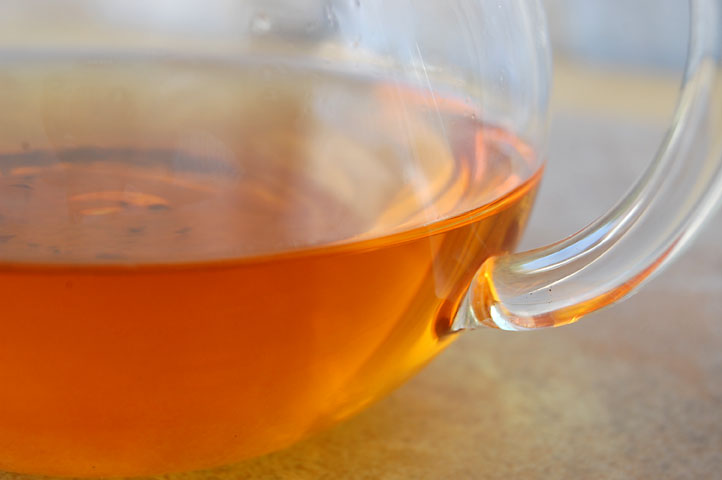
Look at that gorgeous glowing amber color. It’s very different from the last 2 Oolongs and their pale golden color. The darker color indicates that the leaves have been oxidized longer.

An aroma of woods, leaves and chestnuts drifts from my teapot as I gently lift the infuser basket.

The deep, woodsy flavor has toasty notes of chestnut and raisin. Mmmmm, it calls to mind the rich, deep flavors of fall ahead.

“Peace comes from within. Do not seek it without.” ~Buddha


Saturday Morning Tea

In continuing my series on Oolong teas, this morning’s tea, called Bao Jun, comes from the island of Taiwan, located just across the Formosa Strait from Fujian Province in China, home of the Chinese Oolongs.  235 miles long by 90 miles wide, Portugese traders called this island, covered in misty forested mountains, Ilha Formosa.

For many centuries, the island’s original inhabitants, of Polynesian descent, had cultivated and processed tea picked from wild-growing tea trees found high in the mountains. In the 1600s, the Dutch brought over Chinese citizens from Fujian to work as laborers. Some of these immigrants brought tea bush cuttings with them and established tea gardens in various mountain areas, teaching the natives their own methods of tea cultivation. Thus was born a unique history which merged native with immigrant tea knowledge.

Look how these 3 leaves are still connected to the stem. Gorgeous!

This beautiful, hand-made artisan tea, comes from a small family farm located in the Shan Ling Xi area in the mountains of Nantou County, located in central Taiwan. I wrote about another tea grown there and more about this farm here.

I steeped the leaves for 4 minutes in 190 degree F water. You can see how the curled leaves are beginning to unfurl, however, they are not fully unfurled until after the 3rd or 4th infusion. This makes them ideal for multiple steepings.

The aroma carries wisps of a light floral scent.

Its pale gold liquor has a honeyed flavor with notes of flowers and fruit. A magnificent tea!

This past week, our weather has turned cooler and less humid and, yes, there is a very faint hint of the changing season to come. A friend of mine told me that August always makes her sad as she feels the cool winds of change coming our way. Still, our weekend temps are forecasted in the 80s and I will soak up this rich, sunshine-y warmth as long as I can by taking a long, meditative walk on the bike path near my home.

How are you enjoying your August?

“People usually consider walking on water or in thin air a miracle. But I think the real miracle is not to walk either on water or in thin air, but to walk on earth. Every day we are engaged in a miracle which we don’t even recognize: a blue sky, white clouds, green leaves, the black, curious eyes of a child — our own two eyes. All is a miracle.” ~Thich Nhat Hanh

Saturday Morning Tea

Yesterday my company moved from our facility in Hopkinton, MA, where we’ve been for the last 9 years, to a new facility in the nearby town of Holliston. So, needless to say, it was a day of fixing up, hooking up, learning a new phone system and settling in to our new space. Not to mention moving all of that tea. Literally, tons of it. The good news is that we’ve been moving things over to the new space, bit by bit, over the past several months but it was still a big undertaking yesterday nonetheless. Whew!

When I first joined my company in 1995, it was a very  small operation and our packing and shipping areas were in close proximity to each other. The phones were nearby so we could stop to answer a call as we packed and boxed the tea orders. Now, each department has its own huge space and we need to take a bit of a walk to visit each other. We have evolved to have a separate Customer Service department as well as a Purchasing department in a large office area. All that said, the spirit of our company has remained the same no matter how much we grow, with the primary goal of providing our customers with the best tea and service we can. And you will always get a live person whenever you call us during our hours!

This morning’s tea is a first flush Darjeeling from the Makaibari estate. A biodynamic estate located in the Darjeeling district of northeast India, it produces some of the finest Darjeelings I’ve tasted. In all of my years of drinking and enjoying Darjeeling teas, I haven’t met a Makaibari that I haven’t thoroughly enjoyed.

The leaf is resplendent with a profusion of tips which I find smooths out the crisp pungent flavor of a first flush tea. I steeped the leaves at my usual 3 minutes in boiling point water.

Look at that gorgeous color. Yum.

The fragrant aroma has a faint note of juicy citrus and the crisp flavor fills my mouth with notes of a muscatel grape.

I just had to enjoy this tea in a white teabowl so I could keep gazing upon that amazing color.

The muggy humidity has left us here in New England and we are blessed with a clearer, cooler day today. I’m going to find some time to spend in my studio, getting back to my experimentations with acrylic paint and polymer clay.

What’s in your teacup this weekend?

“Being an artist means: not numbering and counting, but ripening like a tree, which doesn’t force its sap, and stands confidently in the storms of spring, not afraid that afterward summer may not come. It does come. But it comes only to those who are patient, who are there as if eternity lay before them, so unconcernedly silent and vast.”

~Rainer Maria Rilke

Saturday Morning Tea on Sunday

On this hazy summer morning in my pleasantly cooled kitchen, I’m lazily sipping a Chinese green tea called Chun Mee. Traditionally, the Chinese have always been quite fond of rolling the tea leaf into various shapes and then naming the tea accordingly. Chun Mee translates to “Precious Eyebrows”. Can you see it?

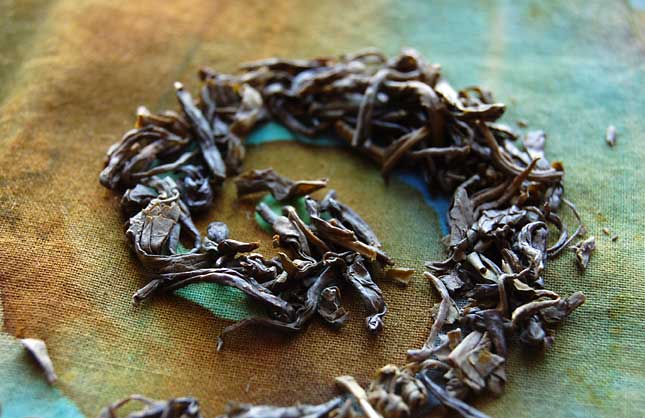
After the leaf is withered and steamed, it is rolled into a thin needle-like shape with a curve like a porcelain doll’s eyebrow.

It is a very popular everyday tea in China, especially to accompany strong flavored foods because of its astringent aftertaste which clears the palate.

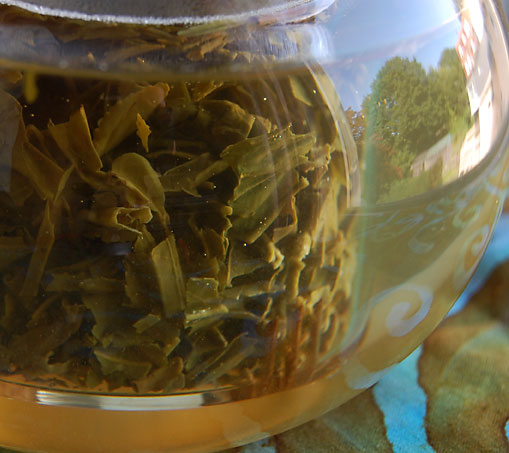
Upon steeping for 3 minutes in 180 degree F water, the tightly rolled leaves open slightly to reveal their curled edges.

The golden liquor has a hint of chestnuts in the aroma and a rich, full-bodied flavor. Its astringency clears my mouth and makes it feel fresh and clean. A whisper of sweet plum rounds out the taste.

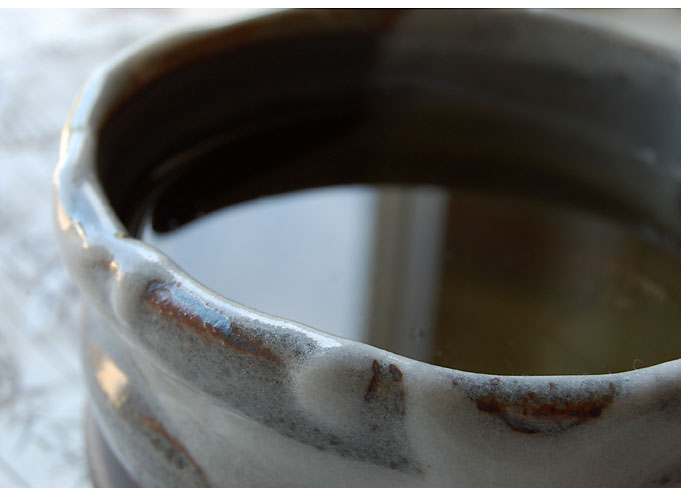
Shopping at the local mall a couple of nights ago, I stopped into a tea store there and found these interesting pottery teamugs on the clearance shelf. The coppery/sage green mottled exterior is rough and textured with a smooth, pale blue interior. I love the juxtaposition of textures and the way the mug feels slightly rough against my palm. I also love finding treasures, especially those at 75% off!

I had a lovely art day yesterday with my guild. We all do our own creative thing companionably, inspiring and encouraging each other, chatting, laughing and eating goodies. A perfect day. I made a couple pairs of earrings using stone, pearls and copper wire. After I antique one pair with liver of sulphur, I’ll share photos very soon.

Enjoy your Sunday!

The purpose of craft is not so much to make beautiful things as it is to become beautiful inside while you are making those things.

Saturday Morning Tea

This morning I felt like having something fresh and clear and green so I turned to a spring harvest Japanese Sencha called Uji Shincha.  The word “shincha” literally translates to “new tea”, referring to the harvest of only tender young spring shoots to produce this wonderful tea.

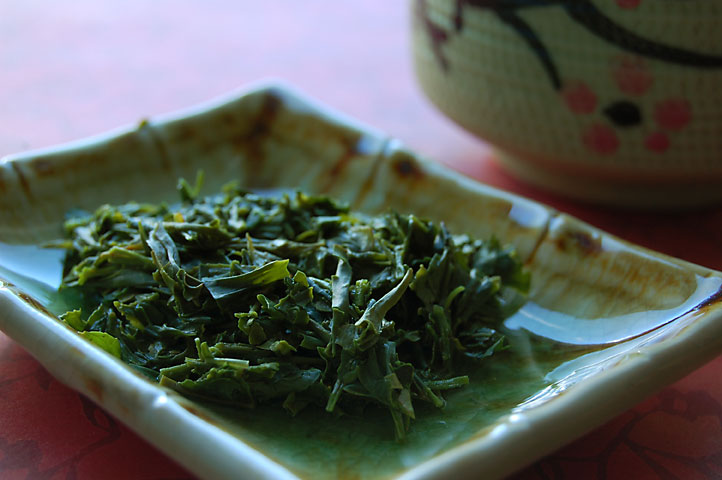
The dry leaf reminds me of dark, glossy grass clippings. It gives off a fresh, sweet aroma as I open the sample packet in preparation to make the tea.

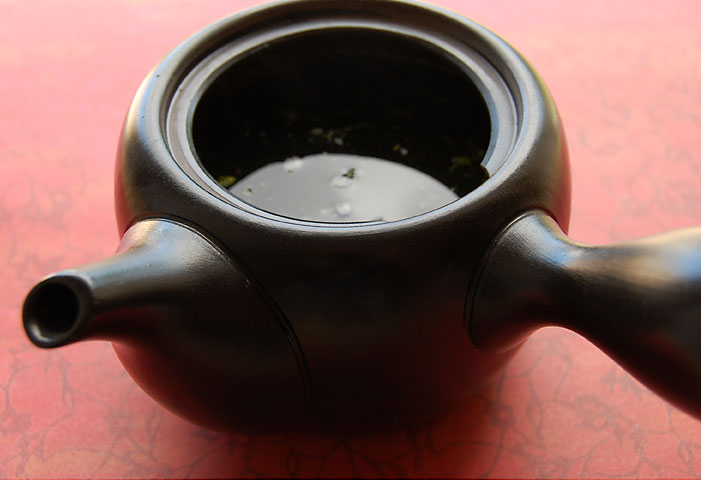
For steeping this very special leaf, I used my Yokode Kyusu, commonly known as a Sencha teapot, with the handle being on the side of the teapot. The Japanese word for teapot is kyusu.

As the leaf is very tender, I steeped it for only 40 seconds in 175 degree F water.

There is a fine mesh screen on the inside of the spout so I could steep the leaves directly in the water.

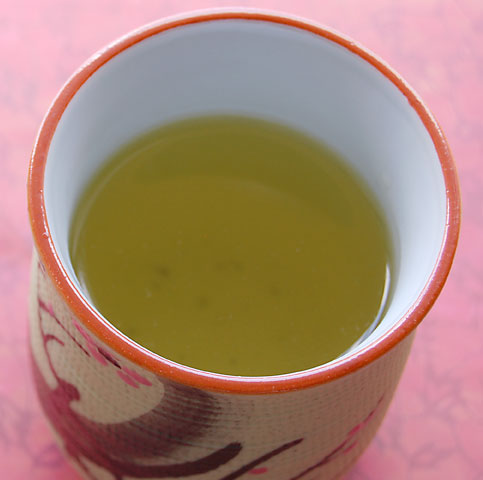
The aroma is fresh and vegetal like new asparagus shoots. The spring green liquor tastes quite vegetal with an interesting bittersweet quality that is best described as umami. The best word to describe umami is savory.

This tea really wakes up my tongue with its intensely fresh, savory flavor.

I’ve so enjoyed my time off this past week, spending a lot of it trying out some new jewelry ideas in my studio. I’ve also been working on finishing the painting in my guest bedroom by finally tackling the molding in there. I’m pleased to say that it’s almost done! I have a household to-do list tacked to my fridge and have slowly but surely been crossing things off as my time and budget allows. Do you have one of those lists?

Enjoy this beautiful weekend, dear tea friends!

“Take control of your destiny. Believe in yourself. Ignore those who try to discourage you. Avoid negative sources, people, places, things and habits. Don’t give up and don’t give in.”

~Wanda Carter, writer