Saturday Morning Tea

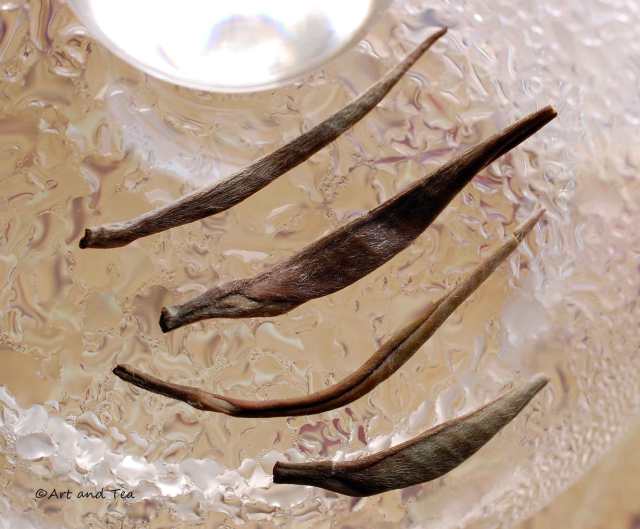
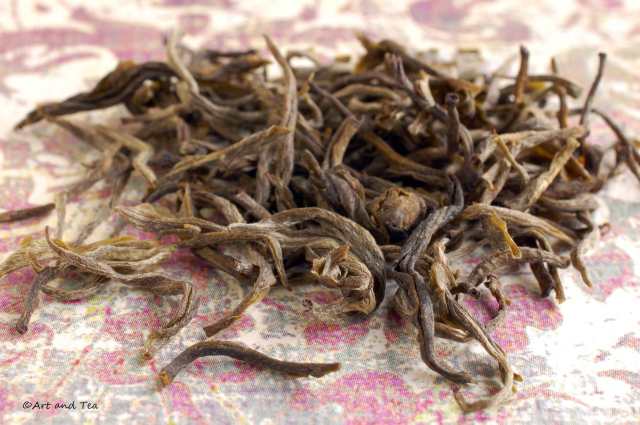
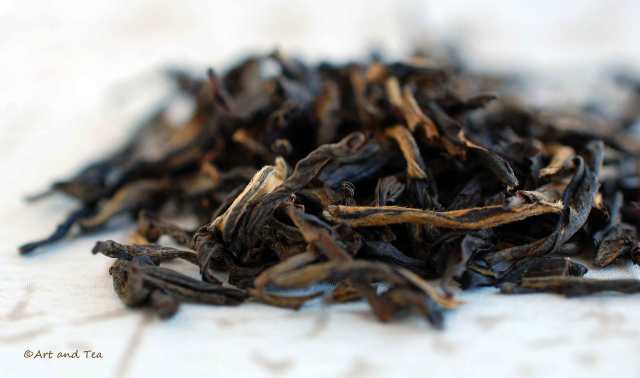
Yunnan FOP Select Dry Leaf 01-10-15

Good morning, dear tea friends, and Happy New Year to you all!

A year just started, all shiny and new, filled with possibility and, of course, many cups of tea.

In my cup this morning is a black tea from Yunnan province in south China. I’m happy to introduce you to Yunnan FOP Select.

As I’ve shared with you before, there are ancient tea trees growing in Yunnan province, one of the places in the world where tea is indigenous. These trees produce enormous leaves with a distinct flavor when processed.
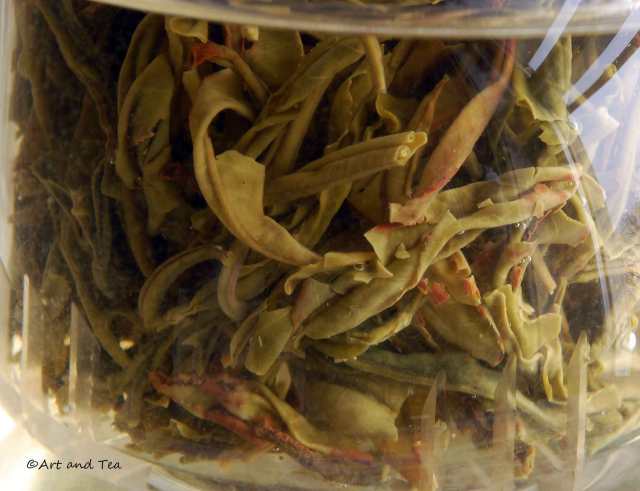
Yunnan FOP Select Steep 01-10-15

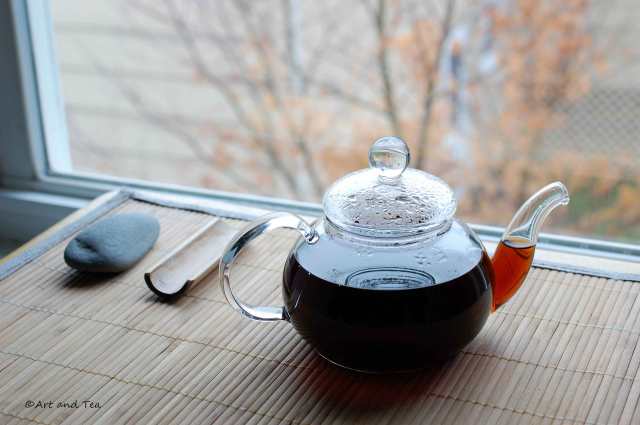
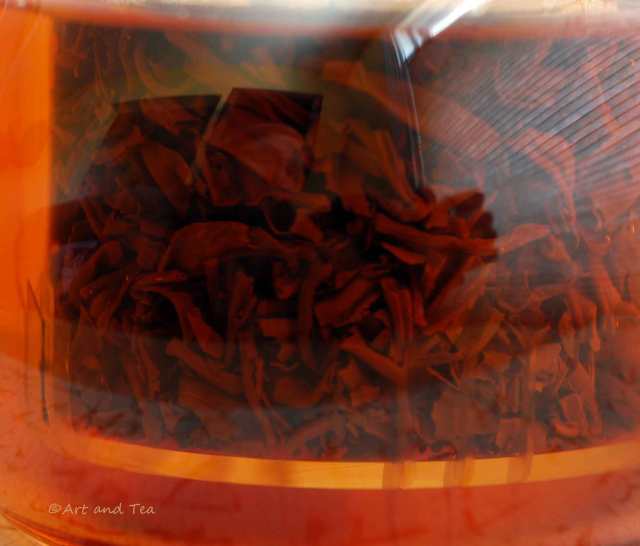
Because the leaf is larger on this whole leaf selection, I steeped for 5 minutes in boiling point (212F) water.

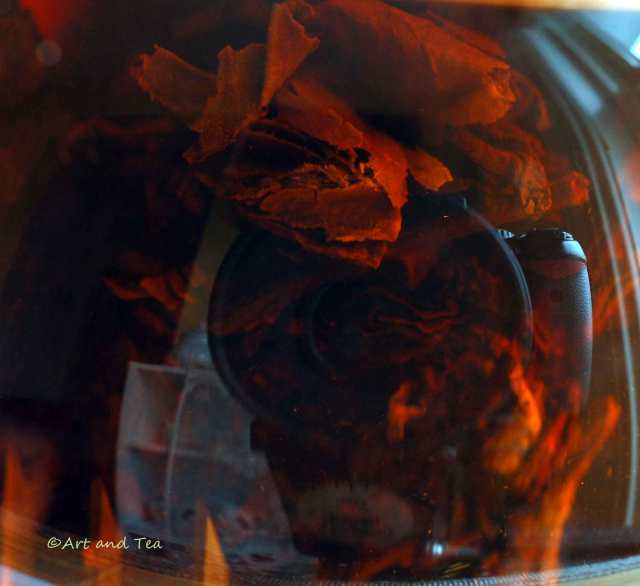
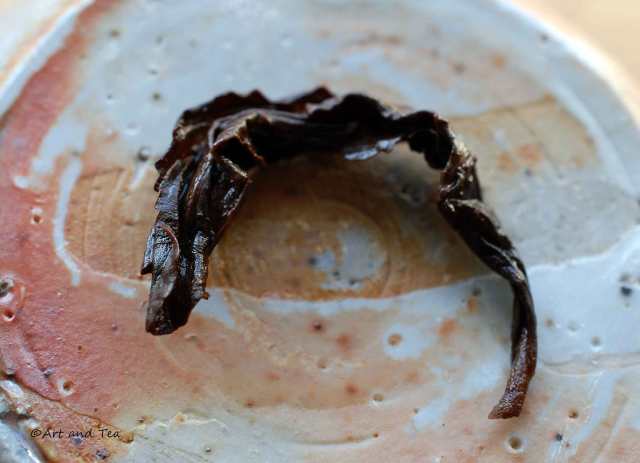
Yunnan FOP Select Wet Leaf 01-10-15

I’m enjoying some closeups today. I think that tea leaves tell a story, not the “read your tea leaves” type of story, but a story of where they come from and how they were processed. Look at this leaf. It tells a story of how it was rolled and twisted during processing.
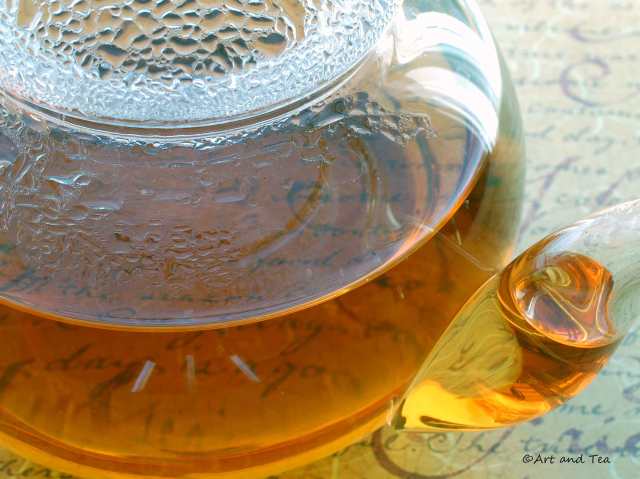
Yunnan FOP Select Teapot 01-10-15

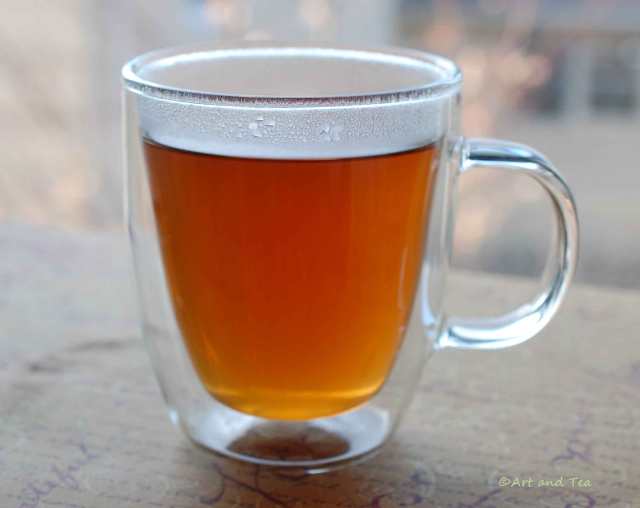
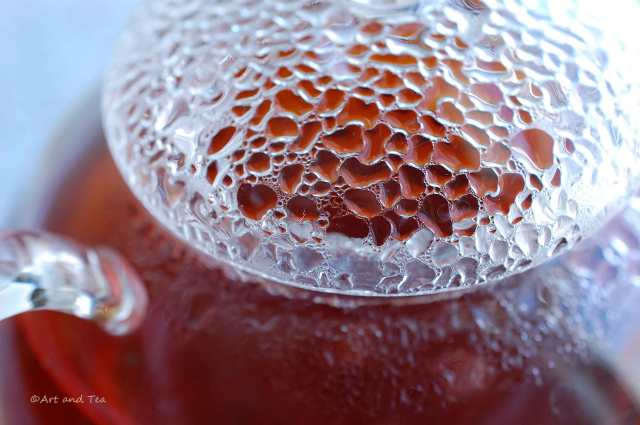
The tea story continues in its aroma and flavor. The deep russet-brown tea liquor has a rich, earthy aroma with a hint of spice and smoke.

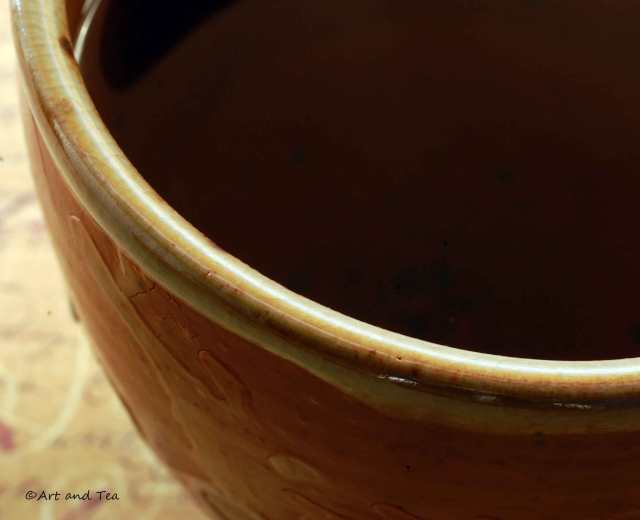
Yunnan FOP Select Tea Bowl 01-10-15

The first sip fills my mouth with a thickness reminiscent of very dark chocolate. The flavor is velvety smooth with notes of earth, spice, chocolate and a whisper of lingering smoke. Each sip warms me on this frigid day when temps will barely reach 20 degrees.

Two of my very dear friends are coming to visit me today. I’m looking forward to an afternoon filled with conversation, laughter and tea!

See you in two weeks!

“Piglet sidled up to Pooh from behind. “Pooh?” he whispered.
“Yes, Piglet?”
“Nothing,” said Piglet, taking Pooh’s hand. “I just wanted to be sure of you.”

A.A. Milne, Winnie-the-Pooh

Saturday Morning Tea

Mackeypore Golden Tips Dry 12-20-14

Good morning, dear tea friends! On this Winter Solstice Eve day, I’m celebrating the return of the light with a very special tea, called Mackeypore Golden Pekoe Tips. From the Assam tea growing region in northeastern India, this tea has been created from tender buds that were plucked at dawn. I envision a group of tea pickers starting their day, entering the field as the sun’s rays break over the horizon. They move through the tea bushes, carefully plucking only the choicest buds. After picking, the buds are laid out to wither and dry, turning a golden color in the warmth of the sun. Even though this tea is processed similarly to a white tea, its flavor is different, and I don’t think it’s classified as one. Each bud has a coating of fine white, downy hairs giving them a soft, fuzzy appearance.

Mackeypore Golden Tips Steep 12-20-14

I steeped the buds for 3 1/2 minutes in water just under boiling point.

In the Northern hemisphere where I live, the December Solstice, also known as the Winter Solstice, heralds the onset of winter. It also marks the shortest day of the year, a time when the North Pole is tilted away from the sun, causing it to appear further south and far away from us. In thinking about this, I picture the sky as an inverted bowl and the path of the sun at this time of year is closest to the rim, or the horizon.

Mackeypore Golden Tips Wet 12-20-14

As you can see, the buds don’t change much in appearance after steeping. Even the little hairs are still present.

I’ve read that the term solstice means “sun stands still”, referring to the appearance of the sun halting in its incremental journey across the sky and changing little in position during this time. Since ancient times, humans have observed this seasonal milestone and created spiritual and cultural traditions to celebrate the rebirth of sunlight after the darkest period of the year.

So, this is a good news/bad news type of day. The bad news is that the daylight hours are incredibly short – a scant 9 hours and 5 minutes of daylight. The good news, however, is that from now on the days will grow longer, a little bit at a time but steadily increasing in light. Personally, I’d like to focus on the good news part!

Mackeypore Golden Tips Teapot 12-20-14

What I find most interesting about this tea is the tea liquor color. One would think it would be pale and delicate but it has the rich amber color of a black tea. The aroma is sweet with a toasty note. The flavor is more robust than I expected, with notes of dried apricot and, yes, there is some malt there. It’s light but it’s there. I wouldn’t recommend milk with this tea, however, I put a dab of local honey in my cup and it was marvelous.

Mackeypore Golden Tips Mug 12-20-14

I pulled out my glass mug so I could enjoy the color of the tea as I sipped.

A beautiful golden amber light.

As we enter Christmas week, I’d like to wish all of you Happy Holidays. Whatever and wherever your celebrations may be, I hope that they’re filled with love and light and joy! And, of course, many cups of delicious tea! I’ll be traveling to Michigan for the holidays so Saturday Morning Tea will return in the New Year on January 10th. See you next year!

Saturday Morning Tea

Sticky Rice Pu-Erh Dry Leaf 12-06-14 Good morning, dear tea friends! It’s a damp, drizzly day, and I can hear the cars splash by outside as I prepare my tea this morning. I’m warming myself up with a dark cup of Pu-Erh tea, called Sticky Rice Pu-Erh Tuo Cha. The leaves have been interestingly mixed with a Chinese herb and then compressed into a square shape. Sticky Rice Pu-Erh Steep 12-06-14 Traditionally, Pu-erh teas are created from leaves harvested in the ancient tea forests of Yunnan province in China. There are two different kinds of Pu-erh tea, raw (Sheng) and cooked (Shou). This Pu-erh selection is of the cooked (Shou) variety. It has been mixed with an herb called Nuo Mi Xiang, which grows in China’s Yunnan province. In consulting with my colleague who speaks Chinese, Nuo Mi Xiang translates to “sticky rice fragrance”, referring to its aroma closely resembling that of sticky rice. I used two squares in my glass teapot and rinsed them for 10 seconds in boiling water first to awaken the leaf. Then I steeped for 5 minutes in boiling point (212F) water. Sticky Rice Pu-Erh Wet Leaf 12-06-14 Cooked Pu-Erh goes through a “composting” step during its processing. The leaves are piled into heaps, much like a compost pile, creating a heat in its core and transforming the leaves into this unique tea. Compressed forms of tea have been produced in China for hundreds of years. It was the most common form transported on the ancient caravan routes because it was less susceptible to physical damage and easier to transport. Sticky Rice Pu-Erh Teapot 12-06-14 The aroma is fragrant with rich earth and autumn leaves. The tea liquor, as is normal for cooked Pu-Erh teas, is the color of black coffee. The flavor is smooth and sweet, with notes of pumpernickel toast and earthy spice. I think the herb lends a unique flavor to this Pu-Erh, which I find very appealing. Sticky Rice Pu-Erh Tea Bowl 12-06-14 This tea can be steeped multiple times. Do any of you steep your Pu-Erh tea that way? The days are shortening as we approach the Winter Solstice and the holiday time. Glowing twinkle lights adorn houses in my neighborhood, chasing away that deep darkness with the promise of the light returning in longer days once again. Have a lovely two weeks and enjoy your tea!

Saturday Morning Tea

Yunnan Silver Tip Dry Leaf 11-22-14

Good morning, dear tea friends! We’ve experienced our first below freezing weather this past week, cold enough for me to pull out my down coat. Of course, nothing like what the poor folks in Buffalo are experiencing right now. My thoughts and prayers go out to them as they dig out of all of that snow.

In my cup this morning is a green tea from China, called Yunnan Silver Tip Mao Feng.

Yunnan Silver Tip Steep 11-22-14

As you can see, the Mao Feng leaf is threaded with a plethora of silver tips (new growth). It brings a taste of spring with its fresh, light dry leaf aroma.

Yunnan Silver Tip Wet 11-22-14

Located in the southwest corner of China, Yunnan province has a long and venerable history of tea growing. There are quite a few native tea trees growing wild in the forests there. A 1,700-year-old wild tea tree, called the king of the tea trees, was found growing in the rainforest. Discovered in 1961, it is 105 feet tall! That kind of age is hard to wrap my head around, wow.

Yunnan Silver Tip Teapot 11-22-14

A green vegetal aroma, like fresh peas, wafted up from my glass teapot as the leaves steeped for 3 minutes in the 180F water.

As the pale golden tea liquor cooled, a fragrance of ripe apricots revealed itself in the aroma. The flavor is clean and light, with a slight citrus tang, and gentle, fruity notes of peach and apricot, which linger long into the finish.

Yunnan Silver Tip Tea Bowl 11-22-14

My tea bowl from Hawaii is perfect for showing off the delicate color of this tea. Whenever I bring this tea bowl out, I remember my dearest best friend who generously gifted it to me. Hawaii was one of his most favorite places on earth.

As we enter Thanksgiving week, I would like to express my deep gratitude for all of my dear tea friends who come and visit here. Thank you all for being there and sharing a cup of tea with me. Happy Thanksgiving!

“Let us be grateful to the people who make us happy; they are the charming gardeners who make our souls blossom.”

~Marcel Proust


Saturday Morning Tea

Water Fairy Oolong Dry Leaf 11-08-14

Good morning, dear tea friends! The leaves that still cling to their branches are darkening and curling as the late autumn winds dry them. Where October was a riot of warm colors, November brings more of a burnished look to the landscape. My morning cup is an Oolong tea from Fujian province in China. It’s beautifully named Wu-Yi Water Fairy Oolong. Also known as Shui Hsien, which translates to “water sprite”, this type of tea is traditionally grown in the Wu-yi mountain area.

I’ve finally done something I’ve been thinking about for awhile now – I got a tea scale! For an enormous leaf like this, it makes measuring a breeze.

Water Fairy Oolong Tare Scale 11-08-14

After turning on the scale, I set it to cup weight mode, placed my glass teapot infuser on the pad and pressed the Tare button to zero it out.

Water Fairy Oolong Weigh Tea On Scale 11-08-14

I added tea leaves until the digital display read 3 since my glass teapot is 17 oz., one ounce shy of 3 cups. I measure everything according to a 6-ounce cup measure.

Water Fairy Oolong Steep 11-08-14

I steeped the leaves for 5 minutes in 190F water. This tea was oxidized approximately 60% and then heated, by roasting, to stop the oxidation process.

Water Fairy Oolong Wet Leaf 11-08-14

I love the story about how this tea got its name.

About 900 years ago, a Song dynasty emperor was traveling with his entourage to southern China to inspect a tea garden. It was a hot summer’s day and everyone soon became very thirsty. They searched high and low for water but could find none. One of the scouts spotted a bush with bright green leaves and his extreme thirst led him to place one of the brightly colored leaves in his mouth. The leaf was very juicy and he found that it quenched his thirst as he chewed it. Soon, everyone was chewing the leaves of this magical plant. Of course, it was the tea plant that produced Shui Xian tea. So, the emperor named the tea “Water Fairy” for its magical thirst quenching powers.

Water Fairy Oolong Teapot 11-08-14

The aroma is fragrant with chestnuts and sweet pipe tobacco. The flavor is smooth and sweet with a pronounced chestnut note and whispers of fruit. The pipe tobacco nuance shows up again in the lingering finish.

The whisky-colored tea liquor has a gentle smokiness I find quite pleasant for a chilly November morning.

Water Fairy Oolong Tea Bowl 11-08-14

Until next time, dear tea friends, may your tea keep you warm and cozy!

“October extinguished itself in a rush of howling winds and driving rain and November arrived, cold as frozen iron, with hard frosts every morning and icy drafts that bit at exposed hands and faces.”

~J.K. Rowling, Harry Potter and the Order of the Phoenix