Saturday Morning Tea

Even though we are on the cusp of autumn and the temps are dropping rapidly here in New England, especially at night, I’m still in the mood for a light tea.

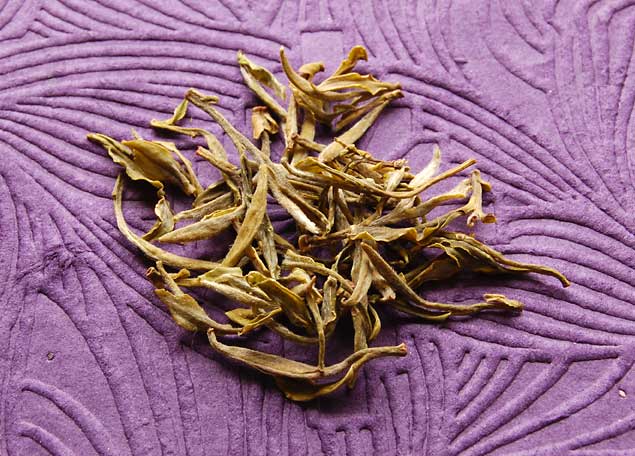
I introduce you to Huangshan Mao Feng Supreme, a beautiful, spring harvest Chinese green tea. Perhaps springtime in a cup can banish away the gloominess I feel on this dark, cloudy day.
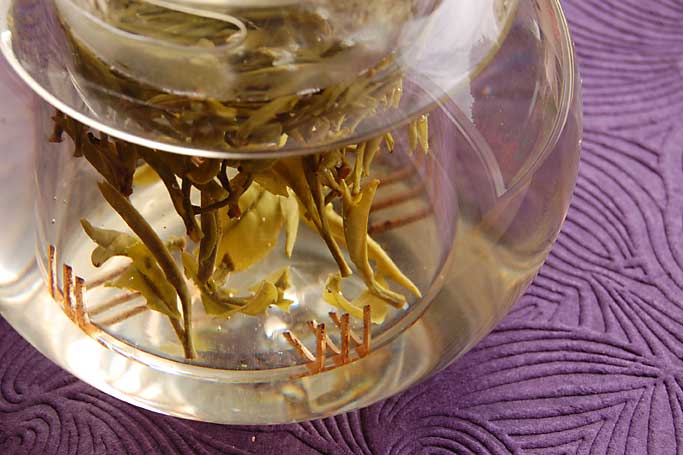
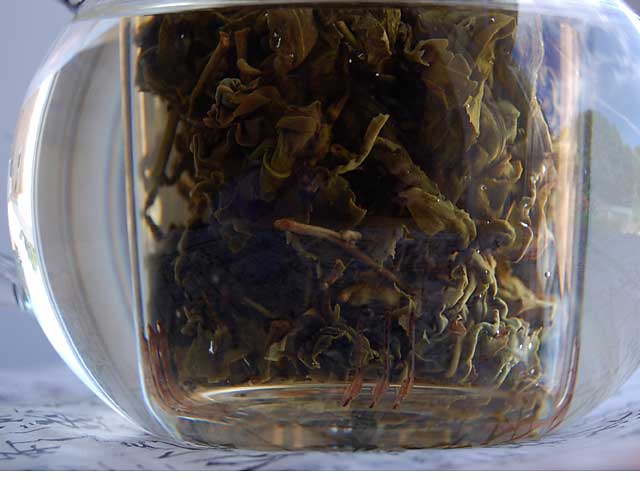
The leaf is from a very fine plucking and careful processing resulting in an amazingly intact leaf set. I loved watching the leaves dance in my glass teapot as they infused.
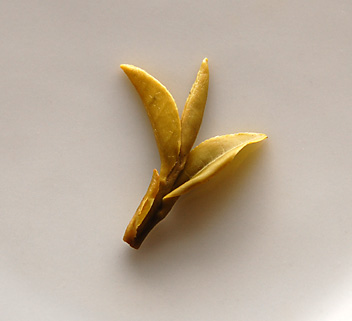
Just the tips, the very new growth, are plucked to create this special tea.

I have read that Huangshan is another name for Mount Huang, located in the Anhui province of China. It’s a place of  granite peaks, hot springs and beautiful sunsets and sunrises. An optical phenomenon known as Buddha’s Light occurs a couple times a month there with the sunrise. Sounds like an amazing place.

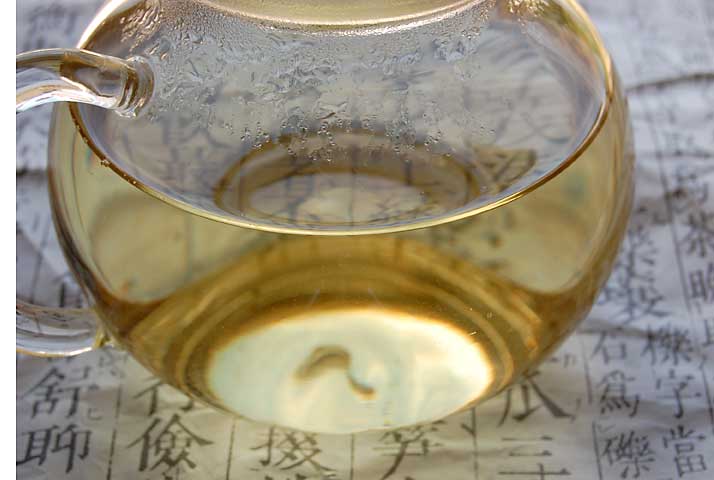
This tea is quite pale in color with a vegetal whisper in the aroma.
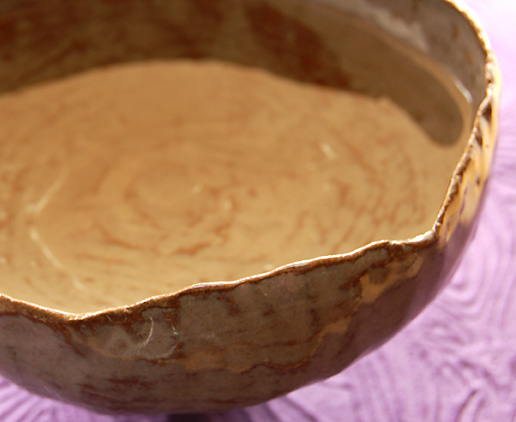
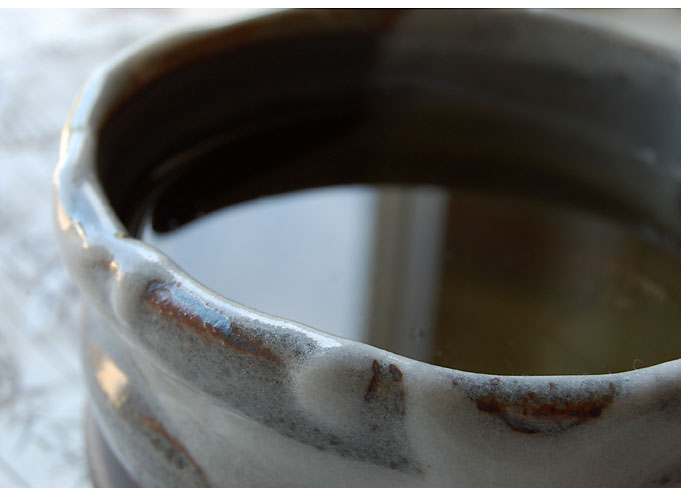
I chose this particular teabowl because the pale liquor allows me to see the beautiful texture inside the bowl. The flavor is light yet fills my mouth with its soft, fruity sweetness. Mmmm….

As I sip my tea, I watch the gray blanket of sky and contemplate the seasonal changes to come. My cup of springtime seems to hold back the thickening clouds as it releases the scent of new growth with every sip.

“Perhaps everything that frightens us is, in its deepest essence, something helpless that wants our love.” ~Rainer Maria Rilke

Saturday Morning Tea

I was up quite early today for a Saturday. The day dawned bright and clear and as I sipped my tea, I thought of that fateful day 9 years ago. Another beautiful, clear September morning that turned dark and sad as the events of the day unfolded.

I raise my teacup and dedicate my thoughts today in memory of all those lives lost that day…

I’m sipping a China green tea called Jade Cloud Mist. Harvested in the spring in An Hui province, the leaf is exquisite.

The leaf is a very fine plucking of the new growth found at the tips of the tea plant stems.

Simply gorgeous.

I steeped the leaves for 3 minutes in 180 degree F water. A pronounced vegetal aroma wafted up from my glass teapot as I poured my first cup.

Even though the tea liquor is a very pale sage green, the mouth feel is very full and buttery smooth with light notes of asparagus.

A sweetness lingers with every sip.

So pale, so light, yet so very flavorful. A real treat for those who cherish their green tea.

Today I am journeying down to the coast of Rhode Island for a gathering of artist friends. Fabulous food, wonderful conversation, creative energy…the perfect day…

“…to go into yourself and see how deep the place is from which your life flows…….perhaps you will discover that you are called to be an artist….” ~Rainer Maria Rilke

Saturday Morning Tea

On this gorgeous late summer’s day, I end my series on Oolong teas with another Tieguanyin style Oolong, this one from the island of Taiwan (Formosa). It is called Tie-Guan-Yin Vintage style.

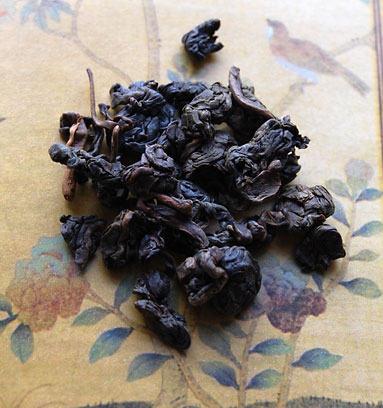
Not quite as dark as last week’s Buddha’s Palm, this tea is the closest in color and flavor to the first Oolong I reviewed 3 weeks ago called Golden Guan Yin. The dry leaf has been curled during processing, opening up during steeping to reveal the large leaves.

As you recall from my discussion last week on TGY Oolong processing, one of the last steps – the drying/roasting – is critical to the final taste of the tea. This particular tea has been roasted for a longer period of time with a lower temperature. This results in a pronounced toasty flavor note which I find quite pleasing.

I steeped the leaves for 3 1/2 minutes in 190 degree F water. As Oolong teas are not as oxidized as black teas, it’s always a good idea to cool the water from boiling before steeping your tea leaves.

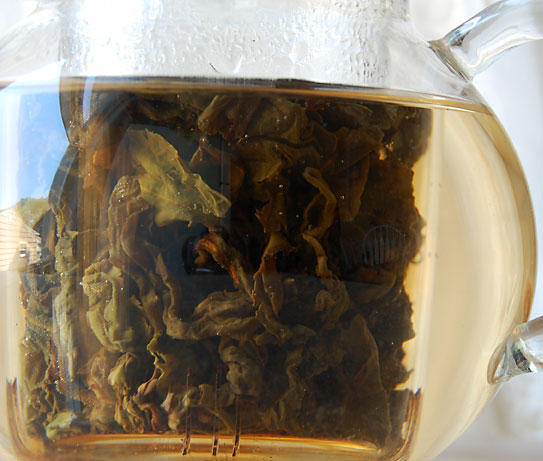
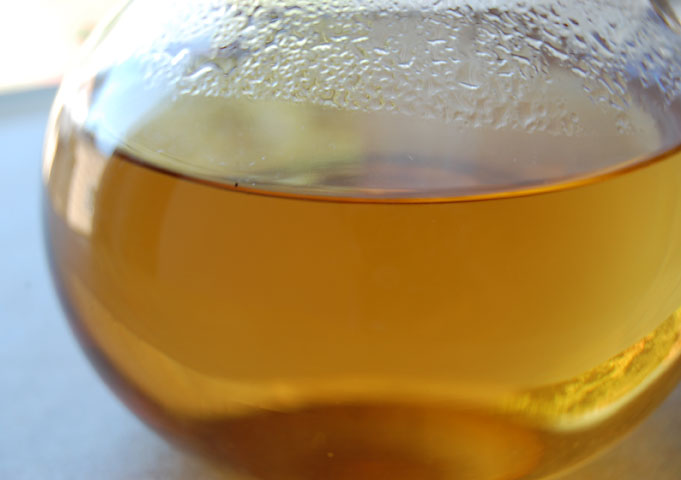
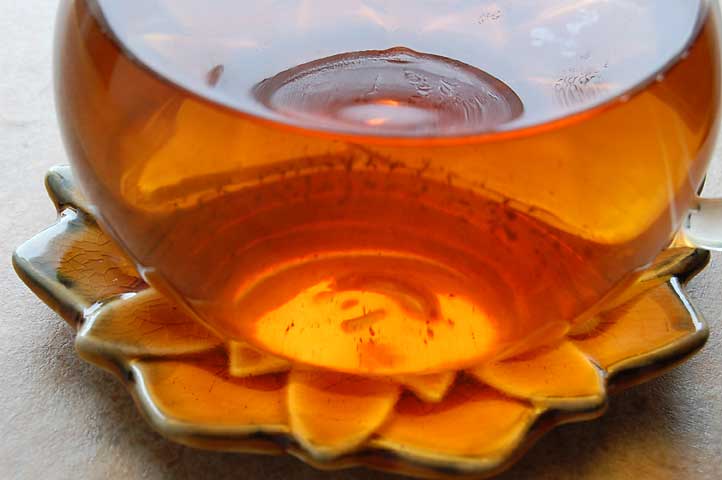
The beautiful light amber colored tea glows in my glass teapot, inviting me to pour my first cup.

The aroma also smells like warm toast and notes of honeyed chestnut and whispers of fruit caress my tongue.

I’ve really enjoyed learning about Oolong teas in more depth and hope you have, too. Soon, our Assam teas should be arriving and I’d love to explore them in more depth as well. Perhaps in October. If there is any category of tea that you’re interested in, please let me know. This has been fun!

Just don’t give up trying to do what you really want to do.  Where there is love and inspiration, I don’t think you can go wrong.” ~Ella Fitzgerald

Saturday Morning Tea

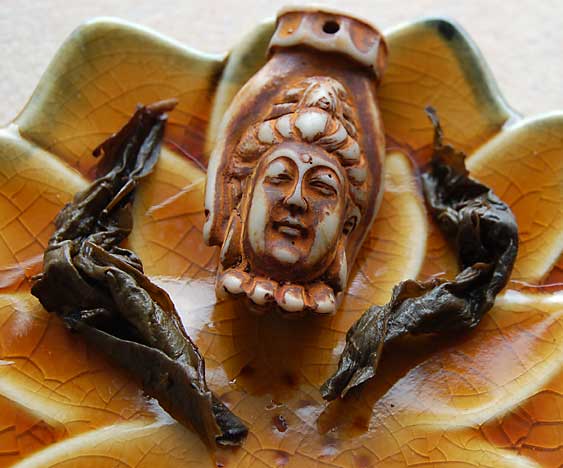
This morning’s tea, a special grade of the legendary Tieguanyin Oolong, was grown in southern Fujian province in China. This type of Oolong tea is named after the Chinese Goddess of Mercy, Guan Yin or Kuan Yin, believed to be the female incarnation of the compassionate Buddha. This tea is aptly called Buddha’s Palm, a lovely name for a beautiful tea.

Tieguanyin Oolong undergoes an amazing 18-step processing which includes withering, sun-drying several times, bruising, rattling and tumbling of the leaf, rolling the leaf in cloth for shaping and, the most important, the final drying in either baskets over charcoal or special tea-firing ovens. The temperature of these ovens is most critical as it is that temperature which will either strengthen or ruin the flavor of the tea. The tea master will carefully control the amount and intensity of the heat during this final step.

Steeped Tieguanyin Oolong leaf is recognizable for its russet-brown color and the crimson edging on the leaf. There are special Tieguanyin cultivars (subspecies of the camellia sinensis tea plant) grown in the mountains near Anxi, the best known being Red Heart Kuan Yin.

Look at that gorgeous glowing amber color. It’s very different from the last 2 Oolongs and their pale golden color. The darker color indicates that the leaves have been oxidized longer.

An aroma of woods, leaves and chestnuts drifts from my teapot as I gently lift the infuser basket.

The deep, woodsy flavor has toasty notes of chestnut and raisin. Mmmmm, it calls to mind the rich, deep flavors of fall ahead.

“Peace comes from within. Do not seek it without.” ~Buddha


Saturday Morning Tea

In continuing my series on Oolong teas, this morning’s tea, called Bao Jun, comes from the island of Taiwan, located just across the Formosa Strait from Fujian Province in China, home of the Chinese Oolongs.  235 miles long by 90 miles wide, Portugese traders called this island, covered in misty forested mountains, Ilha Formosa.

For many centuries, the island’s original inhabitants, of Polynesian descent, had cultivated and processed tea picked from wild-growing tea trees found high in the mountains. In the 1600s, the Dutch brought over Chinese citizens from Fujian to work as laborers. Some of these immigrants brought tea bush cuttings with them and established tea gardens in various mountain areas, teaching the natives their own methods of tea cultivation. Thus was born a unique history which merged native with immigrant tea knowledge.

Look how these 3 leaves are still connected to the stem. Gorgeous!

This beautiful, hand-made artisan tea, comes from a small family farm located in the Shan Ling Xi area in the mountains of Nantou County, located in central Taiwan. I wrote about another tea grown there and more about this farm here.

I steeped the leaves for 4 minutes in 190 degree F water. You can see how the curled leaves are beginning to unfurl, however, they are not fully unfurled until after the 3rd or 4th infusion. This makes them ideal for multiple steepings.

The aroma carries wisps of a light floral scent.

Its pale gold liquor has a honeyed flavor with notes of flowers and fruit. A magnificent tea!

This past week, our weather has turned cooler and less humid and, yes, there is a very faint hint of the changing season to come. A friend of mine told me that August always makes her sad as she feels the cool winds of change coming our way. Still, our weekend temps are forecasted in the 80s and I will soak up this rich, sunshine-y warmth as long as I can by taking a long, meditative walk on the bike path near my home.

How are you enjoying your August?

“People usually consider walking on water or in thin air a miracle. But I think the real miracle is not to walk either on water or in thin air, but to walk on earth. Every day we are engaged in a miracle which we don’t even recognize: a blue sky, white clouds, green leaves, the black, curious eyes of a child — our own two eyes. All is a miracle.” ~Thich Nhat Hanh