Saturday Morning Tea

In my part of the world, nature is just bursting with new growth and bird song and I am eagerly drinking it in with all of my senses.

Welcome May! I’ve dreamed about you all winter long…

With my morning cup, I am once again visiting the Nepal Jun Chiyabari tea estate, today with their Imperial Black. I tell their story here.

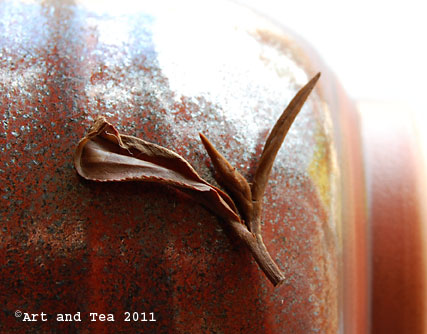
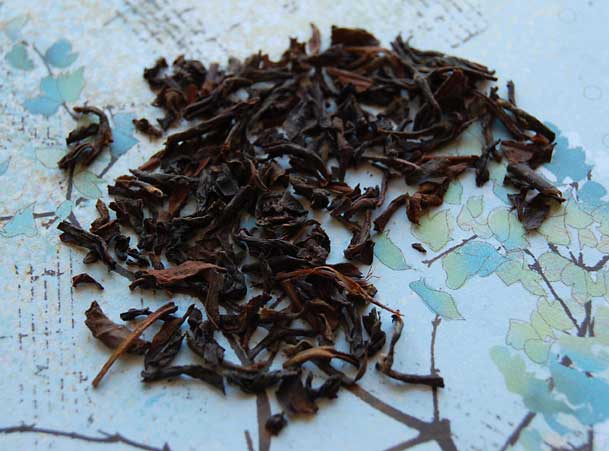
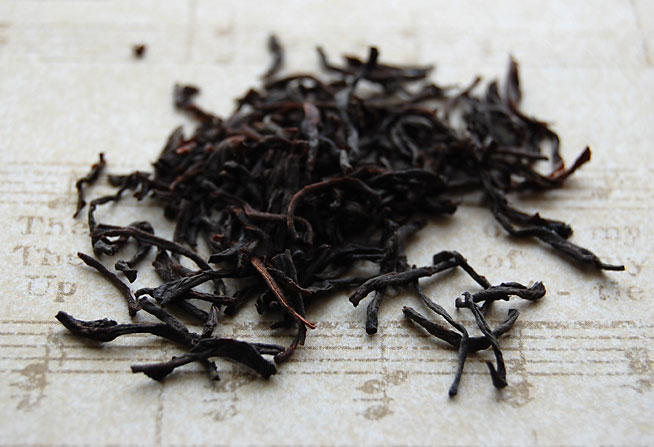
As I gaze upon the large, full leaves, I think that imperial is a perfect name for this majestic leaf.
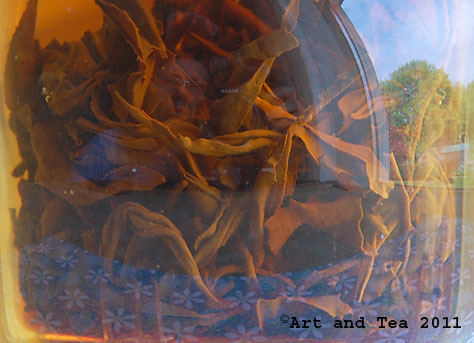

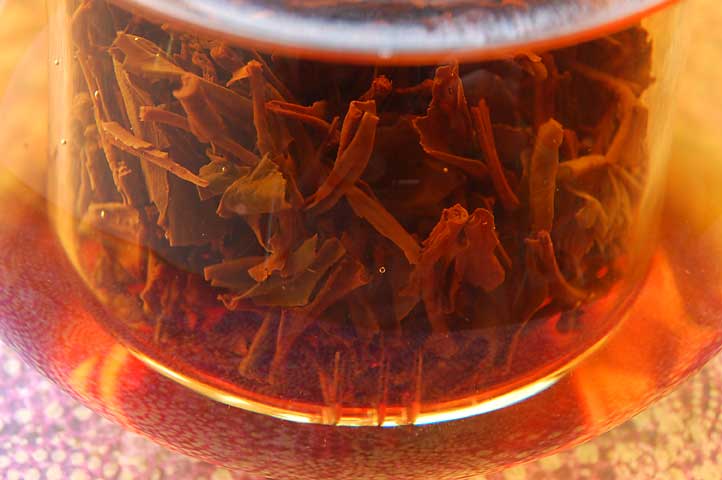
I steeped the leaves for 3 minutes in boiling point (212 F) water.

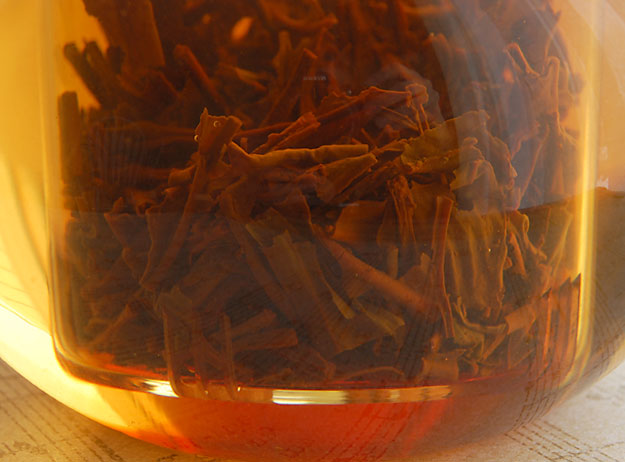
A honeyed aroma rising from my glass teapot reminds me of a dark Oolong tea.
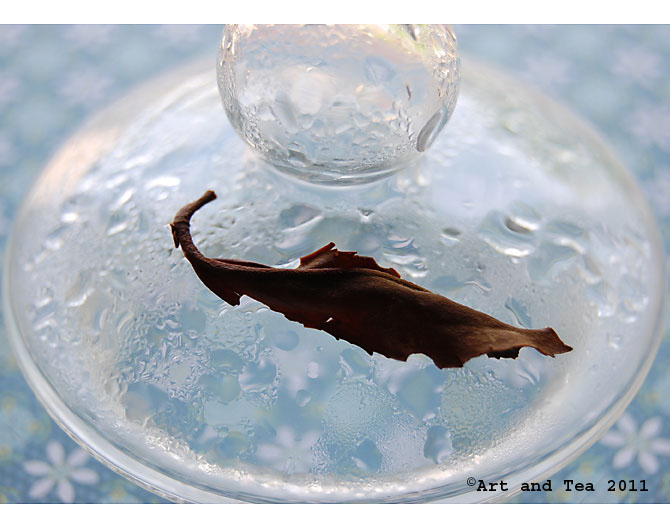
Wow, that is one big leaf!

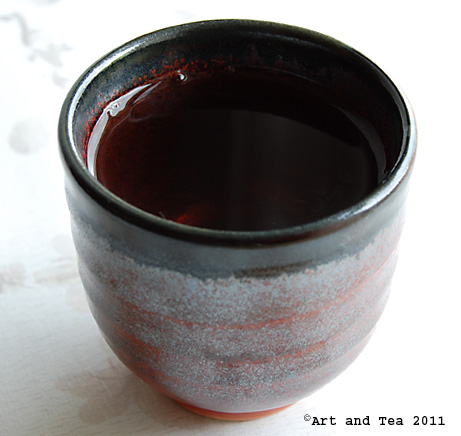
This tea is processed as a black tea but its enormous leaf, its aroma and its flavor notes remind me of an Oolong tea. Not the tea liquor though, a gorgeous glowing whisky color, reminiscent of a rich second flush Darjeeling.

The cup is quite smooth with notes of chestnut and dark honey up front. Subtle hints of spice and a whisper of cocoa linger into the finish.

I’m really enjoying this tea’s unique flavor which reminds me of a dark Oolong with some hints of a China black tea. Quite yummy!

Enjoy your weekend and a warm and happy Mother’s Day to all you Moms out there! Thanks Mom for all of the wonderful things you do.

“Let all thy joys be as the month of May.”  ~Francis Quarles

Unless otherwise noted, all text and photos are the property of Karen Park Art and Tea, copyright 2007-2011. Please do not “lift” any of my photographs or blog posts for use on your blog or website. Thank you so much for your respect and kind attention.

Saturday Morning Tea

As we go deeper into the season of spring, the world is shedding its neutral cloak of browns and grays and blossoming into color – from palest pink to sunny yellow to bright, spring green. I love the green haze of the woods at this time of year. Lovely!

This morning’s tea, called Keemun Jade Pekoe, is a black tea from China with an unusual leaf shape for a Keemun. The long, flat leaf blades remind me more of a Lung Ching, a China green tea I’ve shared with you here.

I steeped the leaf for 4 1/2 minutes in boiling point (212 F) water.

The leaf is handcrafted from a fine plucking (2 leaves and a bud) as you can clearly see from the photo below.

The steeping tea gave off a sweet, cocoa aroma, warming my kitchen and my soul. Being a confirmed dark chocolate lover, I enjoy a China black best when it has notes of cocoa.

The dark amber liquor has the typical Burgundy notes of Keemun, rich and sweet. There are also hints of nutmeg in the very smooth cup.

Do you like my new little teacup?

I treated myself during my visit out to Michigan. I purchased it at Teavana. While I’m not really into their exotic fruit-flavored tea concoctions, I do enjoy browsing their selection of tetsubin (iron) and Yixing (unglazed clay) teapots. I also love their Buddha and Guan Yin statues. They always have such a look of serenity on their face.

Today is a day for getting back into my garden to nourish and ground my soul once again in its earthy beauty. Have a wonderful week, my dear friends!

“Let us imagine care of the soul, then, as an application of poetics to everyday life.”  ~Thomas Moore

Saturday Morning Tea

The sun is shining in a deep blue, early spring sky as I begin my day with a cup of Darjeeling. I wish I could tell you that I’m enjoying a cup from this year’s first flush harvest season but they haven’t arrived just yet. This is a cup of an autumnal Darjeeling from the Sungma estate, harvested last fall.

Darjeeling, located in northeastern India, has 3 plucking seasons, first flush, second flush and autumnal. Sometimes there’s a plucking that’s not quite first or second flush and is called “in between”. The autumnal harvest isn’t as famous as the first and second flush, however, it produces a wonderful tea with the characteristics of Darjeeling yet with a much mellower and smoother flavor profile.

As I do with most Darjeeling black teas, I steeped the leaves for 3 minutes in boiling point (212 F) water.

The rich liquor glows like dark honey in my glass teapot. As I pour my first cup, a delicate fruity aroma wafts up.

The flavor is incredibly smooth with bright notes of fruit. This would be a great tea for those tea lovers looking for a deeper yet mellow Darjeeling cup. It doesn’t have any of the green astringent notes of a first flush or the bold muscatel notes of a second flush.

I love how the deep blue of the sky mixes with the rich color of my tea.

Sky and earth, water and fire.

My grandkids are visiting from New Mexico right now and I am having such a grand time immersing myself in the little ones’ world. Monday we’re headed into Boston to visit the New England Aquarium. Ella can’t wait to see the fishies!

Enjoy your weekend, dear tea friends!

“The soul should always stand ajar, ready to welcome the ecstatic experience.” ~Emily Dickinson

Saturday Morning Tea

My thoughts and prayers go out to the people of Japan and all those affected by the earthquake and tsunamis. May they find shelter and comfort during this tragic, frightening time.

A couple of weeks ago, I reviewed a Shawlands estate Ceylon OP1 here. One of my readers requested that I review another lot from that very same estate, this time the Shawlands BOP1, BOP meaning Broken Orange Pekoe, more simply a broken leaf tea.

The long threads of leaf really don’t look broken to me, their appearance being very similar to the OP1 leaf.

I steeped the leaves for 4 1/2 minutes in boiling point (212 F) water, the same as the OP1.

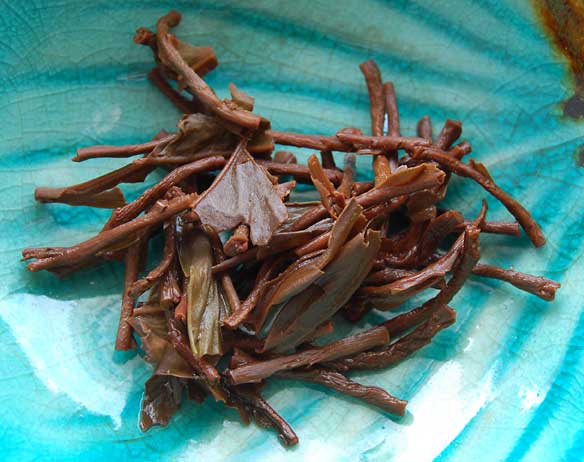
After steeping, the broken pieces are revealed along with pieces of stem, the long threads I saw in the dry leaf.

You might be thinking to yourself, now why aren’t these teas the same since they come from the same tea estate? The subject of single estate tea lots is an interesting one, a subject I usually address at least several times a week at my job. Customers will wonder why we “discontinued” a tea. In other words, we sold a particular tea and now they want to purchase it again but we’re unfortunately sold out of it.  Can’t we just get more? Well, we might be able to purchase another lot from that estate depending upon what is produced the following year but it won’t be the exact one that sold out because that lot was from a previous harvest.

Ah, what gorgeous color – a glowing copper that invites me to take my first sip.

Tea is plucked and then processed as individual lots. Each lot will be different from the others even though it might have come from the same tea estate, the same land, in the same country. This is because there are so many factors that contribute to the ultimate flavor of the tea, including the exact moment of the leaf’s plucking, or harvest, and its processing.

All that being said, the flavor of this tea IS very similar to the tea from 2 weeks ago, however, the mintiness is much less pronounced. The tea liquor itself also feels thicker in my mouth with a smoother character. I enjoyed its medium body very much without milk or sweetener.

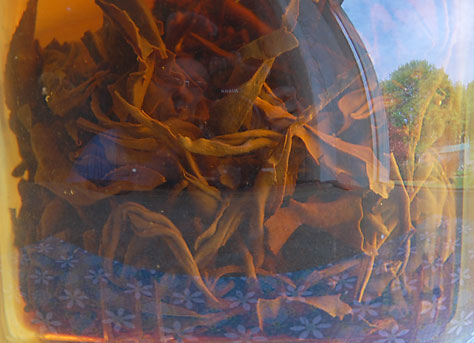
A beautiful, deep blue sky, just on the cusp of spring, is reflected in my cup. Joy…

I encourage you to try cupping 2 teas from the same estate, side by side. Notice the difference in the dry and wet leaf, the color of the tea liquor, the aroma and the flavor notes. It’s fun to do and also helps to refine your tea drinking palate. Enjoy!

“The soul should always stand ajar, ready to welcome the ecstatic experience.” ~Emily Dickinson

Saturday Morning Tea

Can you feel it? The air is softening with a glimmer of hope as we near the month that will bring us the very first day of spring. Ah, music to my ears!

Hello March, you are most welcome here in New England where we’ve felt winter’s brutal force most keenly this season.

To celebrate March this week, I chose a fresh, bright Ceylon called Shawlands estate OP1.

Many teas from Sri Lanka and India have letters after their estate name, in this case, “OP” which stands for Orange Pekoe (rhymes with echo). It doesn’t refer to the flavor of the tea. It is simply a leaf designation. OP refers to a whole leaf tea. If you’re interested in learning more, you can read about this subject here and here.

I steeped the OP leaves for 4 minutes in boiling point (212 F) water.

The Shawlands estate is located in the Uva district, found in the southeastern area of the island of Sri Lanka. The second largest province in Sri Lanka, Uva is a beautiful place of hills and valleys with abundant wildlife, including elephants and leopards and many species of birds.

The tea liquor is as bright as a new copper penny, with quite a pronounced refreshing minty aroma. This might sound strange but the aroma reminds me of the paste I used many moons ago in kindergarten. It is a minty smell I find very comforting.

The brisk, full-bodied flavor brings notes of mint and sweet raisins to my palate. I’m not usually a Ceylon lover but I find this tea deliciously appealing.

I prefer my tea without milk but this tea might stand up to a dollop or two, if you’d like. What’s in your cup this morning?

“It is the first mild day of March.

Each minute sweeter than before…

There is a blessing in the air…”

~William Wordsworth