Creating outside of the box

I’ve been doing a lot of that lately. A wondrous experience for me, a person who has often been referred to as a “Rule Keeper”. A person who feels most comfortable with order and organization. A person who likes everything in its place. (except don’t look in my studio right now, lol)

When I first started making jewelry, everything had to be symmetrical. 2 beads over here, ok, so then the same 2 beads over there and so on and so forth.

My, how things change…

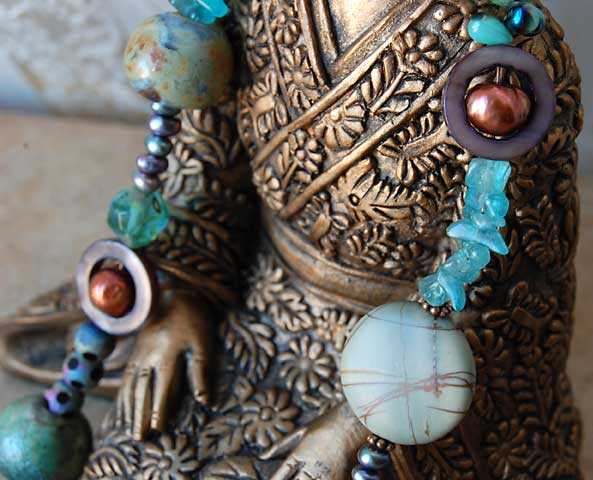
I found the mother of pearl circles and the rainbow “dotty” beads at Michael’s and knew immediately that they were destined for each other in a necklace. So, I sat down in my studio one day and started pulling out all sorts of lovingly stashed things from long ago, including this gorgeous Raku donut and beads purchased at a bead show in Watertown, MA.

I challenged myself to make a free-form style, asymmetrical necklace with neither a right side or a left side. Something with a light summery, watery feeling to it. I transformed the focal Raku donut into a toggle clasp by making a bar from 16-gauge copper wire. I’ve been wearing the donut focal off center when I wear this necklace and I just love that.
What do you think?

Saturday Morning Tea

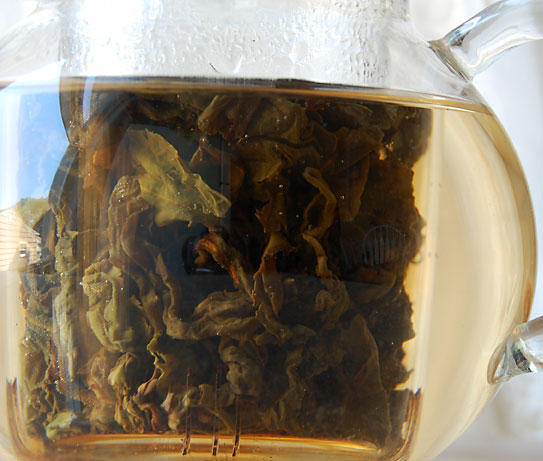
On this gorgeous late summer’s day, I end my series on Oolong teas with another Tieguanyin style Oolong, this one from the island of Taiwan (Formosa). It is called Tie-Guan-Yin Vintage style.

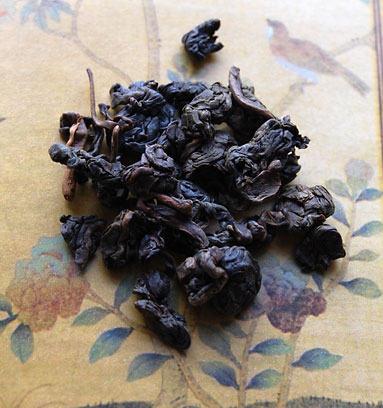
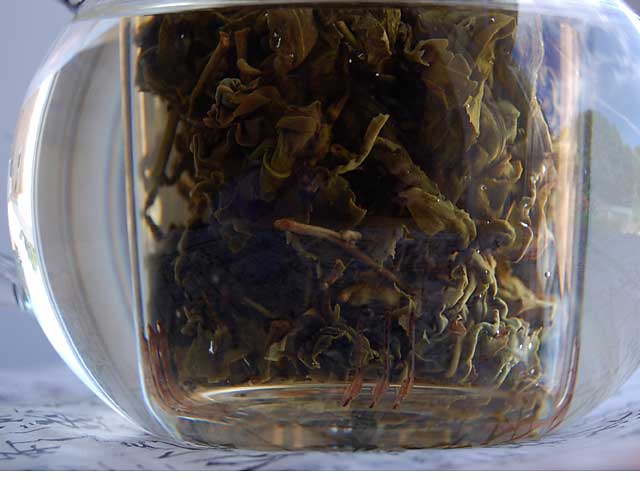
Not quite as dark as last week’s Buddha’s Palm, this tea is the closest in color and flavor to the first Oolong I reviewed 3 weeks ago called Golden Guan Yin. The dry leaf has been curled during processing, opening up during steeping to reveal the large leaves.

As you recall from my discussion last week on TGY Oolong processing, one of the last steps – the drying/roasting – is critical to the final taste of the tea. This particular tea has been roasted for a longer period of time with a lower temperature. This results in a pronounced toasty flavor note which I find quite pleasing.

I steeped the leaves for 3 1/2 minutes in 190 degree F water. As Oolong teas are not as oxidized as black teas, it’s always a good idea to cool the water from boiling before steeping your tea leaves.

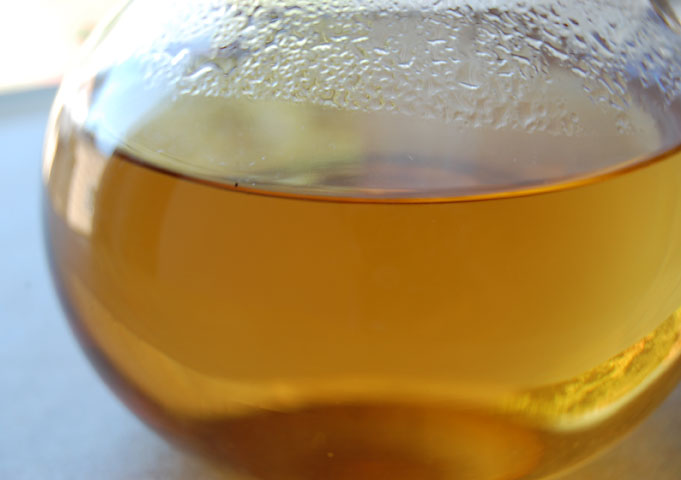
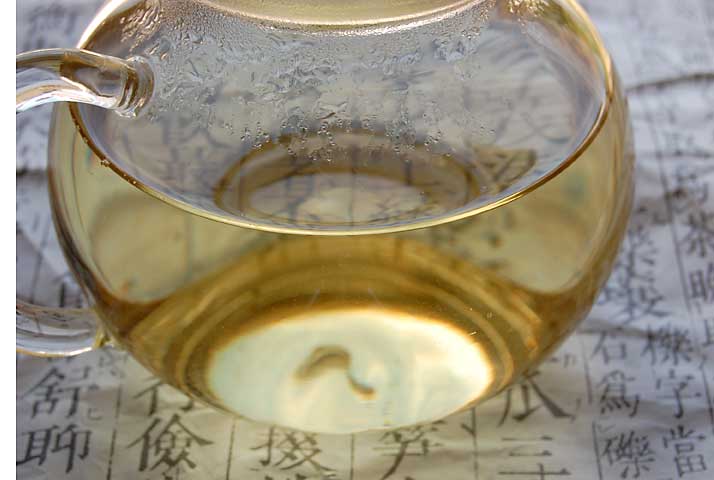
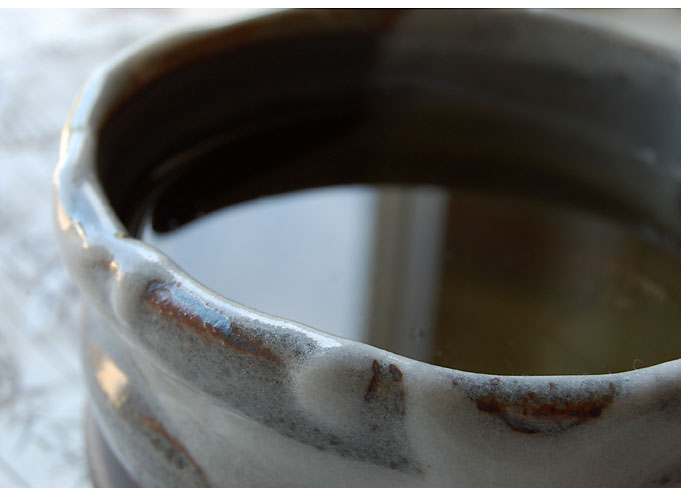
The beautiful light amber colored tea glows in my glass teapot, inviting me to pour my first cup.

The aroma also smells like warm toast and notes of honeyed chestnut and whispers of fruit caress my tongue.

I’ve really enjoyed learning about Oolong teas in more depth and hope you have, too. Soon, our Assam teas should be arriving and I’d love to explore them in more depth as well. Perhaps in October. If there is any category of tea that you’re interested in, please let me know. This has been fun!

Just don’t give up trying to do what you really want to do.  Where there is love and inspiration, I don’t think you can go wrong.” ~Ella Fitzgerald

A Feast

Recently I was honored to be treated to a feast of grilled pizzas whipped up by my dear friend, Judy. You can read about the adventures of “2 Girls and 11 Pizzas” here.

Not only is Judy the mixed media queen extraordinaire, she is a marvelous cook. Ideally, the pizza should be cooked on an outside grill, however, if you don’t have access to that type of grill, you can always make your pizza in a grill pan on the stove. You don’t even have to make your own dough. You can get the frozen kind from the grocery store along with pizza sauce, cheese and your choice of toppings. I can’t wait to try it.

Yum.

Saturday Morning Tea

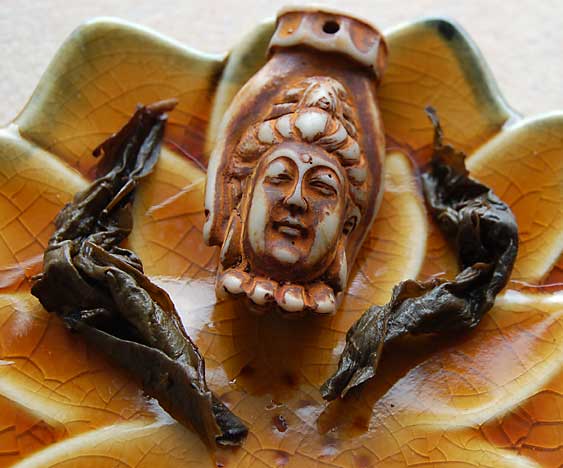
This morning’s tea, a special grade of the legendary Tieguanyin Oolong, was grown in southern Fujian province in China. This type of Oolong tea is named after the Chinese Goddess of Mercy, Guan Yin or Kuan Yin, believed to be the female incarnation of the compassionate Buddha. This tea is aptly called Buddha’s Palm, a lovely name for a beautiful tea.

Tieguanyin Oolong undergoes an amazing 18-step processing which includes withering, sun-drying several times, bruising, rattling and tumbling of the leaf, rolling the leaf in cloth for shaping and, the most important, the final drying in either baskets over charcoal or special tea-firing ovens. The temperature of these ovens is most critical as it is that temperature which will either strengthen or ruin the flavor of the tea. The tea master will carefully control the amount and intensity of the heat during this final step.

Steeped Tieguanyin Oolong leaf is recognizable for its russet-brown color and the crimson edging on the leaf. There are special Tieguanyin cultivars (subspecies of the camellia sinensis tea plant) grown in the mountains near Anxi, the best known being Red Heart Kuan Yin.

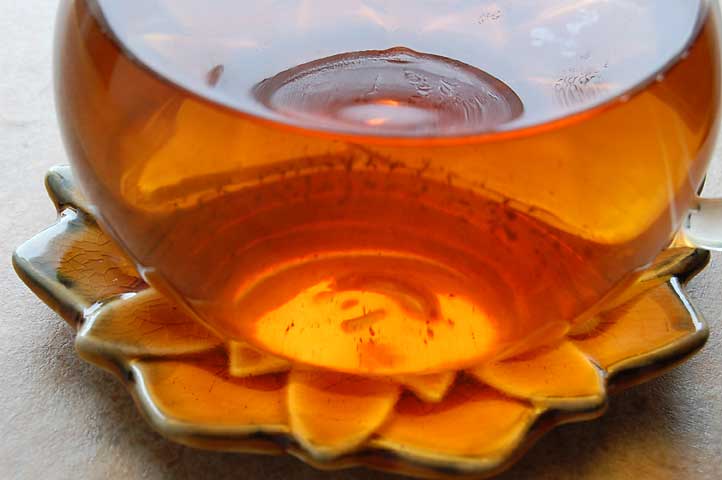
Look at that gorgeous glowing amber color. It’s very different from the last 2 Oolongs and their pale golden color. The darker color indicates that the leaves have been oxidized longer.

An aroma of woods, leaves and chestnuts drifts from my teapot as I gently lift the infuser basket.

The deep, woodsy flavor has toasty notes of chestnut and raisin. Mmmmm, it calls to mind the rich, deep flavors of fall ahead.

“Peace comes from within. Do not seek it without.” ~Buddha


Saturday Morning Tea

In continuing my series on Oolong teas, this morning’s tea, called Bao Jun, comes from the island of Taiwan, located just across the Formosa Strait from Fujian Province in China, home of the Chinese Oolongs.  235 miles long by 90 miles wide, Portugese traders called this island, covered in misty forested mountains, Ilha Formosa.

For many centuries, the island’s original inhabitants, of Polynesian descent, had cultivated and processed tea picked from wild-growing tea trees found high in the mountains. In the 1600s, the Dutch brought over Chinese citizens from Fujian to work as laborers. Some of these immigrants brought tea bush cuttings with them and established tea gardens in various mountain areas, teaching the natives their own methods of tea cultivation. Thus was born a unique history which merged native with immigrant tea knowledge.

Look how these 3 leaves are still connected to the stem. Gorgeous!

This beautiful, hand-made artisan tea, comes from a small family farm located in the Shan Ling Xi area in the mountains of Nantou County, located in central Taiwan. I wrote about another tea grown there and more about this farm here.

I steeped the leaves for 4 minutes in 190 degree F water. You can see how the curled leaves are beginning to unfurl, however, they are not fully unfurled until after the 3rd or 4th infusion. This makes them ideal for multiple steepings.

The aroma carries wisps of a light floral scent.

Its pale gold liquor has a honeyed flavor with notes of flowers and fruit. A magnificent tea!

This past week, our weather has turned cooler and less humid and, yes, there is a very faint hint of the changing season to come. A friend of mine told me that August always makes her sad as she feels the cool winds of change coming our way. Still, our weekend temps are forecasted in the 80s and I will soak up this rich, sunshine-y warmth as long as I can by taking a long, meditative walk on the bike path near my home.

How are you enjoying your August?

“People usually consider walking on water or in thin air a miracle. But I think the real miracle is not to walk either on water or in thin air, but to walk on earth. Every day we are engaged in a miracle which we don’t even recognize: a blue sky, white clouds, green leaves, the black, curious eyes of a child — our own two eyes. All is a miracle.” ~Thich Nhat Hanh