Saturday Morning Tea

PuErhTuoChaDry120515

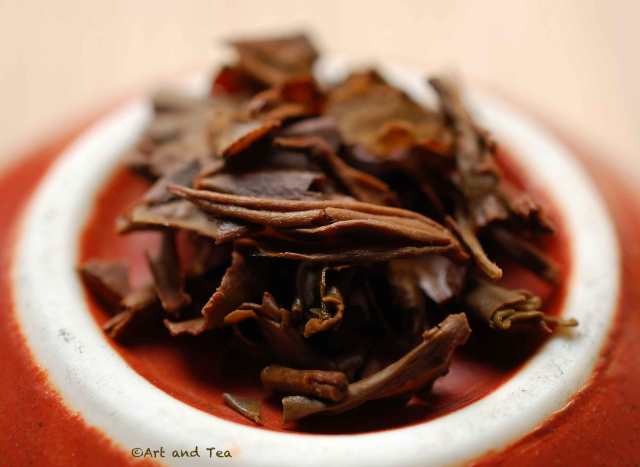
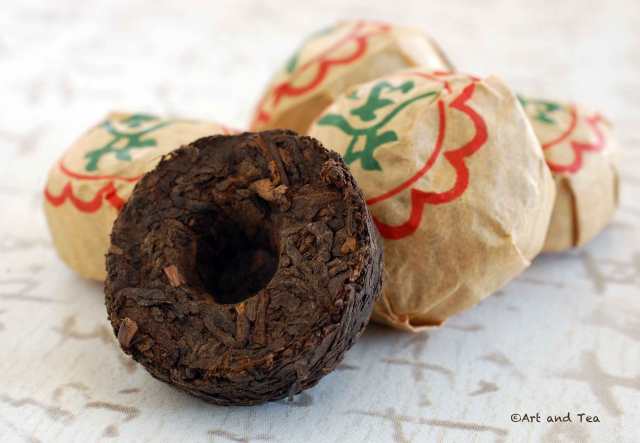
Good morning, dear tea friends! On this crisp, early December morning, there’s not a cloud in the clear blue sky, and I’m enjoying a Pu-Erh tea in my cup. This particular selection, called Pu-Erh Tuo Cha Std., has been compressed into little birds’ nests shapes, called tuo cha. As you can see, each tuo cha is neatly wrapped in paper.

PuErhTuoChaSteep120515

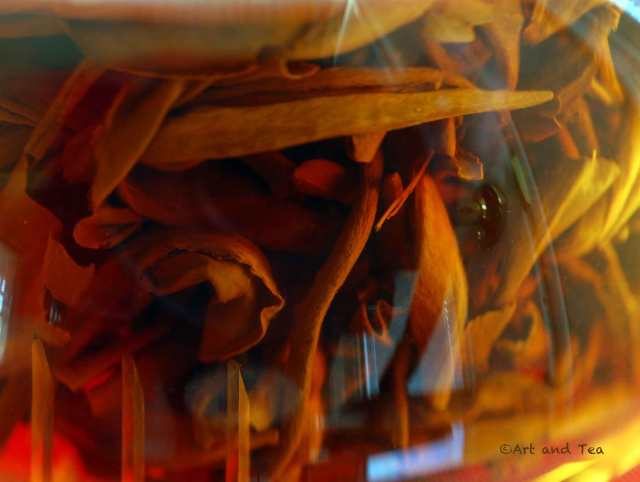
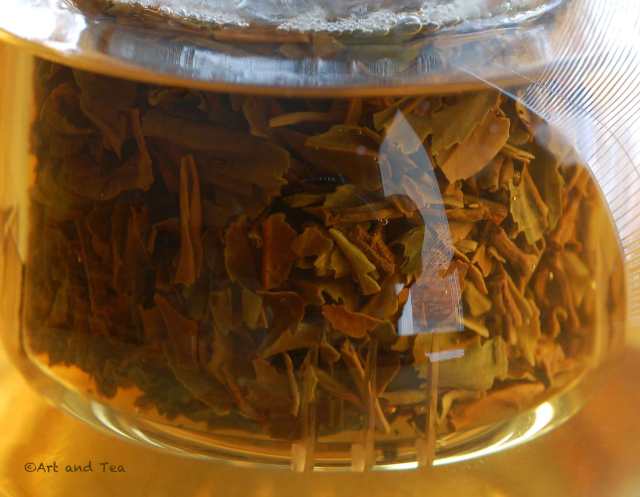
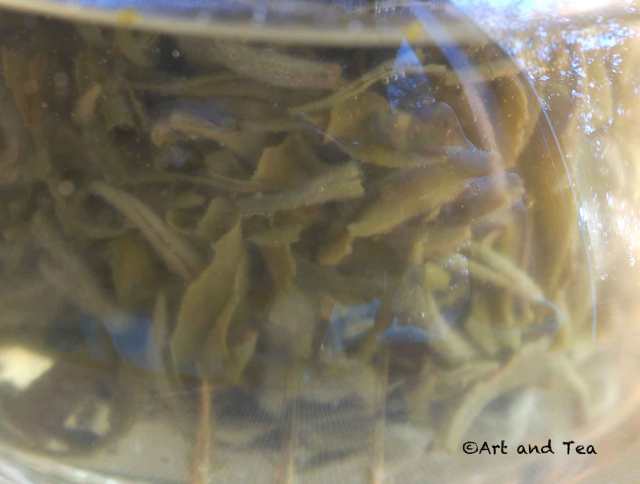
Each tuo cha will make 2 cups of tea so I had to break them up a bit to measure for my 3-cup glass teapot. I used one full tuo cha and one half tuo cha. I steeped for 6 minutes in 212F water.

PuErhTuoChaWetLeaf120515

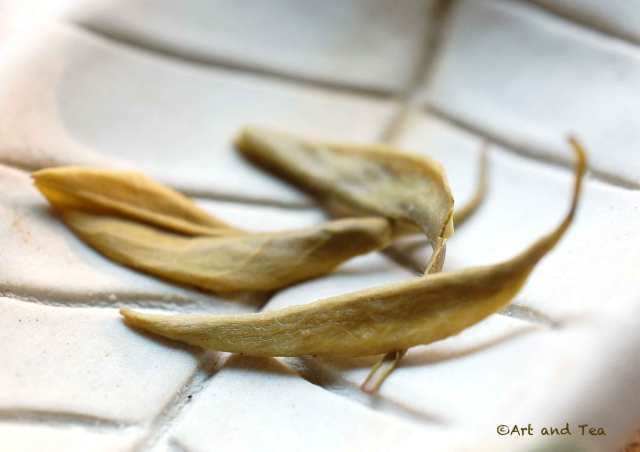
Traditionally, Pu-erh teas are created from leaves harvested in the ancient tea forests of Yunnan province in China. There are two different kinds of Pu-erh tea, raw (Sheng) and cooked (Shou). This Pu-Erh is of the cooked (Shou) variety.

PuErhTuoChaTeapot120515

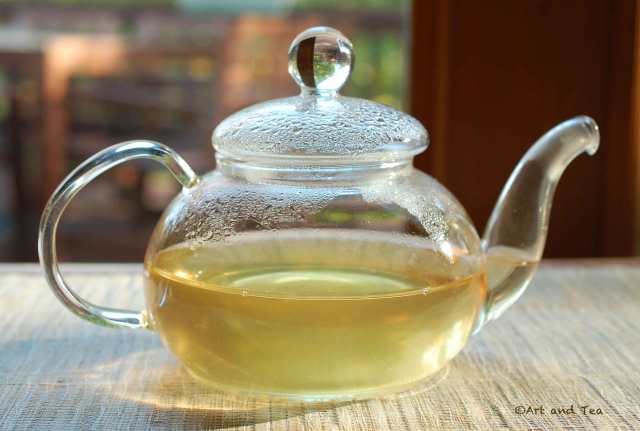
Cooked Pu-Erh goes through a “composting” step during its processing. The leaves are piled into heaps, much like a compost pile, creating a heat in its core and transforming the leaves into this unique tea. Compressed forms of tea have been produced in China for hundreds of years. It was the most common form transported on the ancient caravan routes because it was less susceptible to physical damage and easier to transport.

PuErhTuoChaTeaBowl120515

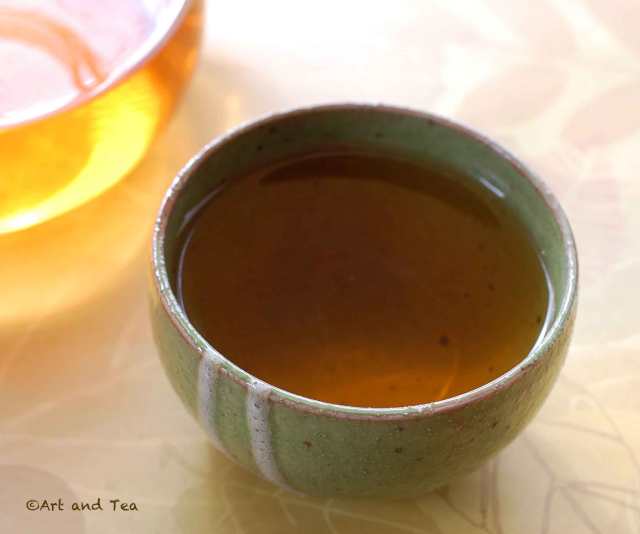
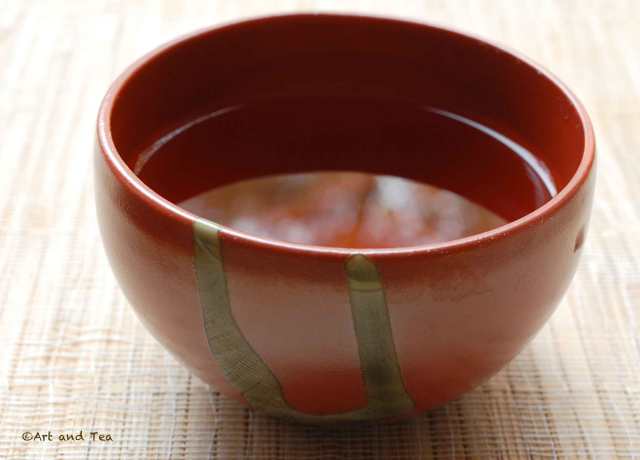
The tea liquor is a dark, opaque brown, with a sweet, earthy aroma. The flavor is velvety smooth, with notes of earth, autumn leaves and a dark sweetness, like molasses or dark brown sugar. As the tea cools, it gets even sweeter.

To conserve on heat, I keep my house pretty cool. I rely on my tea to warm me up and this tea did a great job of that. I’m going to the movies with my grandkids today, always a special treat to spend time with them! When I return home, I’ll put on some holiday jazz music and finish decorating the tree. I love this festive time of year. I hope you have a wonderful weekend and enjoy your tea!

Heaven or Hell, love or hate

No matter where I turn

I meet myself.

Holding life is precious is

Just living with all intensity

Holding life precious.

~Kosho Uchiyama Roshi


Saturday Morning Tea

YunnanRareGradeDryLeaf112115

Good morning, dear tea friends! It’s a bright, cold November day today as we near Thanksgiving, a time to gather with family and friends to give thanks for all of the abundance in our lives. I think it’s especially important to focus on all that’s good in our lives what with the frightening events happening in the world. I’m thankful for a hot cup of tea on a cold morning and for all of you to share it with.

In my cup this morning is a China black tea from Yunnan province, called Yunnan Rare Grade. Composed of downy, golden tips, this tea is rich and inviting.

YunnanRareGradeSteep112115

I stepped out of the box a little bit and steeped the leaves for 6 minutes in boiling point (212F) water. I love how you can see the fine golden hairs even under water.

YunnanRareGradeWetLeaf112115

The twisted tips release slightly after steeping, giving off a warm aroma with just a hint of cocoa. The tea itself has a toasty aroma.

YunnanRareGradeTeapot112115

The beautiful dark-amber liquor is sooooo smooth with notes of biscuit/toast and hints of cocoa, which reveal themselves more as the tea cools. I feel this tea is inviting me to experiment with how long I can push its steep time.

YunnanRareGradeTeaCup112115

I’m comfortably settling in to my new home, one unpacked box at a time, and am looking forward to creating a special area in my dining room to display my tea bowl collection.

Until our next cup of tea, I leave you with one of my favorite poems. Have a lovely Thanksgiving!

Morning Poem

Every morning the world is created. Under the orange

sticks of the sun the heaped ashes of the night turn into leaves again.

and fasten themselves to the high branches—and the ponds appear like black cloth on which are painted islands

of summer lilies. If it is your nature to be happy you will swim away along the soft trails

for hours, your imagination alighting everywhere. And if your spirit carries within it

the thorn that is heavier than lead—if it’s all you can do to keep on trudging—

there is still somewhere deep within you a beast shouting that the earth is exactly what it wanted—

each pond with its blazing lilies is a prayer heard and answered lavishly, every morning,

whether or not you have ever dared to be happy, whether or not you have ever dared to pray.

~Mary Oliver

Saturday Morning Tea

TeestaValley2ndFlDarjDry110715

Good morning, dear tea friends! I’m happy to be sharing a cup of tea with you from my new home. After unpacking all week, it feels great to sit down and savor a cuppa. This morning’s tea is a second flush harvest from the Teesta Valley Estate in Darjeeling, India.

TeestaValley2ndFlDarjSteep110715

Teesta Valley Estate was named for the nearby Teesta, a turbulent mountain river. Along with the Gielle Estate, Teesta Valley was laid out gradually from 1841 to 1856, using carefully selected China bushes. Stretching upwards from 2500 to 6500 feet above sea level, this lovely garden is located at the highest point above the valley and blessed by cool mists, bright sunshine and crisp winds, the perfect growing conditions for great teas.

I steeped the leaves for 3 minutes in 212F (boiling point) water.

TeestaValley2ndFlDarj110715

The leaves steeped up to a beautiful amber color. The aroma wafting up from my glass teapot is sweet and floral. This tea is a bit lighter and smoother than a typical second flush selection. With that in mind, I think I’ll experiment with increasing the steeping time and see what happens.

TeestaValley2ndFlDarjTeapot110715

The flavor has a pronounced sweetness, especially as it cools, with notes of fruit and flowers. A suggestion of apricot lingers in the crisp finish.

TeestValley2ndFlDarjTeaBowl110715

I’ve enjoyed this peaceful respite with you. Now it’s time to return to the stacks of boxes piled up in my new space.

Have a wonderful weekend and enjoy your tea!

Saturday Morning Tea

Castleton2FDarjDry102415

Good morning, dear tea friends! It’s a chilly, overcast autumn day here in my corner of New England. On a day like this, I’m happy to warm my hands as well as my spirit with a hot cup of tea. Or two. Or three. Today’s tea is a second flush selection from the Castleton Estate in Darjeeling, northeastern India. This renowned estate produces high quality, classic Darjeelings every year.

Here’s some interesting information about the estate from an article by Shyamali Ghosh on World Tea News:

Castleton Tea Estate, perched in Darjeeling’s misty Kurseong South Valley, actually has a castle of sorts, as well as a history colored by storybook details. No one is sure of the castle’s origin, though it’s probably just a building left behind by a long-ago money lender.

Originally planted in 1885 by an enterprising Englishman, the estate has passed through the hands of Calcutta royalty, and still uses names rather than numbers to designate specific areas in the garden. The original name of this garden was Kumseri. The various sections of this gardens are known as Bhalu Khop (bear cave), Jim Basha (the erstwhile manager’s domain), Dhobitar (washerman’s clothes line) and Baseri (resting place).

I love reading stories about tea and its history.

Castleton2FDarjSteep102415

I steeped the leaves for 3 minutes in 212F (boiling point) water.

A marvelous fruity fragrance greeted me as I poured my first cup.

Castleton2FDarjWet102415

As you can see, the liquor is a beautiful amber color. The flavor is rich with that characteristic Darjeeling “bite” awakening my palate.

Castleton2FDarj102415

I detected notes of muscatel, a warm toastiness and bright highlights, reminiscent of citrus, in the flavor. This tea is definitely strong enough to add a splash of milk but I encourage you to try it plain first and see what notes you find. This would make a lovely companion to a rich dessert.

Castleton2FDarjTeapot102415

I’m going to relax today and work on a new knitting project, a rosey pink cardigan for someone special. How are you spending your day?

The next time I join you for a cup of tea, I’ll be moved in to my new home. Until then, enjoy your tea!


Saturday Morning Tea

PiLoChunDry101015

Good morning, dear tea friends! Since we last shared a cup of tea together, I’ve moved again. This is my fourth move in a little over a decade. Moving does seem to be a part of my life’s path, and I’m trying my best to embrace it. Again. That’s a story for another time, however. Today’s story is about a well-known and well-loved tea from China, a green tea called Pi Lo Chun Imperial.

The name Pi Lo Chun translates to “green snail spring”, so named because the leaf is rolled into spiral shapes resembling snail shells. I have read that they roll the leaf this way to retain its freshness.

PiLoChunSteep101015

I steeped the leaves for 3 minutes in 180F water. The water turned murky as the silvery dust released from the tippy leaf.

As I lifted the infuser from my glass teapot, a sweet, vegetal fragrance was released.

PiLoChunWet101015

The leaves were loosely rolled so steeping released them into their original leaf bud shape.

PiLoChunTeapot101015

The golden yellow tea liquor has a fresh buttery mouth feel with notes of sweet melon and flowers and sea-grassy vegetal hints.

PiLoChunTeaBowl101015

As I sip my tea, I gaze out the window at the colorful autumn leaves swaying in the breeze and think about change. The change of seasons. The changes in one’s life. The change from a spiral shaped leaf to a delicious cup of tea.

Thanks for your patience with my sporadic tea posts as I get used to this newest change in my life. Enjoy your tea!