Saturday Morning Tea

makaibari2ndflwetleaf.jpg

As the wind and rain whip against my windows this morning, I am thankful and happy to be cozy and warm inside sipping a cup of a new second flush Darjeeling from the Makaibari estate. I watch the tree outside my window which has lost all of its leaves now. It reaches its skeletal branches towards the sky in what appears to be a gesture of praise and gratitude for the water soaking the earth around it.
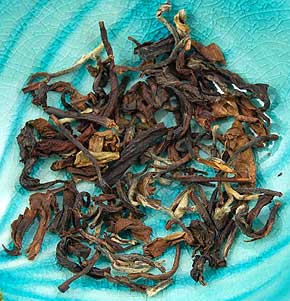
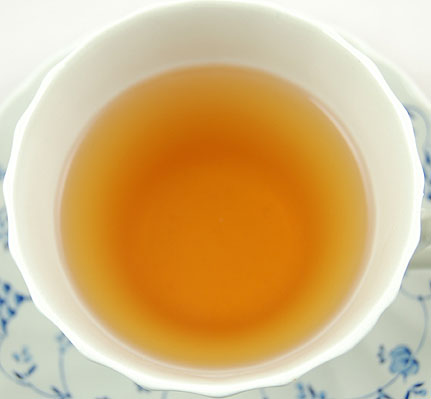
makaibari2ndfldryleaf.jpgmakaibari2ndflliquor.jpg

This tea comes from the biodynamic Fair Trade Makaibari estate in the Darjeeling tea growing district in northeastern India. It has long leaves with the look of an Oolong tea, not a typical Darjeeling leaf which appears smaller. The dry leaf has a fair amount of tip giving it a variegated look. I place my nose inside my cup and I am transported to a fragrant orchard as I inhale the lush ripe aroma of a peach. The liquor is a beautiful honey color with the taste of ripe fruits and muscatel. I usually find a muscatel flavor note to be pungent but the taste is buttery smooth. What a treat for a gloomy November day!

Saturday Morning Tea

mistyfallmorning.jpg

A misty, rainy fall morning and I open with a quote from one of the oldest books on tea, the Ch’a-Ching (The Classic of Tea) by Lu Yu

“There are a thousand different appearances of tea leaves. Some have creases like the leathern boot of a Tartar horseman, curl like the dewlap of a mighty bullock, unfold like the mist rising out a ravine, gleam like a lake touched by a zephyr, and be wet and soft like fine earth newly swept by rain.”

yunnanraregradedryleaf.jpgyunnanraregradeliquor.jpgyunnanraregradewetleaf.jpg

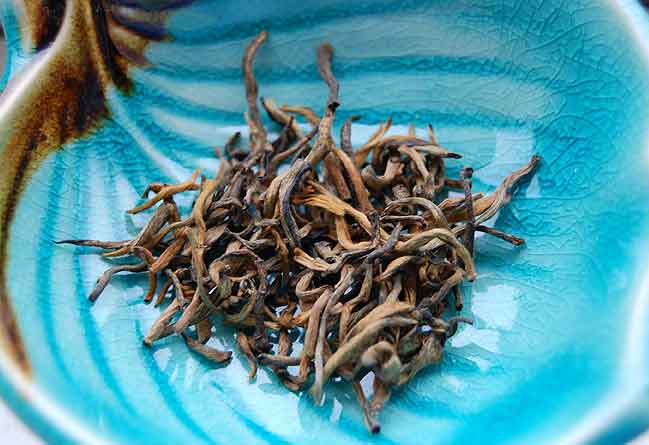
This morning I am sipping a China black tea called Yunnan Rare Grade. As I talked about in my post on Pu-ehr teas, the tea plants in Yunnan province are actually trees with a bigger, broader leaf. This tea has a lot of golden tips as you can see in the dry leaf photo. Some of the leaf is starting to uncurl when wet but most are still curled up from the rolling process.

A dark, sweet aroma wafts from my cup. I take a sip and my mouth is filled with a spicy earthiness, reminding me of the rich smell of a newly fallen leaf. The Chinese call this a red tea and you can see why. If you enjoy red wine, dark chocolate or even a thick, dark beer, you will like the taste of a Yunnan black tea.

Go Sox!

Saturday Morning Tea

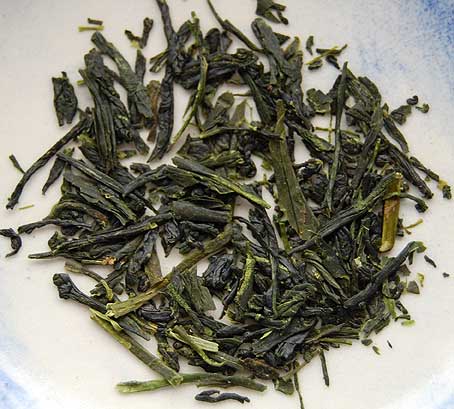
gyokurodryleaf.jpg

I quietly sit with my Saturday morning cuppa and gaze out my window at the gorgeous colors bursting across the New England landscape. The rich autumn palette has inspired me to reach for a tea with a deeply colored leaf, a Japanese green called Gyokuro Kamakura, a precious gift from a colleague.

The Japanese word Gyokuro translates in English to “pearl dew” or “jewel dew” which in my mind conjures up images of a delicate sunrise over misty fields of tea bushes. Approximately 3 weeks before the leaves are ready for plucking, the bushes are covered with a dark cloth or straw. This covering results in the harvest of a darker green, silky leaf with a slightly higher caffeine content.

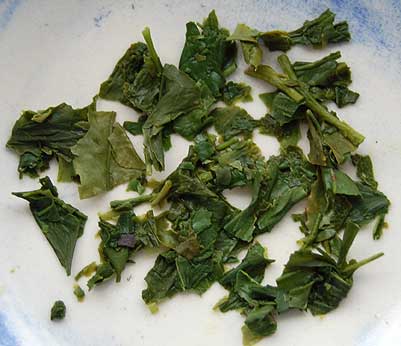
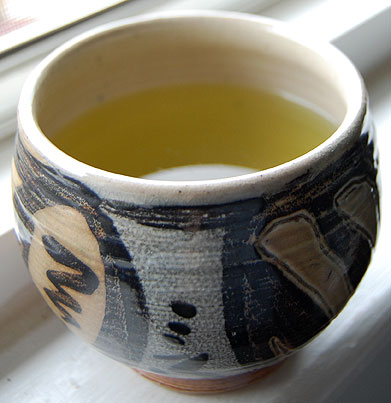
gyokurowetleaf.jpggyokuroliquor.jpg

The aroma reminds me of freshly cut grass and the spring green liquor is richly vegetal with a tang which wakes up my tongue. The tea packet is created with beautifully textured and colored Japanese paper. I believe that the bottom symbol is the Japanese character for tea. If the spirit ever moved me to get a tattoo, this is what I would choose. I love Japanese kanji characters for their artful quality but especially for how they tell a story about a word or phrase.

gyokuropacket.jpg

What is your experience with Japanese tea?

Saturday Morning Tea

springdragonoolongliquor.jpg

This morning there is a very cool breeze coming in my windows. As I gaze out over the treetops, I see a variety of reds, oranges, maroons and golds blooming amongst the greenery. October is one of my favorite months because I love so much about this autumn time of year – the aroma of dry leaf as it dances across my path, the explosion of color across the landscape, the crisp, tart taste of a just picked apple, the bright orange pumpkins displayed in wooden carts along the side of the road. This morning, however, I am feeling wistful as the memory of summer slips away. So, in light of my mood, I have brewed up a green Formosa Oolong called Spring Dragon.

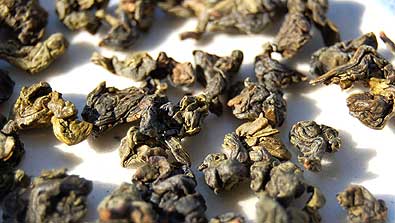
springdragonoolongdryleaf.jpg

After plucking the new growth (2 leaves and a bud), the leaves are spread out to dry and oxidize. They are shaken periodically during this drying period to bruise the leaf and release its volatile oils for flavor. This also helps in the oxidation process, the turning brown process of the leaf. This Oolong is only lightly oxidized so it is carefully monitored during this time. Once the tea master judges the oxidation to be sufficient, the leaves are pan roasted to halt oxidation. Then they are rolled and dryed some more.

springdragonoolongwetleaf.jpg

It is amazing that you can see the serration on the edges of the intact leaf that I have spread out after I steeped the tea. I left a portion of one leaf still rolled up a little so you can see how it has opened up. The aroma is sweet and delicately flowery. The light honey colored liquor is also sweet with lilac flavor notes. Mmmmmmm….

Saturday Morning Tea

blackpuehrtuocha.jpg

A couple of weeks ago, I brewed a cup of green (raw) Pu-ehr tea and I talked about how there are 2 types of Pu-ehr. Today I am enjoying a cup of black (cooked ) Pu-ehr tea called Ancient Pu-ehr Mini Tuo Cha. This tea is from the same area in Yunnan province as the green Pu-ehr.

Another name for this black Pu-ehr tea is dark green “pile fermented” tea. It is created with a special pile fermentation process, a fairly new method in existence since the 1970s. Think compost piles. The tea leaves are heaped into measured piles in a well ventilated, climate controlled room and water is added to each pile to moisten it. The tea master will turn each pile periodically to evenly disperse heat, moisture and bacteria for proper fermentation. After approximately 90 day, the leaves are steamed and compressed into little cakes and then dried.

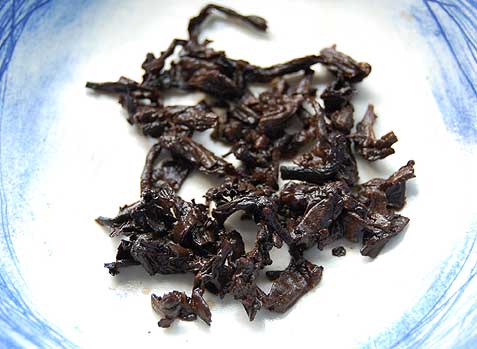
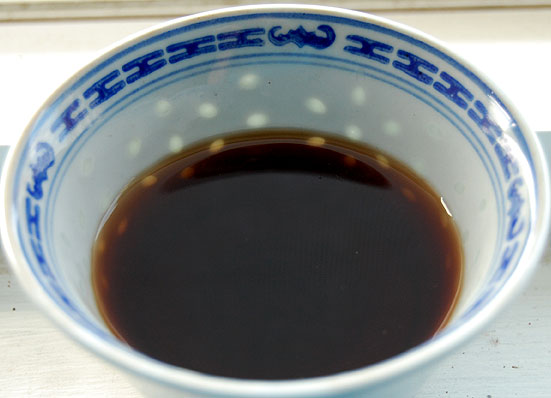
blackpuehrwetleaf.jpgblackpuehrliquor.jpg

Look how black both the tea leaves and the liquor are. Even a China black like Keemun or Yunnan or an Assam tea are not this dark. It looks like black coffee. However, the aroma and taste are very different form coffee! The aroma is sweet and earthy with a hint of woodiness to it. The flavor is also sweet, like molasses, and has a very full mouth feel. I drink it straight but it would probably stand up very well to milk or cream. I don’t recommend sweetener though as it has its own sweetness to enjoy.

One of the most interesting things about Pu-ehr tea is that it gets better with age, like a fine wine does. There are people who collect aged Pu-ehr cakes and some cakes are up to 150 years old! It is also reputed to have medicinal benefits, especially for the digestive system, and has been used as such in China for hundreds of years.

I enjoy tea because of its taste but it’s nice to know that there are health benefits, too!