Saturday Morning Tea

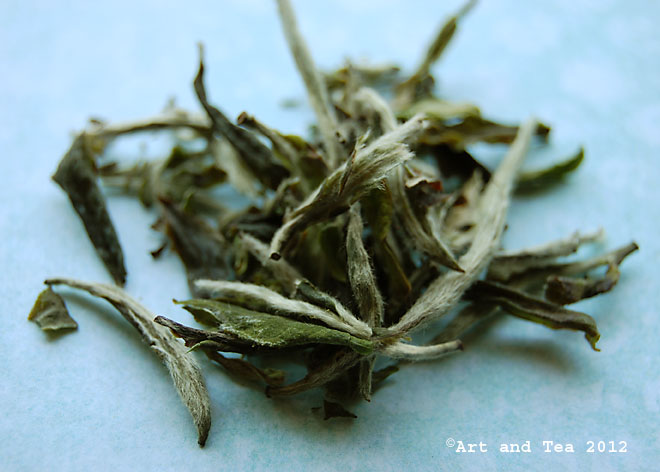
Good morning, dear tea friends! This morning’s tea is another Pre-Chingming tea from the Fujian province of China. A white tea called Pre-Chingming Top Pai Mu Tan Organic, its plucking is of the new leaf shoot, or bud, plus the top two leaves. Pai Mu Tan, or Bai Mudan, translates to “white peony”, some say because of the shape of the leaves, others because of its fragrance.
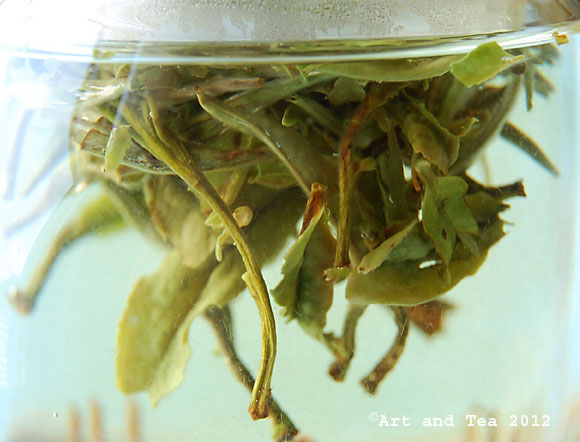
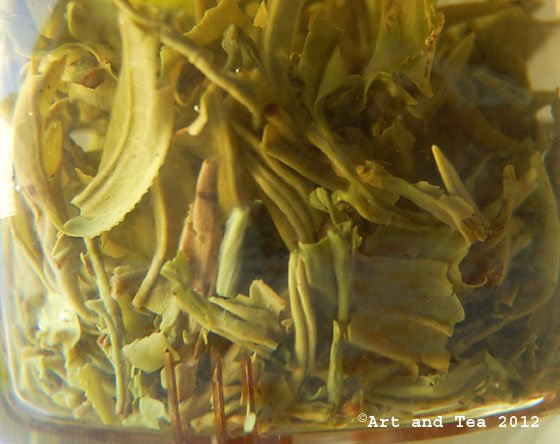
Wow, look at that gorgeous leaf.

Many folks ask, “what is the difference between green tea and white tea?” After all, look at the leaf in the photo above. It’s green, right? Well, it’s all in the processing of the leaf. Whereas green tea leaves are heated up pretty much right away, whether steamed or pan fried, for example, to halt the oxidation of the leaf, white tea leaves are allowed to wither naturally in the sun, sometimes for several days. So, the leaves aren’t heated to halt oxidation. In fact, after withering, the leaves are piled and allowed to oxidize a little bit before they are baked to dry the leaves out for packing and transport.
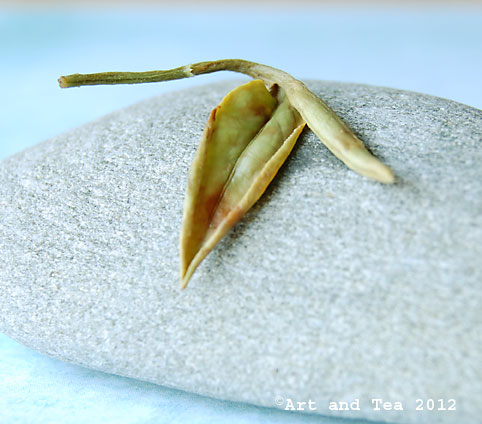
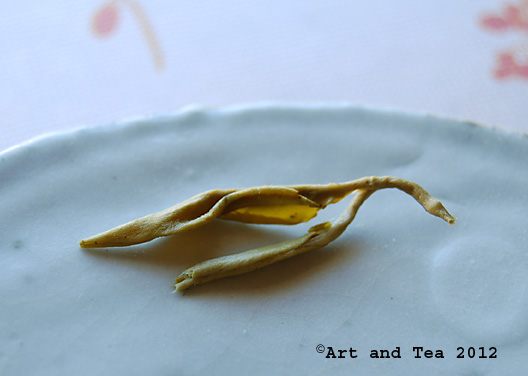
As you can see from the photo above, white tea leaves are handled as minimally as possible so that they remain in the same state as when they’re plucked.
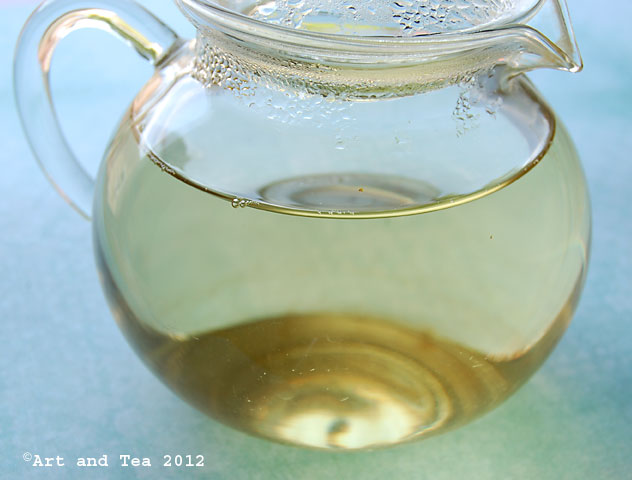
I steeped the leaves for 3 minutes in 175F water. The aroma is light and delicate and smells just like vanilla cookies. That note comes through in the silky smooth flavor as well, along with some nuances of melon. This tea is quite sweet with no vegetal flavor at all.
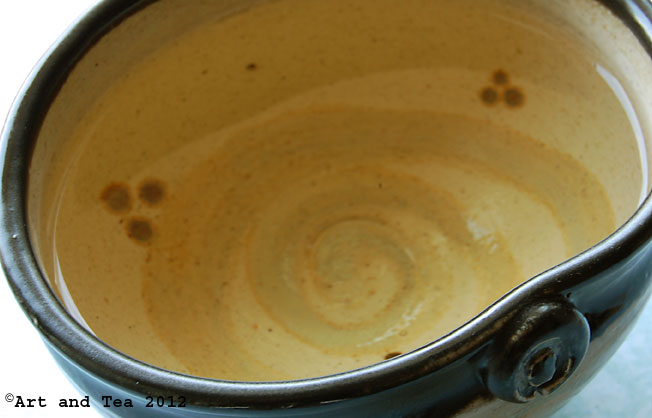
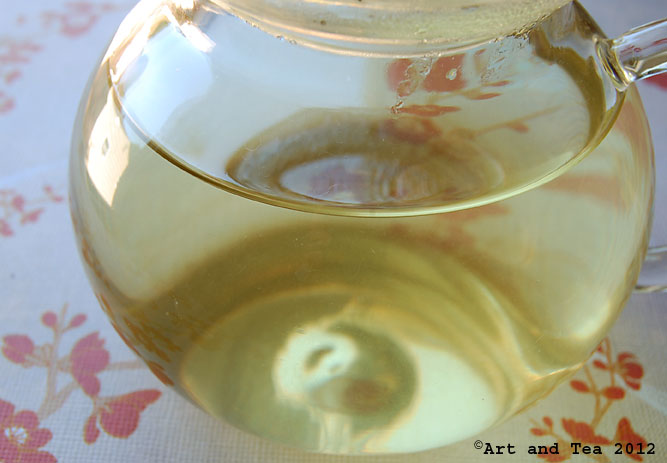
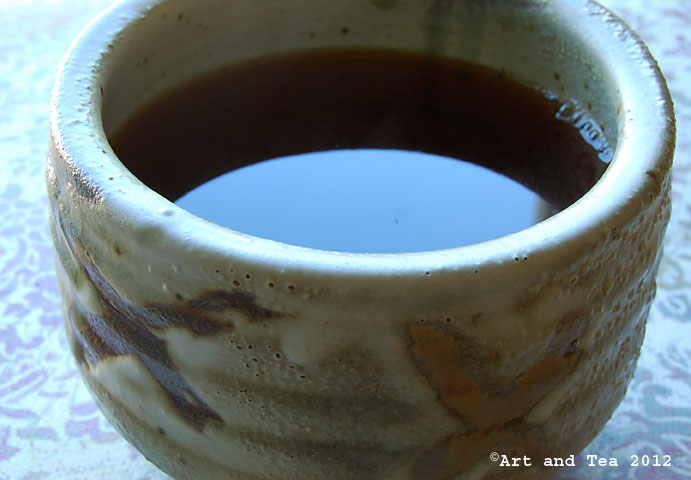
I love to sip white tea out of this teabowl so I can see the spiral shape within. Do you have a favorite teamug or teabowl?

Next week I’d like to review another white tea but from another country. It’s called Arya Pearl. Can you guess what country it’s from?

Have a wonderful week!

“Your creativity is waiting for you like a dancing partner.”

~Barbara Sher

Saturday Morning Tea

Good morning, dear tea friends! I hope that you all had a fabulous week. This morning’s tea comes from Fujian province in China and was harvested in March of this year. Please allow me to introduce you to Pre-Chingming Snow Dragon, a green tea.

For more information about Pre-Chingming teas, I’ve written about them here and here.

The leaves consist of what are called “bud sets”, the fine plucking of the new growth on the tea plant. So, in other words, delicate baby leaves.

You can see what I mean in this photo of the wet leaf.

I steeped the leaves for 3 minutes in 180F water. The aroma was quite vegetal as I poured my first cup. Vegetal like your first bite of new asparagus in the spring.

The tea liquor is a delicate greenish straw color, as light as a white tea. The flavor isn’t delicate though. It’s rich with floral notes and a pronounced sweetness which lingers in my mouth.

I’ve read that the producer of this tea describes the flavor as a “wild green” taste. While I find this tea vegetal but not overly so, I’m not sure what that description means. Does anyone know?

Today is my granddaughter’s dance recital. Very exciting! Have a wonderful week!

“I fear the venture into the unknown. But that is part of the act of creating and the art of performing.” ~Martha Graham, Dancer

Saturday Morning Tea on Sunday

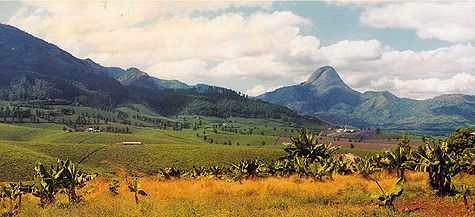
Happy Sunday, dear tea friends! I was called out of town yesterday so here I am on this Sunday morning instead, to share a cup of tea with you. This morning’s tea is from the country of Mozambique, located on the southeastern coast of Africa. It was grown at the Monte Branco tea estate.

Mount Murresse and tea plantations near Gurue, Zambezia Province, northern Mozambique (from wikipedia)

Bantu-speaking people, along with Swahili and Arabs, migrated into this area between the first and fifth centuries until the Portugese explorer, Vasco de Gama, arrived in 1498 and Portugal colonized it in 1505. They finally gained their independence in 1975.

I’ve read that most of the tea produced in Mozambique, about 90%, is exported from the country.

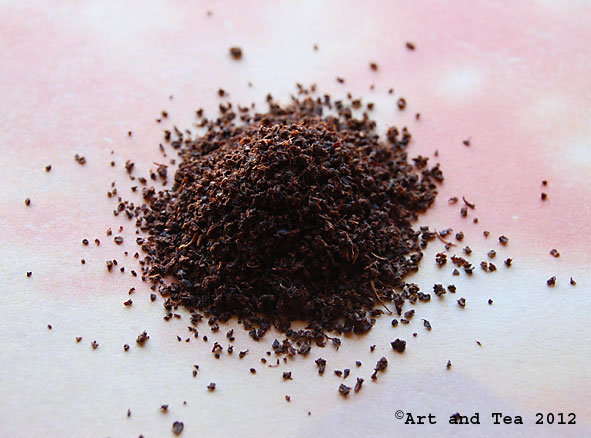
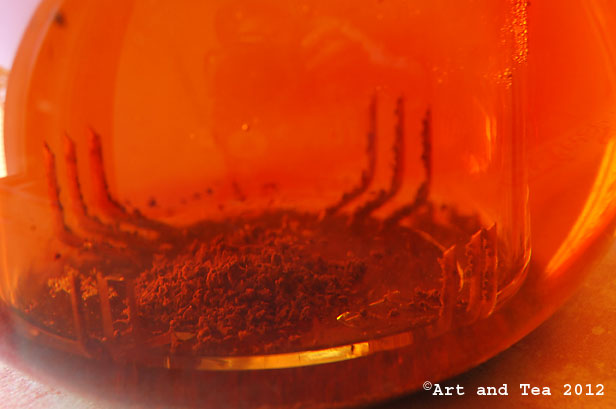
As you can see, this tea has been processed into a very finely particled leaf. I steeped it in boiling point (212F) water for 2 minutes.

The aroma drifting from the steeping tea is very sweet with a light floral undertone. Usually, with a leaf this small, the tea can have a sharp tang and overbrew quickly. Not so with this tea. It’s incredibly smooth with no astringency whatsoever.

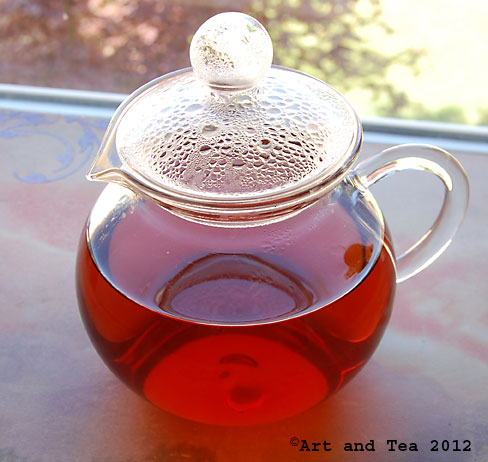
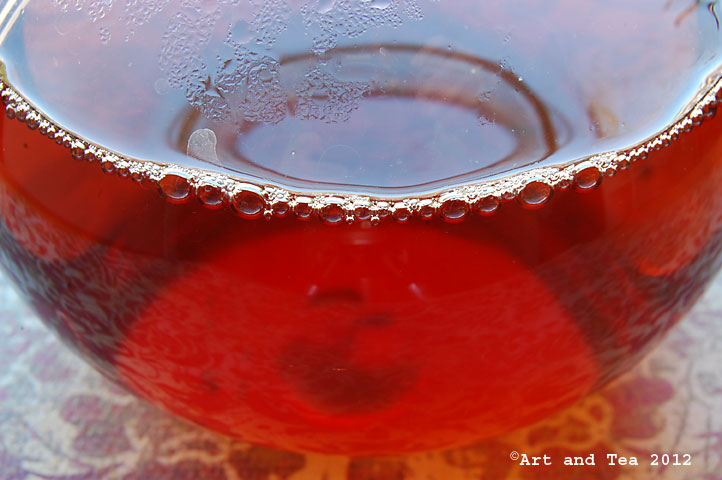
The dark amber liquor is rich and quite sweet with notes of vanilla and nutmeg. As I drink my second cup, I’m still so amazed at how smooth this tea is.

This tea would make a great iced tea. I’m going to try it this week and will let you know how it turns out. Until our next cup of tea, dear friends…

Have a fabulous week!

Saturday Morning Tea

Good morning, dear tea friends! In my quest to find an enjoyable, caffeine-free cuppa for my evenings, I’m doing a cupping on some Earl Greys: Rooibos Earl Grey, Decaffeinated Earl Grey and Premium Decaffeinated Earl Grey.

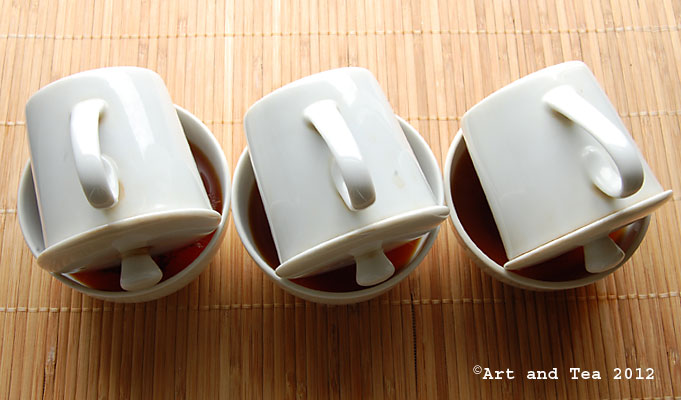
I’m using 3 cupping sets I’ve borrowed from work. These cupping sets are great. Having 3 parts – a steeping cup, a lid and a tasting bowl – they’re specifically made for the purpose of steeping a group of teas to compare and contrast them. Each cup has a 6 ounce capacity and little “teeth” on the rim opposite the handle.

I spooned a teaspoon of tea leaves into each cup and steeped for 5 minutes in boiling point (212F) water.

Once my timer sounded, I gently started pouring the tea from the cup into the bowl making sure I was holding the lid on securely as I poured. The tea will pour out into the bowl through the little “teeth”. I layed the cup into the bowl with the top of the cup tilted down so that the rest of the tea would pour out.

To complete the process, I inverted each cup while holding the lid securely and tapped gently on its bottom. This will release the leaves onto the lid so the steeped leaf for each tea may be viewed next to its tea liquor. It’s a little tricky at first to do this but after you’ve done it a couple of times, it’s easy to get into the rhythm of it.

If more than one person is partaking in the cupping, use a spoon for each bowl so you can place a couple of spoonfuls in your cup, try that tea and so on as you make your way down the line. Since it was just me, I sipped directly out of each teabowl.

It’s a good idea to have a small notebook handy so you can jot down your thoughts about each tea.

I found the Rooibos Earl Grey to be very smooth with a lighter bergamot flavor. The vanilla/citrus-y notes of the Rooibos came through in the cup, pleasantly co-existing with the bergamot.

The Decaffeinated Earl Grey had a very sharp taste, most likely indicating that it really couldn’t take as long of a steeping time as the other two. So, next time I’ll try 3-4 minutes for this tea. The bergamot flavor, however, was very light, even oversteeped.

The Premium Decaffeinated Earl Grey was smooth with a stronger bergamot flavor and a sweetness I found very appealing.

My favorite is the Rooibos Earl Grey.

Have you ever done a cupping like this? If so, please share your experience!

Have a great week!

Saturday Morning Tea

Hello again, dear tea friends. I apologize for not being here last week. Someone very dear to me had surgery so I was out of town. I’m happy to say that all is well and my dear one is on the road to recovery.

Let’s have a cup of tea together, shall we?

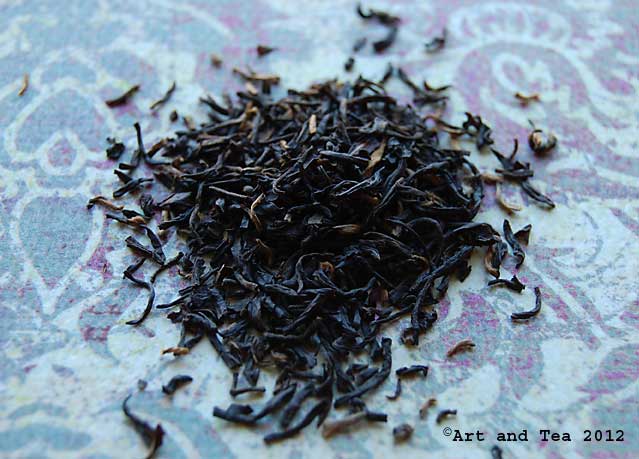
This morning’s tea is called Special Purchase Hao-Ya “A” Keemun, a black tea from China. The term “Hao-Ya A” refers to the grade of tea, this tea being a top grade. I’ve written about Hao-Ya “B” Keemun tea before here. To me, all Keemuns have such a dark glossy leaf, this one also having a sprinkling of golden tip.

Keemun tea is named after a county, Qimen, in Anhui province. There are several stories about its origins but the most common is one of a governmental official in the late 1800s who learned black tea production in Fujian province and then decided to return to his native county, Qimen, to produce black tea there. He met with success and his new black tea was imported to England where it was enjoyed as a breakfast tea.

If you enjoy the darkest of chocolates, you will love this tea. The aroma of rich chocolate of the deepest kind wafted up as I lifted the infuser out of my glass teapot. There was an underlying hint of red wine which validated its description as the “burgundy” of China black teas.

I steeped the tea for 5 minutes in boiling point (212F) water. The dark chocolate aroma carries on into the flavor with notes of 90% chocolate bar, hints of red wine and a whisper of perfumed flowers. Silky smooth, thick and rich, this tea would stand up well to any additions, like milk and sweetener. I suggest trying it plain first to experience its wonderful flavor on your tongue.

Yes, this is an expensive tea but what a special treat this would be for a Sunday morning or to share when a fellow tea lover comes for a visit.

It’s a brilliant, sunshine-y day here in MA. Time to go throw on my overalls and head out to the garden. My sweet daughter gave me a beautiful hydrangea for Mother’s Day with blooms of the palest lavender-pink. I’m off to find a special place for it in my garden.

As always, thanks for stopping by and sharing a cuppa with me. Have a wonderful week and enjoy your tea!

“I don’t want life to imitate art. I want life to be art.” 

~Carrie Fisher, Actress