Saturday Morning Tea

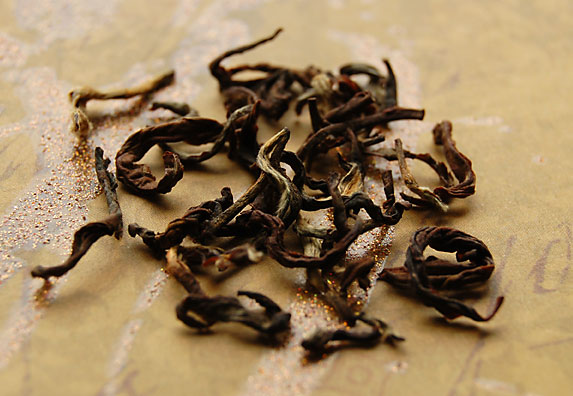
In continuing my series on Oolong teas, this morning’s tea, called Bao Jun, comes from the island of Taiwan, located just across the Formosa Strait from Fujian Province in China, home of the Chinese Oolongs.  235 miles long by 90 miles wide, Portugese traders called this island, covered in misty forested mountains, Ilha Formosa.
For many centuries, the island’s original inhabitants, of Polynesian descent, had cultivated and processed tea picked from wild-growing tea trees found high in the mountains. In the 1600s, the Dutch brought over Chinese citizens from Fujian to work as laborers. Some of these immigrants brought tea bush cuttings with them and established tea gardens in various mountain areas, teaching the natives their own methods of tea cultivation. Thus was born a unique history which merged native with immigrant tea knowledge.

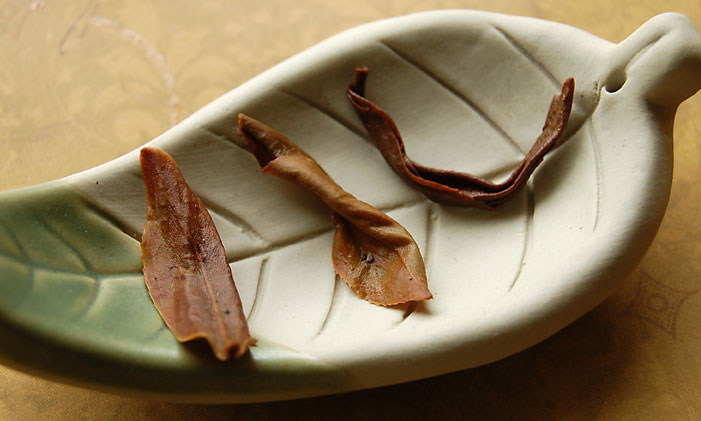
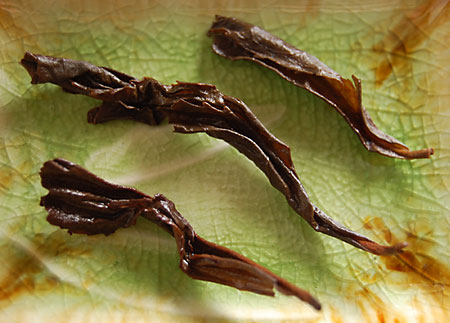
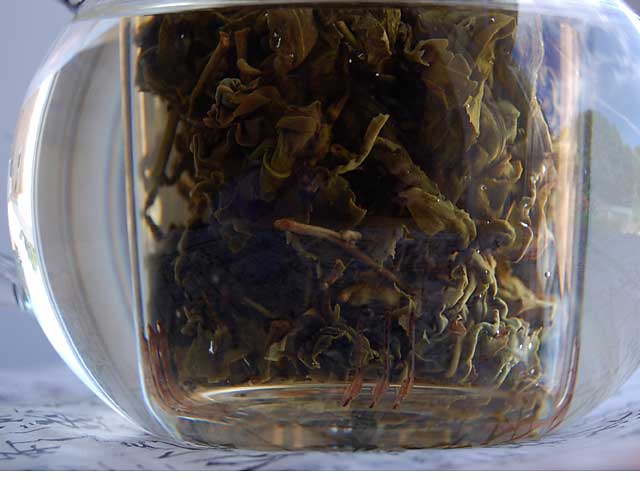
Look how these 3 leaves are still connected to the stem. Gorgeous!

This beautiful, hand-made artisan tea, comes from a small family farm located in the Shan Ling Xi area in the mountains of Nantou County, located in central Taiwan. I wrote about another tea grown there and more about this farm here.
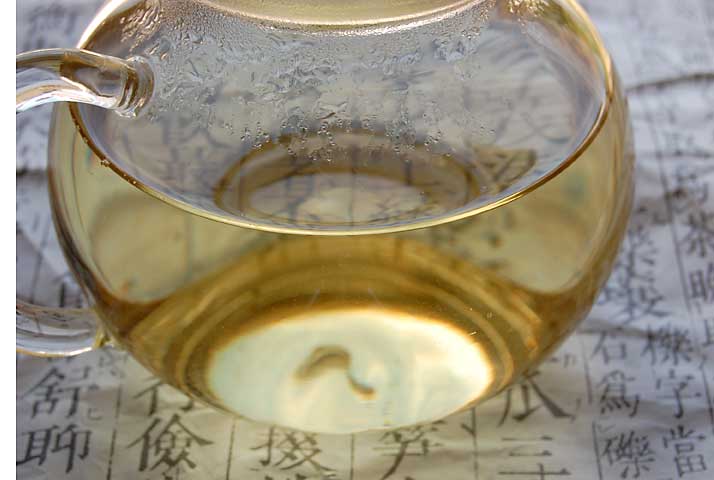
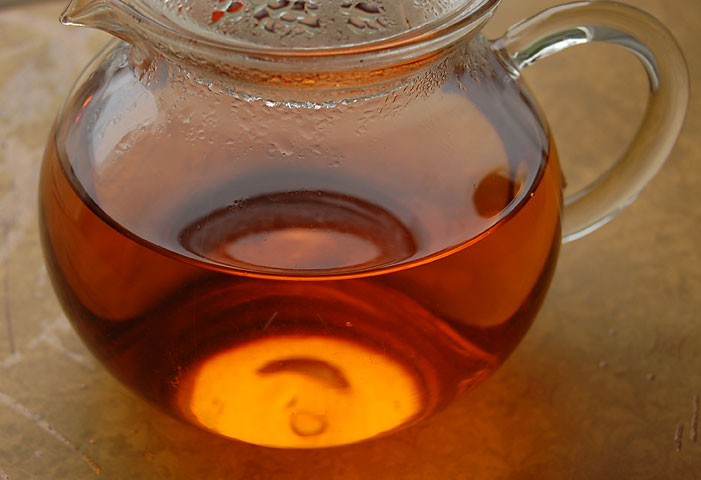
I steeped the leaves for 4 minutes in 190 degree F water. You can see how the curled leaves are beginning to unfurl, however, they are not fully unfurled until after the 3rd or 4th infusion. This makes them ideal for multiple steepings.

The aroma carries wisps of a light floral scent.
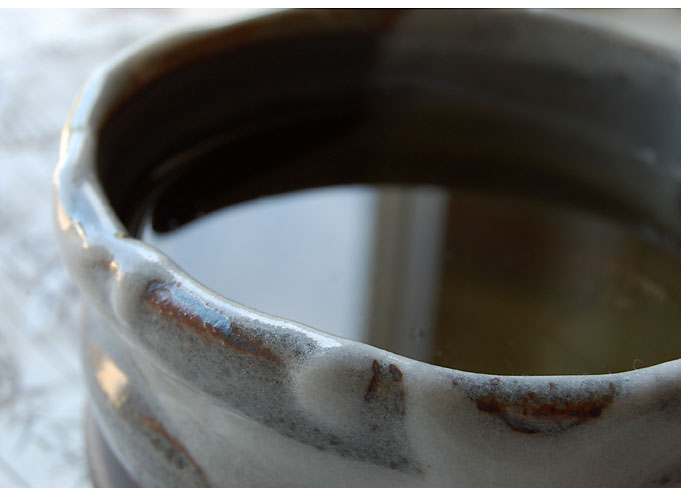
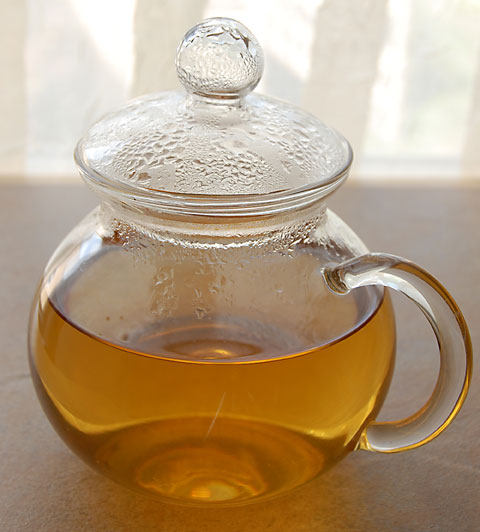
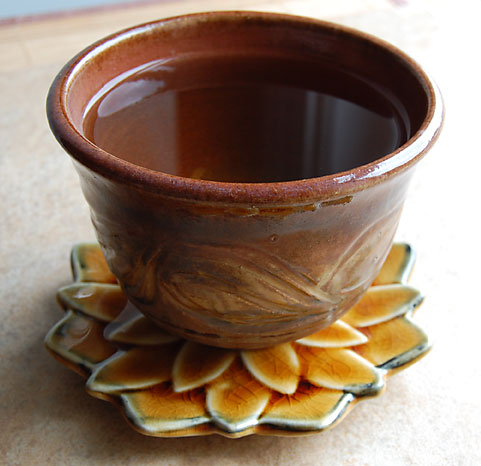
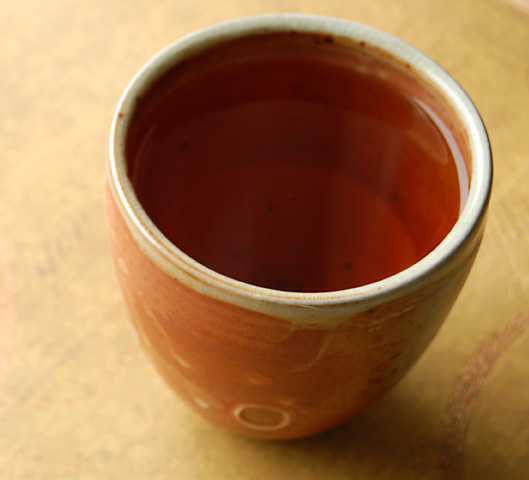
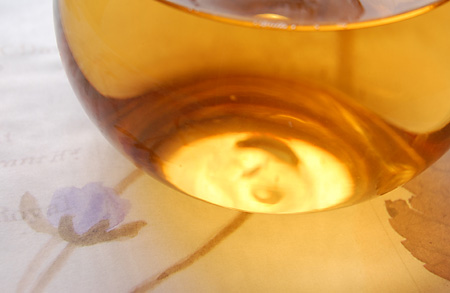
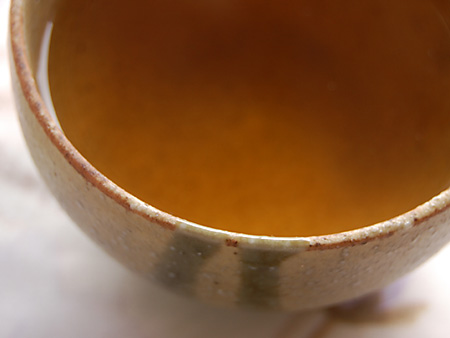
Its pale gold liquor has a honeyed flavor with notes of flowers and fruit. A magnificent tea!

This past week, our weather has turned cooler and less humid and, yes, there is a very faint hint of the changing season to come. A friend of mine told me that August always makes her sad as she feels the cool winds of change coming our way. Still, our weekend temps are forecasted in the 80s and I will soak up this rich, sunshine-y warmth as long as I can by taking a long, meditative walk on the bike path near my home.

How are you enjoying your August?

“People usually consider walking on water or in thin air a miracle. But I think the real miracle is not to walk either on water or in thin air, but to walk on earth. Every day we are engaged in a miracle which we don’t even recognize: a blue sky, white clouds, green leaves, the black, curious eyes of a child — our own two eyes. All is a miracle.” ~Thich Nhat Hanh

Saturday Morning Tea

Happy August to you, my tea friends, and welcome to Oolong month here at Art and Tea!  For the 4 Saturdays in August, I will be exploring various Oolong teas from both China and Taiwan.

As do black, green and white teas, Oolong tea leaf comes from various native subspecies of the Camellia Sinensis plant. The word Oolong, or Wulong, translates to dark or black dragon. Some say this is because the twist given to an Oolong leaf during processing resembles the silhouette of a dragon.

This morning’s tea is a Chinese Oolong called Wuyi Golden Guan Yin. Grown in the Wuyi mountains of northern Fujian province, the leaf is dark and very bold.

Traditionally made from larger tea leaves plucked as a bud with a set of up to 3 leaves, Oolongs are the most complicated tea to manufacture. This is because of the greater number of processing steps over a longer period of time from plant to cup. There is a great advantage to this longer processing time, however, as it gives opportunity for more personal interpretation, or artistry, when creating the tea.

Unlike fully oxidized black teas or unoxidized green teas, Oolong teas are semi-oxidized. Some say that Oolongs are a cross between a black tea and a green tea but this is not the case at all. They are their own unique category of tea.

It’s amazing how such a dark leaf can yield such a light golden liquor. As I lifted the infuser basket from my glass teapot, a honeyed fruit fragrance filled my senses. The flavor is quite sweet with a distinctive woodsy character. Notes of apricot and a hint of chestnuts round out the flavor.

As I sip from my cup of Oolong tea, a cool breeze dances through my windows, beckoning my outside for a long meditative walk.

Join me next week as I continue my explorations with a cup of Oolong tea from Taiwan (Formosa)…

“The first cup caresses my dry lips and throat,

The second shatters the walls of my lonely sadness,

The third searches the dry rivulets of my soul to find the stories of five thousand scrolls.

With the fourth the pain of past injustice vanishes through my pores.

The fifth purifies my flesh and bones.

With the sixth I am in touch with the immortals.

The seventh gives such pleasure I can hardly bear.

The fresh wind blows through my wings

As I make my way to Penglai.”

~Lu Tang, poet (Tang Dynasty)

Saturday Morning Tea on Sunday

Yesterday was a very special day for me. My parents arrived from Michigan for a visit and to see my new place. They were due to get here sometime in the afternoon but arrived in the morning just as I was sitting down to do my tea post! As we are having so much fun chatting and visiting, I will quickly leave you with my photos from yesterday’s cuppa, a Chinese Oolong called Tie-Guan-Yin Second Grade. With its woodsy, nutty flavor and notes of honey, it’s the perfect tea if you’re looking for a “Chinese restaurant” type of tea. Enjoy!

“Surround yourself with people who are going to lift you higher.”

~Oprah Winfrey

Saturday Morning Tea

I awoke this morning to rumbles of thunder and teeming rain that have continued on into the morning. A sudden cool breeze lifts my curtains from the windows revealing sharp flashes of lightning that dance across a low sky filled with bruised clouds. As I wrap myself in a warm robe,  I reach for a black tea but not a typical black tea. It is a black tea that actually tastes like an Oolong tea.

From the Jun Chiyabari estate in Nepal, its leaf designation is one that I have never seen before, GHRHT. Meaning Golden Hand Rolled Himalayan Tips, the picking is of only the first two leaves and a bud from the end of the stems, the tender new growth. The tea is created from a secret process that results in a black tea with the characteristics of a fine Silvertip Oolong tea.

Since the tea is grown in the Himalayan mountains in the same part of the world as Indian Darjeeling tea, I steep the leaves for 3 minutes in boiling point water.

As I lift the steeped leaves from my teapot, a rich, fruity aroma greets me. Mmmm…

The wet leaves reveal whole intact leaf in various stages of unfurling from the hand rolling that was done during their processing.

The deep amber liquor is quite sweet with notes of apricot and peach and a whisper of rosemary in the finish. A colleague of mine, with a very fine palate for tea tasting, has also detected fennel notes in her cup.

For this special tea, I bring out my teamug purchased in Arroyo Seco, NM last fall. You can see the fingertip imprints of the potter on the side of the mug from when they dipped the mug in glaze. That is my favorite part of this beautiful russet and charcoal teamug.

While I had originally thought that I’d be able to work on removing a bush stump from my garden today and prepare the soil with some loam for planting, it looks like it’s going to be an indoor day. Oh dear, I guess I’ll just have to play in my studio then!

Happy Mother’s Day!

“Women need solitude in order to find the true essence of themselves: that firm strand which will be the indispensable center of a whole web of human relationships.”

~Anne Morrow Lindbergh

Saturday Morning Tea

I must admit that I chose this morning’s tea just for the name alone – Water Fairy Oolong, also known as Shui Xian. Grown in the Fujian province of China, the huge, dark chocolate brown leaves are hand-rolled to resemble a frog’s leg.

Of course, there’s a story about how this tea got its ethereal name. I love tea stories so gather round, my friends, teacups in hand…

About 900 years ago, a Song dynasty emperor was traveling with his entourage to southern China to inspect a tea garden. It was a hot summer’s day and everyone soon became very thirsty. They searched high and low for water but could find none. One of the scouts spotted a bush with bright green leaves and his extreme thirst led him to place one of the brightly colored leaves in his mouth. The leaf was very juicy and he found that it quenched his thirst as he chewed it. Soon, everyone was chewing the leaves of this magical plant. Of course, it was the tea plant that produced Shui Xian tea. So, the emperor named the tea “Water Fairy” for its magical thirst quenching powers.

The leaves do look thirst quenching, don’t they?

I steeped them for 4 minutes in 190 degree F water. Even though the leaves look very dark, they are still not oxidized as much as a black tea is so it’s best to use a water temp below boiling point.

This tea is well known for its “narcissus” fragrance. The light amber liquor is silky smooth on my tongue with a lingering honey sweetness felt in the back of my mouth for a long time after sipping. Notes of chestnut and delicate peach round out the flavor.

Today is a day to relax at home and work on some art projects – making a polymer button for my finished Winter Woods vest and starting my winter palette free-form bracelet.

What tea are you enjoying today?

Whatever special nests we make – leaves and moss like the marmots and birds, or tents or piled stones – we all dwell in a house of one room – the world with the firmament for its roof – and are sailing the celestial spaces without leaving any track. ~John Muir