Wow, we made it through the month of February! Time is marching on and we are poised to enter the month when Spring officially starts. Hoo-ray!
There are already small signs of Spring’s imminent arrival.
It’s light out when I rise at 6am every morning.
Where there was once a hushed silence there is now birdsong here and there.
When I go outside, the air feels softer, milder.
Yesterday I saw the tip of a hyacinth gently nudging its way up through the earth.
People are smiling more…
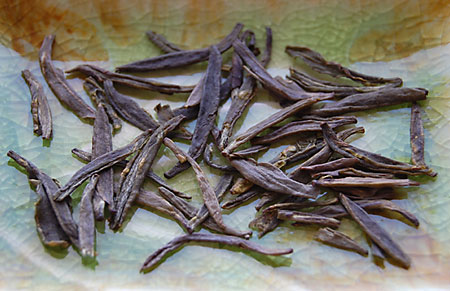
This morning’s tea is a China green called Sparrow’s Tongue Lung Ching. Grown in Zhejiang province, its name comes from its resemblance to bird beaks.
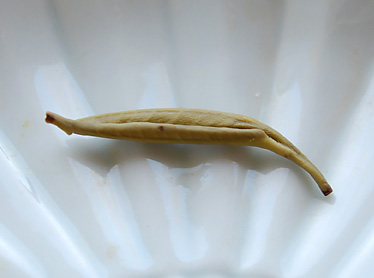
This little beak is closed for the moment. The leaf is a fine plucking of the first 2 leaves and a bud at the tip of each tea bush stem, the new tender growth. It is minimally processed so the leaf retains its original appearance. It looks freshly plucked, a beautiful spring green.

Lung Ching tea is a popular green tea from China. You can read more about it in one of my previous posts here.

I steeped the leaves for 3 minutes in 180 degree F water. The aroma is very clean, fresh and light. The tea liquor is a pale muted yellow with a smooth vegetal taste. There’s something about this tea that is very calming.

Can you see the whisper of steam rising from my teabowl? I love its speckled glazing. It reminds me of the speckling on a birds egg.
As I gently sip my tea, I listen to a CD called “Silk and Bamboo”, an ensemble by harpist Patricia Spero and flautist Tim Wheater. Here is the description from the CD cover:
“Silk and Bamboo brings together the meditative sounds of the traditional silk strings of the Chinese Harp or Cheng and the wonderful sounds of bamboo and wooden flutes.”
The achingly beautiful sounds of the harp and flute weaving their magic together is lovely to listen to while sipping this gentle green tea.
A moment of serenity after a busy week…



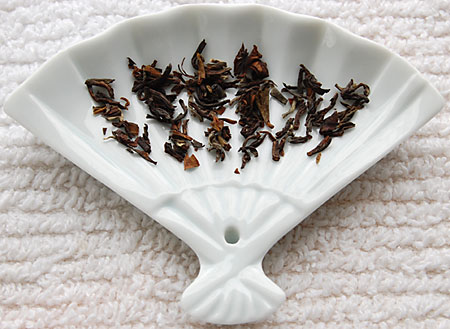
 I steeped the dark leaf for 3 minutes in 212 degree F (boiling) water, resulting in a glowing amber liquid. The thing that I like best about Darjeelings from the Namring estate is that they always have that classic, rich Darjeeling aroma and flavor. Sometimes I am in the mood for an astringent tea that echos in my mouth for awhile after I’ve taken my first sip. This is perfect, with nutty almond, fruity richness. Second flush Darjeelings are harvested in the summertime and are usually fuller with the more mature taste of the summer leaf, as opposed to first flushes, harvested in the springtime.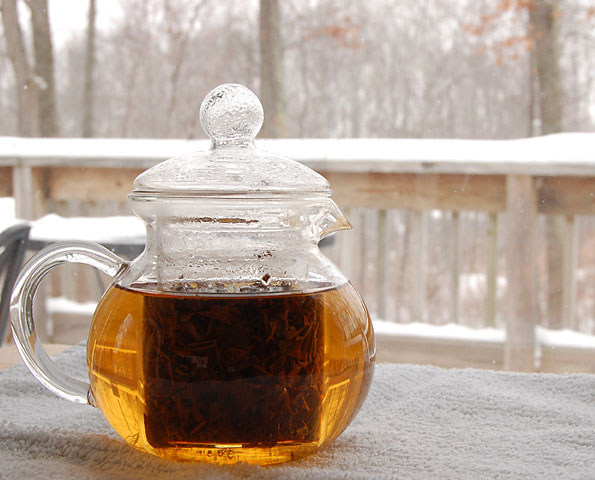
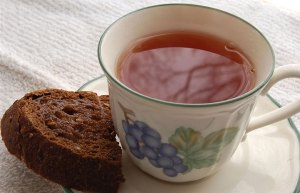 As I was pouring my cup of tea, Dave offered me a piece of pumpernickel toast. It went perfectly with the rich flavor of this tea. The bare tree branches of our backyard trees look like they’d like to warm themselves in my steaming cup. This is the time of year when I never feel quite warm enough. My favorite spot is next to the fireplace with my hands perpetually wrapped around a hot mug and a good book opened in my lap.

 Art and Tea