Saturday Morning Tea

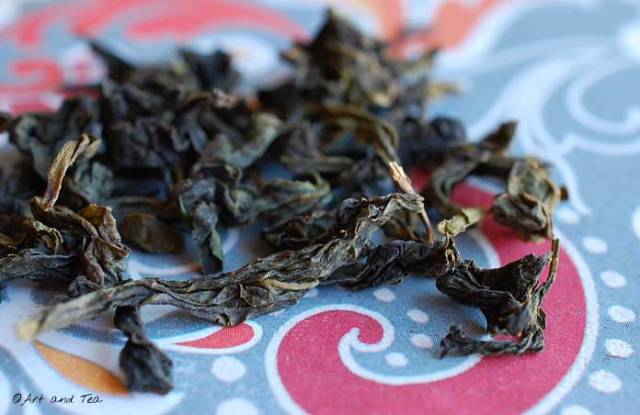
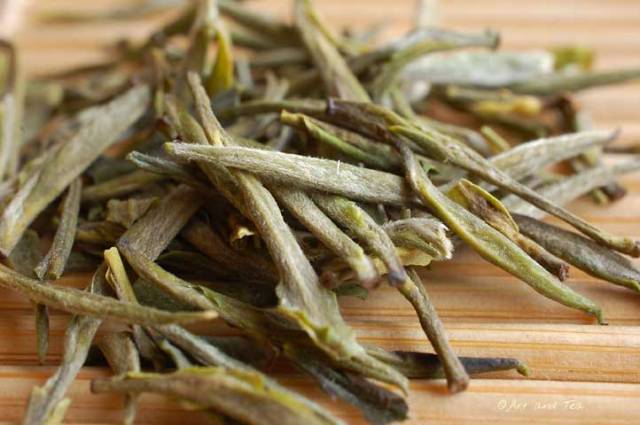
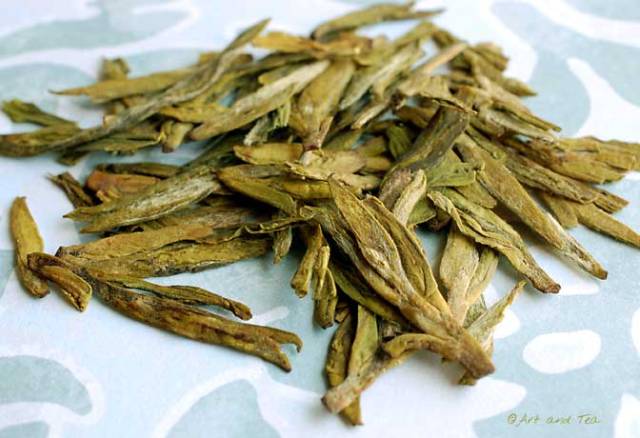
Long Jing Te Ji Dry Leaf 10-26-13

Good morning, dear tea friends! This morning’s tea is a well-known China green tea called Lung Jing, or Lung Ching, this particular lot called Lung Jing Te Ji. Te Ji means “superior grade.”
Long Jing Te Ji Steep 10-26-13

Lung Jing (Lung Ching, Long Jing) tea has a distinctive flat shape due to its unique processing. This flat shape is intentionally caused by the motion of the charcoal pan when the leaf is heated/fired to stop oxidation. Its name means “Dragon’s Well”, referring to the place where it has been traditionally grown. Legend has it that a Taoist priest in the 3rd century advised the local villagers to pray to the dragon of a local well to bring rain and end their drought. It worked and the well was named after that dragon. The Dragon’s Well monastery still stands in that spot to this day.

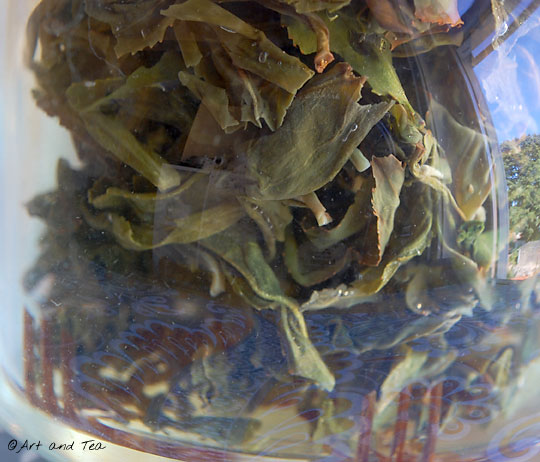
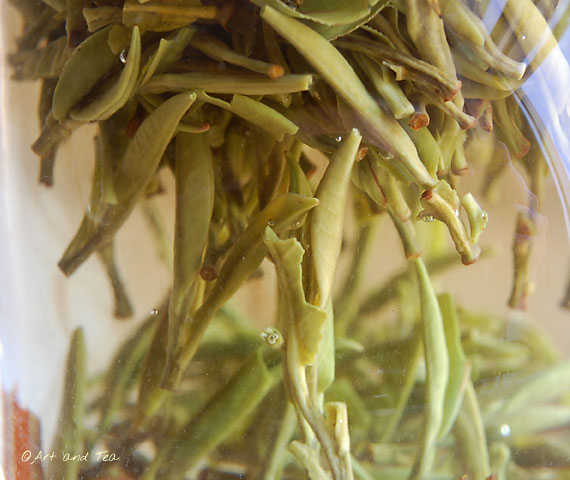
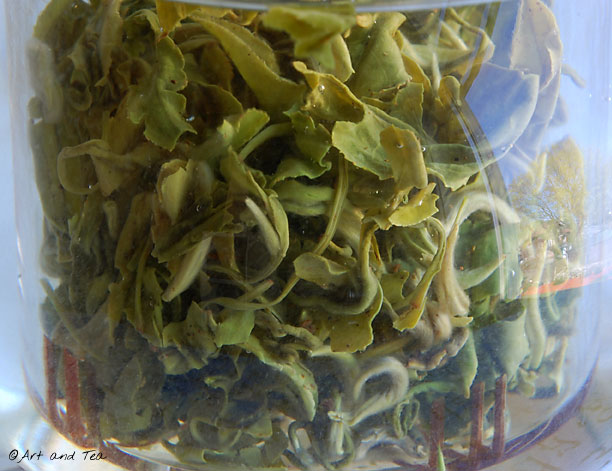
Long Jing Te Ji Wet Leaf 10-26-13

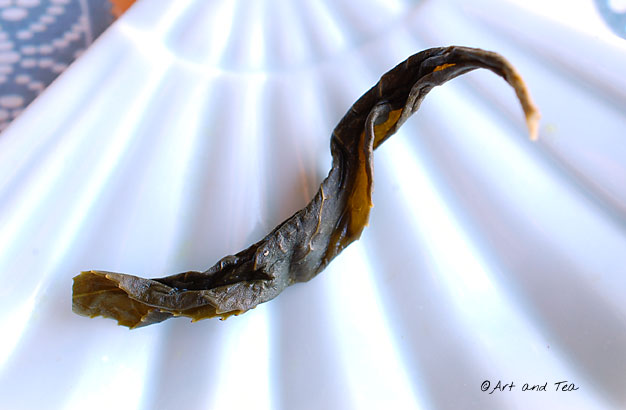
I steeped the leaf for 3 minutes in 180F water. After steeping, the leaf softened and revealed the beautiful, individual bud sets of this fine tea.

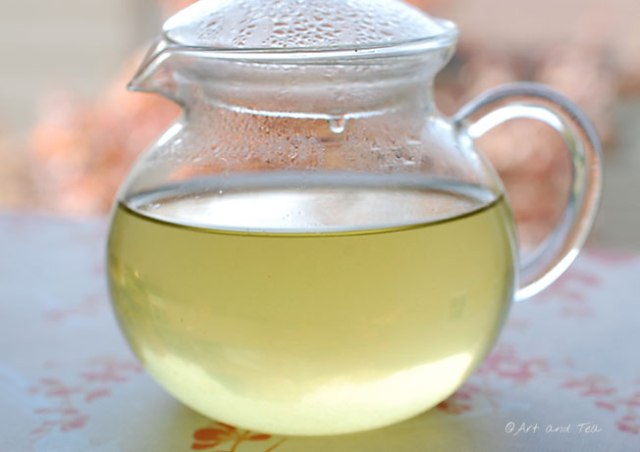
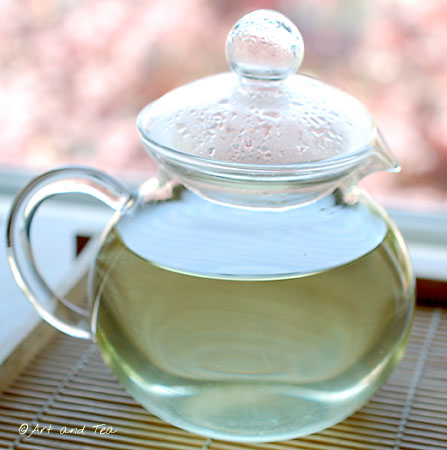
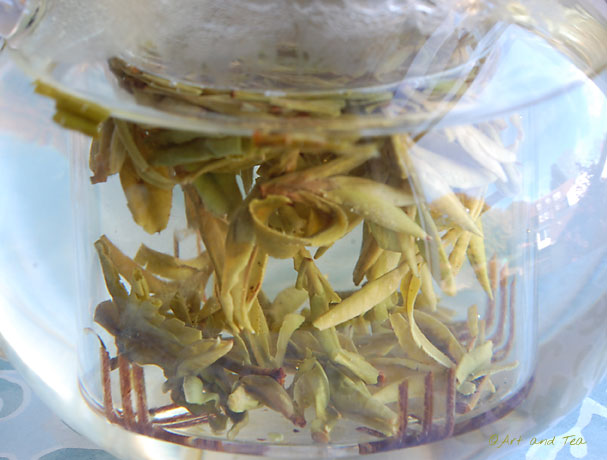
Long Jing Te Ji Teapot 10-26-13

The pale yellow-jade tea liquor has a nutty aroma with a light vegetal undertone. The flavor is clean and refreshing with notes of chestnut and sweet baby corn. The smoothness yields to a whisper of tang in the finish.

I could drink this lovely green tea all day.

Long Jing Te Ji Teabowl 10-26-13

I pulled out my Volmod Ceramics tea bowl to hold and honor this most excellent tea. I purchased it on a trip to Saugatuck, MI with my parents a couple of summers ago. So, not only do I get to enjoy a delicious tea this morning but in holding my tea bowl in my hands, I remembered some warm and wonderful memories.

Have a great week!

“Nothing is ever really lost to us as long as we remember it.”

~L.M. Montgomery
Saturday Morning Tea

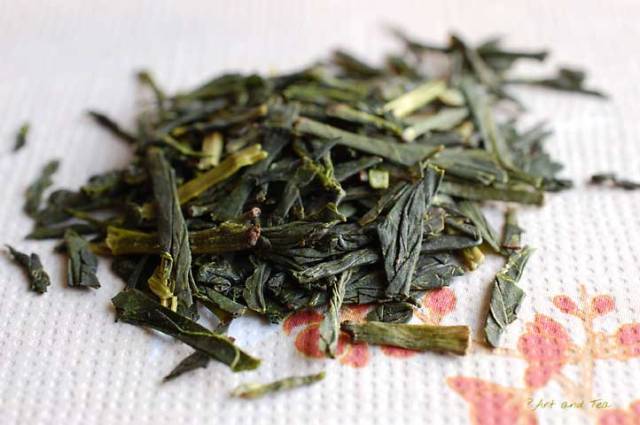
Iccha Kariban Dry Leaf 10-19-13

Good morning, dear tea friends! Another week has come and gone and we’re savoring some glorious fall weather here in New England. This morning’s tea is a Japanese green tea called Iccha Kariban. Its name loosely translates to “flower fragrance”.

Iccha Kariban Steep 10-19-13

Grown in the Kagoshima prefecture, located on the southwest tip of the island of Kyushu in Japan, this tea is the result of experimenting with select cultivars to create a unique batch of tea. It has been likened to a Taiwanese Pouchong.

Iccha Kariban Wet Leaf 10-19-13

I steeped the leaf for 3 minutes in 175F water. The wet leaf looks like steamed greens, which I have found is unique to Japanese greens.

A gentle floral fragrance drifted up from my glass teapot as I poured my first cup.

Iccha Kariban Teapot 10-19-13

The cup is smooth and light with flavor very much like a floral Pouchong or a lightly oxidized Oolong, like a Jade or Spring Dragon. That said, its flavor is much more vegetal with a little brothiness, distinguishing it as a Japanese green tea.

Iccha Kariban Teamug 10-19-13

I talk to many folks who would like to try a green tea for its health benefits, however, they’re not a fan of its vegetal, grassy taste. This would be a great tea to try as the pronounced floral quality places the vegetal taste more in the background than being one of the primary flavor notes.

I think the Tea Masters have done a lovely job of coming up with a unique Japanese green tea! Have a wonderful week.

“Human life is inherently creative. It’s why we all have different résumés. … It’s why human culture is so interesting and diverse and dynamic.”

~Ken Robinson

Saturday Morning Tea

Pouchong Dry Leaf 09-14-13

Good morning, dear tea friends! I had the most interesting experience yesterday, which I’d like to share with you. As I was driving home from work, I noticed the buildup of huge puffy clouds in the late afternoon sky, however, the sun was still shining brightly on my path. All of a sudden, the heavens opened up and the rain was torrential, pouring down like glittering drops of diamonds through the sun’s rays. It was a magical moment, one that was soon followed by the appearance of a rainbow up in the dark sky as the rain passed. A moment that seemed suspended in time, just like my special moments with a cup of tea in hand.

In my teabowl this morning is a Pouchong tea from Taiwan, called Formosa Pouchong Select.

Pouchong Tea Steeping 09-14-13

A Pouchong tea is a very lightly oxidized green tea. Because of the oxidation, some consider it an Oolong tea. I’d like to think of it as being in its very own category, a unique and distinctive tea. The word “pouchong” means “the wrapped kind”, referring to the ancient practice of wrapping the leaves as they were drying.

Pouchong Tea Wet Leaf 09-14-13

I steeped the leaves for 3 minutes in 180F water. As you can see, the leaf is enormous, likening it more to an Oolong tea than a green tea. They barely unfurled while steeping. These bold leaves are perfect for resteeping, if you wish.

A lovely floral fragrance drifted up from my glass teapot as the leaf was steeping.

Pouchong Tea in Teapot 09-14-13

The pale jade tea liquor is gently fragranced with a floral note, which carries over into its taste and notes of fruit add to its complexity. It fills my mouth with its rich buttery flavor, a wonderful experience.

For tea lovers that enjoy scented floral teas and lightly oxidized Oolongs, I highly recommend sampling this tea. And for those looking for a green tea without heavy vegetal notes, this is perfect.

PouchongTeabowl091413

Today I’m going over to the local garden center to check out their selection of spring flowering bulbs. It’s that time of year again to start planning next year’s garden. Tonight a group of us are headed over to Palette’s in Natick to celebrate a dear friend’s birthday. Palettes is a “painting bar” where you can spend an evening painting a masterpiece while sipping your favorite beverage. I always love their fruit and herbal infused water. Last time it was strawberry basil. Mmmm!

Thanks for joining me and sharing a cup of tea today. Stay tuned for next week when I will review either a new second flush Darjeeling or an Assam, newly arrived from India. Cheers!

“And above all, watch with glittering eyes the whole world around you because the greatest secrets are always hidden in the most unlikely places. Those who don’t believe in magic will never find it.”

~Roald Dahl

Saturday Morning Tea

JunShanDry060113

Good morning, dear tea friends! I did something a little different with my morning tea today. You’ll see very soon…

I’ve chosen a spring green tea from China this morning, called Pre-Chingming Jun Shan Yin Zhen. As you can see, it was harvested in the spring before Qingming day. Its name translates to Jun Mountain Silver Needle. Described as “produced at Jun Mountain in the Dongting Lake region of Hunan, this tea is made from traditional Camellia sinensis cultivars.

JunShanSteep060113

I steeped the beautiful, hand processed leaf in my little glass teapot for 3 minutes in 180F water. I used double the amount of leaves that I normally would, about 4-5 teaspoons per cup. You’ll see why soon…

JunShanWet060113

I am in love with this leaf.

It has been processed entirely by hand and gently dried/roasted in baskets over a charcoal fire.

JunShanTeapot060113

The tea liquor is a delicate pale green with a fresh, vegetal aroma reminiscent of baby corn.

JunShanGlassFull060113

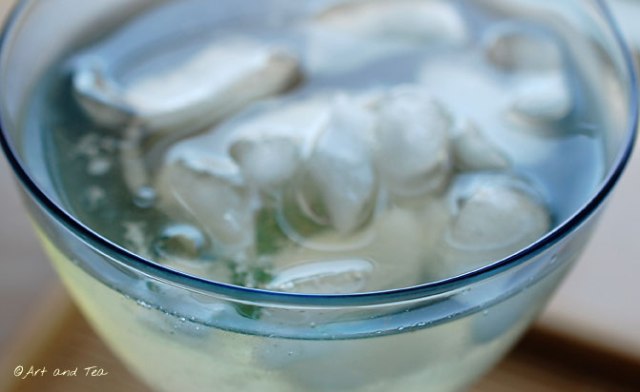
And here is why I used double the amount of leaf! While I do love my hot tea, I just wanted something cool and refreshing in this 90+ degree heatwave we’re having. I filled a Pyrex measuring cup with ice and poured in my green tea, then poured into my Mermaid glass.

JunShanGlassCl060113

The flavor is light and cool with whispers of sweet corn and flowers. Very refreshing!

It’s too hot to putter around in my garden today so I’ll head out to someplace air conditioned that serves ice cream. Mmmm…

As always, thanks for stopping by and sharing a cup/glass of tea with me. Have a great week!

“My love for ice cream emerged at an early age – and has never left!”

~Ginger Rogers

Saturday Morning Tea

PCMPiLoChunDry042713

Good morning, dear tea friends! This week I’m moving away from Indian teas and have steeped up a China green tea in my glass teapot. A China tea whose leaves were still on the bush, unfolding and reaching towards the sunlight a mere few months ago.

I introduce you to Pre-Chingming Pi Lo Chun.

PCMPiLoChunSteep042713

The name Pi Lo Chun translates to “green snail spring”, so named because the leaf is rolled into tight spiral shapes resembling snail shells. I have read that they roll the leaf this way to retain its freshness.

As I’ve shared with you before, Pre-Chingming teas are harvested before the festival of Qingming (Chingming), usually celebrated on the 15th day from the Spring Equinox. Any teas harvested before that date are referred to as Pre-Chingming teas. In other words, harvested in very early spring.

PCMPiLoChunWet042713

Just as this tightly rolled leaf has unfurled and opened up to reveal its beauty, spring is a time of opening up, of blossoming, when everything comes back to life. I feel infused with new energy at this rebirth time of year. How about you?

This tea tastes like a fresh spring day.

PCMPiLoChunTeapot042713

The words that come to mind as I gently sip from my tea bowl are:

delicate. pale. fresh. new.

PCMPiLoChunTeabowl042713

The pale spring green tea liquor gives off a fresh vegetal fragrance. The flavor is also fresh and vegetal with a natural sweetness that softly greets my mouth.

This is the perfect cuppa to celebrate the spring. What tea are you enjoying in your cup today?

“Can words describe the fragrance of the very breath of spring?”

~Neltje Blanchan