Saturday Morning Tea

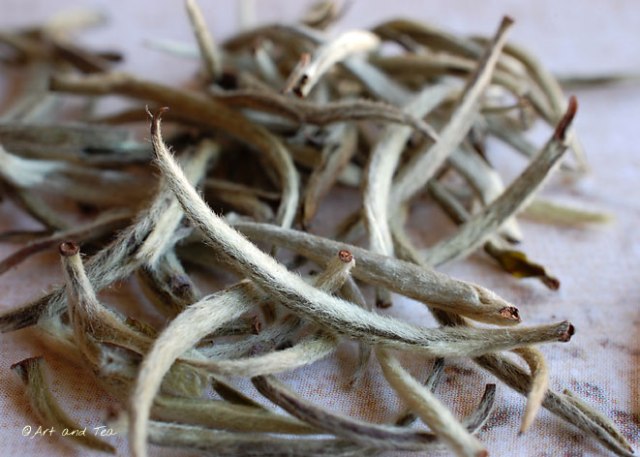
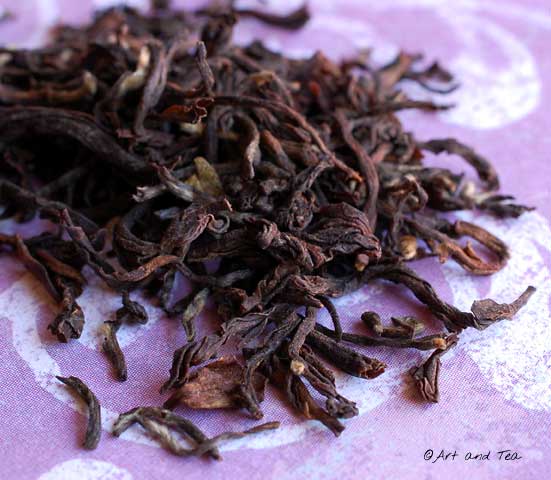
Jungpana Estate 2nd Flush Darjeeling Dry 09-28-13

Good morning, dear tea friends! With almost a week past the autumnal equinox, the shadow of darkness falls earlier in the evenings. That said, when the sun is shining, the days are glorious and the trees look dipped in fire. I love this autumn time of year.

Speaking of glorious, my morning tea is a high-end second flush Darjeeling from the Jungpana Estate. The price per packet might take your breath away, however, the price per teacup is only .76 and compared with a latte price from the local Starbucks, it’s quite a bargain for such an amazing cup.

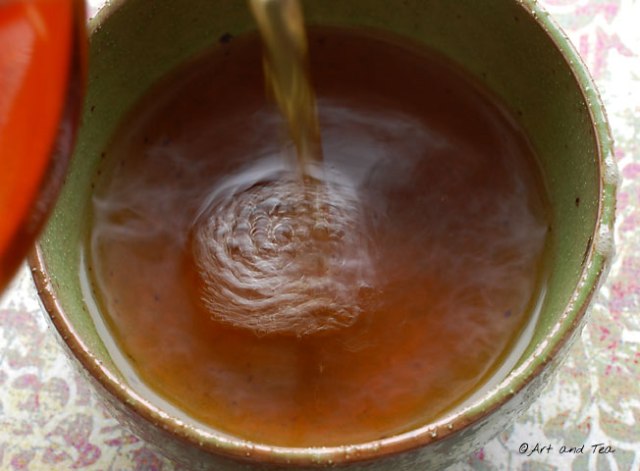
JungpanaEstate 2nd Flush Darjeeling Steep 09-28-13

Referred to as “an island in the mountains”, the Jungpana Estate is located in a rugged terrain surrounded by pine forests in northeastern India. There is a sad legend on how the area received its name. From their website:

Legend has it that many years ago a British hunter was roaming the Himalayas with his faithful gurkha Jung Bahadur by his side when they were attacked by a leopard.

In trying to save his master Jung Bahadur was severely mauled before his master dispensed with the beast. Jung Bahadur was weak and thirsty and asked his master for ‘pana’, or, water. He was carried to a nearby stream and given water to drink but died in his master’s arms soon thereafter.
Eversince that moment, the area has been known as JUNGPANA, or, where Jung Bahadur had his last drink of water. The tea estate planted later, carries the name till today.
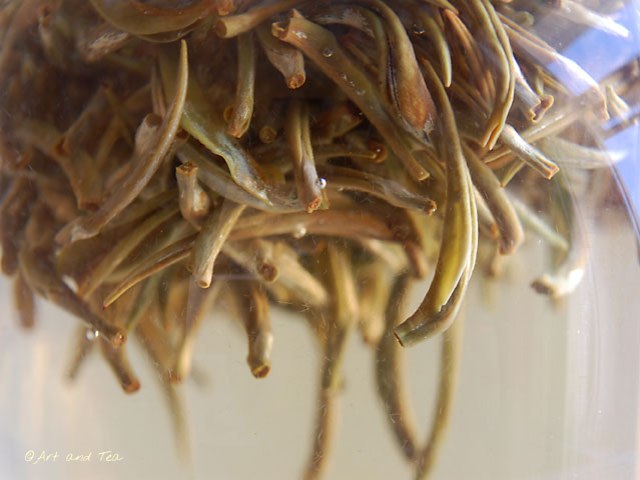
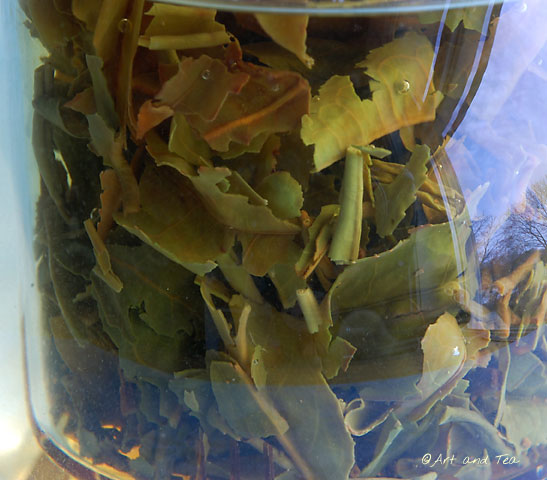
Jungpana Estate 2nd Flush Darjeeling Wet 09-28-13
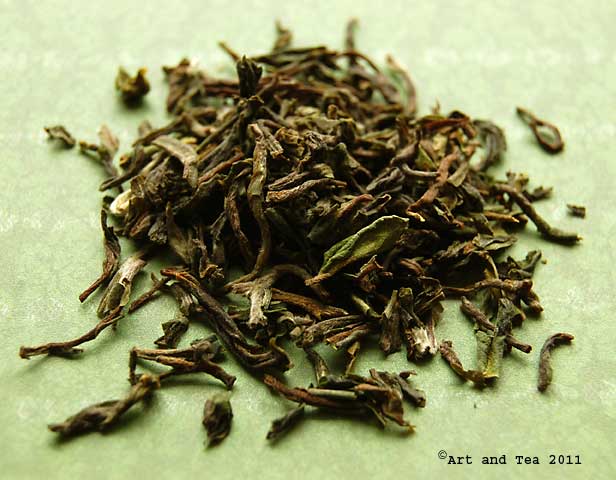
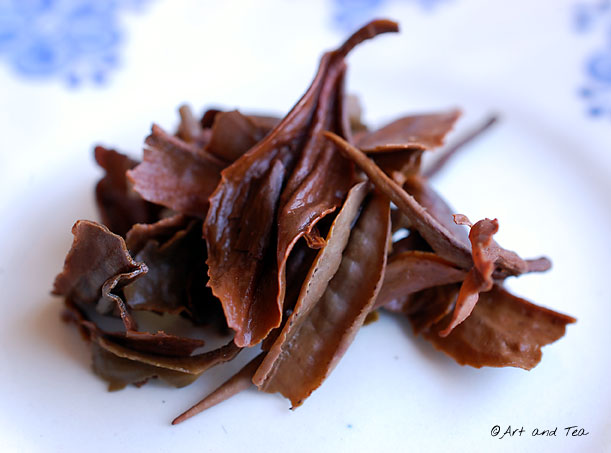
The leaves consist of new tip growth and leaf, some intact, some broken. I steeped them for 3 minutes using boiling point (212F) water. As I lifted the infuser after steeping, I noted the fragrant aroma of peach nectar rising from my glass teapot.
JungpanaEstate 2nd Flush Darjeeling Teapot 09-28-1
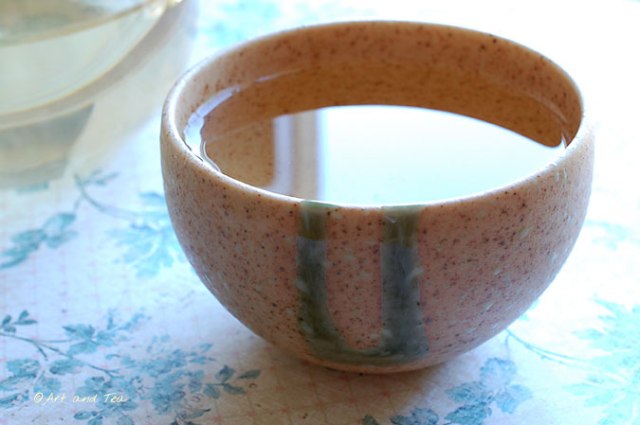
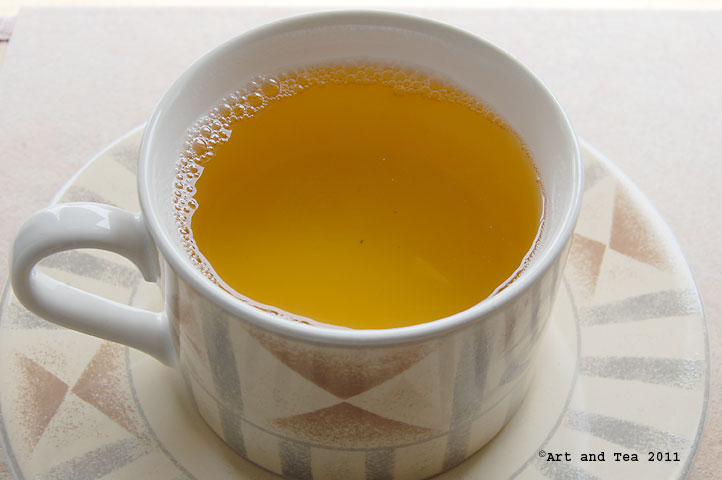
The amber-colored tea liquor is rich and fruity with pronounced notes of peach and muscatel. As the tea cooled, some toasty nuances came out along with a gentle astringency in the finish.
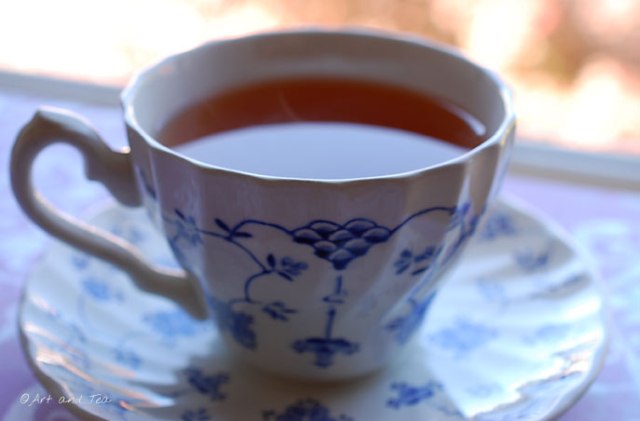
Jungpana Estate 2nd Flush Teacup 09-28-1
Tomorrow I’m going on a fabulous fall adventure – apple picking with family and friends. Mmmm, I can already smell that apple pie baking…
Have a wonderful week filled with many cups of delicious tea!
“Delicious autumn! My very soul is wedded to it, and if I were a bird I would fly about the earth seeking the successive autumns.”
~George Eliot

Saturday Morning Tea

Puttabong2ndFlDry071313

Good morning, dear tea friends! It’s wonderful to be back here with you enjoying a cup of tea again. My first 2nd flush Darjeeling tea review from the 2013 season, this selection is from the Puttabong Estate.

Also known as the Tukvar Estate, it was first planted in 1852 and is nestled in the foothills of the Himalayan mountains near Kanchendzonga peak. With altitudes ranging from 1,500 to 6,500 feet above sea level, it is one of the highest elevation tea gardens in Darjeeling district, in northeastern India.  Its tea plants consist mainly of clonal bushes and China jat, meaning tea bushes with origins from China.

Puttabong2ndFlSteep071313

Look how dark the tea leaf and steeping liquor is when compared to a first flush Darjeeling, whose color has been compared to apple juice. This tea was harvested in later spring as compared to the first flush early spring harvest. What a difference a few months can make!

Puttabong2ndFlWet071313

The dark chocolate color of the leaf contains no green bits as a first flush does.

This tea has an interesting leaf designation called Kakra. I’ve read that this word translates to “dehydrated leaf”. Free of pesticides, the tea leaf is allowed to be attacked by a green fly, which looks similar to an aphid. The fly bites the leaf and starts sucking on its juices. This causes the leaf to start to oxidize on the plant. Only the leaves that have been exposed to the green fly, identified by their yellowish color, are plucked. So, in essence, the leaf undergoes a double oxidation – on the plant and then during its regular processing. Isn’t that cool?

Puttabong2ndFlTeapot071313

I steeped the leaves for 3 minutes in boiling point (212F) water. The glowing dark-amber tea liquor has a rich aroma of fruits and chestnuts, reminiscent of a darker Oolong tea. This brings up an interesting point as I’ve read that the tea leaf that goes on to become Oriental Beauty Oolong from Taiwan has also been exposed to the ministrations of the green fly.

Puttabong2ndFlTeabowl071313

I find the flavor, whose richness literally bursts in my mouth, also reminiscent of an Oolong tea in its nutty, almost woody quality. I also detected faint notes of fruit in the smooth cup.

We’ve been getting rain almost everyday here in New England this past week  and the gardens are bursting with rich color, just like the rich flavor of this tea. In my garden, I have coneflower, hydrangea, roses, tall phlox, astilbe and even some chrysanthemum starting to bloom. I hope that you’re enjoying the season wherever you may be with lots of cups/glasses of tea to keep you company. Have a wonderful week!

“Be gentle with yourself. You are a child of the universe no less than the trees and the stars; you have a right to be here. And whether or not it is clear to you, no doubt the universe is unfolding as it should.”

~Max Ehrmann

Saturday Morning Tea

VictoriasPeakWhiteDry061513

Good morning, dear tea friends! The pollen has been quite high in our area this spring, causing all sorts of allergy symptoms with many I know. Besides the upper respiratory symptoms, it’s really been knocking me out energy-wise so this morning I’m feeling the need for some quiet, restful meditation time with a cup of white tea.

In my cup is a white Darjeeling tea called Victoria’s Peak Estate White Tea.

VictoriasPeakWhiteSteep0615

This tea was grown in the Victoria’s Peak section of the Steinthal Estate in Darjeeling, located in northeastern India. Even though it was grown in India, it has been entirely hand processed in the style of a Chinese white tea called Yin Zhen Downy White Pekoe. You can read about that China white tea here.

VictoriasPeakWhiteWet061513

The leaf is all new growth from the tea plant, the buds, and, since it’s been entirely hand processed, it remains in pristine condition from the day it was plucked. Gorgeous. They remind me of little smiles.

I steeped the leaves for 4 minutes in 180F water.

VictoriasPeakWhiteTeapot061

The tea steeps up to a whisper of color in my glass teapot, like a pale winter wheat. The aroma is delicate with wisps of sweet melon.

VictoriasPeakWhiteTeabowl06

The silky smooth flavor has a clean taste with notes of melon and a sweetness like sugar cookie, which becomes more prominent as it cools.

A perfect cuppa to slow down with, to sit with and sip gently. ..

“The mind can go in a thousand directions, but on this beautiful path, I walk in peace. With each step, the wind blows. With each step, a flower blooms.”

~Thich Nhat Hanh

Saturday Morning Tea

Glenburn1stFl2013Dry

Good morning, dear tea friends! I’m back this week to share another cup of tea but with a heavy heart that grieves for all those affected by the unspeakable violence that took place in our beloved city and state this week. I pray for healing and for justice and to Martin, Lingzu, Krystle and Sean – you will not be forgotten.

This morning’s tea is a 2013 first flush Darjeeling from the Glenburn Estate. Three weeks ago, I reviewed another first flush from last year’s harvest at the Glenburn Estate. This 2013 tea is lot number DJ-17, assigned by the tea estate.

I found the leaf on this tea quite interesting in that it was a combination of various colors – russet, olive, spring green, dark brown – and sizes – whole intact leaf, tips and huge broken pieces.

Glenburn1stFl2013Steep

I steeped the leaves for 4 minutes, pushing the brewing time from my normal 3 minutes for a Darjeeling tea.

Glenburn1stFl2013Wet

The dark golden tea liquor has a light floral aroma. The flavor is smooth (even at 4 minutes!) and sweet with pronounced floral notes and a hint of that tropical banana note I find in a lot of first flushes. The finish has a citrus tang to it that lingers in my mouth. In my next steeping, I might even push the time on this light-bodied black tea a little more to see what happens.

Glenburn1stFl2013Teapot

As the tea cooled in my teacup, I found the flavor lightened up somewhat. I was surprised at how smooth the liquor is even when cooled.

Glenburn1stFl2013Teacup

As I slowly sip my tea and gaze out the window, I notice peeks of brilliant blue sky here and there amidst the dark gray clouds.

“Truly, it is in darkness that one finds the light, so when we are in sorrow, then this light is nearest of all to us.”  ~Meister Eckhart

Saturday Morning Tea

Good morning, dear tea friends! As promised last week, here is my original Tumsong Estate first flush Darjeeling tea post from May 2011.

The skies may be gray outside my window but I am inside enjoying sunshine in my teacup – a first flush Darjeeling from the Tumsong estate.

I have read that the Tumsong tea garden was first planted in 1867 around a temple devoted to the Hindu goddess Tamsa Devi. Devi is the Sanskrit word for goddess.

When I opened the tea packet, an aroma of fresh flowers and sugar cookies greeted my senses.

I steeped the bright olive tea leaves for 3 minutes in boiling point (212F) water.

From the Tumsong tea estate:

“Tumsong’s teas are known to be among the best in the Darjeeling area and command high prices at auctions. Perhaps the first credit for this should go to the goddess, on whose land the garden grows. The goddess Tamsa presides over this serene and surreal landscape and fills the atmosphere with harmony. In the area, Tumsong is often referred to as the garden of happy hearts.”

The leaves may be intensely green but the liquor they produce is a golden yellow, creating pearl bubbles of light in my glass teapot.

I have also read that the entire tea garden faces some of the highest ranges in the Himalayan mountains and receives a constant, cool breeze sweeping across the tea bushes. This breeze causes the plants to grow gradually, allowing them to slowly develop their flavor.

And this tea is positively bursting with flavor! Notes of nut (almond), tropical fruit and citrus pungency sweep across my palate as I slowly savor each sip from my teacup.

All I can say is – yum, and let me go make another pot right now!

I’m headed out to my garden this afternoon to do some more planting – 2 peonies with flowers of raspberry sorbet, tipped in yellow, a lavender for my herb garden, some olive/eggplant-colored coleus for a shady spot under a tree, and some cheerful daisies for the morning sun side of the house.

Have a wonderful weekend, dear friends!

“How to be happy when you are miserable. Plant Japanese poppies with cornflowers and mignonette, and bed out the petunias among the sweet-peas so they shall scent each other.  See the sweet-peas coming up.

Drink very good tea out of a thin Worcester cup of a colour between apricot and pink…”   ~ Rumer Godden