Saturday Morning Tea


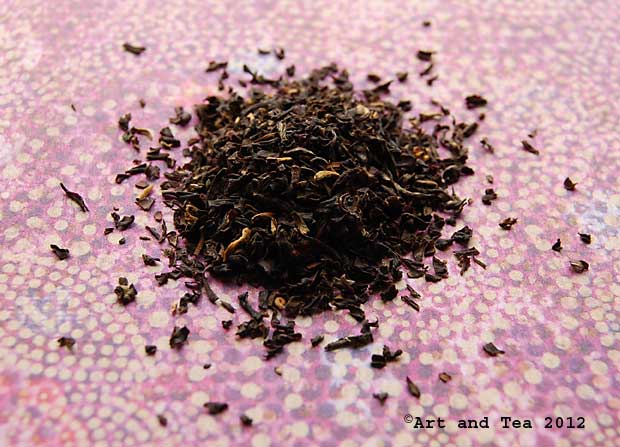
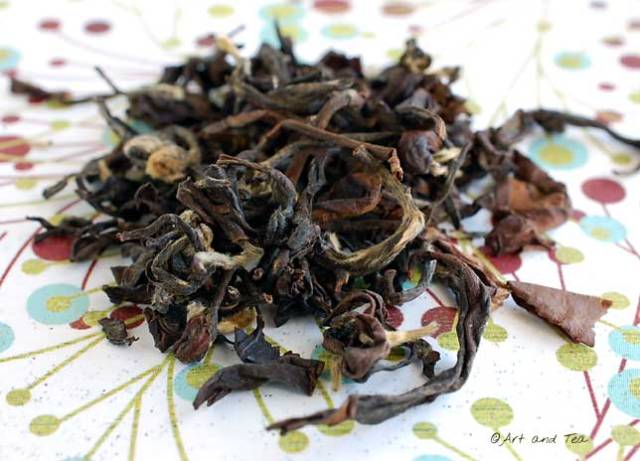
PCM Fairy Oolong Dry Leaf 06-14-14

Good morning, dear tea friends! For those of you in my part of the world, I hope you’re enjoying some beautiful, warm late spring weather. It’s been rainy this week in my area, and my garden is in full blooming glory, soaking up all that moisture. Watching flowers bud and come alive in bloom is so rewarding and healing.

Speaking of flowers, my morning tea today is a floral tasting Oolong called “New Style” Fairy Oolong, a special Pre-Chingming production from Hunan province in south-central China. The name Hunan translates to “south of the lake”, the lake referring to Dongting Lake, a floodbasin for the famous Yangtze river. Dongting Lake is famous as the place of origin of Dragon boat racing, a watersport with ancient roots going back 2,000 years. The boats are decorated with Chinese dragon heads and tails for competition events. So much rich history in China!
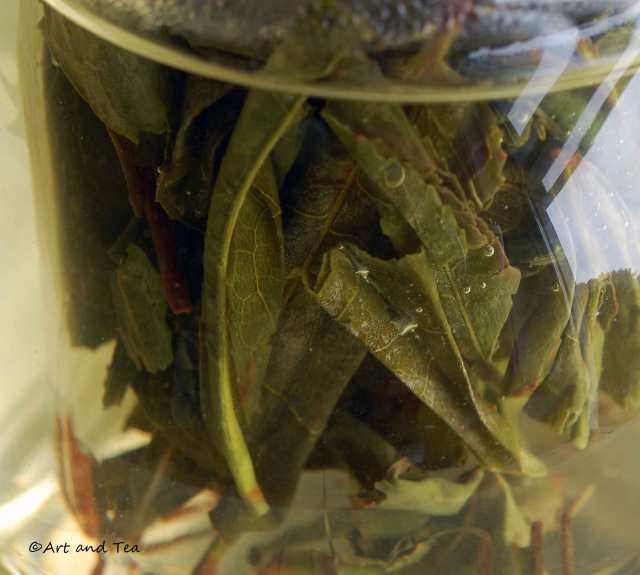
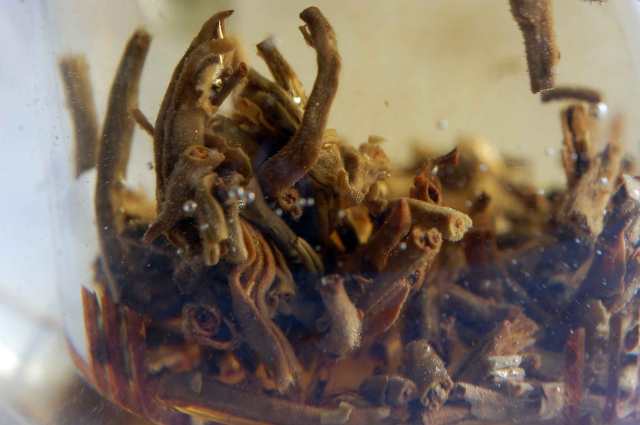
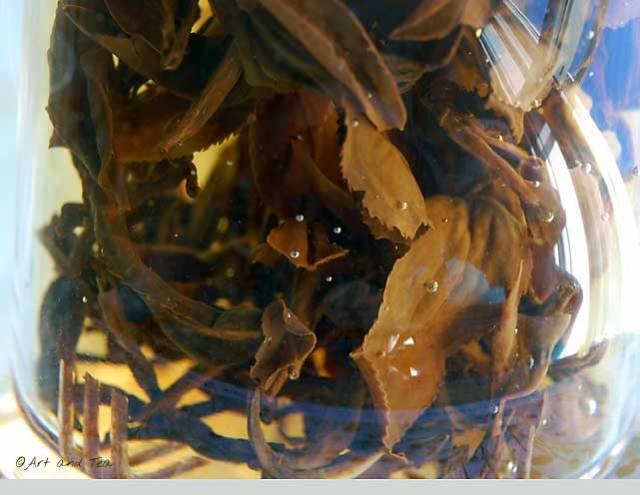
PCM Fairy Oolong Steep 06-14-14As you can see, the leaves of this tea are enormous and filled up the infuser of my little glass teapot. I steeped the tea for 4 minutes in 190 F water. The aroma of lilacs wafted up, its fragrance filling my kitchen. Lovely.
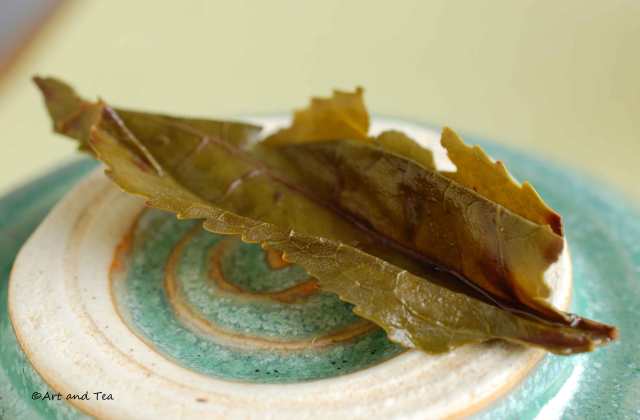
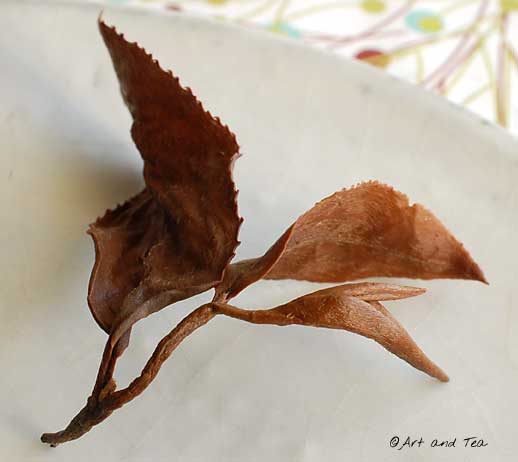
PCM Fairy Oolong Wet Leaf 06-14-14

After steeping, this leaf released its tightly rolled shape to reveal an amazingly intact leaf.

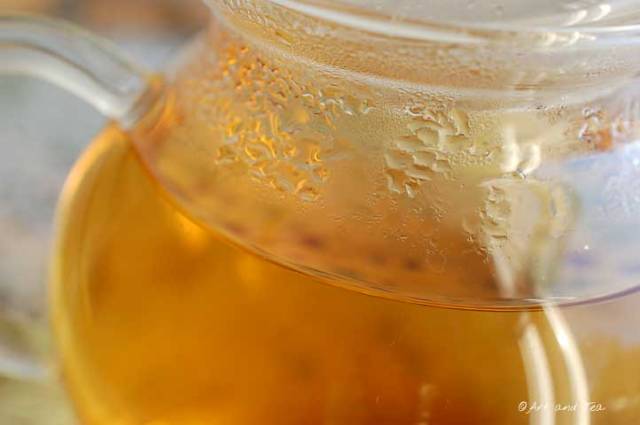
PCM Fairy Oolong Teapot 06-14-14

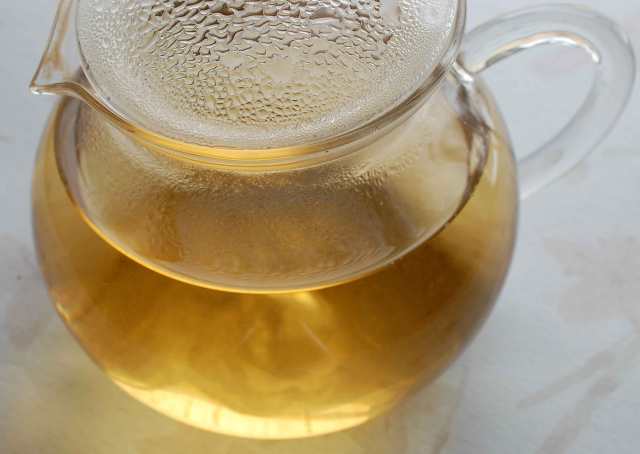
The pale yellow-green liquor has a soft floral fragrance reminding me of lilacs and orchids. This floral aspect carries over into the taste as the main flavor note. The taste is also rich and buttery smooth with some creamy hints. There’s a whisper of vegetal quality, like fresh greens, in both the aroma and the flavor.

PCM Fairy Oolong Tea Bowl 06-14-14

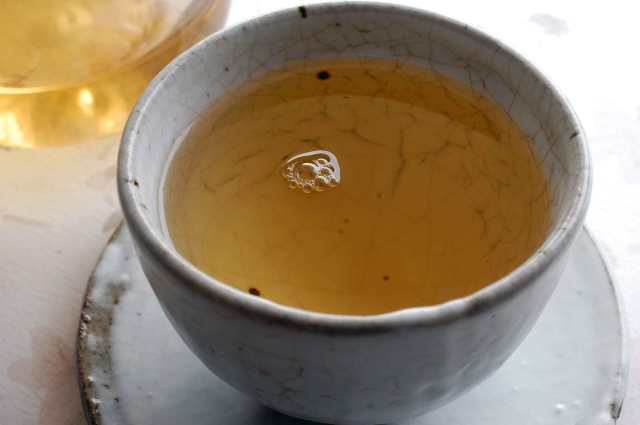
I’m sipping this fragrant tea out of one of my favorite tea bowls, purchased here. The birds are singing merrily outside my window, and I believe I spy a few peeks of blue as the clouds slowly clear. The promise of a walk on the bike path is in the air.

I’ll be back again next week with a new tea to share with you as my daughter is having her house warming party in two weeks. I hope that you all have a wonderful week filled with many cups of delicious tea!

“And so with the sunshine and the great bursts of leaves growing on the trees, just as things grow in fast movies, I had that familiar conviction that life was beginning over again with the summer.”  

F. Scott Fitzgerald, The Great Gatsby

Saturday Morning Tea

PCM Ya Bao Dry 05-31-14

Good morning, dear tea friends! I’m sharing a new tea with you this week because next Saturday I’m leaving early to go visit a dear friend in her new place up on the north shore in Newburyport, MA. It will feel great to go and breath in the fresh sea air and have a wonderful visit with my friend. On to tea…

This morning’s tea has a unique appearance as it is all tea buds. Harvested in Hunan province in China before April 5th, it is called Pre-Chingming Ya Bao white tea.

PCM Ya Bao Steep 05-31-14

As I’ve shared with you before, Pre-Chingming teas are harvested before the festival of Qingming (Chingming), usually celebrated on the 15th day from the Spring Equinox. Any teas harvested before that date are referred to as Pre-Chingming teas. In other words, harvested in very early spring.

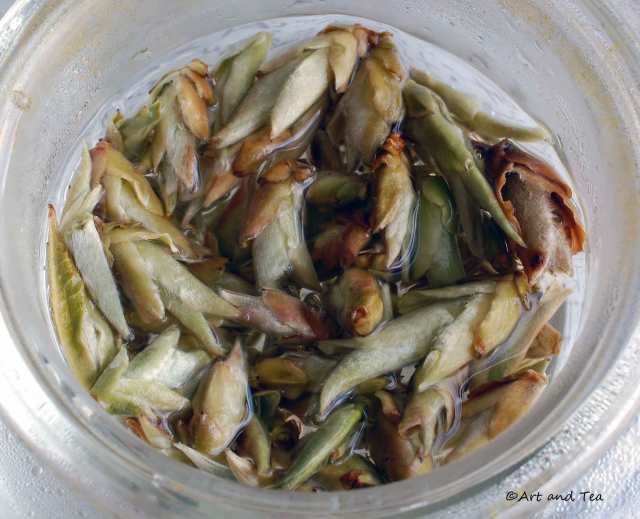
I steeped the Ya Bao buds for 3 minutes in 175 degree F water. As you can see, the buds retain the same appearance after steeping.

PCM Ya Bao Wet 05-31-14

The essence of spring – a new bud just beginning to open.

Can you see the fine downy white hairs on the bud? That’s what gives white tea its name.

PCM Ya Bao Teapot 05-31-14

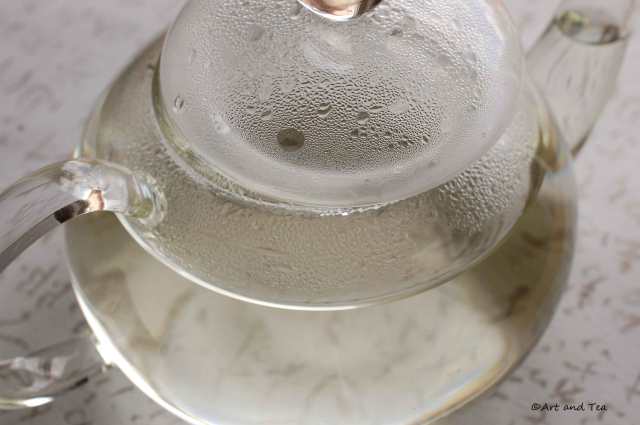
The tea liquor is so pale that it looks like water. It has a fresh melon-y aroma that carries over into its sweet delicate flavor. A vegetal hint lingers into the finish.

PCM Ya Bao Tea Bowl 05-31-14

This is the perfect tea for this tea bowl as it reveals the beautiful spiral shape on the inside of the bowl.

As the tea cools, more sweetness comes out. This would taste lovely iced, with a slice of fruit.

Thanks for joining me for a cuppa today. See you in 2 weeks!

“A friend is someone who knows all about you and still loves you.”

~Elbert Hubbard


Saturday Morning Tea

Green Puerh Tuo Cha Dry 01-25-14

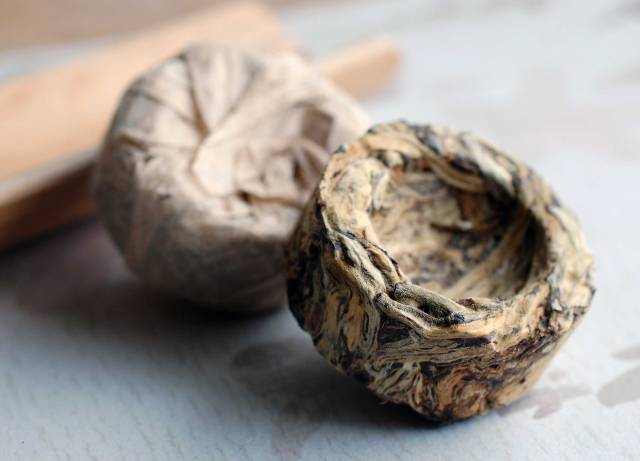
Good morning, dear tea friends! It has been bitterly cold this past week in New England and we were visited once again by the white stuff. Thank goodness for our hot tea to keep us warm and cozy! This morning’s tea is an interesting shape, don’t you think? Compressed into the shape of a small bowl, its name is Ancient Green Pu-Erh Tuo Cha Organic.

Green Puerh Tuo Cha Steep 01-25-14

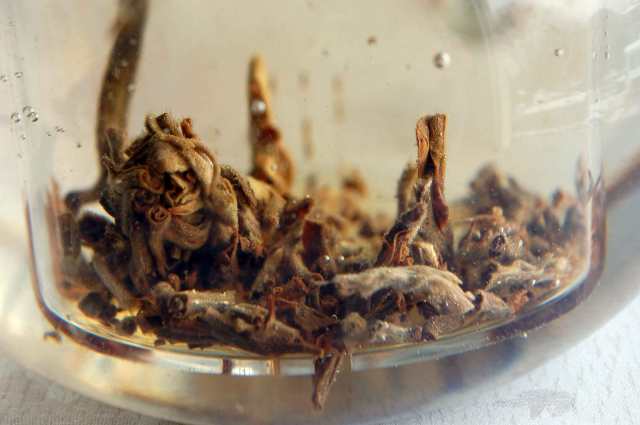
Traditionally, Pu-erh teas are created from leaves harvested in the ancient tea forests of Yunnan province in China. There are two different kinds of Pu-erh tea, raw (Sheng) and cooked (Shou). This Pu-erh is of the raw green variety. The leaves are sun dried and then compressed into small tuo cha shapes. I broke the tuo cha in half and then crumbled the half a bit for steeping purposes. That’s the way I like to do it.

Green Puerh Tuo Cha Steep2 01-25-14

As the compressed leaf pieces steep for 3 minutes in 180F water, they loosen up and release to reveal the individual leaves. This is an excellent tea for resteeping.

Green Puerh Tuo Cha Teapot 01-25-14

The tea liquor is a pale yellow straw color with a delicate herbaceous aroma that has underlying fruity tones. The flavor is light and delicate yet flavorful with notes of melon and sugar cookie, very much like a white tea.

Green Puerh Tuo Cha Teabowl 01-25-14

The wind is howling around the eaves outside. I’m so glad to be tucked into my little nook, snug and warm, sipping my tea gently to enjoy its delicate character. Time seems to stop for awhile in my world…

Have a wonderful and warm tea-filled week!

“A cold wind was blowing from the north, and it made the trees rustle like living things.”  

~George R.R. Martin, A Game of Thrones

Saturday Morning Tea

A good morning to you, dear tea friends! I’m still experiencing computer issues, unfortunately, but there is some good news to report. My tech savvy friend is coming over today to see if my computer can be brought back to life. If not, I’ll have to make some decisions and move forward. As my tea post library is rich and full, I leave you with a Yunnan tea review from a couple of years ago. Enjoy!

A couple of days ago, we did a Yunnan black tea cupping at work, comparing 8 of our current Yunnan selections. I enjoy the cuppings very much because I find it so interesting to taste the teas side by side and discern their similarities and differences, especially within a category. So, with that cupping still fresh in my mind, I chose one of those Yunnan teas as my morning tea today. It’s the only broken leaf one of the group, called Yunnan FBOP(Flowery Broken Orange Pekoe).

From mountainous Yunnan province in southwestern China, this black tea consists of mainly dark leaf with a small amount of yellowish tip sprinkled in. Yunnan teas have traditionally been plucked from very large, old tea trees but I have heard that some of those trees are being cut down or cut in half to make way for monoculture plantings. Hearing that makes me sad but I also know that demand is up for these teas and perhaps that is how they’re accommodating that demand.

I steeped the leaves for only 3 minutes in boiling point (212 F) water. The aroma wafting up from the steeping leaves is sweet and earthy.

The Chinese have traditionally called black tea “red tea” and you can certainly see why as the tea glows a gorgeous russet color in my glass teapot.

The flavor is so incredibly sweet with notes of pepper and earth and a whisper of smoke. The sweet and smoke linger in my mouth reminding me of sweet pipe tobacco. This tea would stand up to milk well but I don’t recommend any sugar because it is plenty sweet already.

I like my wide mouth tea bowl because it allows the tea to cool quickly, revealing the flavor notes. I find it hard to pick out all of the flavor notes when the tea is really hot. How about you?

We had a dusting of snow fall from a gray blanket sky this morning, however, it must be warming up outside because the snow is gone and everything just looks damp now as I gaze out my window. I’ve recently ordered some metalworking supplies, a disk cutter and a dapping set. I’m looking forward to getting back into my studio after an incredibly long period of drought. Way too long…

Happy tea drinking!

“Clouds come floating into my life, no longer to carry rain or usher storm, but to add color to my sunset sky.” ~Rabindranath Tagore

Saturday Morning Tea

Eastern Beauty Oolong Dry Leaf 11-30-13

Good morning, dear tea friends! Last week I enjoyed a lightly oxidized Chinese Oolong, called Huang Jin Gui, for my morning tea. This week I’ve chosen another Chinese Oolong, however, this tea’s leaves have been oxidized for a longer period of time. Its name is Eastern Beauty. I love to compare and contrast teas. Let’s get started!

Eastern Beauty Oolong Steep 11-30-13

First, the leaves look very different from one another. Whereas the Huang Jin Gui is greener (less oxidized) and rolled into “bundles”, the Eastern Beauty‘s leaf is darker (more oxidized) and looks more like leaf to me.

What does it mean for a tea leaf to be oxidized anyway? Well, after the leaves are plucked and allowed to wither to remove moisture, they are bruised by rolling, tossing or shaking. This starts the oxidation process, which enzymatically breaks down the leaf’s chlorophyll, causing the leaf to darken. One of my colleagues likens it to a cut apple turning brown. When exposed to oxygen, the cut apple turns brown. Tea leaf does, too.

Last week’s Huang Jin Gui Oolong tea is oxidized under 20%, which is a short time. I honestly don’t know how long this Eastern Beauty Oolong has been oxidized but I would guess longer, about 40-50% or more. I have read that Formosa Eastern Beauty Oolong is oxidized for 70% but this tea doesn’t taste that dark. It’s definitely darker than the lightly oxidized Oolong though.

Eastern Beauty Oolong Wet Leaf 1 11-30-13

I took 2 shots to show you how enormous and intact this leaf is. Not only does it have the “bud” (the little baby leaves), there are 2 larger leaves, all attached to the same stem. Wow!

Eastern Beauty Oolong Wet Leaf 2 11-30-13

Isn’t that an amazing leaf?!!

I spooned 2 teaspoons of leaf into my small glass teapot and steeped for 4 minutes in 190F water. The fragrant aroma smelled of rich, dark honey.

Eastern Beauty Oolong Teapot 11-30-13

The tea liquor is a glowing orange-y gold. The flavor has a pronounced honey note with hints of nuts, like walnuts, and a whisper of fruit. It’s rich and smooth and has a mouth feel like nectar. I didn’t find any floral notes at all in this tea as was so pronounced in the lighter Oolong last week. So, flavor – honey and nuts vs floral. These teas, while both China Oolongs, are very different in both appearance and in flavor.

Eastern Beauty Oolong Tea Bowl 11-30-13

That was a fun comparison! Which tea do I like better, you might be asking? Actually, I like them both equally as well because of their differences. 🙂

Next Saturday I’m going down the Cape to visit my friend in Hyannis and we’re doing the “Hyannis Stroll” for the holidays. See you in two weeks!