Saturday Morning Tea

My morning tea today is not a tea at all but an herbal which has a long history of many uses worldwide: culinary, medicinal and as a delicacy. The dried root of the ginger plant also makes a wonderfully spicy beverage when infused!

Technically known as the rhizome of the ginger plant, Zingiber officinale, this was grown in the Jinxuan Province of China. Ginger cultivation began in China and Southeast Asia and then spread to other parts of the world such as the Caribbean and Africa.

Its characteristic odor and taste comes from the volatile oils found in the root.

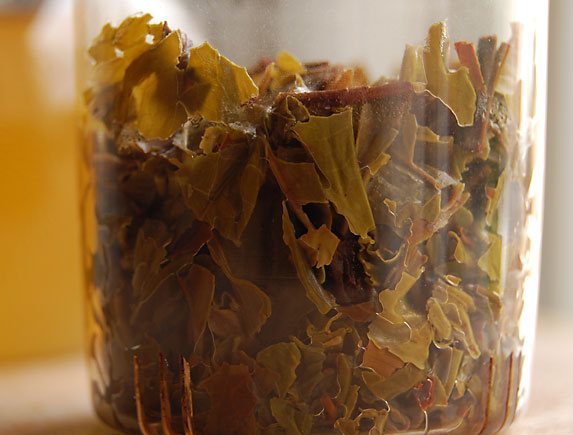
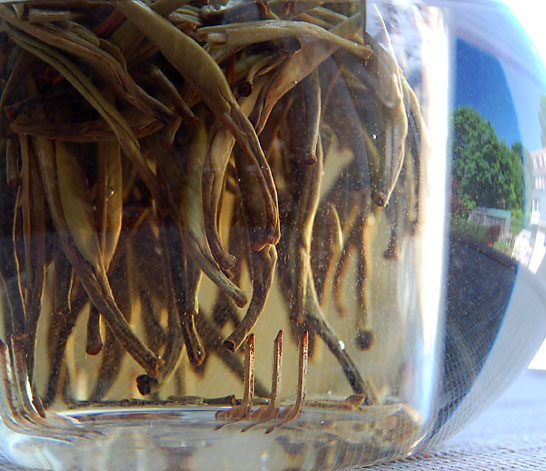
I steeped the ginger pieces for 8 minutes in boiling water. As it brewed, the water became cloudy, giving my glass teapot a mysterious, underwater appearance.

The aroma of the infused “tea” is fresh and spicy. Sometimes, herbals can be confused with real tea which comes from the camellia sinensis plant. Just like tea, each herbal comes from its own specific plant. Almost all herbals, not tea, are caffeine free.

The frosty, lemon-colored liquor tastes quite zesty with tart notes of lemon. Ginger “tea” is often used to soothe nausea and motion sickness. I am enjoying it for its delicious flavor.
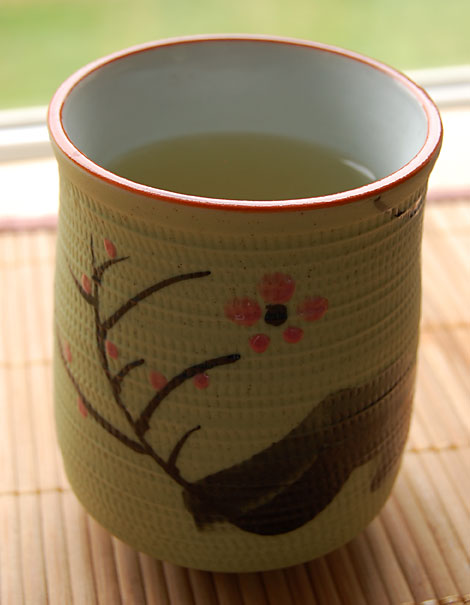
Ginger has a distinctive warming quality to it, making it perfect for sipping on a cold winter’s day. That said, its warmth also has a refreshing quality that is cooling me down on this hot, muggy morning.

Try adding a splash of infused ginger to your next glass of iced tea and spice it up!

“In the sacred traditions, the first thing you do in the morning is ask for blessings from the four elements: earth, air, fire, and water. Because all of the work you are going to do that day will change the universe.”

~Laura Esquivel, Writer

Saturday Morning Tea

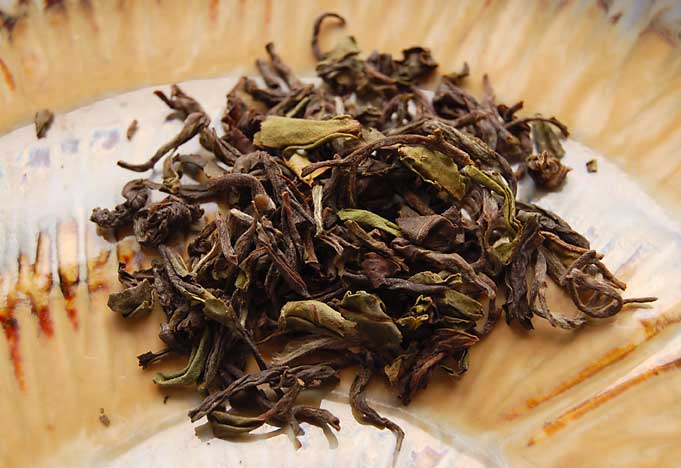
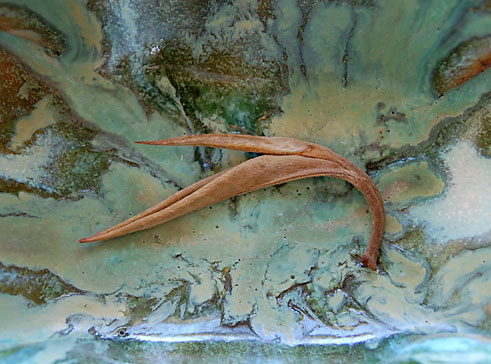
In choosing this morning’s tea, I realized that in my nearly 3 years of reviewing teas here on my blog that I’ve never chosen one from the Nilgiri district in India. This tea growing district is located in the southern state of Tamil Nadu. While its leaf is very dark, in fact, I’ve seen some first flush Darjeelings with more green leaf than this tea, it is a green tea from the Korakundah estate.

Nilgiri, meaning Blue Mountain, has many tea plantations, most of them owned by small growers. This particular plantation, or estate, is Fair Trade certified, meaning that a portion of the tea sales go directly to the workers, helping them invest in community development, improved healthcare and education, to name a few. You can read more about Fair Trade certification and practices here.

As with most green teas, I steeped the leaves for 3 minutes in 180 degree F water.

The golden amber liquor has a pronounced fruity aroma. Quite full-bodied for a green tea, I found the pungent flavor very tasty with hints of asparagus and smoky notes that linger in my mouth.

Now that my teapot is empty, it’s time to don my overalls and head out into the garden for some Saturday gardening time. Last night I stopped at the garden center right up the street from work and got a gorgeous hydrangea bush adorned with big balls of periwinkle flowers. It reminds me so much of my beloved getaway spot, Nantucket Island, where hydrangeas bloom abundantly throughout the summer. Now in my garden, I’ll have my own little reminder of wonderful time spent there every year with my parents.

Enjoy your holiday weekend!

“So the rising sun is reason enough for thankfulness, in that another day has come.  Let us see the beauty in ourselves and one another.”

~Dhyani Ywahoo

Saturday Morning Tea

I feel like a kid in a candy store at this time of year with the first flush Darjeelings arriving freshly plucked from different tea gardens. Oh joy!

This morning’s tea is from the Arya estate, an organic tea garden located high in the Himalayan mountains of northeastern India.

I’ve read that it was started by a team of Buddhist monks who carefully developed their tea plants from Chinese seeds. They practiced Aruyvedic medicine and their original house may still be found on the grounds of the estate.

I imagine a beautiful place nestled in the shadow of great towering peaks where, if you listen very closely, a rich history whispers its secrets.

Many first flush Darjeeling leaves are very green even though they are processed as black teas (allowed to oxidize and turn dark).

This first flush of spring growth doesn’t want to give up its greenness, the essence of spring and rebirth.

I steeped the leaves for 3 minutes in slightly less than boiling point (212 F) water. The green leaf is transformed into a glowing liquid amber.

A fresh, sweet aroma wafts up from my glass teapot as I quietly lift the lid to remove the infuser basket. The only sound at this early hour is the sweet song of the birds outside my window.

The flavor is bright and astringent, waking up my mouth with sweet, fruity notes that linger, linger, linger…

Last weekend’s adventure in my little patch of garden involved an all day affair with a stubborn yew stump that finally had to be ripped out with a heavy chain and large pickup truck. Thank goodness for the generosity of new neighbors! Now that the stump is removed, I have a gathering of shade plants – astilbe, coral bells, bleeding heart, impatiens – that are patiently waiting to be planted in their new home.

“Solitude – walking alone, doing things alone – is the most blessed thing in the world, the mind relaxes and thoughts begin to flow and I think I am beginning to find myself a bit.” ~Helen Hayes

Julie Picarello Workshop

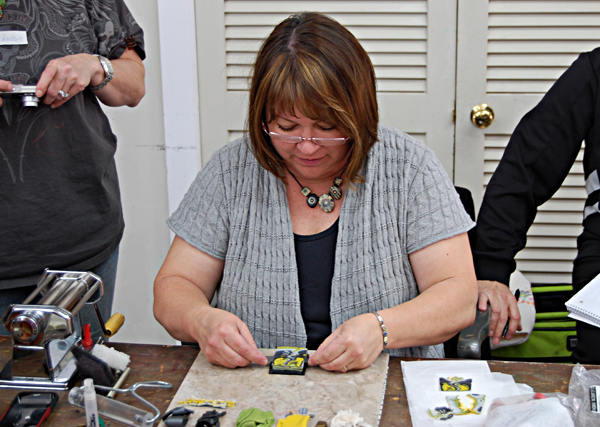
This post is long overdue! In March,  I had the wonderful opportunity to take a workshop with the talented polymer clay artist, Julie Picarello. Here is one of her fabulous creations destined to adorn some lucky person.

More of her amazing work to inspire and delight!

Julie has explored and perfected her own faux mokume gane technique using layers of colored clay, metal leaf and all sorts of nifty texture tools. From this layered and textured clay, she creates colorful, unique jewelry pieces.

Color inspiration can come from many sources.

A yummy color palette.

The first thing that struck me about Julie upon first meeting her is her warm smile and twinkling eyes. In a new place and new experience, she made me feel very welcome and right at home. She is kind, generous and very patient, perfect qualities for a teacher to possess, allowing your students to relax and open up to the creative process.

Besides learning a new approach to one of my favorite polymer clay techniques, this fun workshop also taught me to open up to new color inspiration and that you can find fabulous texture tools just about anywhere.

Soon I’ll share with you what I created at the workshop!

Saturday Morning Tea

For my morning tea on this bright spring morning, I’ve chosen an Assam tea. Wait a minute, you might be saying as you look at my photo, that doesn’t look like an Assam tea at all! That’s because it is a white Assam. Located in northeast India, Assam is most noted for its full-bodied, rich black teas. This unique white tea is from the Mothola estate.

I have read that this tea estate was flooded back in the 60s when the banks of the Brahmaputra river eroded and water swept through the estate. Through the combined efforts of the workers and management, they were able to restore 1000 acres to grow tea once again.

This tea is meticulously crafted using only the tips of the Assamica variety of the Camellia Sinensis tea plant. Native to this lowland region, this variety has large leaves and grows to be a small tree.

When these indigenous tea plants were first identified by Major Robert Bruce around 1823, many believed that they were not capable of producing quality tea as the China variety was. You can read more about that here.

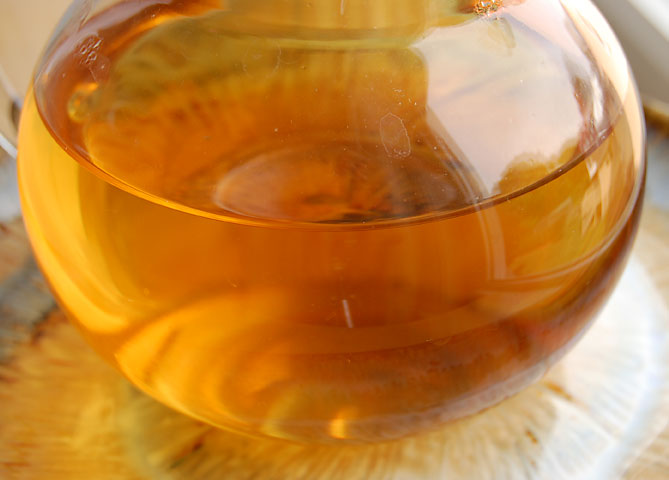
I steeped the leaves for 4 minutes in 180 degree F water. The glowing gold liquor has a distinct malty aroma, immediately identifying it as an Assam tea. However, that’s where the similarity ends.

The flavor is delicate and sweet with complex malty notes. A hint of fruitiness makes a brief appearance across my tongue.

This tea is exquisite and can be compared to a specialty white tea from China. While I do love their white teas, this tea has an extra special something that calls me back for more.

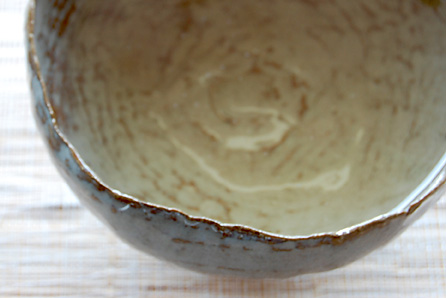
As my hands wrap lightly around my hand-crafted teabowl, I watch the trees dance in the wind outside my window. It’s a perfect day to work in the garden.

Enjoy your weekend!

I wandered lonely as a cloud

that floats on high o’er vales and hills,

when all at once I saw a crowd,

a host of golden daffodils:

beside the lake, beneath the trees,

fluttering and dancing in the breeze….

for oft, when on my couch I lie

in vacant or in pensive mood

they flash upon that inward eye

which is the bliss of solitude;

and then my heart with pleasure fills,

and dances with the daffodils.

~William Wordsworth