Saturday Morning Tea

springdragonoolongliquor.jpg

This morning there is a very cool breeze coming in my windows. As I gaze out over the treetops, I see a variety of reds, oranges, maroons and golds blooming amongst the greenery. October is one of my favorite months because I love so much about this autumn time of year – the aroma of dry leaf as it dances across my path, the explosion of color across the landscape, the crisp, tart taste of a just picked apple, the bright orange pumpkins displayed in wooden carts along the side of the road. This morning, however, I am feeling wistful as the memory of summer slips away. So, in light of my mood, I have brewed up a green Formosa Oolong called Spring Dragon.
springdragonoolongdryleaf.jpg

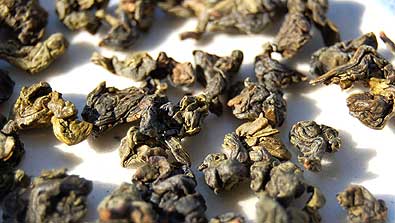
After plucking the new growth (2 leaves and a bud), the leaves are spread out to dry and oxidize. They are shaken periodically during this drying period to bruise the leaf and release its volatile oils for flavor. This also helps in the oxidation process, the turning brown process of the leaf. This Oolong is only lightly oxidized so it is carefully monitored during this time. Once the tea master judges the oxidation to be sufficient, the leaves are pan roasted to halt oxidation. Then they are rolled and dryed some more.

springdragonoolongwetleaf.jpg

It is amazing that you can see the serration on the edges of the intact leaf that I have spread out after I steeped the tea. I left a portion of one leaf still rolled up a little so you can see how it has opened up. The aroma is sweet and delicately flowery. The light honey colored liquor is also sweet with lilac flavor notes. Mmmmmmm….
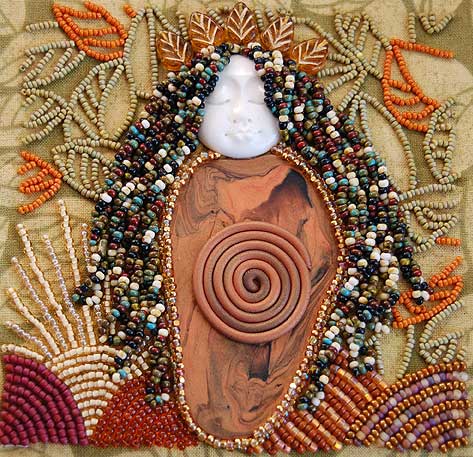

My September Journal page

septemberjournalpage.jpg

I have finished my September journal page, entitled “The Harvest Goddess of Abundance and Gratitude”. Only 12 days behind schedule!

She embodies the cycle of the harvest from the birth of the seed to its growth and manifestation to its harvest and production of more seeds to its dormancy to the rebirth of the seed. The cycle spirals on. The sun rises and gives warmth and nurture to the growth of the seed and its harvest. As the Goddess’s harvest progresses, the leaves fall gently through the air all around her. They will return to the earth to nourish the next seeds.

So, this piece represents the abundance of our harvest and gratitude for what has manifested from the seeds we have sown. Acceptance of the natural rhythms of the earth and a turning inward to contemplate how our seeds have grown and manifested in this cycle.

What do you think?

Another Bead Crochet Experiment

turqbeadcrochet.jpg

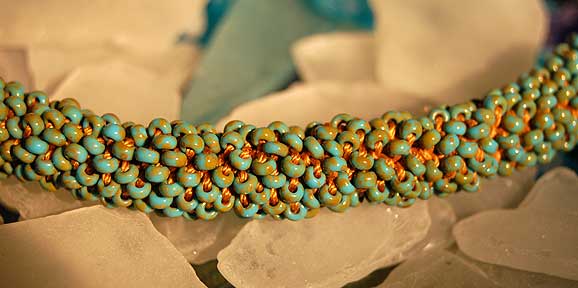
Another bead crochet experiment, this time with C-lon cord and a hank of variegated turquoise and brown size 8 beads I purchased during my trip to Michigan last month. I don’t think you’re supposed to see that much of the cord but I loosened my crocheting up because it was getting so tight that I could hardly get the hook (size 2.25mm) in the stitch. Do any of you bead crocheters experience that? I think it’s going to be a matter of practice to get the right tension. This cord is pretty stiff so maybe that was part of the challenge for me, too. This piece is a little over 4 inches long so too short for a bracelet but I could use it for part of a necklace.

I have a color challenge for myself based on a post I read at Morwyn’s AnotherCountry Beadworks blog. She invited her readers to pick 3 or 4 numbers between 1-50. Then you click on a link to a list of numbers that had a color associated with each number. I love lists and anything to do with color so I had a lot of fun doing this. My colors are turquoise, fuschia, Paynes gray and copper. Paynes gray is a dark bluish gray.

What a great exercise to get beyond your usual color choices. So, today I am gathering components to make a necklace with these colors. Thanks for the inspiration, Morwyn!

Saturday Morning Tea

blackpuehrtuocha.jpg

A couple of weeks ago, I brewed a cup of green (raw) Pu-ehr tea and I talked about how there are 2 types of Pu-ehr. Today I am enjoying a cup of black (cooked ) Pu-ehr tea called Ancient Pu-ehr Mini Tuo Cha. This tea is from the same area in Yunnan province as the green Pu-ehr.

Another name for this black Pu-ehr tea is dark green “pile fermented” tea. It is created with a special pile fermentation process, a fairly new method in existence since the 1970s. Think compost piles. The tea leaves are heaped into measured piles in a well ventilated, climate controlled room and water is added to each pile to moisten it. The tea master will turn each pile periodically to evenly disperse heat, moisture and bacteria for proper fermentation. After approximately 90 day, the leaves are steamed and compressed into little cakes and then dried.

blackpuehrwetleaf.jpgblackpuehrliquor.jpg

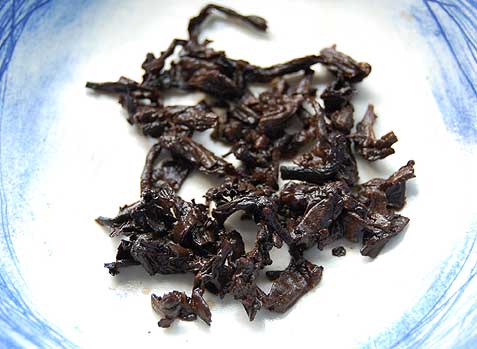
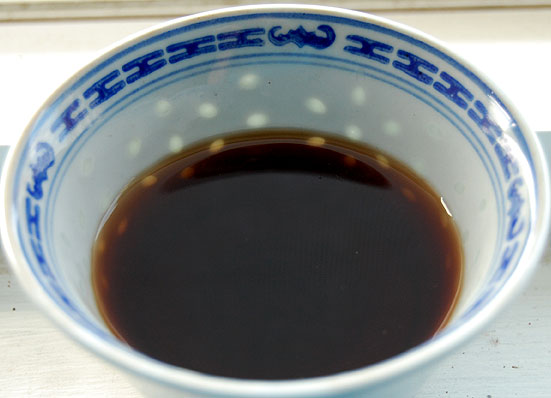
Look how black both the tea leaves and the liquor are. Even a China black like Keemun or Yunnan or an Assam tea are not this dark. It looks like black coffee. However, the aroma and taste are very different form coffee! The aroma is sweet and earthy with a hint of woodiness to it. The flavor is also sweet, like molasses, and has a very full mouth feel. I drink it straight but it would probably stand up very well to milk or cream. I don’t recommend sweetener though as it has its own sweetness to enjoy.

One of the most interesting things about Pu-ehr tea is that it gets better with age, like a fine wine does. There are people who collect aged Pu-ehr cakes and some cakes are up to 150 years old! It is also reputed to have medicinal benefits, especially for the digestive system, and has been used as such in China for hundreds of years.

I enjoy tea because of its taste but it’s nice to know that there are health benefits, too!