Saturday Morning Tea

Good morning, dear tea friends! I’ve returned from my trip to New Mexico and am glad to be here, sharing a cup of tea with you once again. As promised, today I am brewing up a pot of Chinese green tea called Pi Lo Chun Bao Wei.

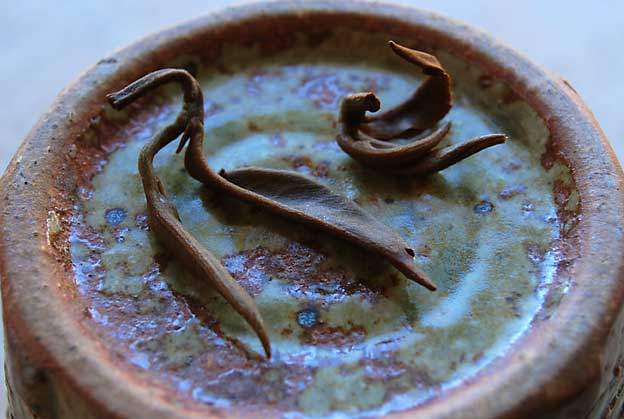
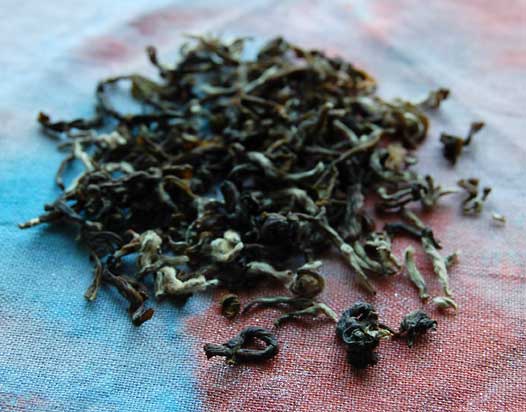
Pi Lo Chun, or Green Snail Spring, is a well-known China green tea from Jiangsu province. Its distinct spiral leaf shape is created during the firing step of its processing. After the fresh leaf is plucked, usually in the morning, it is brought to the factory in either baskets or cloth pouches to protect the leaf and allow for air circulation. Once at the factory, the leaf is spread out on floor mats to air-dry and reduce the moisture content of the leaf.

As Pi Lo Chun leaf must be manipulated during the next step, the firing step, it is placed in short, round metal drums which are placed over a heat source. A gentle twist and roll motion of the hand as heat is applied coaxes the leaf into its characteristic shape, resembling a tiny fiddlehead fern shape. In fixing the leaf into a specific shape, its chi, or energy, remains fixed in the leaf until the moment of steeping when it is released into the cup of tea.

I steeped the leaves for 3 minutes in 180 degree F water. The pale golden liquor gives off a distinctly sweet aroma.

As I take my first sip, a pronounced licorice/anise flavor note surprises me in its intensity. It mellows out as my tea cools revealing a light floral note of honeysuckle. As I usually find a Pi Lo Chun to have fruity notes, this is quite unique. And yummy. Interestingly enough, there are no vegetal notes in this green tea.

As the days shorten and the nights wrap us in a longer, darker cloak, I find myself turning inward in solitude and reflecting upon the year that is flowing towards its end. I find my center and a measure of comfort in the following enduring prayer.

All shall be well,

And all shall be well,

And all manner of things shall be well.

~Dame Julian of Norwich, a 13th century English mystic

Saturday Morning Tea

This morning we travel to the Yunnan province of China for a cup of black tea called Yunnan Golden Snail. A careful plucking of the top leaves on the tea bush is handcrafted into beautiful curls. The leaf looks like the black tea version of Pi Lo Chun, a China green tea whose name translates to Green Snail Spring. You can read my review of that tea here.

I steeped the leaves in boiling point (212 degrees F) water for 4 minutes. Unlike the twisted, “spider leg” tea leaves from last week, these leaves fully unfurled during steeping in what’s called the “agony of the leaf”.

My teapot shows the tree in my neighbor’s backyard that still holds a lot of its golden leaf. I just love those colors against the brilliant blue late autumn sky!

Oh, just look at that gorgeous leaf! It imparts a light smoky aroma, reminiscent of cooked bacon. This smoky quality comes through in the flavor as well. It’s not the fireplace smoky of Lapsang Souchong nor is it the tobacco smoky of gunpowder tea. It’s definitely…bacon…mmmm…and to a confirmed vegetarian like myself, an interesting treat to taste that once again.

The russet liquor glows in my teapot as I pour my first cup. Notes of spice and raisin fill my mouth with a bright astringency in the finish that lingers very nicely. This tea tastes great plain but would definitely stand up to a dollop of milk, if desired.

I sit and gaze out the window, my cup warming my hands, and think of my coming trip to New Mexico. I leave in 2 days time to visit my son and his family, including my brand new grandson, Landon, who came into this world last Monday. My son now has his own son and the circle of life continues…

I won’t return from my trip until next Sunday evening so I’m sorry to say that there won’t be any Saturday Morning Tea post next week. However, I will look forward to sharing another cup of tea with you in 2 weeks time when I believe it will be time to review another Pi Lo Chun tea. What do you think? As always, if you ever have any requests for tea reviews or questions about tea, I am always happy to receive them.

Happy tea drinking, dear friends!

“Let us imagine care of the soul, then, as an application of poetics to everyday life.” ~Thomas Moore

Saturday Morning Tea

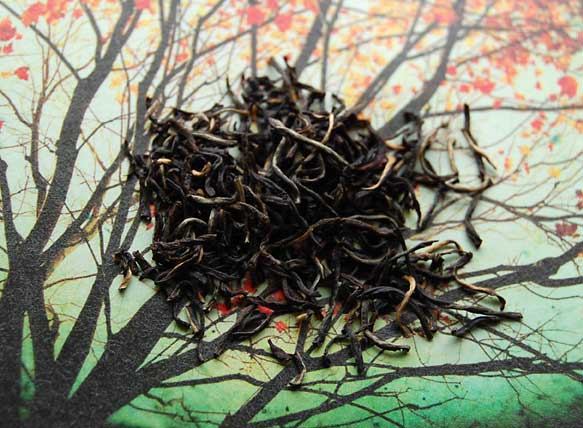
This morning we travel from Japan, where we’ve been tea-wise for the last month, to Sri Lanka. In contrast to the vegetal greens I’ve been enjoying, this morning I chose a dark, rich black tea with beautiful silver tips from New Vithanakande.

Its FBOPF leaf style, designated for this long, wiry, twisted leaf, is unique for a Ceylon tea. You know the tea that comes in teabags from the grocery store, the kind that we might have drunk when we were sick as kids? Well, that leaf style is called “fannings”, a very finely-particled leaf that fits into those bags easily and steeps very quickly. Astoundingly, this leaf has that same designation which is what the last “F” stands for. It’s because this skinny leaf can fit through the smallest sieves during the leaf sorting process. Amazing, huh?

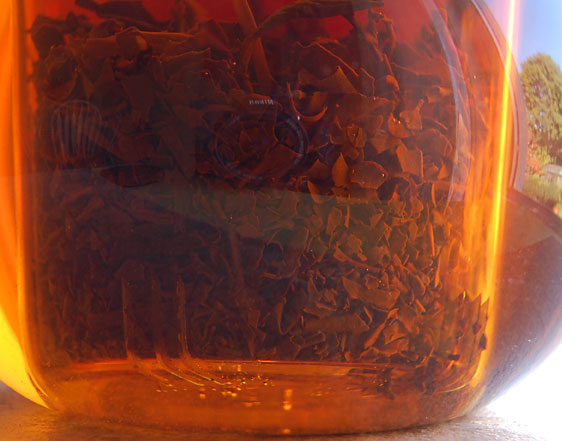
The good news is that, unlike last week, this leaf fits nicely into my glass infuser and doesn’t fall through the narrow slits at all. The leaf swells during steeping but doesn’t unfurl from its tightly rolled shape.

Glorious color!

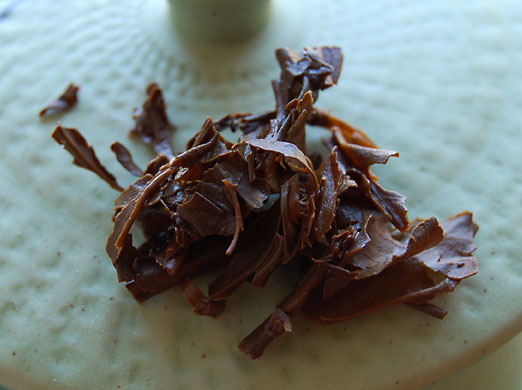
The wet leaf looks like a bunch of twigs but it’s actually twisted tea leaves. The aroma is bright with a sweet molasses note.

This tea is grown in the Ratnapura district, located in southern Sri Lanka. I’ve read that this district is the home of gem mining as well as a crossroads where hill country and plains come together. This tea is processed at a factory supporting 6,000 small landholders and their families. You can read more about it here. In this respect, the tea is similar to a Japanese tea in that it is named after the place that processes the tea not the tea garden.

The rich, dark amber liquor has the brightness of a Ceylon tea along with notes of caramel and molasses, a rich, sweet taste. I put a drop of milk in my second cup to smooth out the brightness.

One of my favorite color combinations – a blend of orange and dusky purple, like dark clouds against an autumn sunset.

A light gray blanket of clouds hangs from the sky, lighting the last of the dark copper leaves clinging to the tree branches. Despite the gloominess of the day, my thoughts are on next spring as I hope to plant some daffodil and tulip bulbs into the earth today.

My hours at work have lengthened as the light of the days grows shorter. This has resulted in much less time in my studio which I’m sure you’ve noticed as I haven’t posted any artwork in awhile. Sometimes when I stop and think about it, a wave of sadness washes over me and I yearn for a stretch of time where I had nothing to do except to play in my studio. But it is what it is and I take comfort in creating some holiday gifts from my pointy sticks in the evenings, hot cup of tea by my side.

Today is my granddaughter Ella’s second birthday and I am looking forward to traveling out to New Mexico very soon to see her and also my new grandson, Landon, who is due to arrive in this world this week. I take so much joy in these blessed family events!

Have a wonderful weekend, dear tea friends.

“But if you have nothing at all to create, then perhaps you create yourself.” ~Carl Jung

Saturday Morning Tea

Happy October, tea friends. October in New England is one of my favorite times of year with its glorious blazes of color streaked across nature’s canvas. A feast for the eyes. This month I’m going to explore tea from Japan and I’m starting the month off with quite a unique tea, a new experience for me and quickly a new favorite.

I introduce you to a black tea from Japan called Ikumi.

Yes, you heard me correctly. A Japanese black tea.

Black tea has been cultivated in Japan for approximately 150 years, however, it is rarely exported out of the country. Almost half of Japan’s tea is grown in the Shizuoka prefecture, an area of abundant rainfall and thick fog located on the central eastern coastline. It is also an area prone to devastating earthquakes which hit historically every 100-150 years, the last one occurring in 1854. Interestingly enough, the name Shizuoka means “Tranquil Hills”.

As the tea leaves steeped in boiling point (212 degrees F) water for 4 minutes, a sweet nutmeg aroma wafted up from my glass teapot, portending wonderful flavor notes to come.

The dark amber liquor is delightfully complex with notes of nutmeg and black raspberry one moment and then cocoa and cinnamon the next. Yum!

Look at that dark, rich color.

A cool breeze blows in my window, a welcome relief to the tropical humidity of this past week. With leaves of crimson and gold framed against a brilliant blue sky today, it’s the perfect day for a nature walk.

Enjoy your weekend!

“Life’s ups and downs provide windows of opportunity to determine your values and goals. Think of using all obstacles as stepping stones to build the life you want.” ~Marsha Sinetar, author

Saturday Morning Tea

Jun, “moon”. Chiya, “tea”. Bari, “garden”.

Jun Chiyabari. Moon tea garden.

It conjures up images of an exotic place, filled with lush tea bushes bathed in the dreamy light of a full moon.

Back in 2000, 2 brothers, Bachan and Lochan Gyawali, along with a former schoolmate, manifested their “moon tea garden” dream when they established the Jun Chiyabari tea garden in the hills surrounding the small town of Hile in the eastern Himalayan region of Nepal.

Working with small, local farmers to encourage and support them in keeping ownership of their land for tea cultivation, the team’s primary focus is on quality of leaf not quantity. They pay the farmers top prices for that high quality leaf, with a markup of 50-100%, a direct benefit to this small rural community.

This morning’s tea was grown in this community.

“There is an old saying that ‘tea is made in the garden’ (as opposed to at the factory).  In other words, what is produced in the garden in terms of quality, plucking, etc., will determine the nature of the end product.  We take this very seriously, and from the outset we have put the small farmer at the heart of our project.” ~Bachan Gyawali

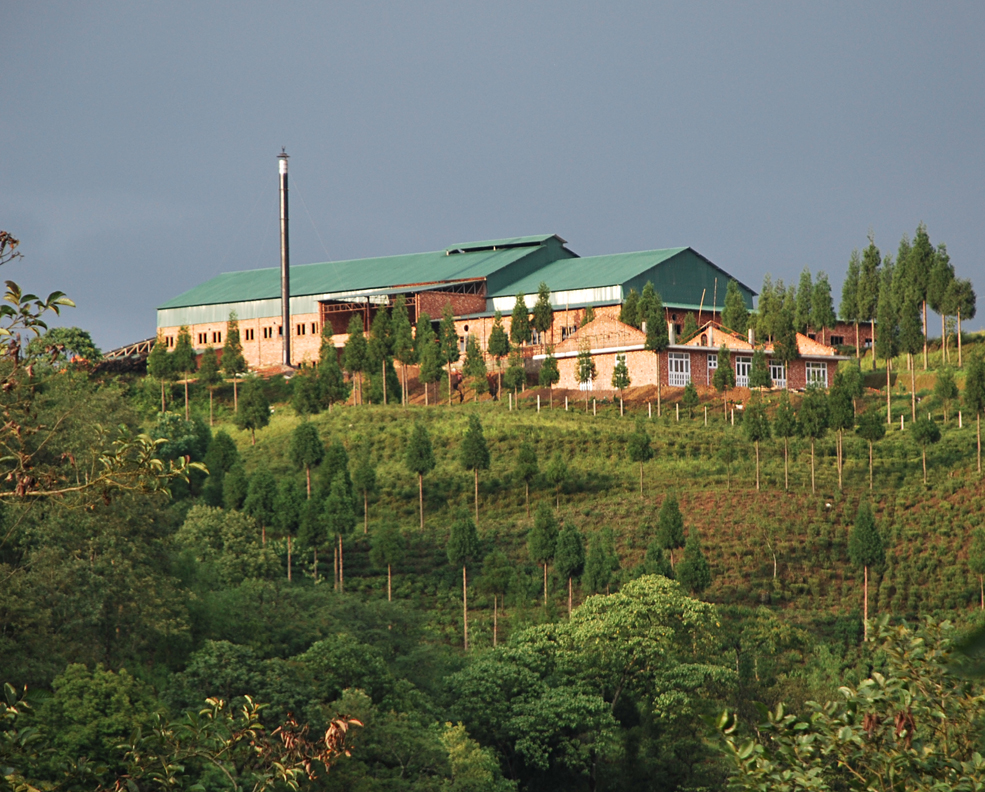
In keeping with this philosophy, the Jun Chiyabari team expanded their vision last year with the construction of the Singalila Tea factory nearby in the town of Fikkal, at an altitude of 5,662 feet above sea level. They are constantly educating themselves and their farmers in tea cultivation skills, bio-organic farming including diversity of crops and preservation of forest areas to benefit the environment.

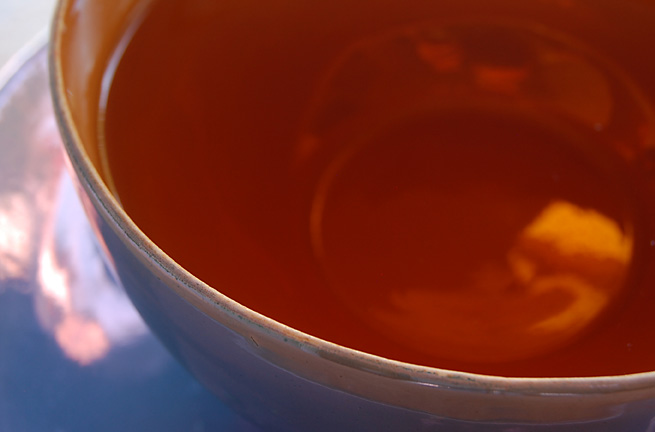
The beautiful amber liquor glows like a jewel in my glass teapot inviting me to pour my first cup.

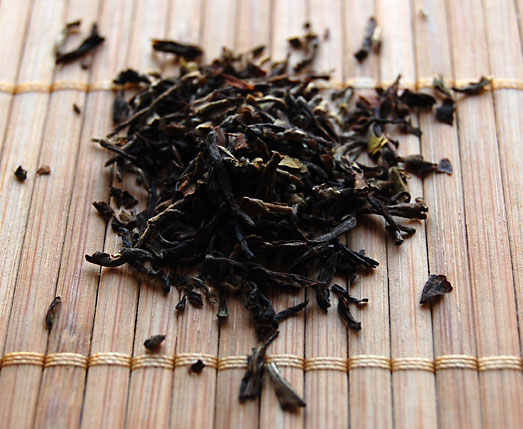
The cup is quite smooth with sweet, lightly floral notes. I also detect some chestnut notes reminiscent of an Oolong tea. Mmmm…

I look forward to more delicious tea from this visionary team!

Today I’m heading down to E. Bridgewater, MA where my dear friend, Judy, is teaching her Buttons & Bellishments class. I’m looking forward to a fun ART Day!

“Alone we can do so little; together we can do so much.”

~Helen Keller