Saturday Morning Tea

Happy St. Paddy’s Day! Top of the mahrnin to one and all. I’m celebrating this day with a rich Irish Breakfast blend in my cup. A blend of hearty Indian Assam tea and brisk Ceylon tea, it’s called River Shannon Breakfast Blend, a perfect blend for today.

It’s a broken leaf selection so it’s best to steep the leaves for 3 minutes when drinking it plain. I wanted a little tang in my cup so I pushed the brew time to 4 minutes. It’s dark and stout with a hint of malt and a bright whisper of lemon.

When I visited Ireland back in 1999, this was the kind of tea served at all of the B&Bs we stayed at. It was a wonderful respite from our busy touring schedule to sit down and enjoy a “cuppa”, always served with a tray of delicious scones.

The deep amber tea liquor would go wonderfully with a spot of milk and a little sweetener.

Aside from a teapot of Irish style tea, I’ll be celebrating today with a long walk along the bike path and then some precious time in my studio. How are you celebrating?

Let’s all raise our teacups to the Emerald Isle and enjoy the day!

Saturday Morning Tea

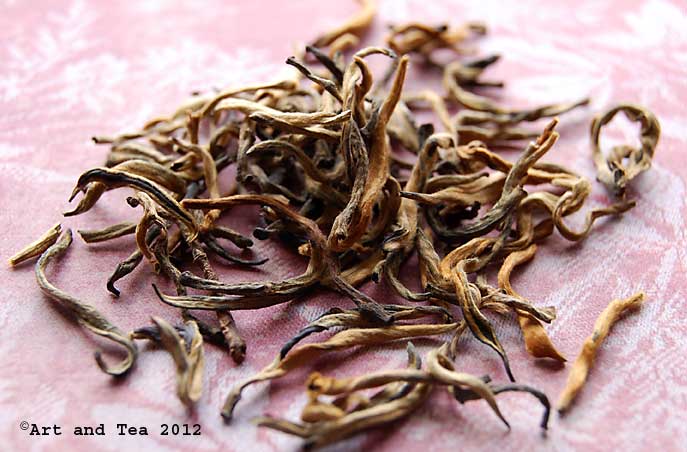
Even though I reviewed a Yunnan black tea very recently, I just couldn’t resist this morning’s tea. Just enjoy gazing upon that gorgeous leaf filled with warm golden tips, named quite fittingly Golden Tip Yunnan.

As evidenced by the intact tip, this tea is plucked and processed meticulously by hand. It shows that very special care.

In steeping the leaf, I used boiling point water (212F) for 5 minutes.

Ah, there are those little swords again except this time in a black tea. I know I’ve said it many times before but it constantly amazes me how many different kinds of tea can come from one kind of plant.

In Yunnan province, ancient tea plants have grown into large trees producing enormous sized leaves. These leaves are traditionally used to produce Pu-erh tea. I imagine a grove of venerable old trees having seen many changes around them over the centuries.

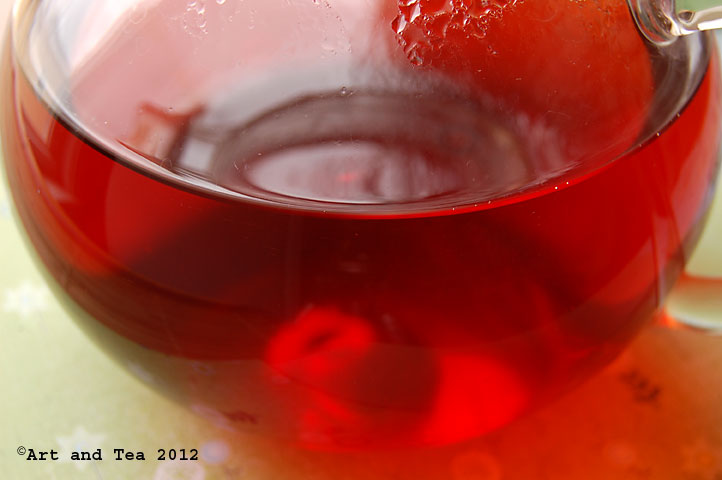
The tea liquor glows like a sunset in my glass teapot. An aroma of sweet peach nectar arises as I pour my first cup. My first sip is like ambrosia on my tongue with notes of peach and spice. Full-bodied and complex, the rich flavor lingers on my tongue like a fine wine.

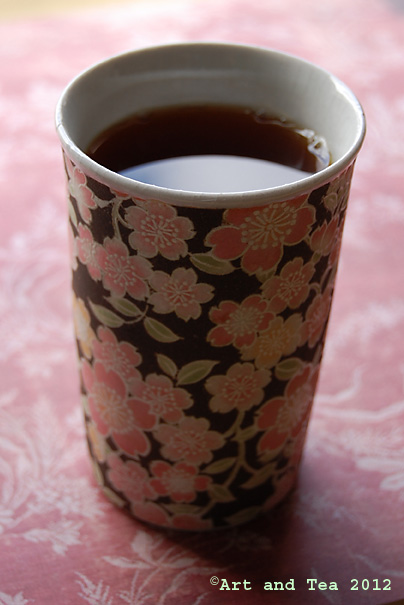
It has now been one year since the earthquake in Japan and I honor them by enjoying my tea in one of my Japanese mugs. The cherry blossoms symbolize new growth and hope for continued healing in their country. I have heard positive reports for the 2012 tea harvest over there and hope that I will have the opportunity to review some new Japanese teas here soon.

Time to go pour another cup! Enjoy your week, dear friends.

“I find hope in the darkest of days, and focus in the brightest.  I do not judge the universe.”  ~Dalai Lama

Saturday Morning Tea

Good morning, dear tea friends! You must be wondering about the picture above – now where are the tea leaves? They are there. They’ve just been compressed. If you look closely, you can see the outline of a few leaves. The tea in my cup this morning is called Pu-Erh Mini Squares.

I know, I know, it sounds kinda like a breakfast cereal. But, of course, it’s not, it is a rich, full-bodied China tea from the mountainous Simao region of Yunnan province.

As I’ve written about before, Pu-ehr tea is divided up into 2 classifications, raw and cooked, depending upon the processing method. This particular tea falls into the cooked category. It undergoes a double fermentation not unlike what happens in a compost pile. The leaves actually begin to decompose, giving them a strong earthy taste when steeped. For this particular tea, the leaves have been steamed after processing and then pressed into a large, flat “cake”. After it dried, the “cake” was then cut up into small squares, each square perfect for preparing a 6-8 ounce cup of tea.

To aid in full flavor extraction during steeping, I broke the square up into little pieces. This is fairly easy to do with your hand. If you experience any difficulty, I find that a hammer helps to start that process. Please watch out for your fingers! I steeped the broken pieces for 5 minutes in boiling point (212 F) water.

This traditional compressed form of tea has been produced in China for hundreds of years. It was the most common form transported on the ancient caravan routes because it was less susceptible to physical damage and easier to transport.

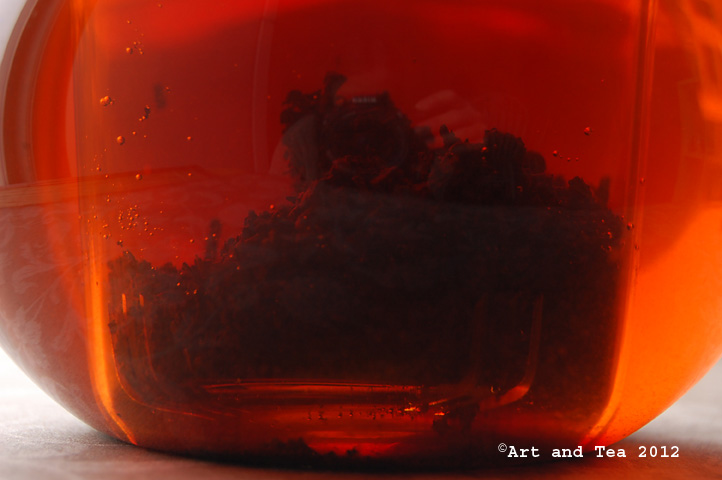
The tea is so incredibly dark, like the darkest chocolate. A sweet earthy aroma rises from my glass teapot as I pour my first cup.

Although this tea has that quite distinct Pu-Erh flavor of earth and forest floors, it is lighter than other Pu-Erh teas I’ve tried. And it is so incredibly sweet and smooth. There is also a whisper of dark cocoa that lingers in my mouth with each sip. I’m quite enjoying this tea!

I’m spending the day today with my daughter and granddaughter. A girls day! I’m so looking forward to it. More good news – I might have an art post to share with you this week. Stay tuned…

Have a wonderful week and enjoy your tea!

Saturday Morning Tea

Good morning, my dear tea friends! I’m on my way out to my art guild meeting on this blustery cold morning. The clouds are racing across the deep blue sky and the branches sway back and forth in the brisk wind. I feel a change in the air. Could it be spring? I hope so! Anyway, I leave you with another Chun Mee tea review from a couple of summers ago. Enjoy!

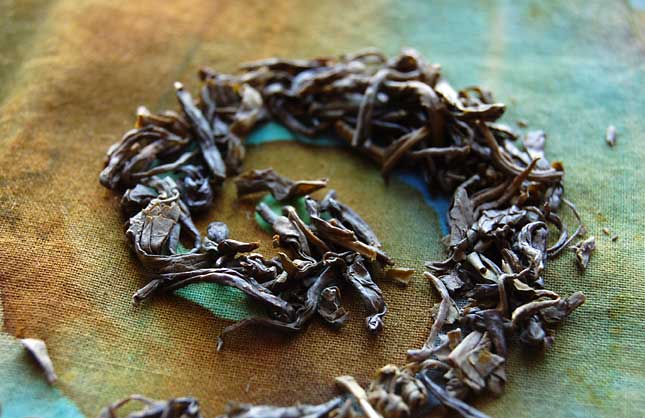
On this hazy summer morning in my pleasantly cooled kitchen, I’m lazily sipping a Chinese green tea called Chun Mee. Traditionally, the Chinese have always been quite fond of rolling the tea leaf into various shapes and then naming the tea accordingly. Chun Mee translates to “Precious Eyebrows”. Can you see it?

After the leaf is withered and steamed, it is rolled into a thin needle-like shape with a curve like a porcelain doll’s eyebrow.

It is a very popular everyday tea in China, especially to accompany strong flavored foods because of its astringent aftertaste which clears the palate.

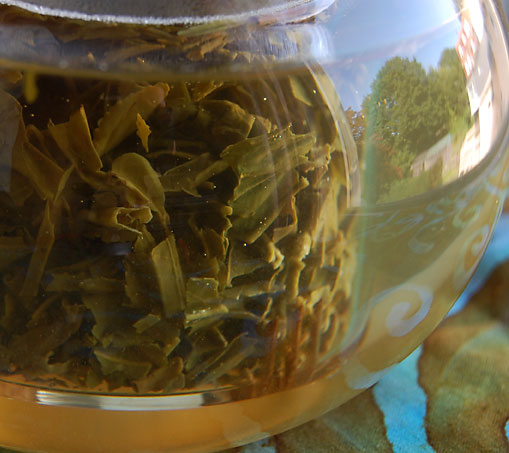
Upon steeping for 3 minutes in 180 degree F water, the tightly rolled leaves open slightly to reveal their curled edges.

The golden liquor has a hint of chestnuts in the aroma and a rich, full-bodied flavor. Its astringency clears my mouth and makes it feel fresh and clean. A whisper of sweet plum rounds out the taste.

Shopping at the local mall a couple of nights ago, I stopped into a tea store there and found these interesting pottery teamugs on the clearance shelf. The coppery/sage green mottled exterior is rough and textured with a smooth, pale blue interior. I love the juxtaposition of textures and the way the mug feels slightly rough against my palm. I also love finding treasures, especially those at 75% off!

The purpose of craft is not so much to make beautiful things as it is to become beautiful inside while you are making those things.

Saturday Morning Tea

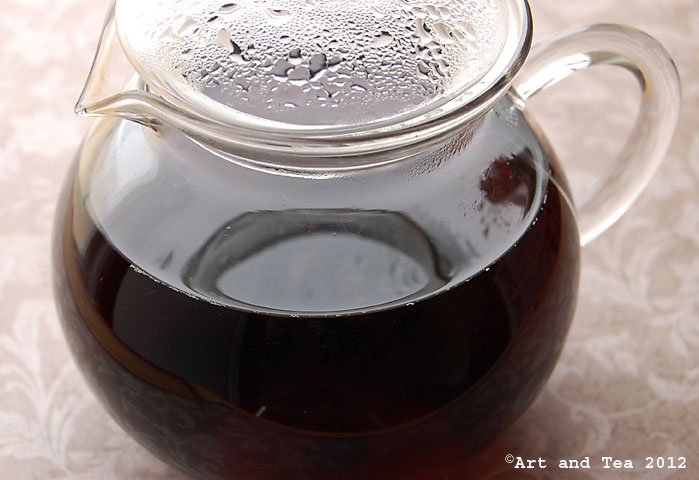
Good morning, dear tea friends! A couple of weeks ago at work, I took part in a cupping of some China green teas – the Chun Mees and the Young Hysons. This morning I have brewed up a pot of my favorite tea of that grouping – Chun Mee Moon Palace. I do admit that part of its charm lies in its cool name but, for me, it really shined in its flavor.

The name Chun Mee translates to “precious eyebrows”. After withering and steaming, the leaves are rolled into thin curved shapes resembling a porcelain doll’s eyebrows. I wrote about another lot of Chun Mee here.

The Chinese are very fond of naming their teas.
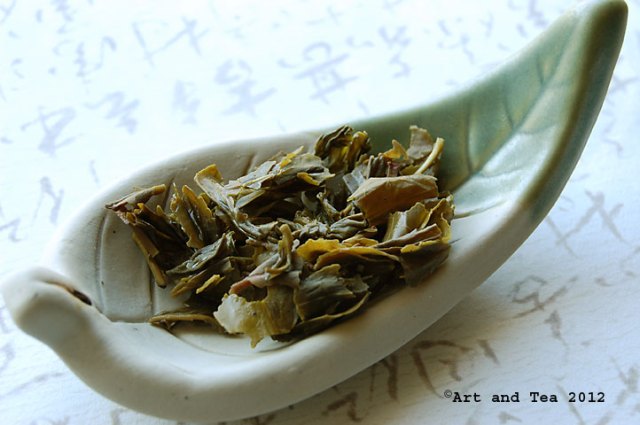
I steeped the leaves for 3 minutes in 180 F water as I do with most green teas. After steeping, the leaves look more like bushy eyebrows, don’t you think?
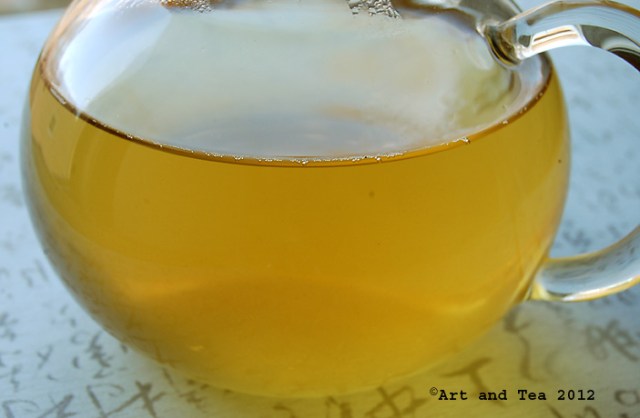
The deep yellow liquor gives off a fresh vegetal fragrance. The flavor is also vegetal, lightly so with pronounced fruity nuances, like pear and melon. It is the fruity nuances that make this tea so enjoyable for me. As my tea cooled, it got sweeter.

As I continued to sip this tea, an astringency began to flower, leading me to think that I probably oversteeped it. So with my next pot of tea, I’ll experiment by pulling back on the steeping time, probably starting with a 2 1/2 minute steep and then possibly working back to a 2 minute steep.

As I’ve talked about before, it’s amazing how different a tea can taste when you adjust the steeping time a small amount of time. I like to be open to the positive qualities of a tea and believe that I can develop a relationship with it with some minor adjustments. Too often I hear stories of folks thinking that something is wrong with a tea after just one steeping. I encourage everyone to experiment and see what works best for them. After that period of experimentation, if you still don’t like it, well, that’s just what it is – you just don’t like it. It doesn’t necessarily mean that there’s something wrong with the tea. Enjoy the journey!

Next week I will be attending my art guild meeting so there won’t be any new tea post on Saturday. I’ll be back in 2 weeks to share another cup of tea with you. Until then, dear friends, happy sipping!

“Thousands of candles can be lighted from a single candle, and the life of the candle will not be shortened. Happiness never decreases by being shared.”  ~Buddha