Saturday Morning Tea

This morning we travel from Japan, where we’ve been tea-wise for the last month, to Sri Lanka. In contrast to the vegetal greens I’ve been enjoying, this morning I chose a dark, rich black tea with beautiful silver tips from New Vithanakande.

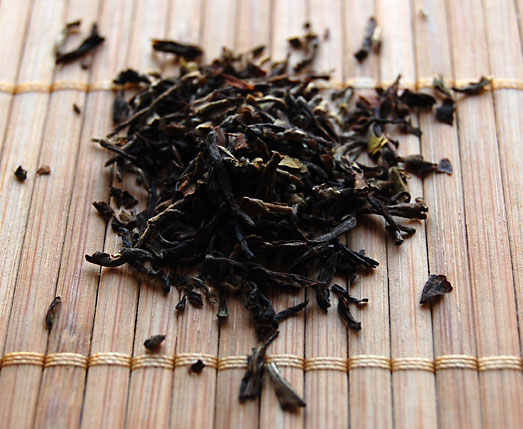
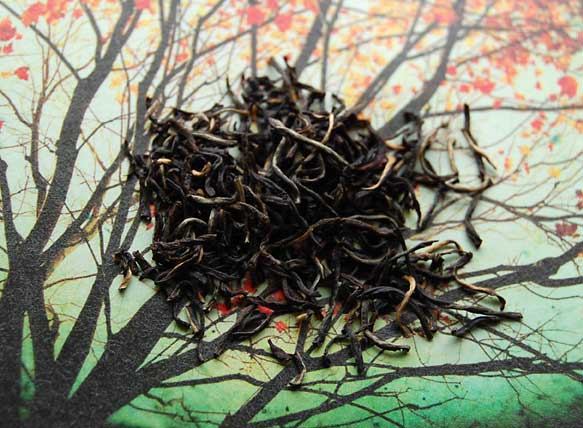
Its FBOPF leaf style, designated for this long, wiry, twisted leaf, is unique for a Ceylon tea. You know the tea that comes in teabags from the grocery store, the kind that we might have drunk when we were sick as kids? Well, that leaf style is called “fannings”, a very finely-particled leaf that fits into those bags easily and steeps very quickly. Astoundingly, this leaf has that same designation which is what the last “F” stands for. It’s because this skinny leaf can fit through the smallest sieves during the leaf sorting process. Amazing, huh?

The good news is that, unlike last week, this leaf fits nicely into my glass infuser and doesn’t fall through the narrow slits at all. The leaf swells during steeping but doesn’t unfurl from its tightly rolled shape.

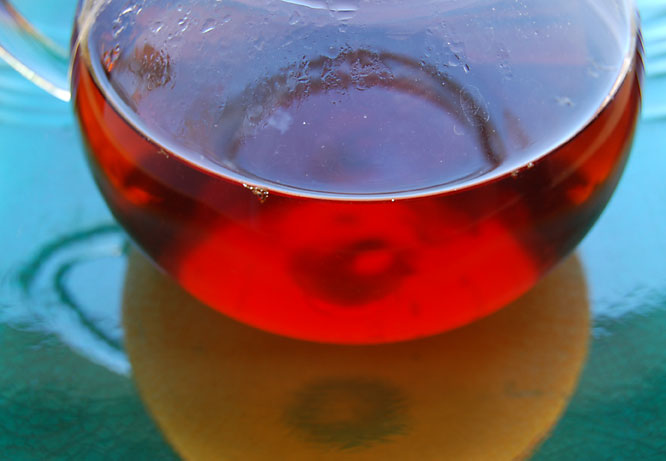
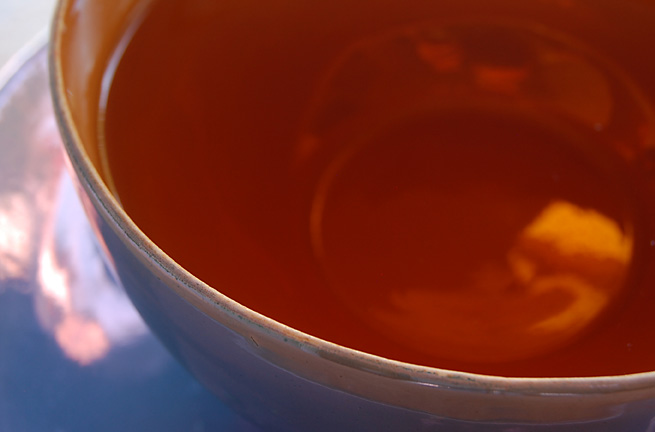
Glorious color!

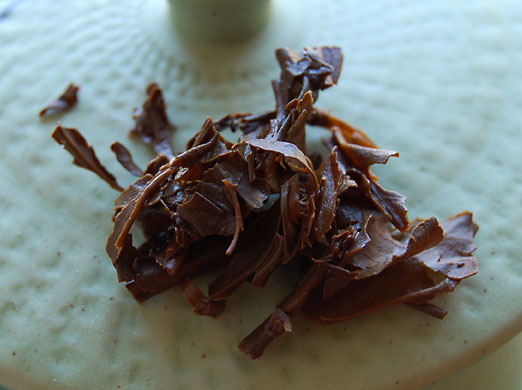
The wet leaf looks like a bunch of twigs but it’s actually twisted tea leaves. The aroma is bright with a sweet molasses note.

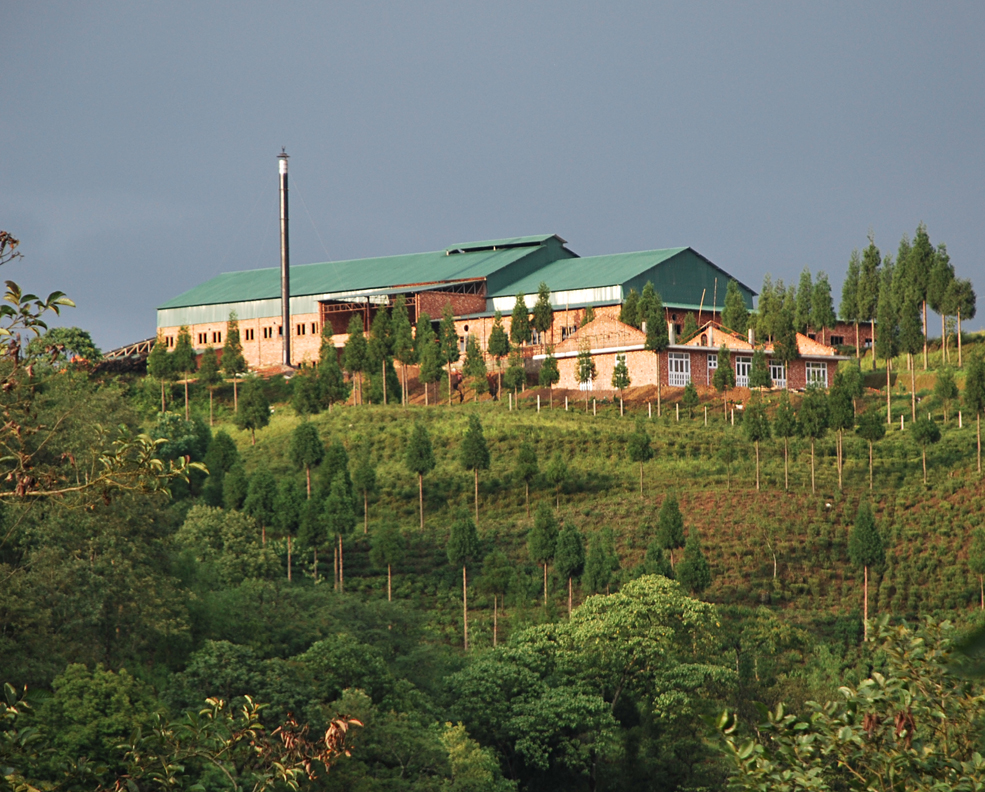
This tea is grown in the Ratnapura district, located in southern Sri Lanka. I’ve read that this district is the home of gem mining as well as a crossroads where hill country and plains come together. This tea is processed at a factory supporting 6,000 small landholders and their families. You can read more about it here. In this respect, the tea is similar to a Japanese tea in that it is named after the place that processes the tea not the tea garden.

The rich, dark amber liquor has the brightness of a Ceylon tea along with notes of caramel and molasses, a rich, sweet taste. I put a drop of milk in my second cup to smooth out the brightness.

One of my favorite color combinations – a blend of orange and dusky purple, like dark clouds against an autumn sunset.

A light gray blanket of clouds hangs from the sky, lighting the last of the dark copper leaves clinging to the tree branches. Despite the gloominess of the day, my thoughts are on next spring as I hope to plant some daffodil and tulip bulbs into the earth today.

My hours at work have lengthened as the light of the days grows shorter. This has resulted in much less time in my studio which I’m sure you’ve noticed as I haven’t posted any artwork in awhile. Sometimes when I stop and think about it, a wave of sadness washes over me and I yearn for a stretch of time where I had nothing to do except to play in my studio. But it is what it is and I take comfort in creating some holiday gifts from my pointy sticks in the evenings, hot cup of tea by my side.

Today is my granddaughter Ella’s second birthday and I am looking forward to traveling out to New Mexico very soon to see her and also my new grandson, Landon, who is due to arrive in this world this week. I take so much joy in these blessed family events!

Have a wonderful weekend, dear tea friends.

“But if you have nothing at all to create, then perhaps you create yourself.” ~Carl Jung

Saturday Morning Tea

This morning I am enjoying a very unique Japanese green tea with 3 distinct components, a sencha green tea, a matcha green tea and puffed brown rice.

I introduce you to Matcha Gen-Mai Cha, the 4th tea in my Japanese tea series.

Even though Japan is now an industrialized nation with its bustling, crowded cities, underneath this is a culture based on Zen practices devoted to moments of simplicity and beauty as captured in the tea ceremony, or Chanoyu. Matcha, or powdered, tea is the tea that is traditionally used in this ceremony.

In this tea, the Matcha is dusted over the sencha leaf and the puffed brown rice. The addition of toasted, puffed brown rice to green tea is a popular beverage enjoyed in Japan. Gen-Mai Cha translates to brown rice tea.

This tea leaf looks like cooked greens with rice krispies added to it.

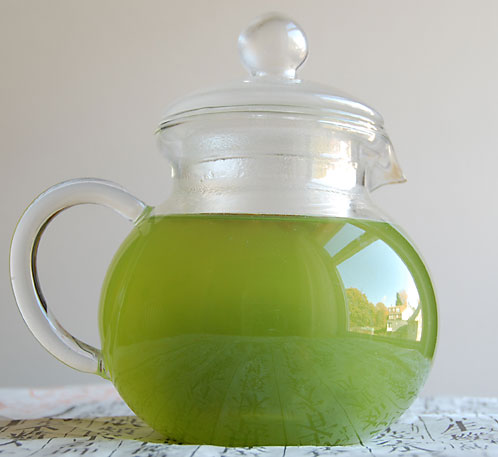
The liquor color is like none other I’ve ever seen in steeped tea. To be honest, it reminds me of the Gatorade drinks my kids used to drink after sports. The Matcha powder makes the tea more opaque.

With 80% of Japan’s 4 major islands being mountainous, efficiency is key in utilizing every piece of land available for tea cultivation. In contrast to China’s isolated mountain tea gardens, Japanese tea gardens are arranged in orderly, well manicured rows on gently rolling hillsides, close to rivers and streams to provide moisture for the tea bushes.

Except for very special, extremely expensive tea, most tea in Japan is harvested with shearing machines, either handheld by 2 workers on either side of the tea row or by a large volume machine which fits perfectly between rows set apart to accommodate the machine. The machines can yield 200-300 lbs. of tea per day as opposed to the 20-30 lbs. hand plucked.

The predominant aroma and flavor of this tea is of toasty rice. The vegetal quality of the tea comes through in wisps along with a lovely sweetness.

So warming. Mmmm…

This weekend my family is visiting from Michigan. It’s the perfect time of year to visit southern New England. The fall colors are at their peak – golds, russets, flaming orange and deep burgundy. I just love this colorful time of year!

Have a lovely weekend, dear tea friends.

“Call it a clan, call it a network, call it a tribe, call it a family.  Whatever you call it, whoever you are, you need one.”

~Jane Howard

Saturday Morning Tea

After a damp, cool week, today dawned bright and clear and dry. A perfect weekend to be outside, soaking in the brilliant colors of autumn.

In the second week of my series on Japanese tea culture, today’s tea is a Japanese green tea called Fukamushi Cha, meaning “deep steamed tea”.

Almost all Japanese green tea is steamed for 30-45 seconds in the first step of processing. This halts oxidation of the leaf and sets the distinctive, brilliant green color of the Japanese green tea leaf as well as giving it its pronounced vegetal flavor.

Fukamushi Cha undergoes a deeper, or longer steaming time.

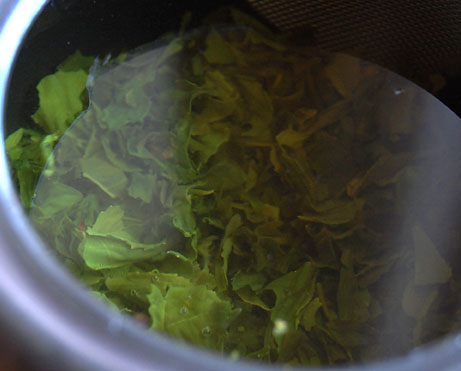
Just look at that gorgeous green leaf.

Tea drinking in Japan can be traced back to the 8th century when the Emperor Kammu dispatched several diplomatic missions to China to learn about and better understand their culture.

As in China, tea drinking was only practiced in Japan among monks, the nobility and the imperial court for many years.

It wasn’t until the 12th century when Myoan Esai, a Japanese Buddhist priest, encouraged all Japanese citizens to drink tea for their health, writing the first Japanese book on tea entitled Kissa Yojoki which translates to “Tea Drinking Good for the Health”.

I steeped my Fukamushi Cha for 3 minutes in a lower temperature water, 160 degrees F. The aroma is feather light and vegetal.

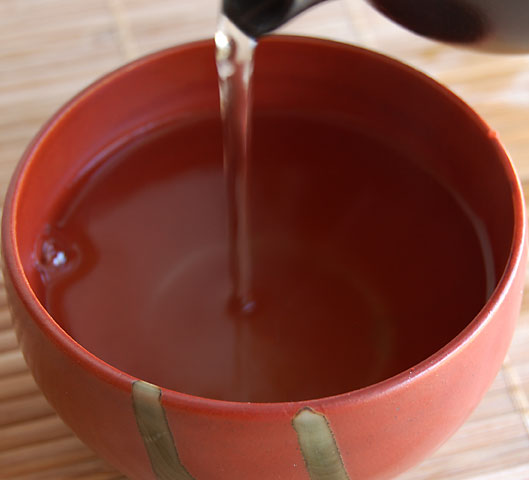
The pale spring-green tea liquor is very sweet with a light pungency which refreshes my palate. A pronounced vegetal flavor embraces the sweetness.

Over time, tea became elevated to a fine art in Japan, culminating with the development of the Japanese tea ceremony known as Chanoyu. I had the privilege of attending a tea ceremony 3 years ago and wrote about it here.

This weekend will be a fall cleaning, staying at home kind of weekend for me. Perhaps I’ll even find some time to spend in my studio!

Please join me next week when I will be sharing my review of a Japanese gyokuro tea.

“Make a delicious bowl of tea; lay the charcoal so that it heats the water; arrange the flowers as they are in the field; in summer suggest coolness, in winter, warmth; do everything ahead of time; prepare for rain; and give those with whom you find yourself every consideration.”

~Sen Rikyu, Zen tea master (1522-1591)

Saturday Morning Tea

Happy October, tea friends. October in New England is one of my favorite times of year with its glorious blazes of color streaked across nature’s canvas. A feast for the eyes. This month I’m going to explore tea from Japan and I’m starting the month off with quite a unique tea, a new experience for me and quickly a new favorite.

I introduce you to a black tea from Japan called Ikumi.

Yes, you heard me correctly. A Japanese black tea.

Black tea has been cultivated in Japan for approximately 150 years, however, it is rarely exported out of the country. Almost half of Japan’s tea is grown in the Shizuoka prefecture, an area of abundant rainfall and thick fog located on the central eastern coastline. It is also an area prone to devastating earthquakes which hit historically every 100-150 years, the last one occurring in 1854. Interestingly enough, the name Shizuoka means “Tranquil Hills”.

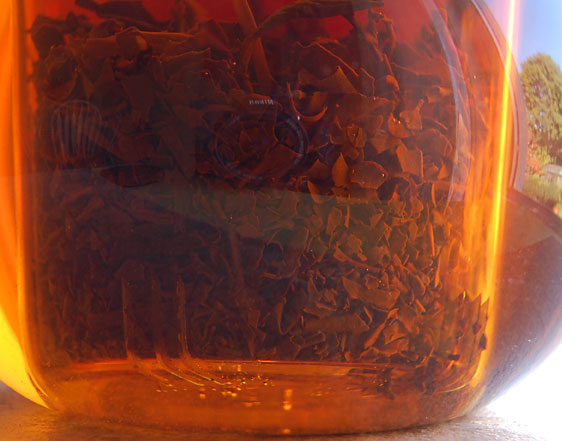
As the tea leaves steeped in boiling point (212 degrees F) water for 4 minutes, a sweet nutmeg aroma wafted up from my glass teapot, portending wonderful flavor notes to come.

The dark amber liquor is delightfully complex with notes of nutmeg and black raspberry one moment and then cocoa and cinnamon the next. Yum!

Look at that dark, rich color.

A cool breeze blows in my window, a welcome relief to the tropical humidity of this past week. With leaves of crimson and gold framed against a brilliant blue sky today, it’s the perfect day for a nature walk.

Enjoy your weekend!

“Life’s ups and downs provide windows of opportunity to determine your values and goals. Think of using all obstacles as stepping stones to build the life you want.” ~Marsha Sinetar, author

Saturday Morning Tea

Jun, “moon”. Chiya, “tea”. Bari, “garden”.

Jun Chiyabari. Moon tea garden.

It conjures up images of an exotic place, filled with lush tea bushes bathed in the dreamy light of a full moon.

Back in 2000, 2 brothers, Bachan and Lochan Gyawali, along with a former schoolmate, manifested their “moon tea garden” dream when they established the Jun Chiyabari tea garden in the hills surrounding the small town of Hile in the eastern Himalayan region of Nepal.

Working with small, local farmers to encourage and support them in keeping ownership of their land for tea cultivation, the team’s primary focus is on quality of leaf not quantity. They pay the farmers top prices for that high quality leaf, with a markup of 50-100%, a direct benefit to this small rural community.

This morning’s tea was grown in this community.

“There is an old saying that ‘tea is made in the garden’ (as opposed to at the factory).  In other words, what is produced in the garden in terms of quality, plucking, etc., will determine the nature of the end product.  We take this very seriously, and from the outset we have put the small farmer at the heart of our project.” ~Bachan Gyawali

In keeping with this philosophy, the Jun Chiyabari team expanded their vision last year with the construction of the Singalila Tea factory nearby in the town of Fikkal, at an altitude of 5,662 feet above sea level. They are constantly educating themselves and their farmers in tea cultivation skills, bio-organic farming including diversity of crops and preservation of forest areas to benefit the environment.

The beautiful amber liquor glows like a jewel in my glass teapot inviting me to pour my first cup.

The cup is quite smooth with sweet, lightly floral notes. I also detect some chestnut notes reminiscent of an Oolong tea. Mmmm…

I look forward to more delicious tea from this visionary team!

Today I’m heading down to E. Bridgewater, MA where my dear friend, Judy, is teaching her Buttons & Bellishments class. I’m looking forward to a fun ART Day!

“Alone we can do so little; together we can do so much.”

~Helen Keller