Saturday Morning Tea

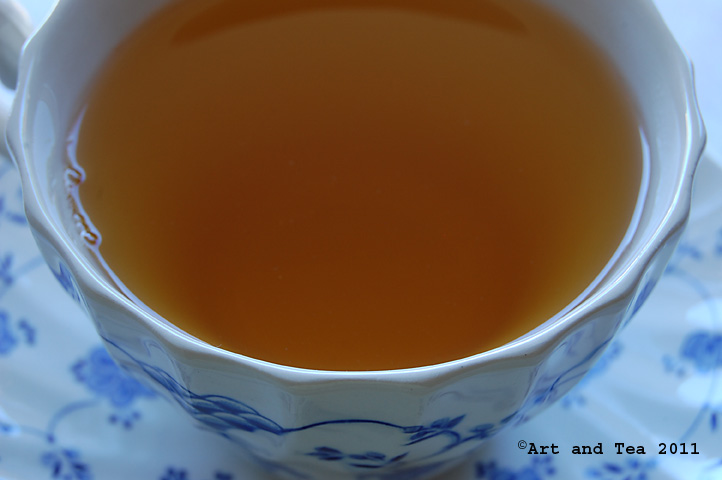
Happy first day of fall, dear tea friends! The gray blanket sky has broken up into wisps of cotton fluff revealing a deep blue sky and the promise of a warm day. This morning I’m enjoying a cup of China Oolong tea. Harvested this past spring, it’s called Pre-Chingming Da Hong Pao. Da Hong Pao translates to “Big Red Robe” and I’ve written about it before here.

Are you wondering what big red robes have to do with this tea? Well, there’s a legend that the mother of an emperor fell ill and was cured by a certain tea. The emperor sent big red robes to clothe and honor the bushes from which the tea originated, in the Wuyi mountains of Fujian province. The legend goes on to say that three of the four bushes still survive today and are highly venerated.

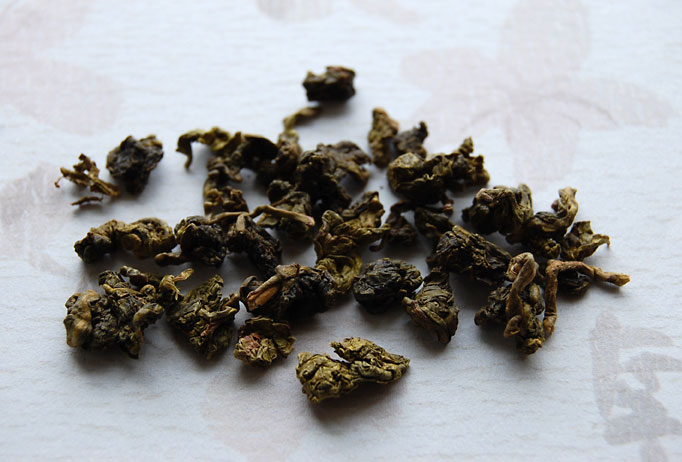
As you can see, the leaves of this tea are huge and mainly intact. I steeped them for 4 minutes in 190F water. Because of their immense size, I used 3 teaspoons of tea leaves in my glass teapot.
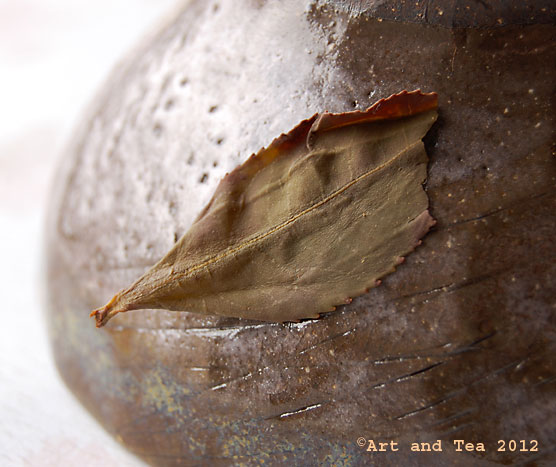
Right away, I could smell the orchid fragrance as the tea leaves steeped. As I poured my first cup, I also detected honey and a slight vegetal fragrance as well.
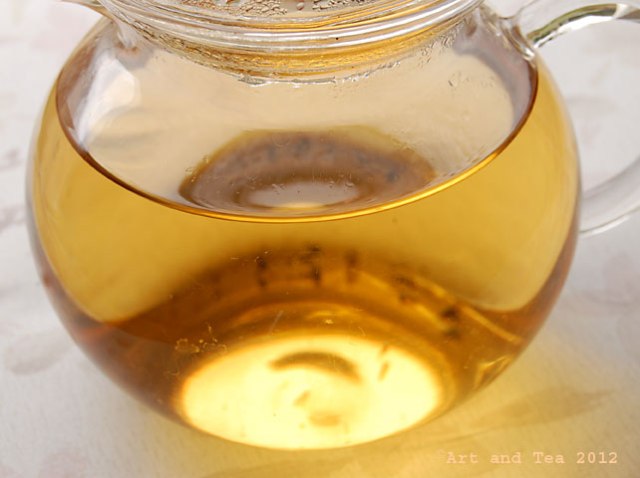
The golden-colored tea liquor is smooth and buttery with notes of orchid, peach and honey. Ambrosia! It is suggested to do multiple steepings with this tea as the flavor develops even further with subsequent steepings. Wow, I think this tea is bursting with flavor on the first steep.
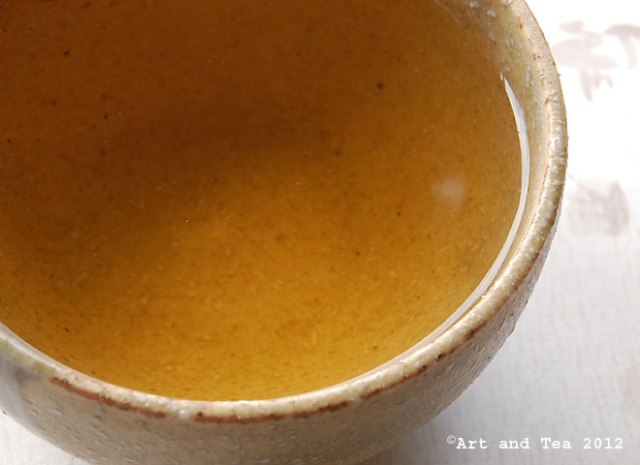
This is a lovely tea.

Today will be spent signing up for a hosting plan for my new website, downloading WordPress and starting to learn how to design it. I’m excited and nervous at the same time as I venture into this unknown territory. I know that I eventually want to sell some of my jewelry online. The question is: where do I sell it? On my own website? On Etsy and provide a link on my website to the Etsy shop? I do know that I want to do this but also know that I want to take the route that is less maintenance work so I can fit it in with my full-time job. If anyone has any experience/feedback about this, I’d love to hear from you.

Thanks for visiting and enjoy your week and your tea!

“All our dreams can come true – if we have the courage to pursue them.”  ~Walt Disney

Saturday Morning Tea

This morning’s tea is a decadent treat.

At approximately $2.25 per cup, it is also an expensive treat! It’s name is quite fitting. Meet Extra Fancy Oolong from Taiwan (Formosa). Extra Fancy indeed.

It is described as a “style of Oolong often referred to as ‘Champagne Oolong’, and exemplifies the art of fine tea manufacture”. We can see how carefully this tea was processed by the full leaf sets still intact.

This tea has been entirely hand processed. From the careful picking of the first two leaves and bud on the tea plant to the drying and shaking of the leaf every hour to bruise and encourage oxidation to the pan roasting that halts the oxidation, the Tea Master who created this tea has synchronized all of these steps perfectly as an art form.

Because Oolong tea is not fully oxidized as is black tea, I steeped the leaves in cooler than boiling point water – about 190 degrees F for 5 minutes.

The deep sherry-colored tea liquor smells like ambrosia, giving off an aroma of fresh peaches. I can’t wait to take my first sip which fills my mouth with notes of ripe fruit, rich and syrupy. Oh, what a treat!

I know it’s a tradition to have a glass of champagne at midnight on New Year’s Eve. Why not enjoy a cup of “champagne” tea instead?

What a wonderful way to welcome in a brand new year!

Until next time, dear tea friends…

To listen to the songs of birds, I skipped the evening meditation,
enjoyed a patch of grass by the edge of an ancient mountain stream.
Pleasure recollected depends on a beautiful phrase;
the appreciative mind meets with a close friend.
Spring water cries out in a rocky valley;
pine trees echo when wind is coming.
I drank a cup of tea and watched the flowing and stillness.
Quietly and naturally I seemed to forget the return of time.

Cho-ui
1786-1866

Saturday Morning Tea

This morning I’m enjoying another tea from the Jun Chiyabari estate in Nepal. Called Himalayan Oolong, it reminds me very much of a tea I reviewed about a year ago in this post.

The leaves look very much like an Oolong tea, large and rolled, yet there are some differences in the taste, creating a tea, in my opinion, whose flavor notes are a melding of Oolong and Darjeeling. As I said in a previous post, their Himalayan Oolongs are created with a secret process resulting in a black tea with the characteristics of a Silvertip Oolong tea. True Silvertip Oolong teas come from Taiwan (Formosa).

The dry leaf gave off a sweet cookie aroma as I spooned the leaves into my glass teapot. Since they’re so huge, I used 2 teaspoons per cup. I steeped the leaves for 4 minutes at a water temperature of approximately 185 degrees F. Based on my experience several weeks ago, I’m trying a longer steeping time initially. After steeping, I detected a light floral aroma in the wet leaf, a faint whisper of a green Oolong’s (like Spring Dragon) floral characteristic.

As you can see, the tea liquor is a lighter amber color than the Himalayan Oolong I reviewed last year. It’s also lighter-bodied in the cup. The flavor is rich and fruity and quite smooth. I might try steeping for 5 minutes at the lower temp and see what happens.

Isn’t it fun to experiment with your tea and see what happens? Some wonderful surprises and some….well…I guess that didn’t work. But then you know and you go on from there.

Some people like to stick with a tea and try different steeping times until the flavor suits them and others don’t want to be bothered with the “fuss”. One’s not right and one’s not wrong. They’re just different ways of approaching something. I think you can tell which way I am. Which way are you?

“It is the soul’s duty to be loyal to its own desires.  It must abandon itself to its master passion.”  ~Rebecca West

Saturday Morning Tea

Good morning, dear tea friends! This morning I am on my way out the door to my polymer clay guild meeting, travel mug in hand. I leave you with a post I did to welcome in spring, with the lovely Magnolia Blossom Oolong. Enjoy!

The crocus I planted last fall are pushing their way up through the earth and their leaf blanket. As the days lengthen and warm, they are drawn to grow and burst into bloom. A big welcome to Spring this weekend!

To celebrate the first day of Spring, my morning tea is a scented tea from China called Magnolia Blossom Oolong. Grown and processed in the Guangdong province in South China, this tea is often described as “Orchid Oolong” as the flowers come from a tree that native Chinese call “yulan”, meaning jade orchid. Despite its translation, yulan is actually a type of magnolia tree (Magnolia denudata) which originated in southern China.

The leaves look very much like a Jade Oolong to me, rolled into compressed shapes. I steeped them for 3 minutes in 190 degree F water.

The shapes released as they steeped, giving off a wonderful fragrance. As I lifted the lid from my glass teapot, it was like putting my face into a bouquet of freshly cut flowers!

I find the floral flavor to be similar to a jasmine tea. The flower notes are very strong and sweet but not cloying. The flavor of the Oolong tea comes through the scenting, adding a fuller, silky smooth mouth feel. It doesn’t have the delicacy of a jasmine tea though.

I was able to find out more information about my Hawaiian teabowl. Created by Clayton Amemiya on the Big Island, it was fired in a traditional Japanese kiln called an anagama. Clayton’s work combines Japanese tradition with the unique style of the Big Island. What I thought was glaze on the bowl is actually ash and wood. From his brochure:

“No glaze has been used. A glazed appearance is made by the firing process. Flying ash and wood particles fuse to the clay as they draft through the kiln. Because this is done by the fire, no two pieces can ever be the same. Individual woods have many of their own firing properties. This understanding gives Clayton the opportunity to collaborate with a force of nature.”

Knowing this makes my teabowl that much more special to me. As tea drinkers, we also collaborate with nature when we steep our leaves and transform them into a cup of tea.

Happy Spring!

“All you need is deep within you waiting to unfold and reveal itself.  All you have to do is be still and take time to seek for what is within, and you will surely find it.” ~Eileen Caddy

Unless otherwise noted, all text and photos are the property of Art and Tea at http://www.artandtea.wordpress.com, copyright 2007-2011.

Saturday Morning Tea

The crocus I planted last fall are pushing their way up through the earth and their leaf blanket. As the days lengthen and warm, they are drawn to grow and burst into bloom. A big welcome to Spring this weekend!

To celebrate the first day of Spring, my morning tea is a scented tea from China called Magnolia Blossom Oolong. Grown and processed in the Guangdong province in South China, this tea is often described as “Orchid Oolong” as the flowers come from a tree that native Chinese call “yulan”, meaning jade orchid. Despite its translation, yulan is actually a type of magnolia tree (Magnolia denudata) which originated in southern China.

The leaves look very much like a Jade Oolong to me, rolled into compressed shapes. I steeped them for 3 minutes in 190 degree F water.

The shapes released as they steeped, giving off a wonderful fragrance. As I lifted the lid from my glass teapot, it was like putting my face into a bouquet of freshly cut flowers!

I find the floral flavor to be similar to a jasmine tea. The flower notes are very strong and sweet but not cloying. The flavor of the Oolong tea comes through the scenting, adding a fuller, silky smooth mouth feel. It doesn’t have the delicacy of a jasmine tea though.

I was able to find out more information about my Hawaiian teabowl. Created by Clayton Amemiya on the Big Island, it was fired in a traditional Japanese kiln called an anagama. Clayton’s work combines Japanese tradition with the unique style of the Big Island. What I thought was glaze on the bowl is actually ash and wood. From his brochure:

“No glaze has been used. A glazed appearance is made by the firing process. Flying ash and wood particles fuse to the clay as they draft through the kiln. Because this is done by the fire, no two pieces can ever be the same. Individual woods have many of their own firing properties. This understanding gives Clayton the opportunity to collaborate with a force of nature.”

Knowing this makes my teabowl that much more special to me. As tea drinkers, we also collaborate with nature when we steep our leaves and transform them into a cup of tea.

Happy Spring!

“All you need is deep within you waiting to unfold and reveal itself.  All you have to do is be still and take time to seek for what is within, and you will surely find it.” ~Eileen Caddy

Unless otherwise noted, all text and photos are the property of Art and Tea at http://www.artandtea.wordpress.com, copyright 2007-2011.