Saturday Morning Tea

Happy New Year! I hope that you all enjoyed the holiday season. And now here we find ourselves in January of a brand new year.

A time of new beginnings…

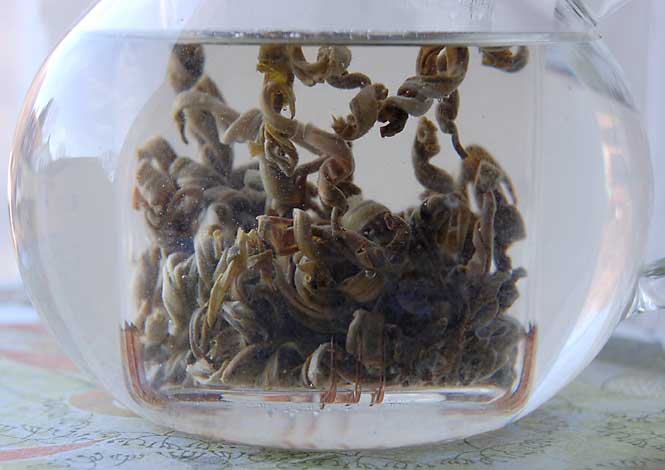
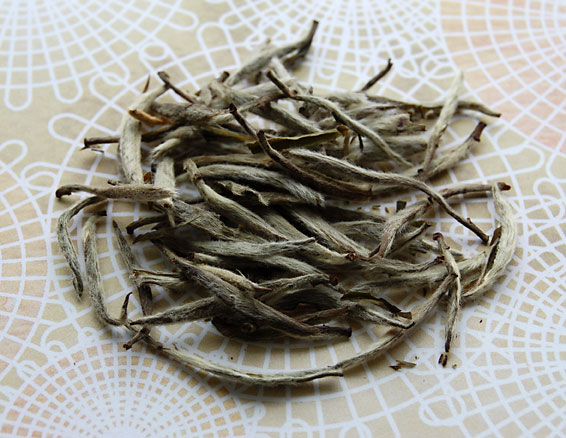
As I gaze out my window at an iced world of white, it inspired me to reach for a delicate leaf to steep in my cup this morning, a China white called White Point Reserve.

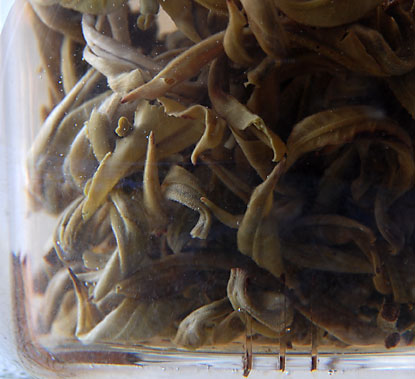
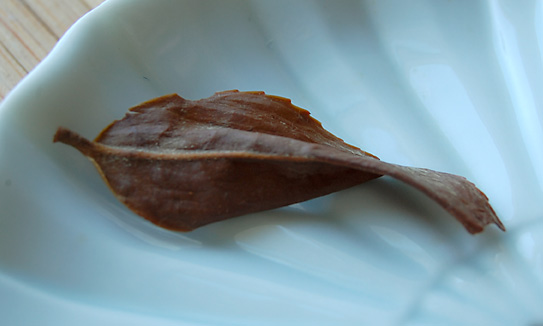
Composed entirely of unopened leaf buds, this tea is soft and sweet.

I steeped the buds in 180 degree F water for 3 minutes.
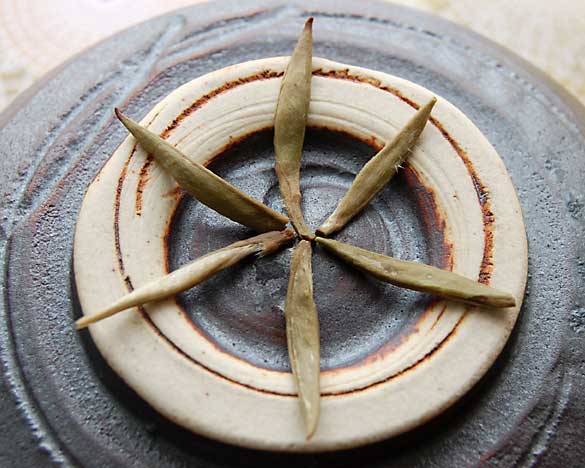
The buds remain unopened in their pristine state even after steeping. White tea is the least processed of all teas, plucked, dried, gently heated to halt oxidation and there you go.

The tea liquor is a pale ecru color and allows my teapot to reflect the winter wonderland outside. A lightly sweet aroma drifts from my cup and the flavor is also sweet with nutty notes. It always amazes me how white tea usually doesn’t have a hint of the vegetal quality of green tea.

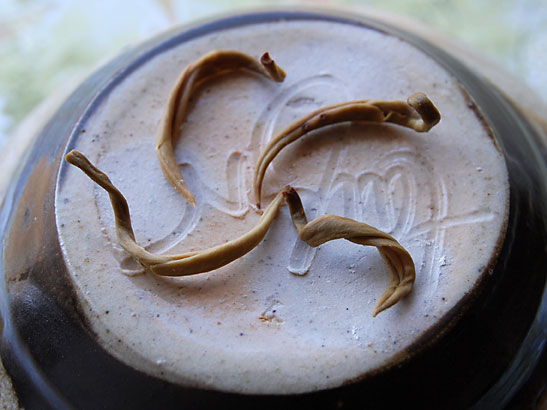
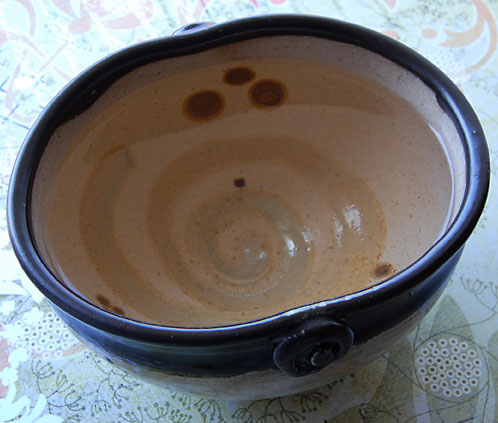
I chose my “iced” tea bowl to enjoy my tea in. Notice a color theme (or lack thereof) going on here?

This type of weather at this time of year always induces a quiet, reflective state of mind for me. I just want to sit and do nothing else but sip my tea and gaze out my window…

“Let us be silent, that we may hear the whispers of the gods.”

~Ralph Waldo Emerson
Saturday Morning Tea

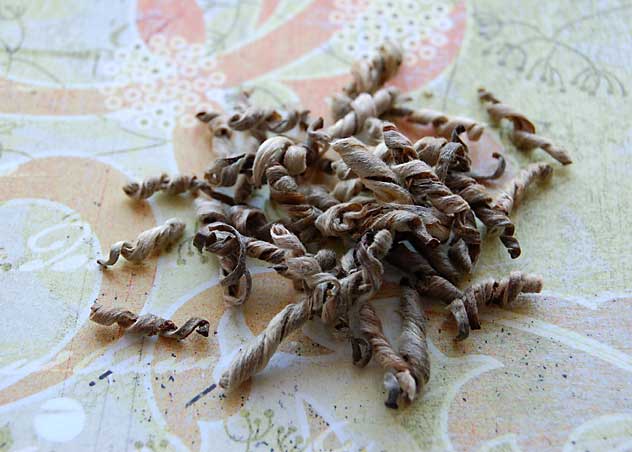
I experienced sheer joy in taking photos of this morning’s tea, a green tea from the Yunnan province in China. It’s called Yunnan green Snow Dragon.

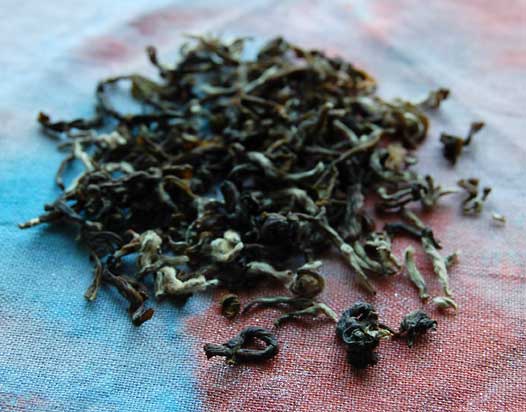
I don’t think that anyone rivals the tea artisans of China in their tea leaf rolling techniques. Corkscrews? Unbelievably amazing, huh?

With such an auspicious name, I wondered where this tea came from so I looked up if there were any mountains called Snow Dragon in Yunnan.  Here’s what I discovered.

Jade Dragon Snow Mountain, located in northern Yunnan province, is the southernmost glacier in the Northern hemisphere. It consists of 13 peaks, the highest one being 18,360 feet. It’s never been climbed. Wow. You can see photos of the area and read about the legend of the creation of Snow Dragon mountain here.

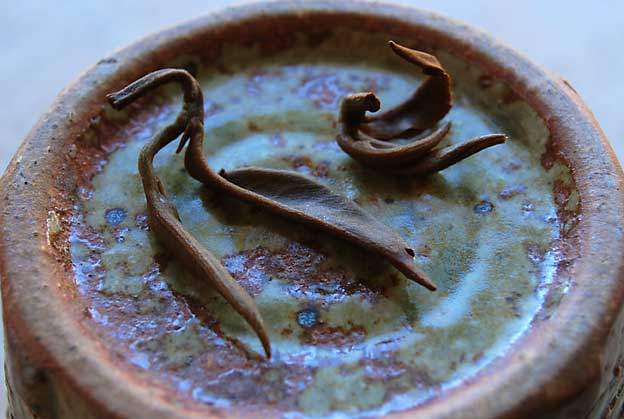
I steeped the little corkscrews for 3 minutes in 180 degree F water. Their shape relaxed considerably towards the end of their steeping time.

As I removed the infuser basket from my glass teapot, I was struck by an intense aroma of fresh pear. This distinct note carried on into the flavor.

These steeped leaves remind me very much of a white tea, consisting of mainly leaf buds, the newest growth on the tea plant. That said, the further manipulation of the leaf into a shape is the mark of a green (or black or Oolong) tea, not a white tea.

The straw colored liquor is as pale as a white tea though.

The flavor is very soft and delicate with notes of pear and fruit. As the tea cools, its sweetness becomes more defined and lingers in my mouth.

As I watched the leaves steep and release their shape, I thought of how we all have a tendency to hold on to things – people, situations, even sickness and emotional wounds – because we get so comfortable with them, even if it is time to move on and change our shape. Even though the unknown is scary, if we are just able to release and let go, we can discover the beauty in a new way of being. Just like the corkscrew tea leaves released their shape and transformed into a delicious cup of tea.

“People have a hard time letting go of their suffering. Out of a fear of the unknown, they prefer suffering that is familiar.” ~Thich Nhat Hanh

Saturday Morning Tea

I know that I’ve mentioned this before but if someone asked me the question – what’s your favorite tea? – I would have to be honest and admit it. Darjeelings have a special place in my heart. What is it about them, you might ask, that puts them at the top of my list? Well, there are so many wonderful characteristics but I would have to say that it’s their fragrance that transports me to another place. A quiet, calm place. To me, tea is more than just its flavor. It is an experience and a Darjeeling definitely fulfills that for me.

So, without further ado, this morning’s tea is a Darjeeling from the Arya estate and is called Ruby. A gem of a cuppa, for sure.

As you can see, the leaves are much larger than an average Darjeeling. They are plucked from specially grown clonal tea bushes and carefully processed by hand to ensure their leaf remains intact and the flavor is developed.

I used twice the amount of tea I usually spoon into my glass teapot and steeped the leaves for 3 1/2 minutes in boiling point water.

Just think – this leaf started its life in another part of this world. A land of towering, majestic mountains and a climate that nurtures its careful growth into something unique that produces a delicious brew.

It is said that the Arya estate was started by a group of Buddhist monks who carefully developed their tea plants from some seeds brought over from China. I reviewed another Arya Ruby several years ago on a snowy day in early spring. You can read that review here.

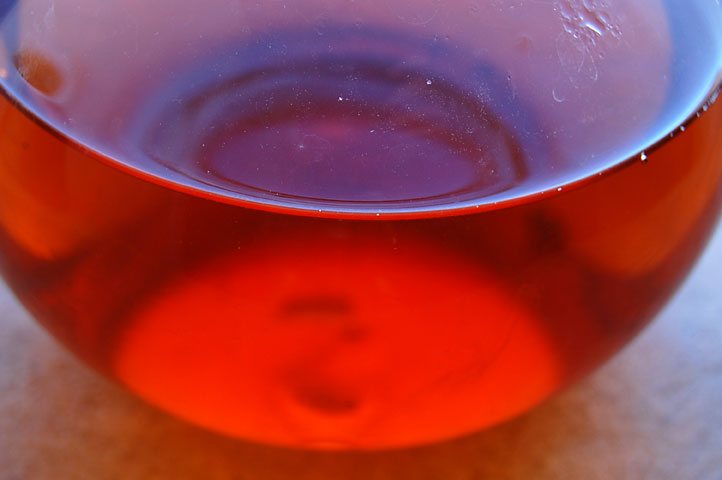
A customer told me this past week that he loves Darjeelings for their beautiful amber color. I agree!

A pronounced fruity, grape aroma wafts up as I pour my first cup.

The fruitiness carries on into the flavor with rich notes of muscatel. This tea is a second flush harvest, picked in the summertime. With each sip, I’m transported to a warm, sunny time where swollen, ripe fruit are just ready to be picked. Mmmmm…

Today I’m attending a holiday concert where a good friend is performing with her harp. I can’t think of anything better to get into the spirit of the season than to close my eyes and settle into the lovely angelic strains of harp music.

What are you doing to get into the spirit of this holiday season?

“Nobody can conceive or imagine all the wonders there are unseen and unseeable in the world.” ~Francis P. Church

Saturday Morning Tea

Good morning, dear tea friends! I’ve returned from my trip to New Mexico and am glad to be here, sharing a cup of tea with you once again. As promised, today I am brewing up a pot of Chinese green tea called Pi Lo Chun Bao Wei.

Pi Lo Chun, or Green Snail Spring, is a well-known China green tea from Jiangsu province. Its distinct spiral leaf shape is created during the firing step of its processing. After the fresh leaf is plucked, usually in the morning, it is brought to the factory in either baskets or cloth pouches to protect the leaf and allow for air circulation. Once at the factory, the leaf is spread out on floor mats to air-dry and reduce the moisture content of the leaf.

As Pi Lo Chun leaf must be manipulated during the next step, the firing step, it is placed in short, round metal drums which are placed over a heat source. A gentle twist and roll motion of the hand as heat is applied coaxes the leaf into its characteristic shape, resembling a tiny fiddlehead fern shape. In fixing the leaf into a specific shape, its chi, or energy, remains fixed in the leaf until the moment of steeping when it is released into the cup of tea.

I steeped the leaves for 3 minutes in 180 degree F water. The pale golden liquor gives off a distinctly sweet aroma.

As I take my first sip, a pronounced licorice/anise flavor note surprises me in its intensity. It mellows out as my tea cools revealing a light floral note of honeysuckle. As I usually find a Pi Lo Chun to have fruity notes, this is quite unique. And yummy. Interestingly enough, there are no vegetal notes in this green tea.

As the days shorten and the nights wrap us in a longer, darker cloak, I find myself turning inward in solitude and reflecting upon the year that is flowing towards its end. I find my center and a measure of comfort in the following enduring prayer.

All shall be well,

And all shall be well,

And all manner of things shall be well.

~Dame Julian of Norwich, a 13th century English mystic

Saturday Morning Tea

This morning we travel to the Yunnan province of China for a cup of black tea called Yunnan Golden Snail. A careful plucking of the top leaves on the tea bush is handcrafted into beautiful curls. The leaf looks like the black tea version of Pi Lo Chun, a China green tea whose name translates to Green Snail Spring. You can read my review of that tea here.

I steeped the leaves in boiling point (212 degrees F) water for 4 minutes. Unlike the twisted, “spider leg” tea leaves from last week, these leaves fully unfurled during steeping in what’s called the “agony of the leaf”.

My teapot shows the tree in my neighbor’s backyard that still holds a lot of its golden leaf. I just love those colors against the brilliant blue late autumn sky!

Oh, just look at that gorgeous leaf! It imparts a light smoky aroma, reminiscent of cooked bacon. This smoky quality comes through in the flavor as well. It’s not the fireplace smoky of Lapsang Souchong nor is it the tobacco smoky of gunpowder tea. It’s definitely…bacon…mmmm…and to a confirmed vegetarian like myself, an interesting treat to taste that once again.

The russet liquor glows in my teapot as I pour my first cup. Notes of spice and raisin fill my mouth with a bright astringency in the finish that lingers very nicely. This tea tastes great plain but would definitely stand up to a dollop of milk, if desired.

I sit and gaze out the window, my cup warming my hands, and think of my coming trip to New Mexico. I leave in 2 days time to visit my son and his family, including my brand new grandson, Landon, who came into this world last Monday. My son now has his own son and the circle of life continues…

I won’t return from my trip until next Sunday evening so I’m sorry to say that there won’t be any Saturday Morning Tea post next week. However, I will look forward to sharing another cup of tea with you in 2 weeks time when I believe it will be time to review another Pi Lo Chun tea. What do you think? As always, if you ever have any requests for tea reviews or questions about tea, I am always happy to receive them.

Happy tea drinking, dear friends!

“Let us imagine care of the soul, then, as an application of poetics to everyday life.” ~Thomas Moore