Saturday Morning Tea

The sun is shining in a deep blue, early spring sky as I begin my day with a cup of Darjeeling. I wish I could tell you that I’m enjoying a cup from this year’s first flush harvest season but they haven’t arrived just yet. This is a cup of an autumnal Darjeeling from the Sungma estate, harvested last fall.

Darjeeling, located in northeastern India, has 3 plucking seasons, first flush, second flush and autumnal. Sometimes there’s a plucking that’s not quite first or second flush and is called “in between”. The autumnal harvest isn’t as famous as the first and second flush, however, it produces a wonderful tea with the characteristics of Darjeeling yet with a much mellower and smoother flavor profile.

As I do with most Darjeeling black teas, I steeped the leaves for 3 minutes in boiling point (212 F) water.

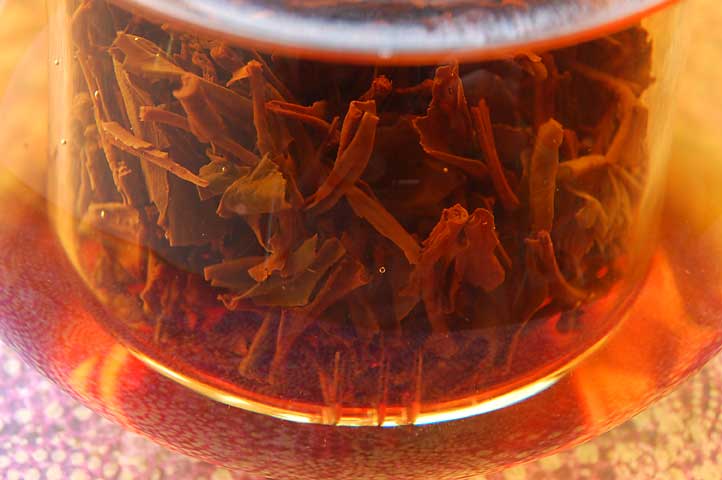
The rich liquor glows like dark honey in my glass teapot. As I pour my first cup, a delicate fruity aroma wafts up.

The flavor is incredibly smooth with bright notes of fruit. This would be a great tea for those tea lovers looking for a deeper yet mellow Darjeeling cup. It doesn’t have any of the green astringent notes of a first flush or the bold muscatel notes of a second flush.

I love how the deep blue of the sky mixes with the rich color of my tea.

Sky and earth, water and fire.

My grandkids are visiting from New Mexico right now and I am having such a grand time immersing myself in the little ones’ world. Monday we’re headed into Boston to visit the New England Aquarium. Ella can’t wait to see the fishies!

Enjoy your weekend, dear tea friends!

“The soul should always stand ajar, ready to welcome the ecstatic experience.” ~Emily Dickinson
Saturday Morning Tea

The crocus I planted last fall are pushing their way up through the earth and their leaf blanket. As the days lengthen and warm, they are drawn to grow and burst into bloom. A big welcome to Spring this weekend!

To celebrate the first day of Spring, my morning tea is a scented tea from China called Magnolia Blossom Oolong. Grown and processed in the Guangdong province in South China, this tea is often described as “Orchid Oolong” as the flowers come from a tree that native Chinese call “yulan”, meaning jade orchid. Despite its translation, yulan is actually a type of magnolia tree (Magnolia denudata) which originated in southern China.

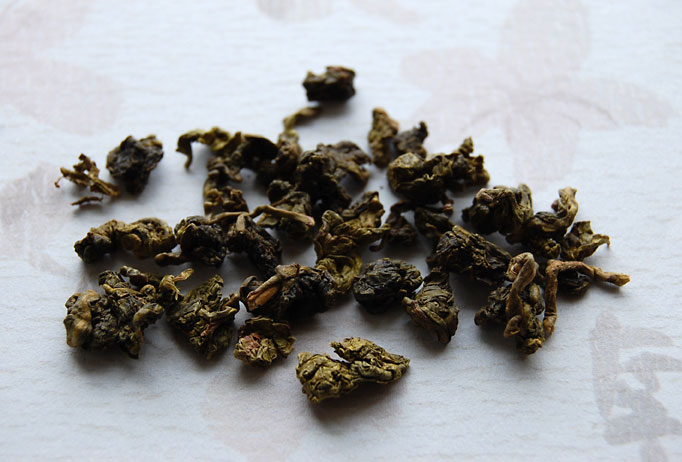
The leaves look very much like a Jade Oolong to me, rolled into compressed shapes. I steeped them for 3 minutes in 190 degree F water.

The shapes released as they steeped, giving off a wonderful fragrance. As I lifted the lid from my glass teapot, it was like putting my face into a bouquet of freshly cut flowers!

I find the floral flavor to be similar to a jasmine tea. The flower notes are very strong and sweet but not cloying. The flavor of the Oolong tea comes through the scenting, adding a fuller, silky smooth mouth feel. It doesn’t have the delicacy of a jasmine tea though.

I was able to find out more information about my Hawaiian teabowl. Created by Clayton Amemiya on the Big Island, it was fired in a traditional Japanese kiln called an anagama. Clayton’s work combines Japanese tradition with the unique style of the Big Island. What I thought was glaze on the bowl is actually ash and wood. From his brochure:

“No glaze has been used. A glazed appearance is made by the firing process. Flying ash and wood particles fuse to the clay as they draft through the kiln. Because this is done by the fire, no two pieces can ever be the same. Individual woods have many of their own firing properties. This understanding gives Clayton the opportunity to collaborate with a force of nature.”

Knowing this makes my teabowl that much more special to me. As tea drinkers, we also collaborate with nature when we steep our leaves and transform them into a cup of tea.

Happy Spring!

“All you need is deep within you waiting to unfold and reveal itself.  All you have to do is be still and take time to seek for what is within, and you will surely find it.” ~Eileen Caddy

Unless otherwise noted, all text and photos are the property of Art and Tea at http://www.artandtea.wordpress.com, copyright 2007-2011.

Saturday Morning Tea

My thoughts and prayers go out to the people of Japan and all those affected by the earthquake and tsunamis. May they find shelter and comfort during this tragic, frightening time.

A couple of weeks ago, I reviewed a Shawlands estate Ceylon OP1 here. One of my readers requested that I review another lot from that very same estate, this time the Shawlands BOP1, BOP meaning Broken Orange Pekoe, more simply a broken leaf tea.

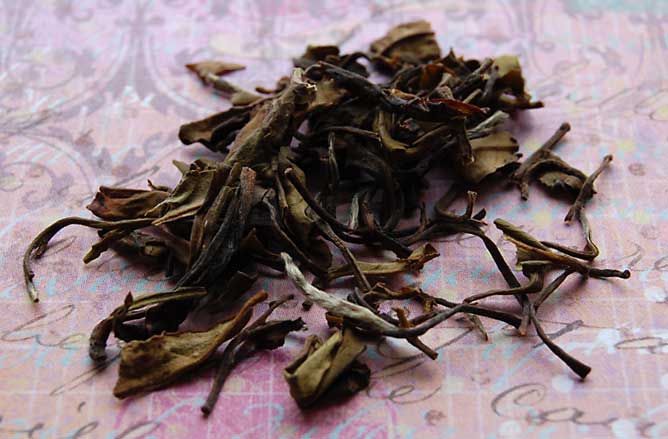
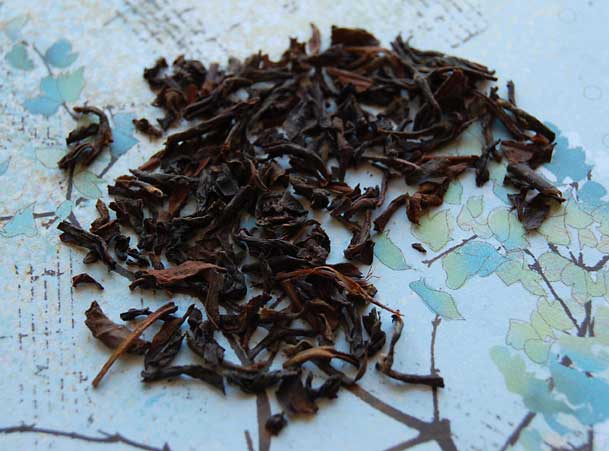
The long threads of leaf really don’t look broken to me, their appearance being very similar to the OP1 leaf.

I steeped the leaves for 4 1/2 minutes in boiling point (212 F) water, the same as the OP1.

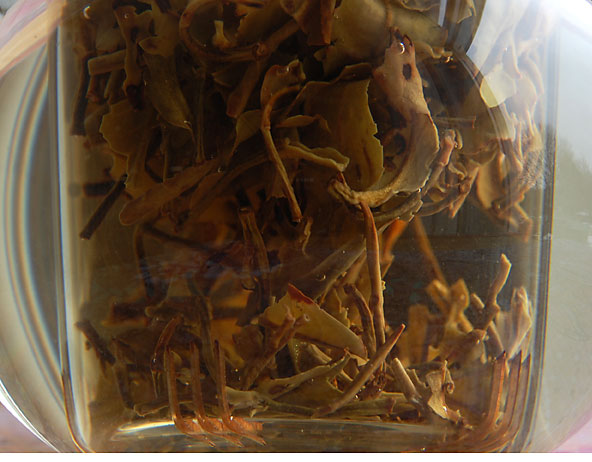
After steeping, the broken pieces are revealed along with pieces of stem, the long threads I saw in the dry leaf.

You might be thinking to yourself, now why aren’t these teas the same since they come from the same tea estate? The subject of single estate tea lots is an interesting one, a subject I usually address at least several times a week at my job. Customers will wonder why we “discontinued” a tea. In other words, we sold a particular tea and now they want to purchase it again but we’re unfortunately sold out of it.  Can’t we just get more? Well, we might be able to purchase another lot from that estate depending upon what is produced the following year but it won’t be the exact one that sold out because that lot was from a previous harvest.

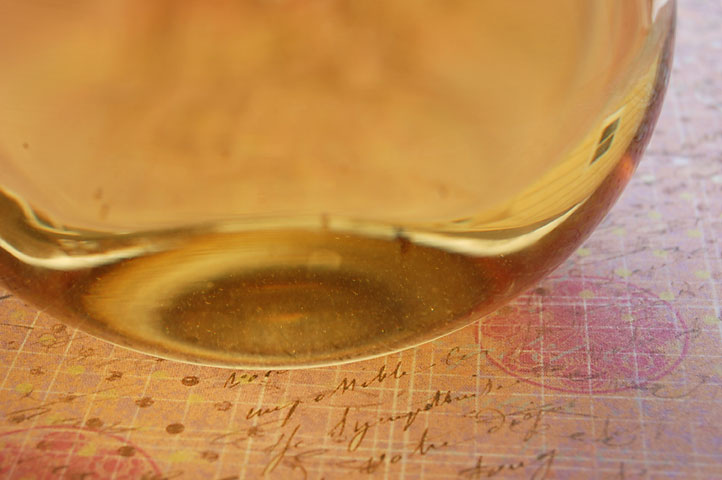
Ah, what gorgeous color – a glowing copper that invites me to take my first sip.

Tea is plucked and then processed as individual lots. Each lot will be different from the others even though it might have come from the same tea estate, the same land, in the same country. This is because there are so many factors that contribute to the ultimate flavor of the tea, including the exact moment of the leaf’s plucking, or harvest, and its processing.

All that being said, the flavor of this tea IS very similar to the tea from 2 weeks ago, however, the mintiness is much less pronounced. The tea liquor itself also feels thicker in my mouth with a smoother character. I enjoyed its medium body very much without milk or sweetener.

A beautiful, deep blue sky, just on the cusp of spring, is reflected in my cup. Joy…

I encourage you to try cupping 2 teas from the same estate, side by side. Notice the difference in the dry and wet leaf, the color of the tea liquor, the aroma and the flavor notes. It’s fun to do and also helps to refine your tea drinking palate. Enjoy!

“The soul should always stand ajar, ready to welcome the ecstatic experience.” ~Emily Dickinson

Saturday Morning Tea

The hard edges of winter continue to soften as temps creep up over the freezing mark and snow and ice transform. As we start the transition from one season to the next, it’s almost as if nature is holding its breath waiting for just the right moment to burst into life. I find my mood these days to be just in the same place – poised and waiting. Waiting for warmth. Waiting for growth. Waiting for nature to rebirth itself in its continuing cycle.

I’ve strayed a bit from my usual choice of Darjeelings this morning. Not a first flush, not a second flush, not even an autumnal but a Darjeeling Oolong. Tindharia estate Oolong tea.

Most of the teas produced in the Darjeeling tea growing region of northeast India are black teas. Some are green teas, rarer are white teas but rarer still are Oolong style teas. I don’t have any information on the oxidation level of this Oolong but if I had to guess, I would say it’s low.

The leaf is much bigger than a Darjeeling black tea and wow, look at that intact fine plucking of the upper leaves and bud. I love to find a leaf set like that as I sift through the wet leaf. Taking photographs of the tea in all its steeping stages has given me a finer appreciation of how the tea leaf makes its journey from bush to cup. It gives me an awareness that I wouldn’t usually have. It’s amazing what you see when you look at something very closely.

I steeped the leaves for 4 minutes in 190 degree F water. I find its light golden color to be more in line with a green or white tea as well as the vegetal, almost herbaceous flavor notes and aroma.

Isn’t this a gorgeous teabowl? My friend got it for me in Hawaii on his recent vacation there. The glazing reminds me of cake icing. Mmmm…

As my tea cools, I detect a fruity, almost muscatel flavor note. Oh, there you are, Darjeeling flavor. A whisper of peach reminds me of a Fancy Oolong from Taiwan. This tea has an incredible range of complexity.

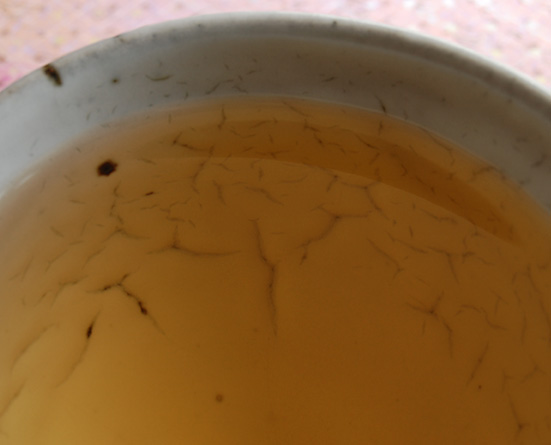
I love the pattern of cracks on my teabowl. I wonder if they fired it in such a way that it was intentional. Intentional or not, I love its character. It makes me want to peer more closely at it to discover its wonders.

Just like with my tea leaves…

“We shall not cease from exploration

And the end of all our exploring

Will be to arrive where we started

And know the place for the first time.”

~T.S. Eliot

Saturday Morning Tea

As I sit here and sip my tea, I can feel my whole house shake from the strength of the wind outside. It’s a bit unnerving. We’re experiencing an incredible drop in temps from almost 60 yesterday to the 20s later on this afternoon. The winds are sweeping in a big change. What can I say? It’s late winter here in New England…..

On to my tea…. a lovely Pouchong style tea from the Jun Chiyabari estate in Nepal, called Jun Chiyabari Jade. A Pouchong tea is a very lightly oxidized green tea. Because of the oxidation, some consider it an Oolong tea. I’d like to think of it as being in its very own category, a very unique and distinct tea. The word “pouchong” means “the wrapped kind”, referring to the ancient practice of wrapping the leaves as they were drying.

Back in 2000, brothers Lochan and Bachan Gyawali realized their dream of starting their own tea garden/company and Jun Chiyabari, meaning “moon tea garden”, was born. I wrote about their amazing story here.

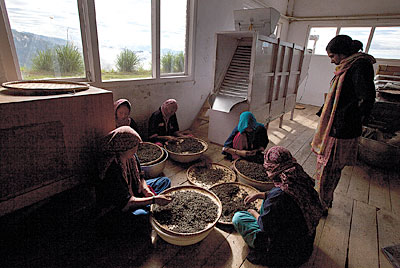
A recent article in the Nepali Times wrote about their commitment to empowering women in the tea business. Nearly 80% of their over 230 work force is women.

This is a great photo from the article, showing the women gathered round sorting the tea leaves. A circle of women. Very powerful.

They do a great job. Look at the beauty of that intact tea leaf.

I steeped the leaves for 3 minutes in 180 degree F water. The aroma is sweetly floral, like a lightly oxidized Jade Oolong.

The golden liquor is amazingly sweet, almost as if I had added sugar to my tea. Hints of melon and apricot whisper in the flavor.

I think they’re producing some great teas out of that tea garden. This tea was delicious. And I say “was” because my cup is now empty.

Time to go make another pot!

“You must have a room or a certain hour of the day or so where you do not know what was in the morning paper…a place where you can simply experience and bring forth what you are, and what you might be…At first you may find nothing’s happening….But if you have a sacred place and use it, take advantage of it, something will happen.” ~Joseph Campbell