Saturday Morning Tea

Produced in the spring from the first plucking of the tea bush, Gyokuro is Japan’s most treasured tea.

On this blustery fall morning, I watch the leaves dance and twirl outside my window as I sip from a cup of Gyokuro Kenjyo tea. Kenjyo translates to “present to noble man”.

What distinguishes a Gyokuro tea from other Japanese green teas is that as soon as the bushes start to flush with new growth, they are shaded. The first shading method, called tana, is when a black netting is thrown over trellises that have been built up around the rows of tea bushes. The second method, called jikagise, is when each bush is individually wrapped in cloth.
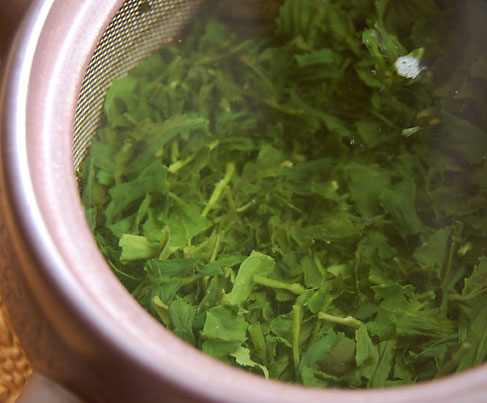
The bushes will grow in the shade for approximately 3 weeks.  The shading increases the chlorophyll production which in turn affects the balance of caffeine, flavanols and sugar in the leaf.  The absence of photosynthesis also increases the theanine component in the leaf.  Theanine is an amino acid that gives tea its vegetal taste.  With the increase of theanine, Gyokuro tea is quite vegetal.
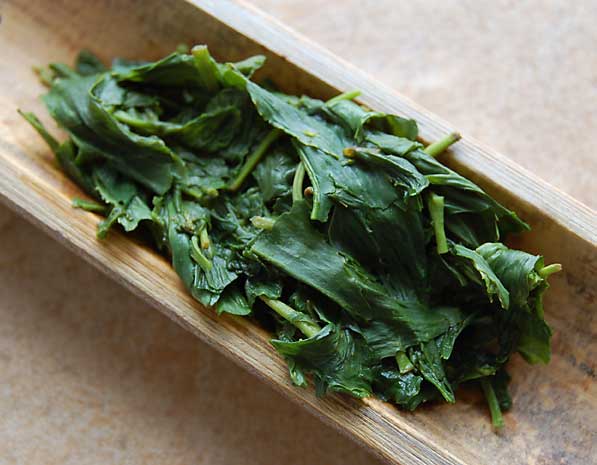
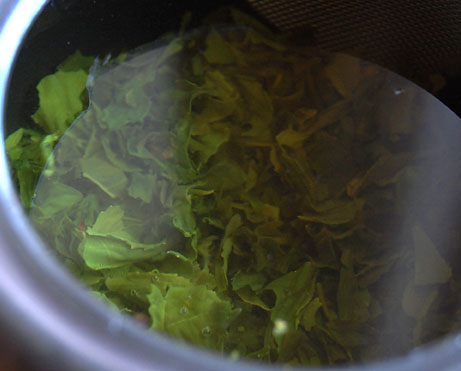
I steeped my Gyokuro Kenjyo for 3 minutes in 170 degree F water. Look at that brilliant green leaf. It reminds me of cooked spinach.

The aroma is of spring asparagus, very vegetal.

As I take my first sip, a rich sweetness fills my mouth, not at all what I was expecting after smelling the aroma. The vegetal flavor is definitely there but the sweetness smooths all its pungent edges. So sweet!
Because there is only a small amount of tea styles grown in Japan, most tea is blended and sold without any tea farm or garden designation. The tea is sold as the brand of a tea shop or tea company.

Yearly competitions are held to seek the best Gyokuro producer. The hard work and intricate care that goes into producing this amazing tea makes it truly an art form.

“Making art is a rite of initiation.  People change their souls.”

~Julia Cameron, Writer

Saturday Morning Tea

After a damp, cool week, today dawned bright and clear and dry. A perfect weekend to be outside, soaking in the brilliant colors of autumn.

In the second week of my series on Japanese tea culture, today’s tea is a Japanese green tea called Fukamushi Cha, meaning “deep steamed tea”.

Almost all Japanese green tea is steamed for 30-45 seconds in the first step of processing. This halts oxidation of the leaf and sets the distinctive, brilliant green color of the Japanese green tea leaf as well as giving it its pronounced vegetal flavor.

Fukamushi Cha undergoes a deeper, or longer steaming time.

Just look at that gorgeous green leaf.

Tea drinking in Japan can be traced back to the 8th century when the Emperor Kammu dispatched several diplomatic missions to China to learn about and better understand their culture.

As in China, tea drinking was only practiced in Japan among monks, the nobility and the imperial court for many years.

It wasn’t until the 12th century when Myoan Esai, a Japanese Buddhist priest, encouraged all Japanese citizens to drink tea for their health, writing the first Japanese book on tea entitled Kissa Yojoki which translates to “Tea Drinking Good for the Health”.

I steeped my Fukamushi Cha for 3 minutes in a lower temperature water, 160 degrees F. The aroma is feather light and vegetal.

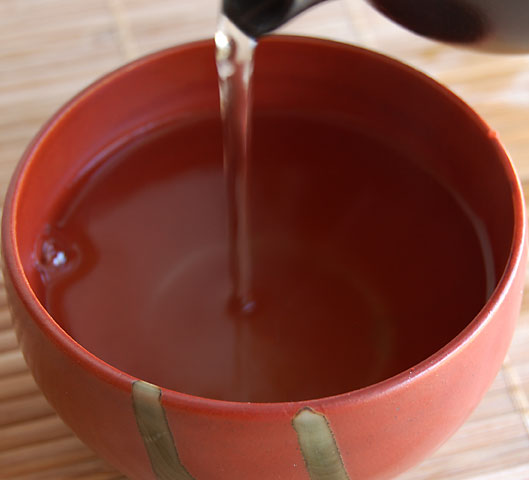
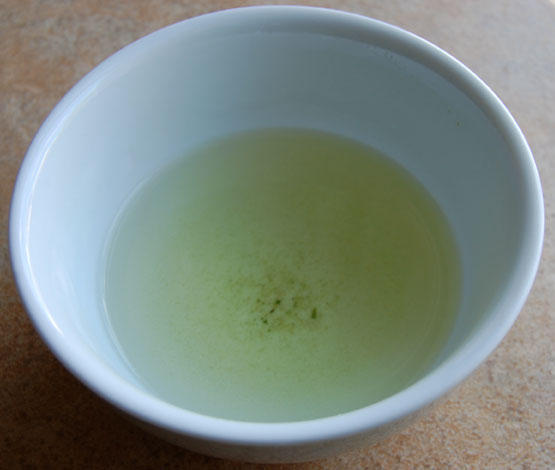
The pale spring-green tea liquor is very sweet with a light pungency which refreshes my palate. A pronounced vegetal flavor embraces the sweetness.

Over time, tea became elevated to a fine art in Japan, culminating with the development of the Japanese tea ceremony known as Chanoyu. I had the privilege of attending a tea ceremony 3 years ago and wrote about it here.

This weekend will be a fall cleaning, staying at home kind of weekend for me. Perhaps I’ll even find some time to spend in my studio!

Please join me next week when I will be sharing my review of a Japanese gyokuro tea.

“Make a delicious bowl of tea; lay the charcoal so that it heats the water; arrange the flowers as they are in the field; in summer suggest coolness, in winter, warmth; do everything ahead of time; prepare for rain; and give those with whom you find yourself every consideration.”

~Sen Rikyu, Zen tea master (1522-1591)

Saturday Morning Tea

Happy October, tea friends. October in New England is one of my favorite times of year with its glorious blazes of color streaked across nature’s canvas. A feast for the eyes. This month I’m going to explore tea from Japan and I’m starting the month off with quite a unique tea, a new experience for me and quickly a new favorite.

I introduce you to a black tea from Japan called Ikumi.

Yes, you heard me correctly. A Japanese black tea.

Black tea has been cultivated in Japan for approximately 150 years, however, it is rarely exported out of the country. Almost half of Japan’s tea is grown in the Shizuoka prefecture, an area of abundant rainfall and thick fog located on the central eastern coastline. It is also an area prone to devastating earthquakes which hit historically every 100-150 years, the last one occurring in 1854. Interestingly enough, the name Shizuoka means “Tranquil Hills”.

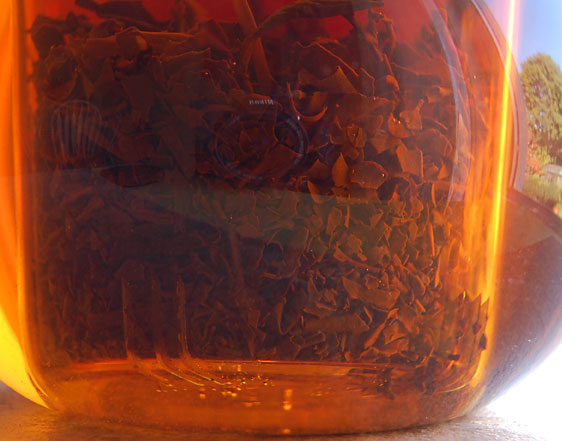
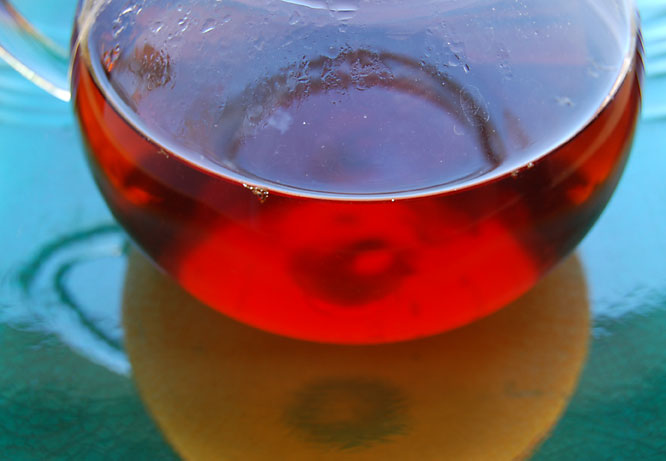
As the tea leaves steeped in boiling point (212 degrees F) water for 4 minutes, a sweet nutmeg aroma wafted up from my glass teapot, portending wonderful flavor notes to come.

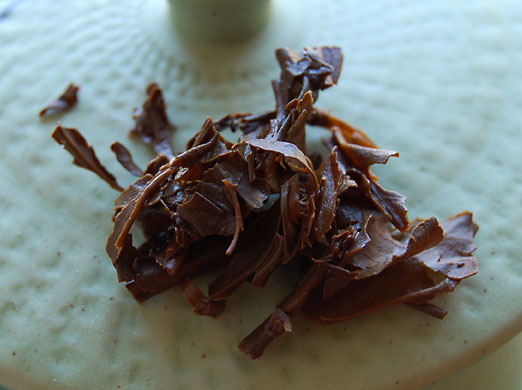
The dark amber liquor is delightfully complex with notes of nutmeg and black raspberry one moment and then cocoa and cinnamon the next. Yum!

Look at that dark, rich color.

A cool breeze blows in my window, a welcome relief to the tropical humidity of this past week. With leaves of crimson and gold framed against a brilliant blue sky today, it’s the perfect day for a nature walk.

Enjoy your weekend!

“Life’s ups and downs provide windows of opportunity to determine your values and goals. Think of using all obstacles as stepping stones to build the life you want.” ~Marsha Sinetar, author