Saturday Morning Tea

SpringHarvestSenchaDry01191

Good morning, dear tea friends! As the wind howls outside my windows, I dream of spring and those thoughts have led me to my morning tea – a Japanese green tea called Spring Harvest Sencha. This tea is a rare treat as a tea of this high grade is usually not exported outside of Japan.
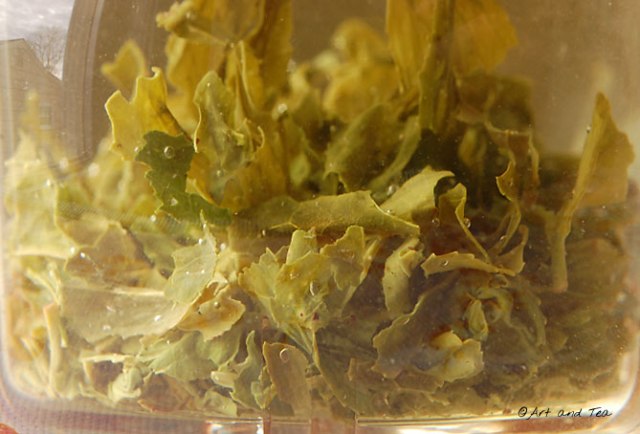
SpringHarvestSenchaSteep011

As the name suggests, it is a spring harvest, like a first flush Darjeeling. The most well known Japanese green tea is Sencha, which is harvested after Shincha, the very first tea of the spring. With each subsequent harvest, the tea becomes stronger and darker with leaves of lesser quality and price. The exceptional quality of this tea shows that it was an earlier harvest.
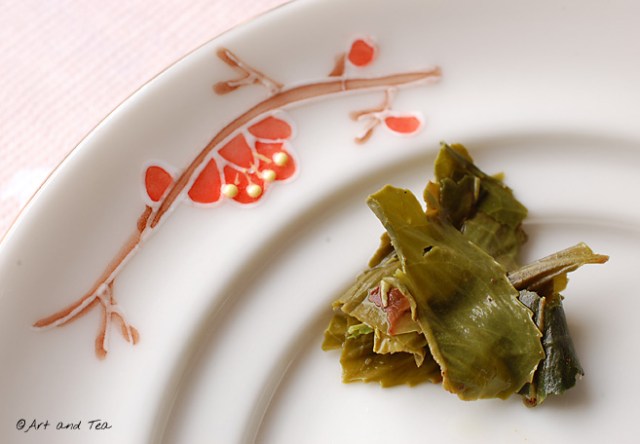
SpringHarvestSenchaWet01191

Japanese teas are recognizable by their grassy, needle-like shape. The shape is attained by sending the leaf through a series of rolling machines. Paddles move the tea back and forth over metal ridges while heat is applied so the leaf is slowly formed into its needle shape.

I steeped the leaf for 2 minutes in 175 degree F water. Some Japanese tea lovers will use a lower temp and steeping time when preparing their tea. I have found that this works best for my taste.
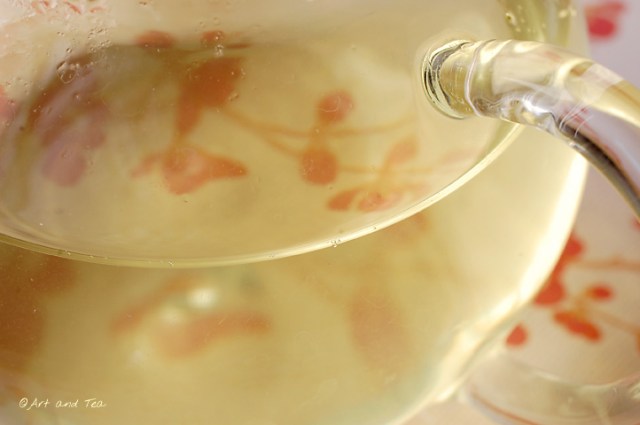
SpringHarvestSenchaTeapot01

The tea liquor is a pale spring green with a delicate vegetal aroma. The flavor is quite sweet and light with only a whisper of a vegetal note. I usually find Japanese green teas to be much more vegetal tasting than this tea is.

SpringHarvestSenchaTeamug01

This tea allows me to show off my new Cherry Blossom mug, a wonderful birthday gift from my lovely daughter. It came with a ceramic infuser basket but I don’t really see myself using that basket as the holes are much too large.

I’ve been fighting off a virus this week, which has left me feeling tired and washed out. I feel refreshed and rejuvenated after several cups of this wonderful tea.

As always, thanks for stopping by and sharing a cuppa with me!

“If we had no winter, the spring would not be so pleasant: if we did not sometimes taste of adversity, prosperity would not be so welcome.”

~Anne Bradstreet

Saturday Morning Tea

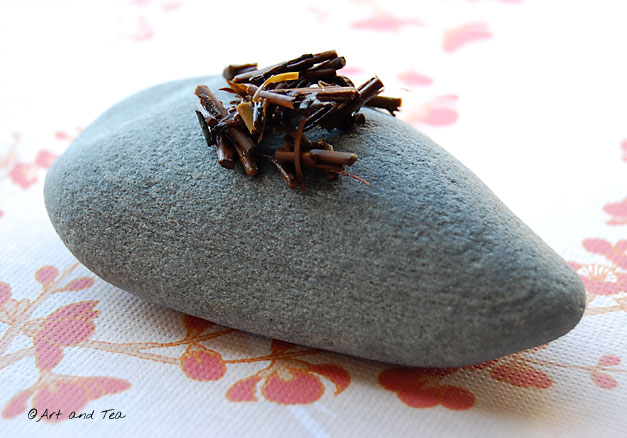
Good morning, dear tea friends! Are you wondering where the tea leaves are today? Well, this morning’s tea is a unique beverage greatly enjoyed in Japan, called Ku-Ki Ho-Ji Cha, which translates to roasted twig tea.

The stems, stalks and twigs from the Camellia Sinensis plant are used for this beverage. Usually, they are unoxidized and green with small bits of green leaf mixed in. In this particular version, the “Ho-Ji” part refers to roasting, like Ho-Ji Cha tea, which is roasted bancha tea, a common green tea that has been roasted. So, these twigs have been roasted, giving them a toasty flavor.

I steeped the twigs for 3 minutes in 180 degree F water. The steeping tea filled my kitchen with a warm, toasty aroma.

Most Japanese green teas are steamed. I have read that Ho-Ji Cha tea is roasted over charcoal at a very high heat.

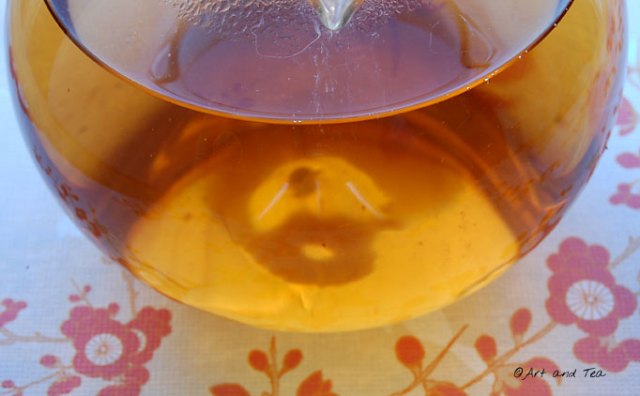
The whisky-colored liquor is creamy smooth and woody/toasty with nutty notes. Because most of the caffeine in the tea plant is located in the leaf, especially the new growth, the twigs contain a negligible amount so this tea is very low in caffeine.

I’ve read that this tea is one of the beverages recommended in a macrobiotic diet, an eating lifestyle that concentrates on natural grains and vegetables, avoiding highly refined foods.

There’s something about the flavor of this tea that reminds me of coffee, maybe even chicory. Perhaps it’s the toastiness that fills my mouth with each sip. Please keep in mind though that I’m not a coffee drinker at all. I much prefer its wonderful aroma to the jittery feeling I get when I drink it.

It’s a beautiful, sunny day outside today so I’m going to take the opportunity to do some cleanup in the garden and mulch the perennials for their winter rest.

As we approach our Thanksgiving holiday, I want to thank all of you, dear readers, for your visits to my little corner of the blogoshere.  They mean so much to me. Happy Thanksgiving!

“To give thanks in solitude is enough. Thanksgiving has wings and goes where it must go. Your prayer knows much more about it than you do.” ~Victor Hugo

Saturday Morning Tea

Good morning, dear tea friends! This morning I am pleased to present to you a Japanese green tea that was harvested this year. I’m so glad to see the producers able to sell their tea confidently again after the terrible disaster that gripped their nation in March 2011. This tea is called 88th Night Shincha.

Shincha translates literally to “new tea”. It is the first flush in the springtime. This particular tea was harvested on the 88th day after the spring equinox, which I’ve read is February 4th in Japan. I’ve also read that it’s a traditional saying in Japan that if you drink of the leaves of the 88th day tea, you will enjoy a year of good health. Wonderful news as my allergies are really acting up this week!

If you’d like to read more about tea production in Japan, you can go back to my posts here and here. In October 2010, I spent a whole month exploring Japanese teas.

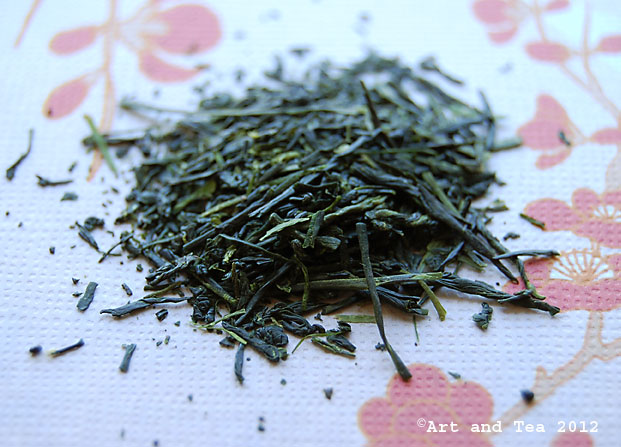
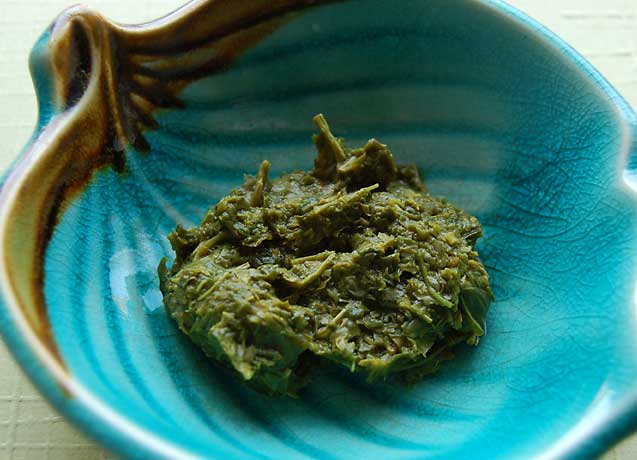
I steeped the leaves for 2 minutes in 170F water. I find that Japanese green teas are very sensitive to the temperature of the water. Do you? As you can see, the dry leaf looks like grass clipping while the wet leaf reminds me of steamed spinach. Speaking of steaming, this tea was lightly steamed in the first step of production. The steaming halts the oxidation process so the tea remains green.

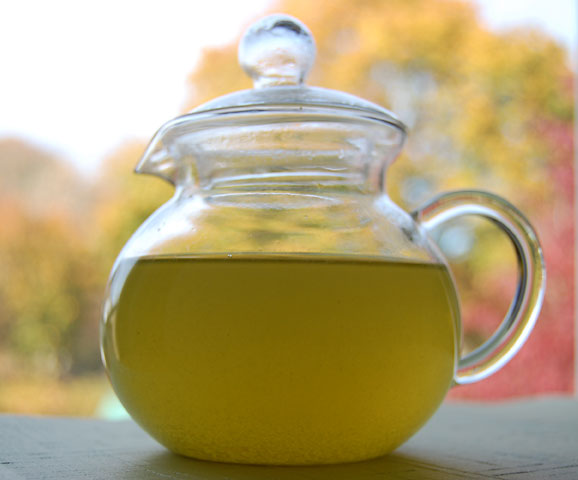
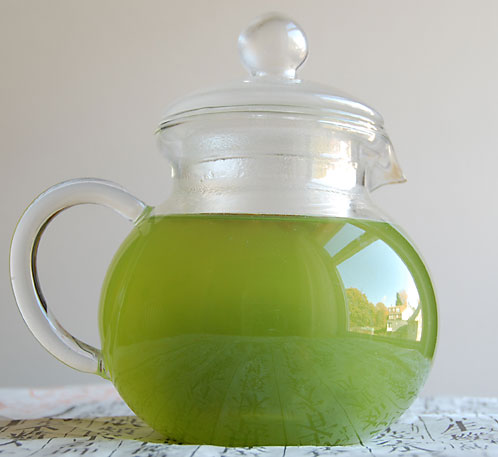
The tea liquor is the most amazing spring green color. I don’t think my camera fully portrayed the loveliness of the color. A strong vegetal, seagrass aroma drifted from my glass teapot as I poured my first cup.

My first sip filled my mouth with sweetness and an incredibly pronounced vegetal taste of the sea. As I sipped, I detected a light floral quality underneath all of that vegetalness. I enjoyed this tea much better when it cooled.

As I prepared my tea this morning, a cool breeze gusted in the window. We had some rain move in overnight which also swept in some cooler temperatures. Fall is definitely at our doorstep here in New England.

As always, thanks for sharing a cuppa with me!

“There is this mysterious energy that wants us to keep growing.”

~Michelle Cassou, Artist

Saturday Morning Tea

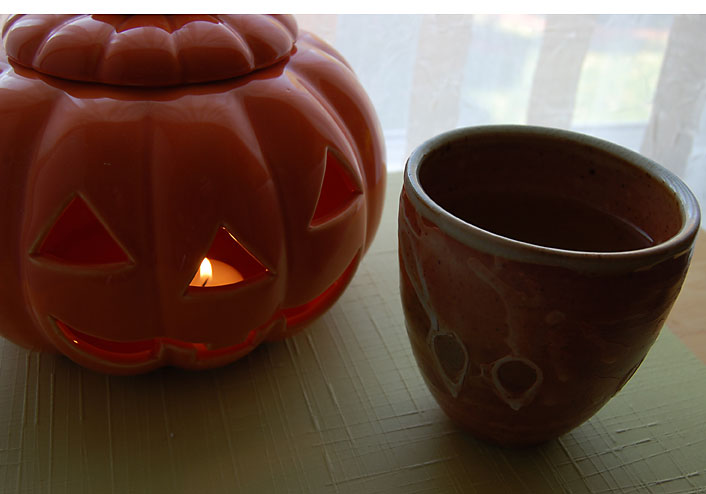
Some of the trees in my neighborhood are looking downright skeletal now as the fall winds blow in chillier temps and winter creeps closer. All Hallow’s Eve marks a threshold into a darker time of year, a time when we focus inward and reach for warmth.

In this last installment of my Japanese tea series, I am reaching for warmth this morning in a cup of Japanese green tea called Sencha Tokujyo Ohashiri, a competition grade Sencha.

Japanese teas are recognizable by their grassy, needle-like shape. The shape is attained by sending the leaf through a series of rolling machines. Paddles move the tea back and forth over metal ridges while heat is applied so the leaf is slowly formed into its needle shape.

Most Japanese green tea is processed to a half finished state called aracha. Aracha is kept stable in refrigerated, vacuum sealed bags until it is ready to be purchased by tea masters who will refine it and finish its processing.

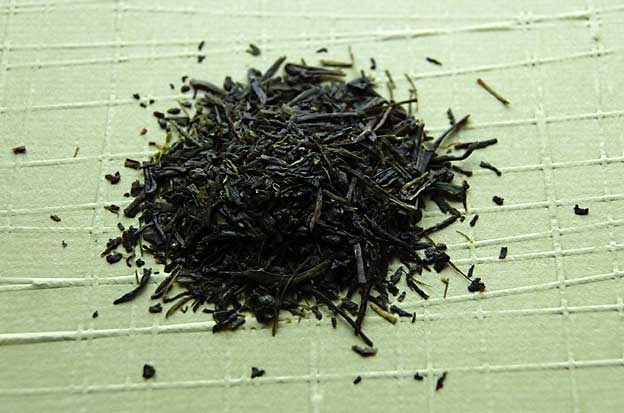
I found this particular sencha leaf to be incredibly fine and it clogged the slits in my glass infuser basket. It’s probably best to steep the leaves directly in water and then strain as well as you can. The fine dust from the tea leaves settles to the bottom of my teamug.

The most well known Japanese green tea is Sencha which is harvested after Shincha, the first tea of the spring. With each subsequent harvest, the tea becomes stronger and darker with leaves of lesser quality and price.

The spring green liquor of this tea has a strong vegetal aroma which carries on into its flavor. A refreshing pungency cleanses my mouth with each sip.

The basic steps to creating aracha, or crude tea are: plucking, steaming plus 4 steps of rolling/drying/shaping. At the end of this processing, the moisture content of the leaf is approximately 13 percent.

Refining of the leaf brings it into the final stages of sorting, separating and drying which transforms the leaf and brings out the flavor, color and glossy finish. Now the finished leaf is called shiagecha. It is common practice for tea artisans to purchase aracha to refine it in their workshops.

I hope you’ve enjoyed my series on Japanese tea. I know that I really enjoyed exploring a type of tea in more depth and learning more about the country and history of the tea. I look forward to doing this again with another type of tea.

Ooooooooooo………Happy Halloween!

“A house is never still in darkness to those who listen intently; there is a whispering in distant chambers, an unearthly hand presses the snib of the window, the latch rises.  Ghosts were created when the first man awoke in the night.” ~J.M. Barrie

Saturday Morning Tea

This morning I am enjoying a very unique Japanese green tea with 3 distinct components, a sencha green tea, a matcha green tea and puffed brown rice.

I introduce you to Matcha Gen-Mai Cha, the 4th tea in my Japanese tea series.

Even though Japan is now an industrialized nation with its bustling, crowded cities, underneath this is a culture based on Zen practices devoted to moments of simplicity and beauty as captured in the tea ceremony, or Chanoyu. Matcha, or powdered, tea is the tea that is traditionally used in this ceremony.

In this tea, the Matcha is dusted over the sencha leaf and the puffed brown rice. The addition of toasted, puffed brown rice to green tea is a popular beverage enjoyed in Japan. Gen-Mai Cha translates to brown rice tea.

This tea leaf looks like cooked greens with rice krispies added to it.

The liquor color is like none other I’ve ever seen in steeped tea. To be honest, it reminds me of the Gatorade drinks my kids used to drink after sports. The Matcha powder makes the tea more opaque.

With 80% of Japan’s 4 major islands being mountainous, efficiency is key in utilizing every piece of land available for tea cultivation. In contrast to China’s isolated mountain tea gardens, Japanese tea gardens are arranged in orderly, well manicured rows on gently rolling hillsides, close to rivers and streams to provide moisture for the tea bushes.

Except for very special, extremely expensive tea, most tea in Japan is harvested with shearing machines, either handheld by 2 workers on either side of the tea row or by a large volume machine which fits perfectly between rows set apart to accommodate the machine. The machines can yield 200-300 lbs. of tea per day as opposed to the 20-30 lbs. hand plucked.

The predominant aroma and flavor of this tea is of toasty rice. The vegetal quality of the tea comes through in wisps along with a lovely sweetness.

So warming. Mmmm…

This weekend my family is visiting from Michigan. It’s the perfect time of year to visit southern New England. The fall colors are at their peak – golds, russets, flaming orange and deep burgundy. I just love this colorful time of year!

Have a lovely weekend, dear tea friends.

“Call it a clan, call it a network, call it a tribe, call it a family.  Whatever you call it, whoever you are, you need one.”

~Jane Howard