Saturday Morning Tea

Good morning, dear tea friends! This morning I am pleased to present to you a Japanese green tea that was harvested this year. I’m so glad to see the producers able to sell their tea confidently again after the terrible disaster that gripped their nation in March 2011. This tea is called 88th Night Shincha.

Shincha translates literally to “new tea”. It is the first flush in the springtime. This particular tea was harvested on the 88th day after the spring equinox, which I’ve read is February 4th in Japan. I’ve also read that it’s a traditional saying in Japan that if you drink of the leaves of the 88th day tea, you will enjoy a year of good health. Wonderful news as my allergies are really acting up this week!

If you’d like to read more about tea production in Japan, you can go back to my posts here and here. In October 2010, I spent a whole month exploring Japanese teas.

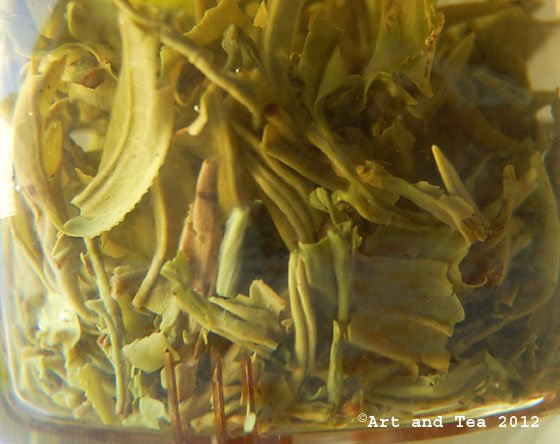
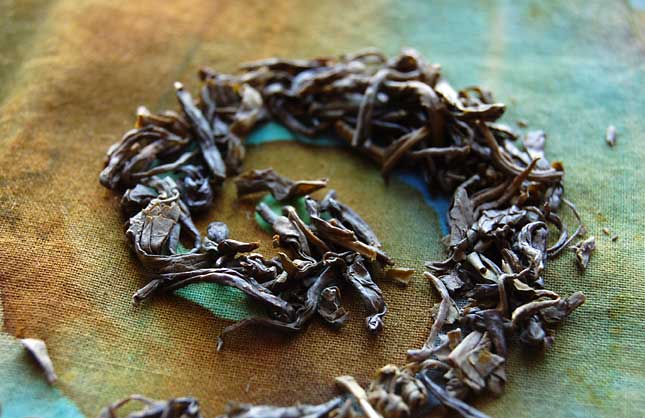
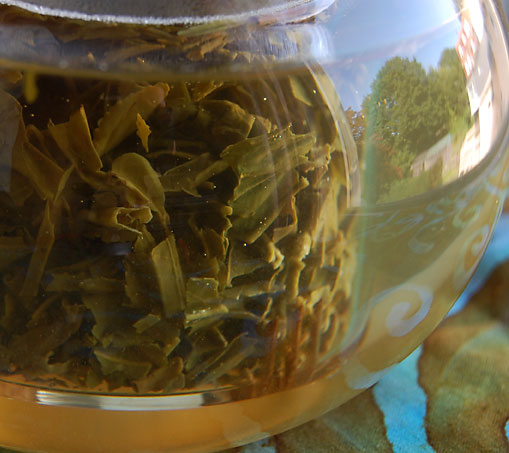
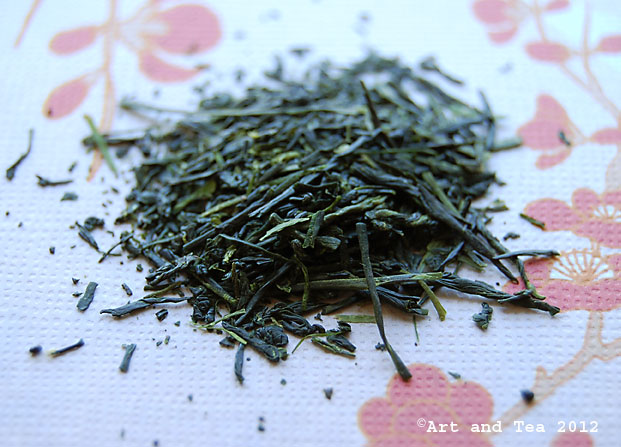
I steeped the leaves for 2 minutes in 170F water. I find that Japanese green teas are very sensitive to the temperature of the water. Do you? As you can see, the dry leaf looks like grass clipping while the wet leaf reminds me of steamed spinach. Speaking of steaming, this tea was lightly steamed in the first step of production. The steaming halts the oxidation process so the tea remains green.

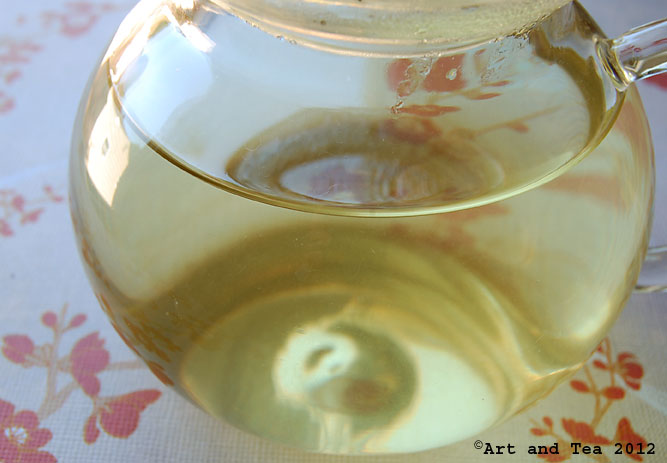
The tea liquor is the most amazing spring green color. I don’t think my camera fully portrayed the loveliness of the color. A strong vegetal, seagrass aroma drifted from my glass teapot as I poured my first cup.

My first sip filled my mouth with sweetness and an incredibly pronounced vegetal taste of the sea. As I sipped, I detected a light floral quality underneath all of that vegetalness. I enjoyed this tea much better when it cooled.

As I prepared my tea this morning, a cool breeze gusted in the window. We had some rain move in overnight which also swept in some cooler temperatures. Fall is definitely at our doorstep here in New England.

As always, thanks for sharing a cuppa with me!

“There is this mysterious energy that wants us to keep growing.”

~Michelle Cassou, Artist

Saturday Morning Tea

Good morning, dear tea friends! I hope that you all had a fabulous week. This morning’s tea comes from Fujian province in China and was harvested in March of this year. Please allow me to introduce you to Pre-Chingming Snow Dragon, a green tea.

For more information about Pre-Chingming teas, I’ve written about them here and here.

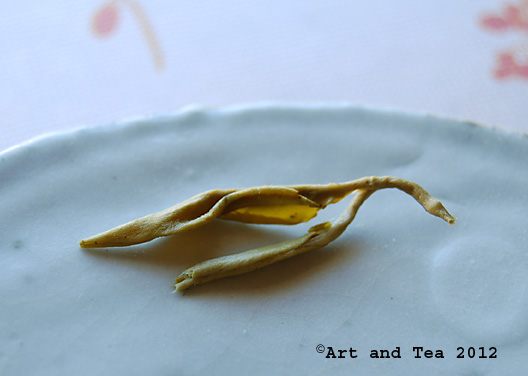
The leaves consist of what are called “bud sets”, the fine plucking of the new growth on the tea plant. So, in other words, delicate baby leaves.

You can see what I mean in this photo of the wet leaf.

I steeped the leaves for 3 minutes in 180F water. The aroma was quite vegetal as I poured my first cup. Vegetal like your first bite of new asparagus in the spring.

The tea liquor is a delicate greenish straw color, as light as a white tea. The flavor isn’t delicate though. It’s rich with floral notes and a pronounced sweetness which lingers in my mouth.

I’ve read that the producer of this tea describes the flavor as a “wild green” taste. While I find this tea vegetal but not overly so, I’m not sure what that description means. Does anyone know?

Today is my granddaughter’s dance recital. Very exciting! Have a wonderful week!

“I fear the venture into the unknown. But that is part of the act of creating and the art of performing.” ~Martha Graham, Dancer

Saturday Morning Tea

Good morning, dear tea friends! It’s that time of year again when not only are the first flush Darjeelings being harvested in India but the Pre-Chingming teas are being harvested in China. In my cup this morning is a Pre-Chingming Lung Ching which I am happy to introduce to you.

Chingming, or Qingming, is a festival in China, usually celebrated on the 15th day from the Spring Equinox, or April 5th. It is a day for going outside to enjoy the return of greenery and tend to the graves of departed loved ones. So, Pre-Chingming refers to the tea being plucked before this festival time. This particular tea was harvested in China within the last few weeks.

Lung Ching tea, a very popular and well known tea from China, has a distinctive flat shape to the leaf after processing. This flat shape is intentionally caused by the motion of the pan when the leaf is heated to stop oxidation. Its name means “Dragon’s Well”, referring to the place where it has been traditionally grown. Legend has it that a Taoist priest in the 3rd century advised the local villagers to pray to the dragon of a local well to bring rain and end their drought. It worked and the well was named after that dragon. The Dragon’s Well monastery still stands in that spot to this day.

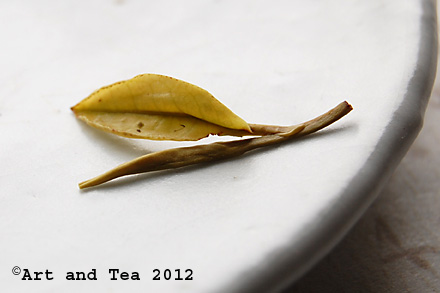
The color of the leaf while steeping is such an amazing spring green, don’t you think? I steeped the leaves for 3 minutes in 180 degree F water.

Seeing such an intact leaf is a gift. I imagine a field of women deftly plucking the delicate leaf and tossing it into the baskets strapped to their backs. They methodically make their way through the rows in the crisp spring air.

The tea liquor is so pale, like straw, with a whisper of green tinge. It’s as delicate as a white tea with a complexity of flavor showing its high quality and care in processing. The aroma is slightly nutty with a note of fresh early corn.

So very pale and delicate yet so very flavorful with notes of sweet nectar, melon, a hint of grapefruit and that delicious note of sweet corn. A very special tea indeed.

I’m so excited that my son is on leave for the next week and has come home to be embraced by his family once again.

Enjoy your week and your tea!

Saturday Morning Tea

Good morning, my dear tea friends! I’m on my way out to my art guild meeting on this blustery cold morning. The clouds are racing across the deep blue sky and the branches sway back and forth in the brisk wind. I feel a change in the air. Could it be spring? I hope so! Anyway, I leave you with another Chun Mee tea review from a couple of summers ago. Enjoy!

On this hazy summer morning in my pleasantly cooled kitchen, I’m lazily sipping a Chinese green tea called Chun Mee. Traditionally, the Chinese have always been quite fond of rolling the tea leaf into various shapes and then naming the tea accordingly. Chun Mee translates to “Precious Eyebrows”. Can you see it?

After the leaf is withered and steamed, it is rolled into a thin needle-like shape with a curve like a porcelain doll’s eyebrow.

It is a very popular everyday tea in China, especially to accompany strong flavored foods because of its astringent aftertaste which clears the palate.

Upon steeping for 3 minutes in 180 degree F water, the tightly rolled leaves open slightly to reveal their curled edges.

The golden liquor has a hint of chestnuts in the aroma and a rich, full-bodied flavor. Its astringency clears my mouth and makes it feel fresh and clean. A whisper of sweet plum rounds out the taste.

Shopping at the local mall a couple of nights ago, I stopped into a tea store there and found these interesting pottery teamugs on the clearance shelf. The coppery/sage green mottled exterior is rough and textured with a smooth, pale blue interior. I love the juxtaposition of textures and the way the mug feels slightly rough against my palm. I also love finding treasures, especially those at 75% off!

The purpose of craft is not so much to make beautiful things as it is to become beautiful inside while you are making those things.

Saturday Morning Tea

Good morning, dear tea friends! A couple of weeks ago at work, I took part in a cupping of some China green teas – the Chun Mees and the Young Hysons. This morning I have brewed up a pot of my favorite tea of that grouping – Chun Mee Moon Palace. I do admit that part of its charm lies in its cool name but, for me, it really shined in its flavor.

The name Chun Mee translates to “precious eyebrows”. After withering and steaming, the leaves are rolled into thin curved shapes resembling a porcelain doll’s eyebrows. I wrote about another lot of Chun Mee here.

The Chinese are very fond of naming their teas.

I steeped the leaves for 3 minutes in 180 F water as I do with most green teas. After steeping, the leaves look more like bushy eyebrows, don’t you think?

The deep yellow liquor gives off a fresh vegetal fragrance. The flavor is also vegetal, lightly so with pronounced fruity nuances, like pear and melon. It is the fruity nuances that make this tea so enjoyable for me. As my tea cooled, it got sweeter.

As I continued to sip this tea, an astringency began to flower, leading me to think that I probably oversteeped it. So with my next pot of tea, I’ll experiment by pulling back on the steeping time, probably starting with a 2 1/2 minute steep and then possibly working back to a 2 minute steep.

As I’ve talked about before, it’s amazing how different a tea can taste when you adjust the steeping time a small amount of time. I like to be open to the positive qualities of a tea and believe that I can develop a relationship with it with some minor adjustments. Too often I hear stories of folks thinking that something is wrong with a tea after just one steeping. I encourage everyone to experiment and see what works best for them. After that period of experimentation, if you still don’t like it, well, that’s just what it is – you just don’t like it. It doesn’t necessarily mean that there’s something wrong with the tea. Enjoy the journey!

Next week I will be attending my art guild meeting so there won’t be any new tea post on Saturday. I’ll be back in 2 weeks to share another cup of tea with you. Until then, dear friends, happy sipping!

“Thousands of candles can be lighted from a single candle, and the life of the candle will not be shortened. Happiness never decreases by being shared.”  ~Buddha