Saturday Morning Tea

pouchongwetleaf.jpg

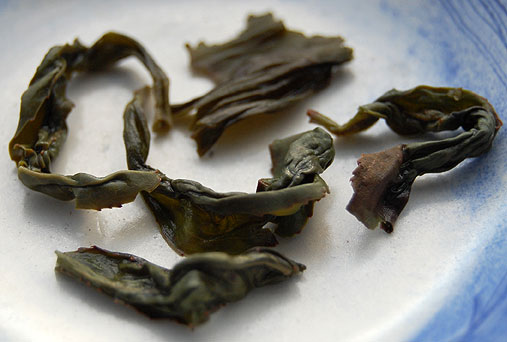
Pouchong tea. Is it a green tea or is it an Oolong tea? Technically, it is described as a slightly oxidized, or fermented, green tea. Well, so is Jade Oolong tea lightly oxidized. Hmmmm, isn’t it interesting how we as humans always like to put things in a category? Give a label? I like the idea of this tea being in its own little group, its own little tribe. The leaf is very large and twisted and pleated. I had fun arranging the wet leaf in a curling pattern, one leading to the other. The dance of the leaf tribe.
pouchongdryleaf.jpgpouchongcuppa.jpg

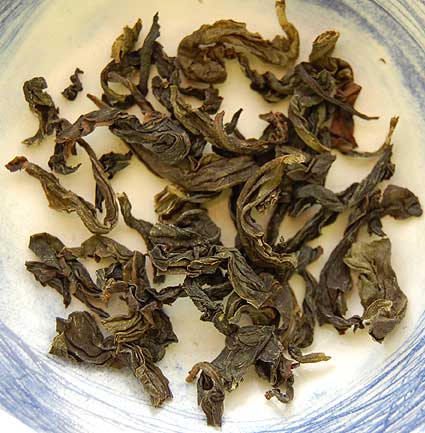
Pouchong tea is produced in the Fujian province of China and also in Pinglin Township near Taipei, Taiwan. This tea is often used in scented tea such as jasmine. It doesn’t have the vegetal quality of a green tea but is more floral like a green Oolong.

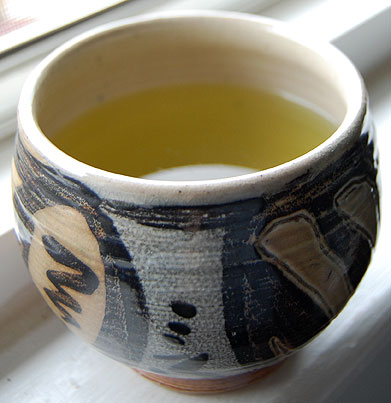
This morning as I get ready for my show, I am sipping a Formosa Pouchong tea. The liquor is light and fragrant and the aroma of flowers gently drifts from my cup. The floral quality is also apparent in the taste with a light honey note. It reminds me of Jade Oolong but not as heavy sweet. A perfect cuppa to start the day as I venture out to my show on this cold clear morning!
Saturday Morning Tea

gyokurodryleaf.jpg

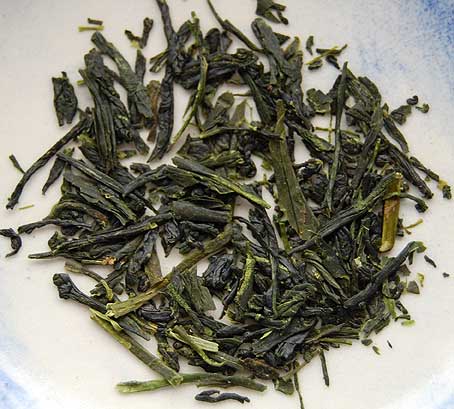
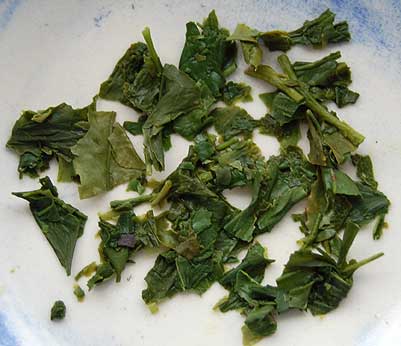
I quietly sit with my Saturday morning cuppa and gaze out my window at the gorgeous colors bursting across the New England landscape. The rich autumn palette has inspired me to reach for a tea with a deeply colored leaf, a Japanese green called Gyokuro Kamakura, a precious gift from a colleague.

The Japanese word Gyokuro translates in English to “pearl dew” or “jewel dew” which in my mind conjures up images of a delicate sunrise over misty fields of tea bushes. Approximately 3 weeks before the leaves are ready for plucking, the bushes are covered with a dark cloth or straw. This covering results in the harvest of a darker green, silky leaf with a slightly higher caffeine content.

gyokurowetleaf.jpggyokuroliquor.jpg

The aroma reminds me of freshly cut grass and the spring green liquor is richly vegetal with a tang which wakes up my tongue. The tea packet is created with beautifully textured and colored Japanese paper. I believe that the bottom symbol is the Japanese character for tea. If the spirit ever moved me to get a tattoo, this is what I would choose. I love Japanese kanji characters for their artful quality but especially for how they tell a story about a word or phrase.

gyokuropacket.jpg

What is your experience with Japanese tea?