Saturday Morning Tea

Oh joyous day! In celebration of the arrival of spring, I have a very special treat for you today. Here’s a hint for those of you who have been reading my tea posts for awhile? What do I look forward to with great joy and anticipation every spring???

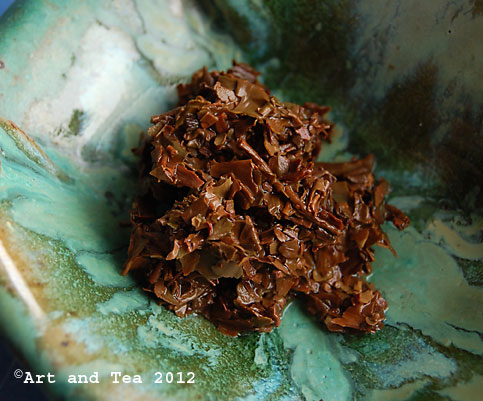
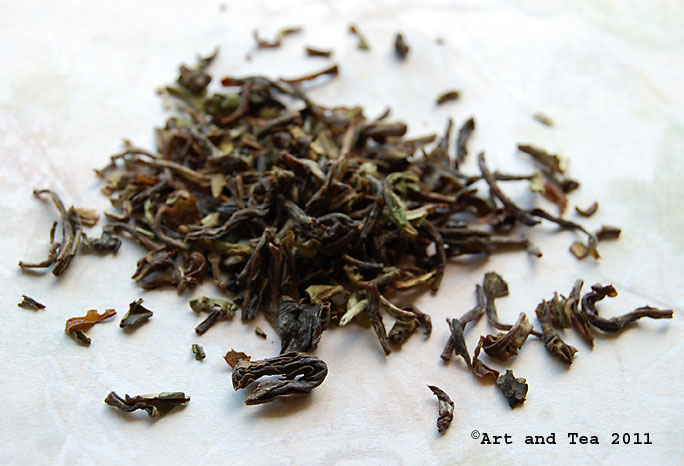
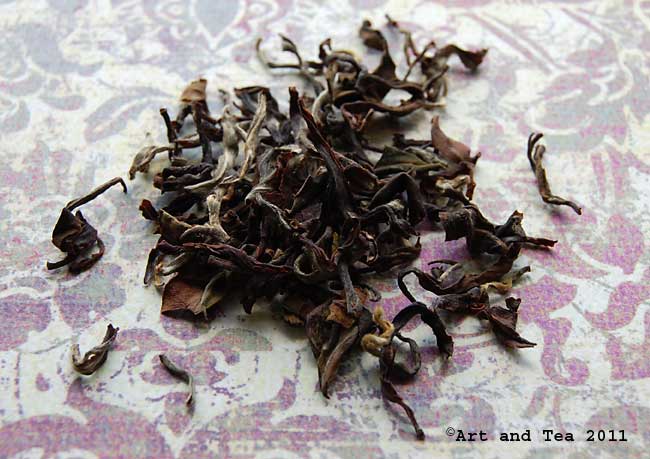
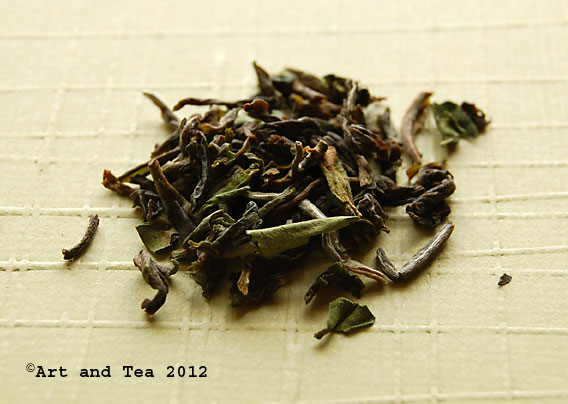
If you guessed a first flush Darjeeling, you are absolutely right! This particular selection is an early first flush offering from the Tindharia estate. It was just picked this month. Look at that gorgeous variegated leaf with white tips, green bits and brown leaf.

The Tindharia tea garden is a bio-organic estate, located in the South Kurseong area of Darjeeling district. I’ve read that the town of Kurseong, whose name means “Land of the White Orchids”, is a quiet hill station. A hill station is “a town in the low mountains of the Indian subcontinent, popular as a holiday resort during the hot season.” At elevations of 400-1000 meters, it sounds like a great destination for cooling off during the hot summer months.

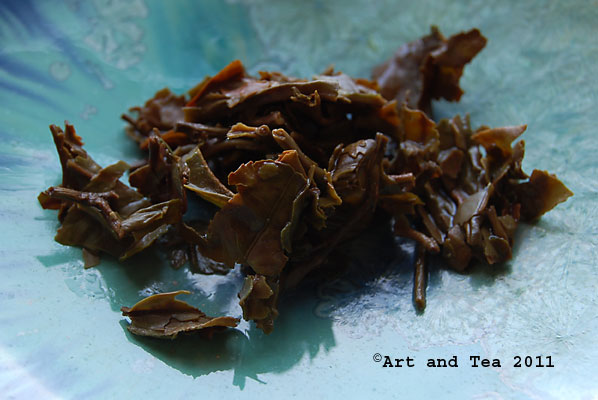
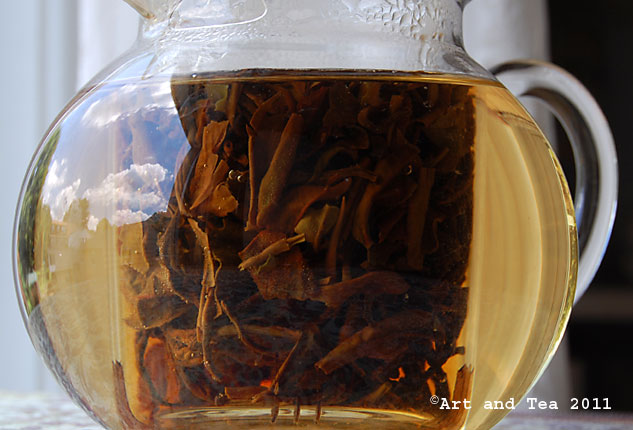
Despite its leaf appearance, this tea has been processed as a black tea. I steeped the leaves for 3 minutes in water just under the boiling point (212F). The first thing I noticed as I removed the infuser basket from my glass teapot was the incredibly fresh aroma with just a delicate hint of flowers.
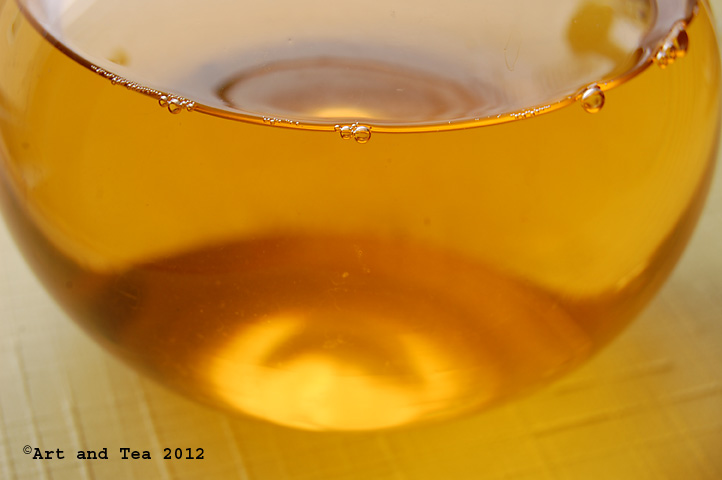
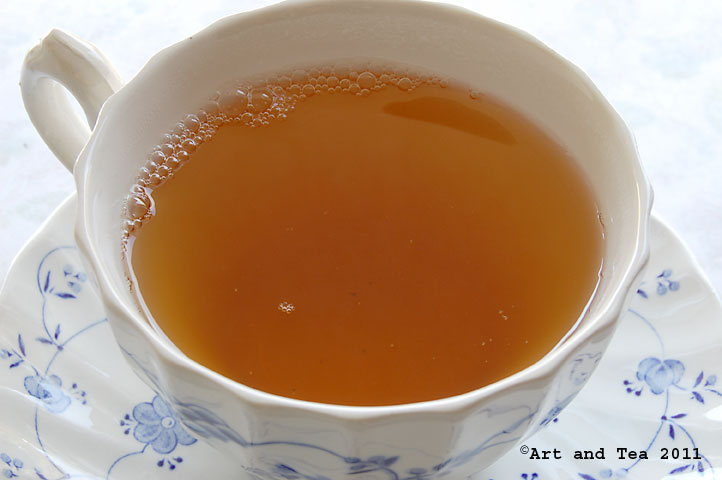
The tea liquor is a pale glowing amber. As I take my first sip, the fresh flavor fills my mouth with its freshness and hints of green grapes and flowers. It is surprisingly smooth for a first flush tea but there is a bright tang that lingers in my mouth. I could drink this tea all day long.

This special treat has succeeded in lifting my spirits today. I was heartbroken to learn just this past week that my polymer clay guild has been dissolved. While the friendships will still remain, I am feeling so sad that my days of creating side by side with these ladies is at an end. I’ve lost my tribe, creatively speaking. So, I will look for another local artistic group to connect and create with. Any ideas on where to start?

Happy Spring, my dear tea friends!

“Is the spring coming”? he said. “What is it like?”…

“It is the sun shining on the rain and the rain falling on the sunshine…”

~Frances Hodgson Burnett, The Secret Garden
Saturday Morning Tea

Good morning dear tea friends! It’s beginning to look a lot like a New England winter around here. Up until this week, we’ve been blessed with mild temps and…should I speak the words?….oh dear…no snow. There. I said it. Well, it’s finally happened and the white stuff is gently falling from the sky, blanketing everything. Compared with our last winter though this is nothin, folks.

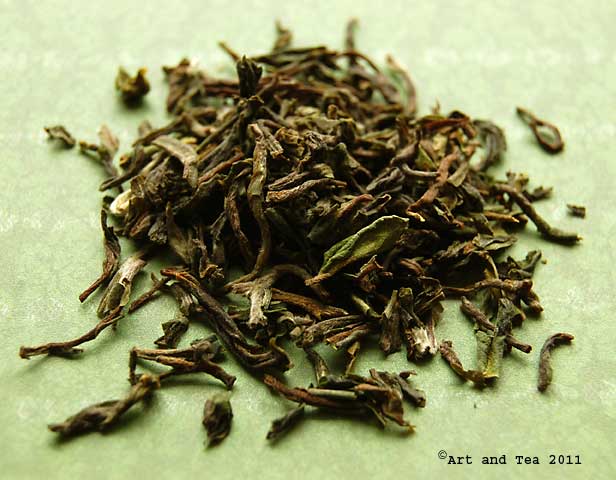
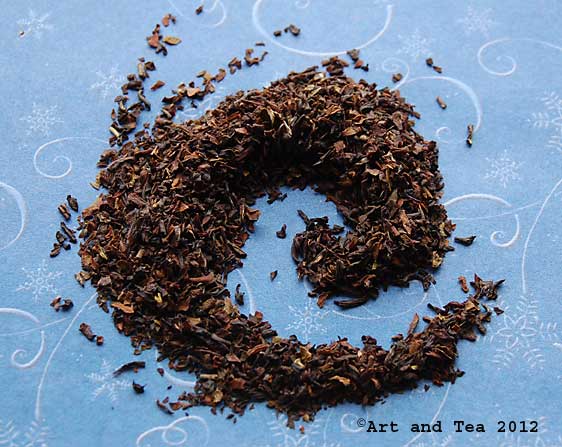
Ok, on to tea. This morning’s tea is a good solid everyday broken leaf second flush Darjeeling from the Margaret’s Hope estate. Some folks like to avoid the broken leaf Darjeelings because they steep very fast and if you don’t catch it in time, tend to get quite bitter. As opposed to a tea like a China black say, where you can oversteep with no bitter consequences.

Do you know how this tea garden got its beautiful name? Story has it that in the 1930s, the garden was owned by a Mr. Bagdon who, with his two daughters, sailed from England to India to visit the garden. The younger daughter, Margaret, fell in love with the estate and hoped that some day she could return. It was not to be, however, as she became ill and died on the return voyage home. In her memory, her father named the estate Margaret’s Hope. What a poignant story.

Both the wet leaf and the tea give off a mild fruity aroma. There’s not much complexity to this tea but I think that it’s a wonderful value for a Darjeeling tea you can drink everyday.

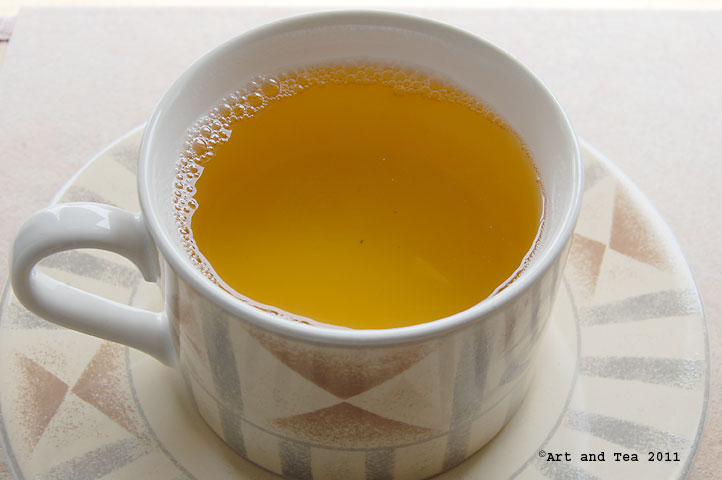
The flavor of the deep amber-colored liquor is rich and full with hints of fruit. What strikes me the most about this tea is how incredibly smooth it is with no lingering bite. As long as you go easy on the steep time, this tea delivers a flavor and smoothness I’ve not experienced in most BOP Darjeelings.

I think this selection would also make a wonderful iced tea for all of you lucky tea lovers who are not gazing out onto a world of snow and ice as I am right now. Another one to place on my list to audition for iced tea when the weather warms up.

Ok, time for another cup and then it’s time to think about going outside and picking up my shovel. Next Saturday is my art guild meeting so I won’t be able to review a new tea, however, I’ll be sure and repost another oldie but goodie for you. Have a wonderful week and stay warm and dry, cup of tea in hand!

Announced by all the trumpets of the sky,
Arrives the snow, and, driving o’er the fields,
Seems nowhere to alight: the whited air
Hides hills and woods, the river, and the heaven,
And veils the farmhouse at the garden’s end.
The sled and traveller stopped, the courier’s feet
Delayed, all friends shut out, the housemates sit
Around the radiant fireplace, enclosed In a tumultuous privacy of storm.

~Ralph Waldo Emerson

Saturday Morning Tea

The first day of fall is only days away and here in New England, temps have dropped almost 20 degrees literally overnight. Even though fall is one of my most favorite seasons, spring is, too, and I’ve chosen a tea this morning that reminds me of those promising days when the soil is just warming up and the tea bushes have started their growth cycle. Yes, one of my most favorite teas – a first flush Darjeeling! This one is from the Makaibari estate, an organic, biodynamic, Fair Trade tea garden in northeast India.

I’ve written about it before here.

As the tea steeps (3 minutes in 212 F water) in my glass teapot, you can see the green bits of leaf that are a good indicator of its first flush designation. Some folks actually believe they’ve received a green tea when they look at the first flush leaf. Yes, it is processed as a black tea but it seems that this first leaf growth, or flush, retains its greenish color, unlike a second flush tea.

As I lift the lid of my teapot, a faint aroma of nuts arises from the light amber tea liquor.

My teapot wears a necklace of pearl bubbles that adorns its glowing, inviting color. As I pour my first cup, I also detect a whisper of ripe fruit.

What strikes me first and foremost about the flavor is its amazing smoothness. Usually, not always, first flushes exhibit a healthy level of astringency. While it is there in this tea, I might say that it is bright rather than astringent. There is also a honey-like sweetness and a bit of fruitiness that lingers in my mouth.

As I wave goodbye to the very last days of summer, I now look forward to cozy sweaters and dark, rich cups of tea. How about you?

Until next week, dear tea friends…

Let us, then, be up and doing

With a heart for any fate;

Still achieving, still pursuing,

Learn to labor and to wait.

                               ~Henry Wadsworth Longfellow

Saturday Morning Tea

I’m back from vacation and feeling rejuvenated despite a busy return to work this week. I’d like to share an interesting experience I had a few days ago. My colleague brewed a pot of a newly arrived Castleton estate second flush Darjeeling and the first word that popped into my head as I took my first sip was

PHENOMENAL!

It had a honeyed peach aroma with rich peach and muscatel flavor notes.

Ambrosia.

Naturally, we all requested it for our morning tea the following day. As I took my first sip that morning, I thought I had poured the wrong tea into my cup. While it was a very good Darjeeling, all of the wonderful flavor notes I had experienced the day before weren’t there. As my tea cooled, however, I detected them but they were very subtle.

So, what happened?

Different steeping times.

The first cup was steeped at 4 minutes and the second at 3 minutes. What a difference a minute makes, huh?

Look at this gorgeous leaf. It’s huge and chock full of tips/intact leaf sets.

Just like your water source can make all the difference in your resulting cup of tea so too can your steeping time. In light of my recent experience (and it’s happened to me before), I highly recommend that you experiment with different steeping times to find what works best for you. A tea you don’t like with your first cup could end up being your favorite tea by just making an adjustment to the steeping time!

This is the tea steeped for 3 minutes in boiling point water – a glowing medum amber hue.

The cup on the right is the tea steeped for 4 minutes. The color goes deeper and the peach/muscatel aroma and flavor are much more pronounced.

As my tea cooled, I was expecting the longer steeped tea to develop that characteristic “bite” but it never did. I might even try this tea steeped for 30 seconds longer. I like to push the steeping time to just before it develops that bitterness, that well known bitterness of being oversteeped.

So, I encourage you, dear tea friends, to experiment with the steeping times for your tea. That being said, however, I think that it’s best not to change the water temperature or the amount of tea leaves used per cup.  Those should remain consistent.

For this tea, I used 2 teaspoons of leaf per cup since the leaf is so huge and boiling point water.

Do you have a story similar to mine? If so, please share!

Enjoy your weekend!

Saturday Morning Tea

The skies may be gray outside my window but I am inside enjoying sunshine in my teacup – a first flush Darjeeling from the Tumsong estate.

I have read that the Tumsong tea garden was first planted in 1867 around a temple devoted to the Hindu goddess Tamsa Devi. Devi is the Sanskrit word for goddess.

When I opened the tea packet, an aroma of fresh flowers and sugar cookies greeted my senses.

I steeped the bright olive tea leaves for 3 minutes in boiling point (212F) water.

From the Tumsong tea estate:

“Tumsong’s teas are known to be among the best in the Darjeeling area and command high prices at auctions. Perhaps the first credit for this should go to the goddess, on whose land the garden grows. The goddess Tamsa presides over this serene and surreal landscape and fills the atmosphere with harmony. In the area, Tumsong is often referred to as the garden of happy hearts.”

The leaves may be intensely green but the liquor they produce is a golden yellow, creating pearl bubbles of light in my glass teapot.

I have also read that the entire tea garden faces some of the highest ranges in the Himalayan mountains and receives a constant, cool breeze sweeping across the tea bushes. This breeze causes the plants to grow gradually, allowing them to slowly develop their flavor.

And this tea is positively bursting with flavor! Notes of nut (almond), tropical fruit and citrus pungency sweep across my palate as I slowly savor each sip from my teacup.

All I can say is – yum, and let me go make another pot right now!

I’m headed out to my garden this afternoon to do some more planting – 2 peonies with flowers of raspberry sorbet, tipped in yellow, a lavender for my herb garden, some olive/eggplant-colored coleus for a shady spot under a tree, and some cheerful daisies for the morning sun side of the house.

Have a wonderful weekend, dear friends!

“How to be happy when you are miserable. Plant Japanese poppies with cornflowers and mignonette, and bed out the petunias among the sweet-peas so they shall scent each other.  See the sweet-peas coming up.

Drink very good tea out of a thin Worcester cup of a colour between apricot and pink…”   ~ Rumer Godden

Unless otherwise noted, all text and photos are the property of Karen Park Art and Tea, copyright 2007-2011. Please do not “lift” any of my photographs or blog posts for use on your blog or website. Thank you so much for your respect and kind attention.