Saturday Morning Tea

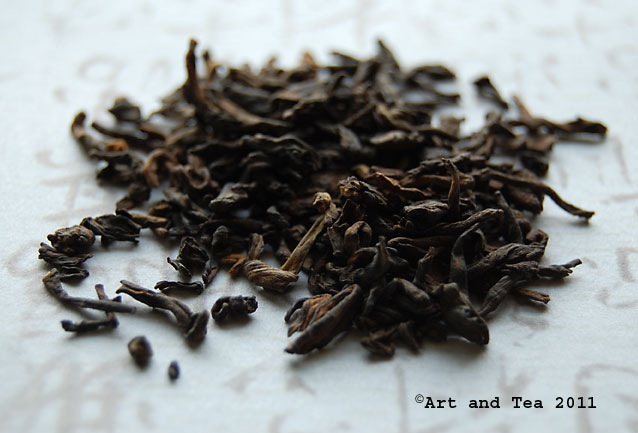
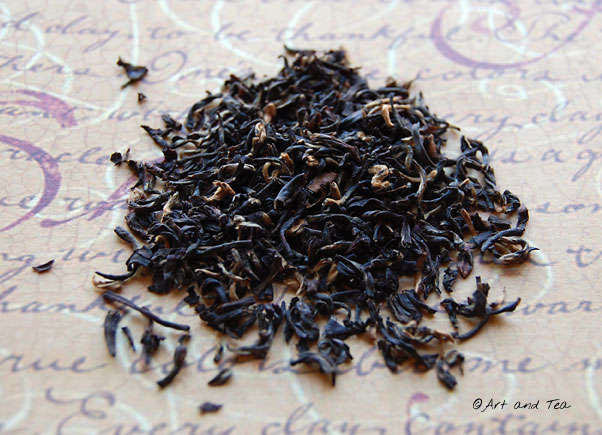
Good morning, dear tea friends! Wow, are we really into the month of November already? This morning I’m enjoying a dark, rich cuppa from China, called Yunnan FOP Select. Hey, there’s the letters again in the name. FOP means “flowery orange pekoe”, a leaf designation meaning a whole leaf tea with some tip interspersed. The tip is the golden-colored part.
From the mountainous Yunnan province in southwestern China, Yunnan teas have traditionally been plucked from very large, old tea trees but I have heard that some of those trees are being cut down or cut in half to make way for monoculture plantings. Hearing that makes me sad but I also know that demand is up for these teas and perhaps that is how they’re accommodating that demand.
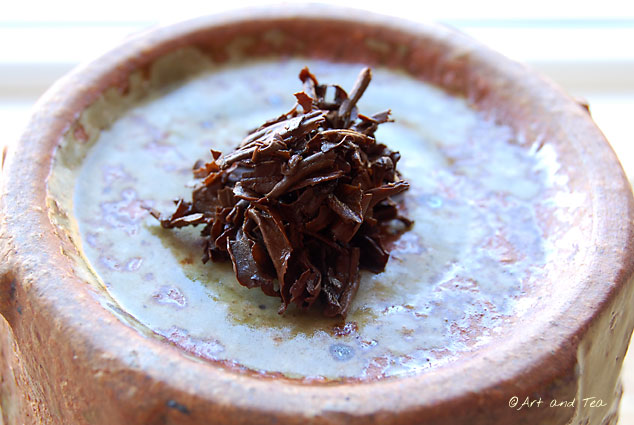
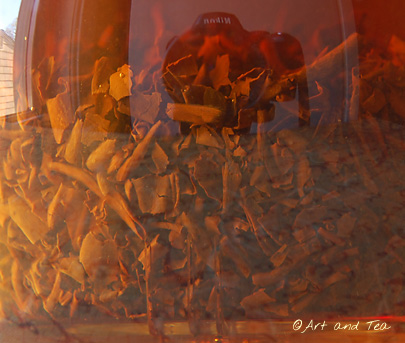
I steeped the leaves for a full five minutes in boiling point water (212F). I’m glad I did because the longer steeping time brought out the rich cocoa aroma.

The dark-amber liquor is silky smooth and sweet with notes of cocoa, spice and a hint of fruit. This is a great tea for warming up on a cool autumn afternoon after raking leaves or taking a long hike in the woods. Speaking of which, that’s my plan for tomorrow – I love hiking in the woods at this time of year!
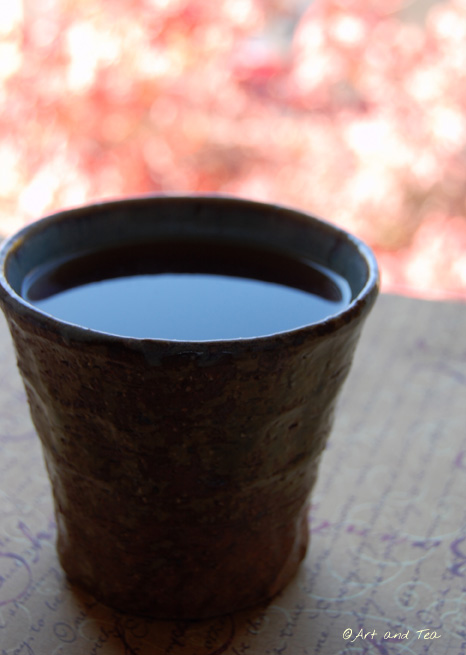
Well, my first cup is already gone so I’m off to refill my mug. Have a wonderful weekend and I’ll see you all next Saturday to share another cup of tea!

“Everything in the universe is within you. Ask all from yourself.”

~Rumi

Saturday Morning Tea

Happy first day of fall, dear tea friends! The gray blanket sky has broken up into wisps of cotton fluff revealing a deep blue sky and the promise of a warm day. This morning I’m enjoying a cup of China Oolong tea. Harvested this past spring, it’s called Pre-Chingming Da Hong Pao. Da Hong Pao translates to “Big Red Robe” and I’ve written about it before here.

Are you wondering what big red robes have to do with this tea? Well, there’s a legend that the mother of an emperor fell ill and was cured by a certain tea. The emperor sent big red robes to clothe and honor the bushes from which the tea originated, in the Wuyi mountains of Fujian province. The legend goes on to say that three of the four bushes still survive today and are highly venerated.

As you can see, the leaves of this tea are huge and mainly intact. I steeped them for 4 minutes in 190F water. Because of their immense size, I used 3 teaspoons of tea leaves in my glass teapot.

Right away, I could smell the orchid fragrance as the tea leaves steeped. As I poured my first cup, I also detected honey and a slight vegetal fragrance as well.

The golden-colored tea liquor is smooth and buttery with notes of orchid, peach and honey. Ambrosia! It is suggested to do multiple steepings with this tea as the flavor develops even further with subsequent steepings. Wow, I think this tea is bursting with flavor on the first steep.

This is a lovely tea.

Today will be spent signing up for a hosting plan for my new website, downloading WordPress and starting to learn how to design it. I’m excited and nervous at the same time as I venture into this unknown territory. I know that I eventually want to sell some of my jewelry online. The question is: where do I sell it? On my own website? On Etsy and provide a link on my website to the Etsy shop? I do know that I want to do this but also know that I want to take the route that is less maintenance work so I can fit it in with my full-time job. If anyone has any experience/feedback about this, I’d love to hear from you.

Thanks for visiting and enjoy your week and your tea!

“All our dreams can come true – if we have the courage to pursue them.”  ~Walt Disney

Saturday Morning Tea

Good morning, dear tea friends! Another week has gone by and now it’s September already. While I love the hot, sunny days of summer, I always look forward to the flame of colors that autumn sweeps in. In anticipation of those cooler days ahead, I’m enjoying a cup of a thick, rich China black tea, called Chingwo Congou Super Grade.

This tea is a popular style from Fujian province in southern China. I have read that most Chingwo (Ching Wo) teas are grown from a cultivar called Da Baicha. The mountainous area of northern Fujian provides a perfect climate for this particular cultivar. I’ve also read that while Keemun teas are considered the “Burgundies”, Chingwo teas are named the “Clarets”.

The long, beautifully intact leaves look like accordion pleated silk.

I steeped the leaves for 5 minutes in boiling point (212F) water. The dark copper tea liquor has a warm, fragrant aroma of toast with a hint of cocoa.

The tea is super smooth and mellow with notes of red wine and a suggestion of dark chocolate. I bet you could steep the leaves for much longer than 5 minutes. A great tea to leave steeping while you go do something else.

As always, thanks for popping by and sharing a cuppa with me. I’m going to start sharing my creative work again. I have been making pieces this summer, just haven’t had any time to photograph them! Soon, soon… I leave you with a wonderful quote by Eleanor Roosevelt. Have a great week!

You gain strength, courage and confidence by every experience in which you really stop to look fear in the face. You are able to say to yourself, “I lived through this horror. I can take the next thing that comes along.” You must do the thing you think you cannot do.  ~Eleanor Roosevelt

Saturday Morning Tea

Good morning, dear tea friends! I’m still working on getting my camera fixed so I share a post with you from last summer. Enjoy!

I sit here quietly and sip my tea, the sounds of summer all around me – the faint buzzing of a lawn mower, the electric sound of the cicadas in the trees, the caw-caw of one crow to another as they fly over my house. As we enter the warm, hazy days of late summer, the fuschia impatiens dress my garden in their rich color.

In my cup this morning is a very dark tea, a China tea called Organic Pu-Erh 2nd Grade. Back in June, I wrote about the 1st grade here.

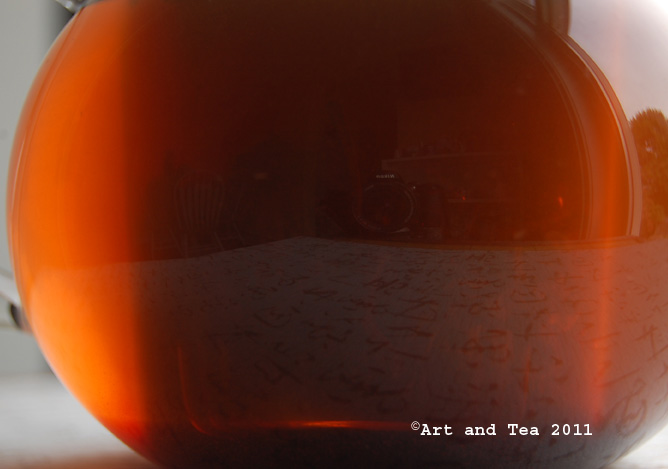
I steeped the leaves for 8 minutes in boiling point (212 F) water and, as you can see, the water quickly gets very murky on its way to becoming as black as night. Pu-Erh goes through a “composting” step during its processing. The leaves are piled into heaps, much like a compost pile, creating a heat in its core and transforming the leaves into this very unique tea.

Everything about this tea is so dark – the dry leaf, the wet leaf and the tea liquor after steeping. A rich, sweet, earthy aroma rises from my glass teapot as I remove the infuser basket.

I find that if I gaze at the tea liquor long enough, I can see a mulberry tinge around its edges. Can you see it?

The flavor is mellow and quite smooth, not as strong as its aroma. Characteristic notes of autumn leaf and forest floor mingle with a sweet molasses syrup flavor. I find myself enjoying it more and more with each sip.

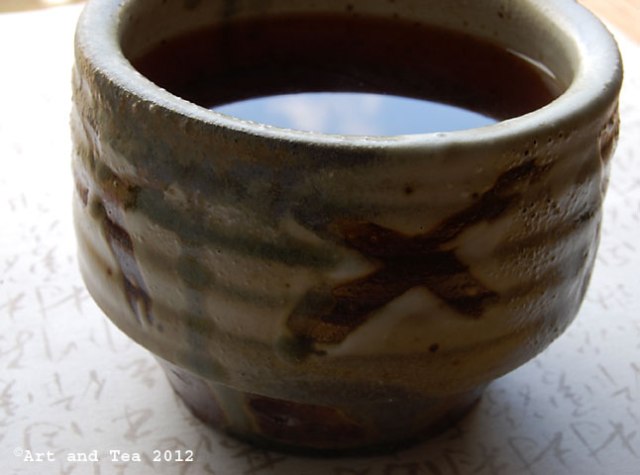
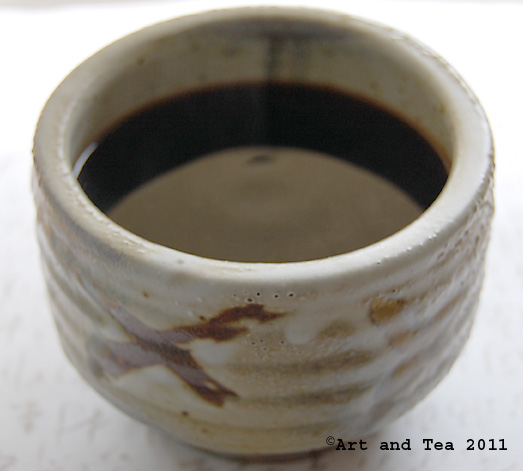
While I was visiting my family in Michigan last month, we visited a quaint little village called Saugatuck, located on a river very near Lake Michigan. As we were strolling the shops, I came upon a pottery shop and purchased a few teabowls there. The artist’s name is Jeff Blandford and his business is called Volmod Ceramics. Voluptuous. Modern. Ceramic. He had some really cool pieces. As he was ringing my purchase, he told me that the teabowls I chose were created during a very creative time at the end of his student days at Michigan State University, over 3 years ago. So, I’d like to think that these lovely teabowls were sitting on the shelf patiently waiting for me to come along and bring them home to Massachusetts with me so I could enjoy many tea moments with them.

Until next week, dear tea friends…

“The world is round and the place which may seem like the end may also be only the beginning.”   ~Ivy Baker Priest

Saturday Morning Tea

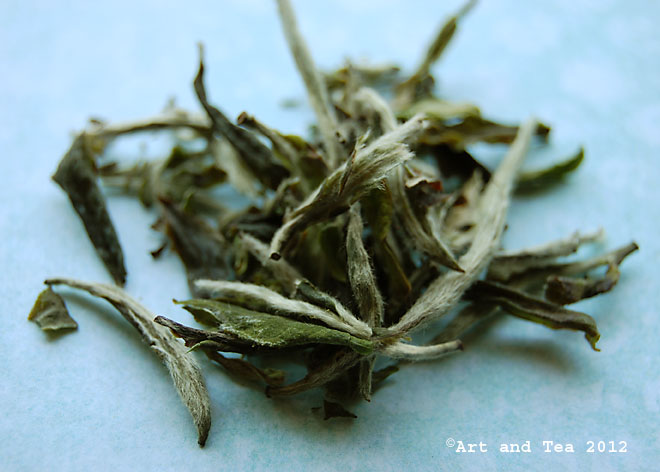
Good morning, dear tea friends! This morning’s tea is another Pre-Chingming tea from the Fujian province of China. A white tea called Pre-Chingming Top Pai Mu Tan Organic, its plucking is of the new leaf shoot, or bud, plus the top two leaves. Pai Mu Tan, or Bai Mudan, translates to “white peony”, some say because of the shape of the leaves, others because of its fragrance.

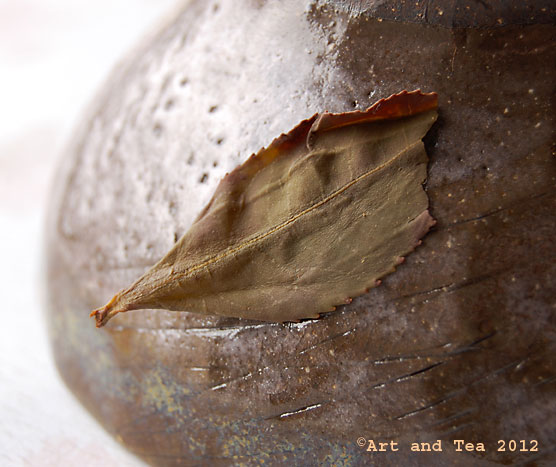
Wow, look at that gorgeous leaf.

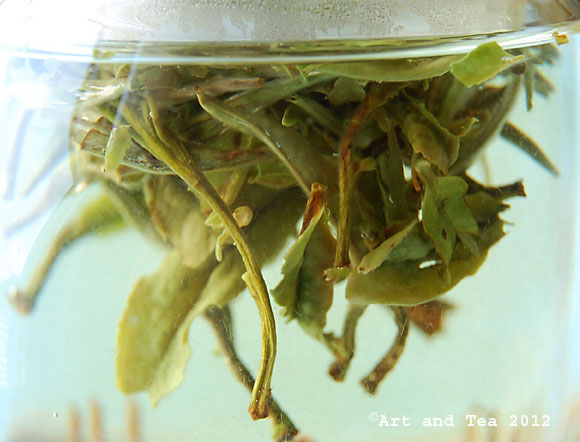
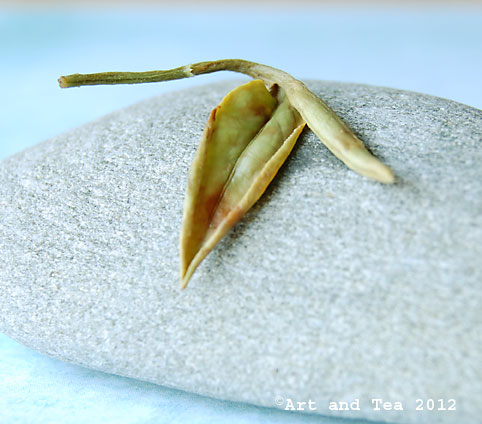
Many folks ask, “what is the difference between green tea and white tea?” After all, look at the leaf in the photo above. It’s green, right? Well, it’s all in the processing of the leaf. Whereas green tea leaves are heated up pretty much right away, whether steamed or pan fried, for example, to halt the oxidation of the leaf, white tea leaves are allowed to wither naturally in the sun, sometimes for several days. So, the leaves aren’t heated to halt oxidation. In fact, after withering, the leaves are piled and allowed to oxidize a little bit before they are baked to dry the leaves out for packing and transport.

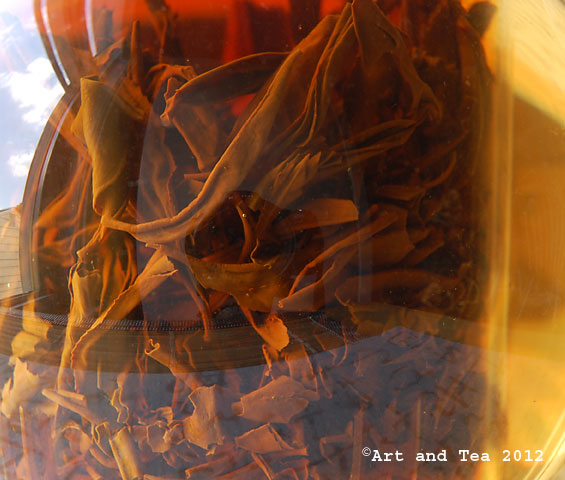
As you can see from the photo above, white tea leaves are handled as minimally as possible so that they remain in the same state as when they’re plucked.

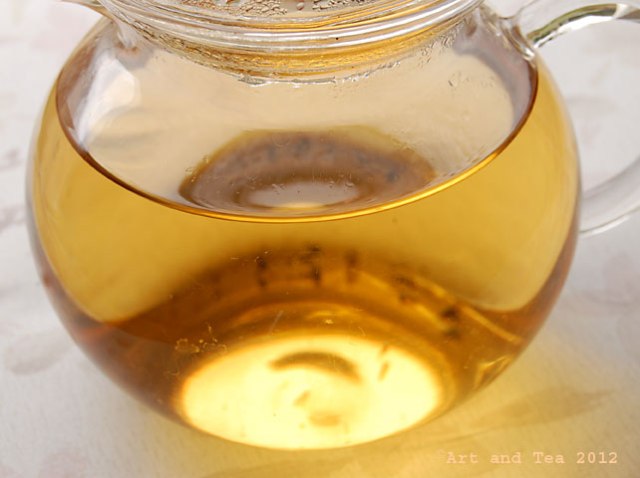
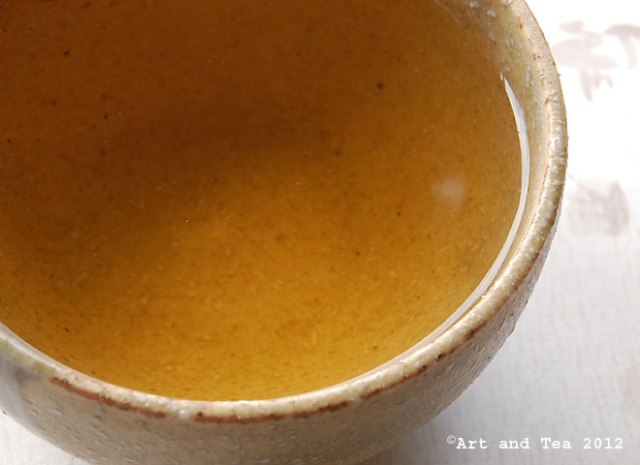
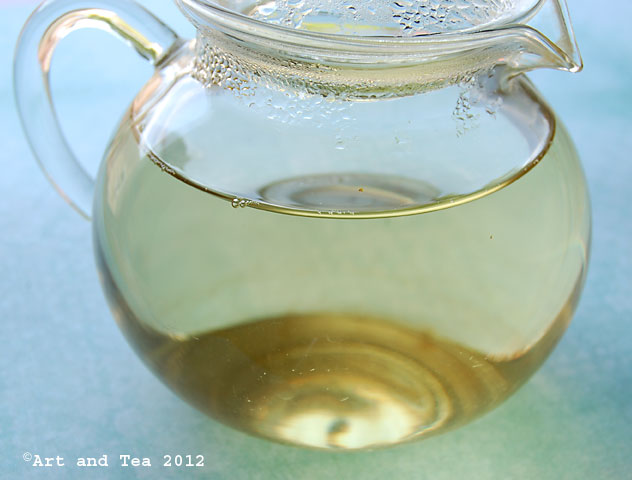
I steeped the leaves for 3 minutes in 175F water. The aroma is light and delicate and smells just like vanilla cookies. That note comes through in the silky smooth flavor as well, along with some nuances of melon. This tea is quite sweet with no vegetal flavor at all.

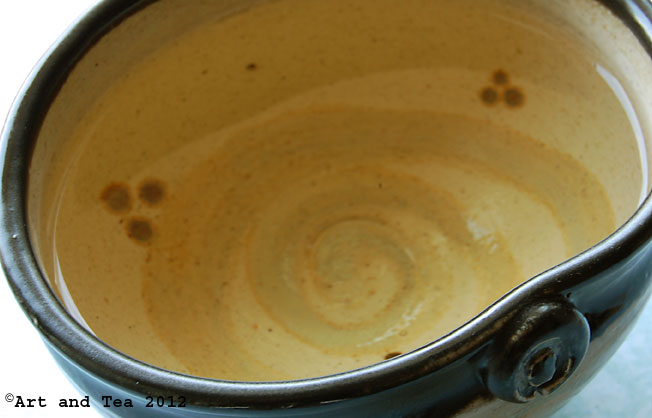
I love to sip white tea out of this teabowl so I can see the spiral shape within. Do you have a favorite teamug or teabowl?

Next week I’d like to review another white tea but from another country. It’s called Arya Pearl. Can you guess what country it’s from?

Have a wonderful week!

“Your creativity is waiting for you like a dancing partner.”

~Barbara Sher