Saturday Morning Tea

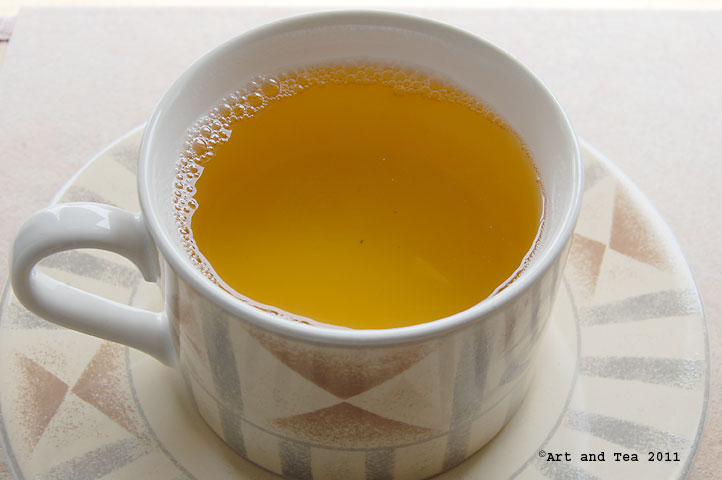
I sit here quietly and sip my tea, the sounds of summer all around me – the faint buzzing of a lawn mower, the electric sound of the cicadas in the trees, the caw-caw of one crow to another as they fly over my house. As we enter the warm, hazy days of late summer, the fuschia impatiens dress my garden in their rich color.

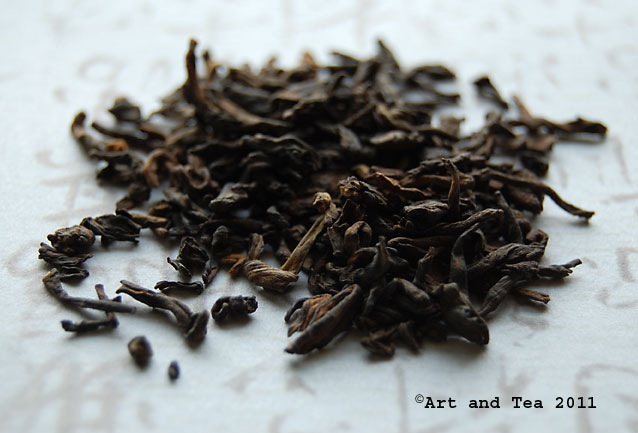
In my cup this morning is a very dark tea, a China tea called Organic Pu-Erh 2nd Grade. Back in June, I wrote about the 1st grade here.
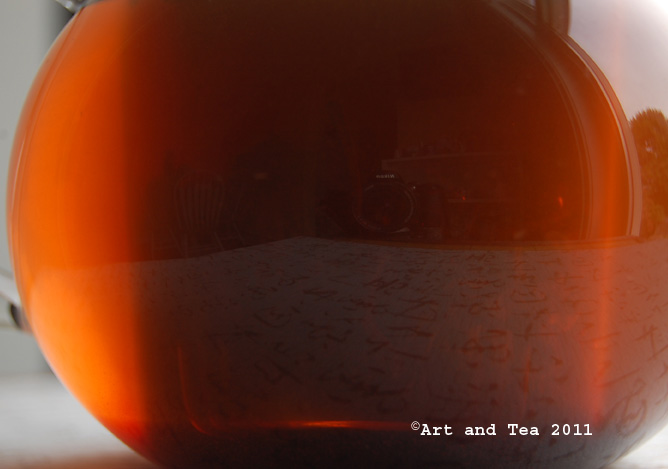
I steeped the leaves for 8 minutes in boiling point (212 F) water and, as you can see, the water quickly gets very murky on its way to becoming as black as night. Pu-Erh goes through a “composting” step during its processing. The leaves are piled into heaps, much like a compost pile, creating a heat in its core and transforming the leaves into this very unique tea.

Everything about this tea is so dark – the dry leaf, the wet leaf and the tea liquor after steeping. A rich, sweet, earthy aroma rises from my glass teapot as I remove the infuser basket.

I find that if I gaze at the tea liquor long enough, I can see a mulberry tinge around its edges. Can you see it?

The flavor is mellow and quite smooth, not as strong as its aroma. Characteristic notes of autumn leaf and forest floor mingle with a sweet molasses syrup flavor. I find myself enjoying it more and more with each sip.
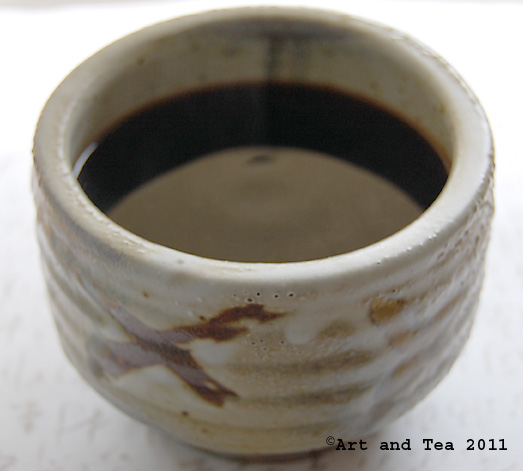
While I was visiting my family in Michigan last month, we visited a quaint little village called Saugatuck, located on a river very near Lake Michigan. As we were strolling the shops, I came upon a pottery shop and purchased a few teabowls there. The artist’s name is Jeff Blandford and his business is called Volmod Ceramics. Voluptuous. Modern. Ceramic. He had some really cool pieces. As he was ringing my purchase, he told me that the teabowls I chose were created during a very creative time at the end of his student days at Michigan State University, over 3 years ago. So, I’d like to think that these lovely teabowls were sitting on the shelf patiently waiting for me to come along and bring them home to Massachusetts with me so I could enjoy many tea moments with them.

Until next week, dear tea friends…

“The world is round and the place which may seem like the end may also be only the beginning.”   ~Ivy Baker Priest

Saturday Morning Tea

This morning I’m enjoying another tea from the Jun Chiyabari estate in Nepal. Called Himalayan Oolong, it reminds me very much of a tea I reviewed about a year ago in this post.

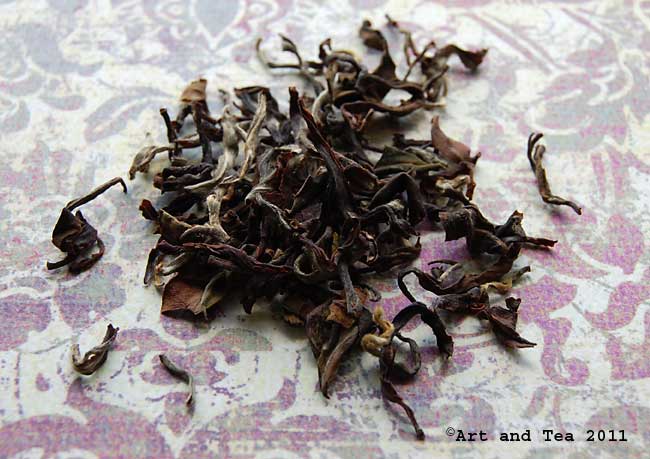
The leaves look very much like an Oolong tea, large and rolled, yet there are some differences in the taste, creating a tea, in my opinion, whose flavor notes are a melding of Oolong and Darjeeling. As I said in a previous post, their Himalayan Oolongs are created with a secret process resulting in a black tea with the characteristics of a Silvertip Oolong tea. True Silvertip Oolong teas come from Taiwan (Formosa).

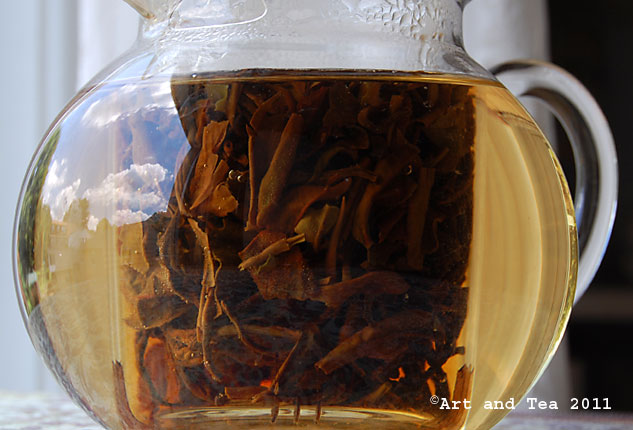
The dry leaf gave off a sweet cookie aroma as I spooned the leaves into my glass teapot. Since they’re so huge, I used 2 teaspoons per cup. I steeped the leaves for 4 minutes at a water temperature of approximately 185 degrees F. Based on my experience several weeks ago, I’m trying a longer steeping time initially. After steeping, I detected a light floral aroma in the wet leaf, a faint whisper of a green Oolong’s (like Spring Dragon) floral characteristic.

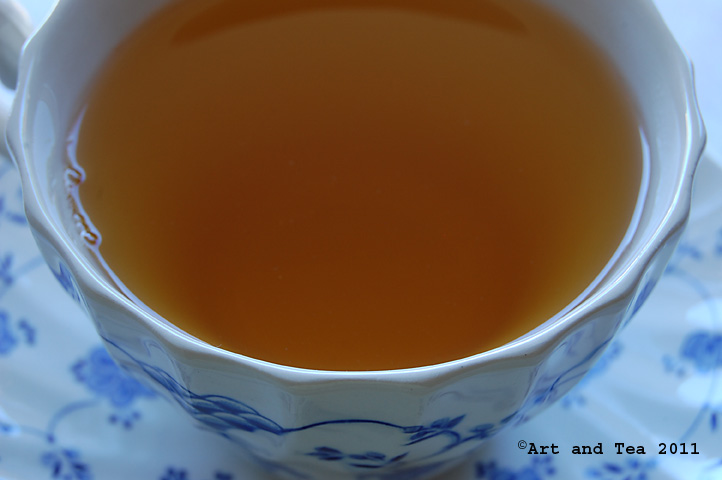
As you can see, the tea liquor is a lighter amber color than the Himalayan Oolong I reviewed last year. It’s also lighter-bodied in the cup. The flavor is rich and fruity and quite smooth. I might try steeping for 5 minutes at the lower temp and see what happens.

Isn’t it fun to experiment with your tea and see what happens? Some wonderful surprises and some….well…I guess that didn’t work. But then you know and you go on from there.

Some people like to stick with a tea and try different steeping times until the flavor suits them and others don’t want to be bothered with the “fuss”. One’s not right and one’s not wrong. They’re just different ways of approaching something. I think you can tell which way I am. Which way are you?

“It is the soul’s duty to be loyal to its own desires.  It must abandon itself to its master passion.”  ~Rebecca West

Saturday Morning Tea

I’m back from vacation and feeling rejuvenated despite a busy return to work this week. I’d like to share an interesting experience I had a few days ago. My colleague brewed a pot of a newly arrived Castleton estate second flush Darjeeling and the first word that popped into my head as I took my first sip was

PHENOMENAL!

It had a honeyed peach aroma with rich peach and muscatel flavor notes.

Ambrosia.

Naturally, we all requested it for our morning tea the following day. As I took my first sip that morning, I thought I had poured the wrong tea into my cup. While it was a very good Darjeeling, all of the wonderful flavor notes I had experienced the day before weren’t there. As my tea cooled, however, I detected them but they were very subtle.

So, what happened?

Different steeping times.

The first cup was steeped at 4 minutes and the second at 3 minutes. What a difference a minute makes, huh?

Look at this gorgeous leaf. It’s huge and chock full of tips/intact leaf sets.

Just like your water source can make all the difference in your resulting cup of tea so too can your steeping time. In light of my recent experience (and it’s happened to me before), I highly recommend that you experiment with different steeping times to find what works best for you. A tea you don’t like with your first cup could end up being your favorite tea by just making an adjustment to the steeping time!

This is the tea steeped for 3 minutes in boiling point water – a glowing medum amber hue.

The cup on the right is the tea steeped for 4 minutes. The color goes deeper and the peach/muscatel aroma and flavor are much more pronounced.

As my tea cooled, I was expecting the longer steeped tea to develop that characteristic “bite” but it never did. I might even try this tea steeped for 30 seconds longer. I like to push the steeping time to just before it develops that bitterness, that well known bitterness of being oversteeped.

So, I encourage you, dear tea friends, to experiment with the steeping times for your tea. That being said, however, I think that it’s best not to change the water temperature or the amount of tea leaves used per cup.  Those should remain consistent.

For this tea, I used 2 teaspoons of leaf per cup since the leaf is so huge and boiling point water.

Do you have a story similar to mine? If so, please share!

Enjoy your weekend!

Saturday Morning Tea

In one week, we’ve made what feels like a light speed jump from cool and rainy to hot and hazy. From one season to the next just in time for the outdoor holiday activities planned for this weekend.

Today we travel to the Wah tea garden which is located in the Kangra Valley near Dharamshala in northern India. I am enjoying their first flush tea in my cup this morning.

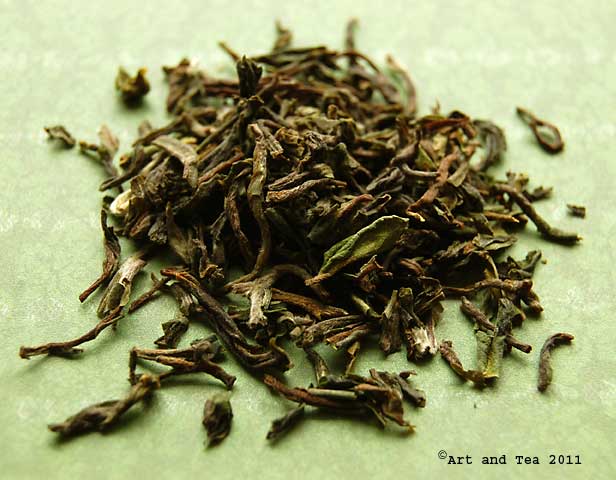
Similar to a first flush Darjeeling tea, this tea’s leaf is quite green, the first plucking of the spring.

The Wah tea estate was established in the late 1850s, where some of the first China tea bushes were planted in India. To this day, this tea growing region grows only China cultivars. You can read more about the history of Wah and that region here.

I steeped the leaf for 3 minutes in boiling point (212F) water. The wet leaf has a distinct aroma of fresh greens.

The luminescent amber liquor gives off a hint of lemon along with an inviting toasty note. The toastiness follows into the flavor along with a refreshing pungency which cleanses my palate with every sip. For those of you enjoying a sweeter tea, the addition of a sweetener would soften the astringency.

While I did not find the depth of flavor notes that most first flush Darjeelings have, this tea has a very pleasant flavor that makes me want to go brew up a second pot and explore it further.

As I lazily sit and sip my tea, I start a wonderfully relaxing 3-day weekend filled with family, friends and, of course, my garden.

Happy Memorial Day, dear friends!

“Oh, the fun of arriving at a house and feeling the spark that tells you that you are going to have a good time.”  ~Mark Hampton

Saturday Morning Tea

The skies may be gray outside my window but I am inside enjoying sunshine in my teacup – a first flush Darjeeling from the Tumsong estate.

I have read that the Tumsong tea garden was first planted in 1867 around a temple devoted to the Hindu goddess Tamsa Devi. Devi is the Sanskrit word for goddess.

When I opened the tea packet, an aroma of fresh flowers and sugar cookies greeted my senses.

I steeped the bright olive tea leaves for 3 minutes in boiling point (212F) water.

From the Tumsong tea estate:

“Tumsong’s teas are known to be among the best in the Darjeeling area and command high prices at auctions. Perhaps the first credit for this should go to the goddess, on whose land the garden grows. The goddess Tamsa presides over this serene and surreal landscape and fills the atmosphere with harmony. In the area, Tumsong is often referred to as the garden of happy hearts.”

The leaves may be intensely green but the liquor they produce is a golden yellow, creating pearl bubbles of light in my glass teapot.

I have also read that the entire tea garden faces some of the highest ranges in the Himalayan mountains and receives a constant, cool breeze sweeping across the tea bushes. This breeze causes the plants to grow gradually, allowing them to slowly develop their flavor.

And this tea is positively bursting with flavor! Notes of nut (almond), tropical fruit and citrus pungency sweep across my palate as I slowly savor each sip from my teacup.

All I can say is – yum, and let me go make another pot right now!

I’m headed out to my garden this afternoon to do some more planting – 2 peonies with flowers of raspberry sorbet, tipped in yellow, a lavender for my herb garden, some olive/eggplant-colored coleus for a shady spot under a tree, and some cheerful daisies for the morning sun side of the house.

Have a wonderful weekend, dear friends!

“How to be happy when you are miserable. Plant Japanese poppies with cornflowers and mignonette, and bed out the petunias among the sweet-peas so they shall scent each other.  See the sweet-peas coming up.

Drink very good tea out of a thin Worcester cup of a colour between apricot and pink…”   ~ Rumer Godden

Unless otherwise noted, all text and photos are the property of Karen Park Art and Tea, copyright 2007-2011. Please do not “lift” any of my photographs or blog posts for use on your blog or website. Thank you so much for your respect and kind attention.