Saturday Morning Tea

Welcome to Assam month here at Art and Tea!

I’m starting off the month with an Assam from one of my most favorite estates, the Mangalam estate. As I look back on my tea posts, I’m surprised to see that I’ve only reviewed a Mangalam once, way back in 2008. You can read that review here.

Assam, located in northeast India, has one of the richest biodiverse climates in the world with tropical rainforest, bamboo and deciduous forests, grasslands and wetlands. The tea plant, Camellia sinensis, was found growing wild there in the 1830s, one of the few areas in the world where tea is a native plant.

I’ve read that this estate was named after one of the estate owner’s sons (who later became one of its managers) and that the word Mangalam means “auspicious” in the Sanskrit language. The estate was founded in 1973.

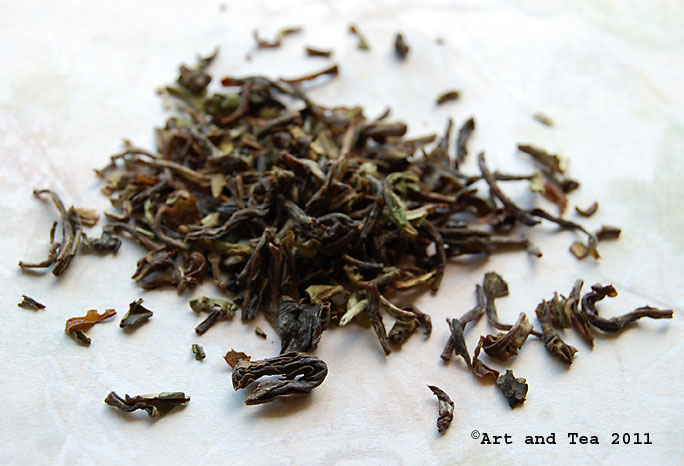
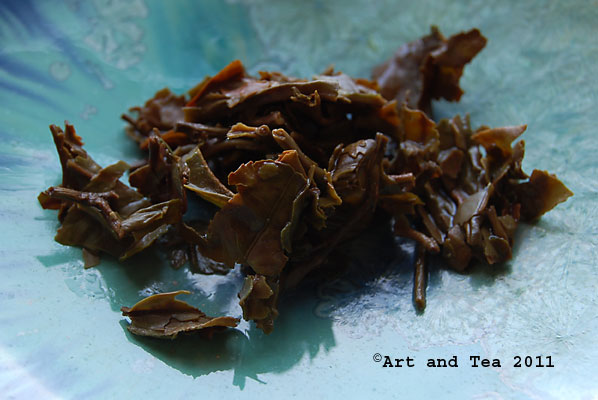
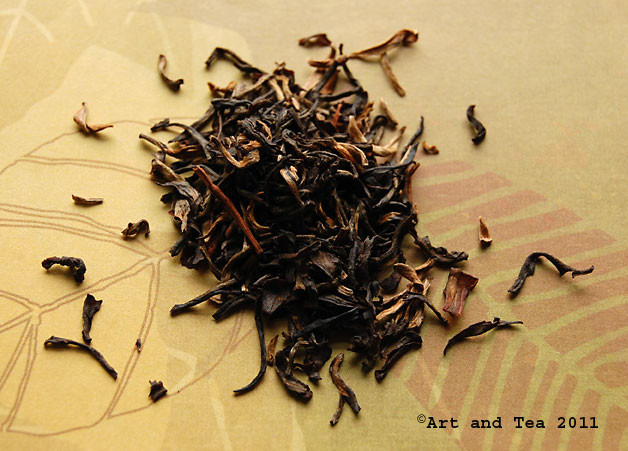
When I opened the tea packet, a hint of cocoa wafted up from the dry leaf. There is a profusion of beautiful golden tips (new growth) peppered amongst the deep brown whole leaf.

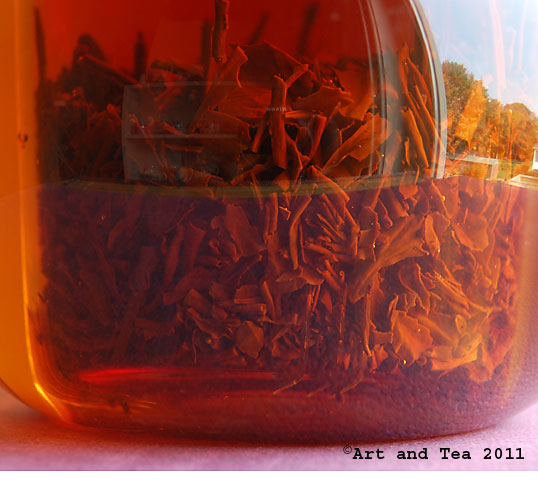
I steeped the leaves for 4 minutes in boiling point (212F) water. I discovered that for enjoying this tea plain, this is the perfect steeping time.

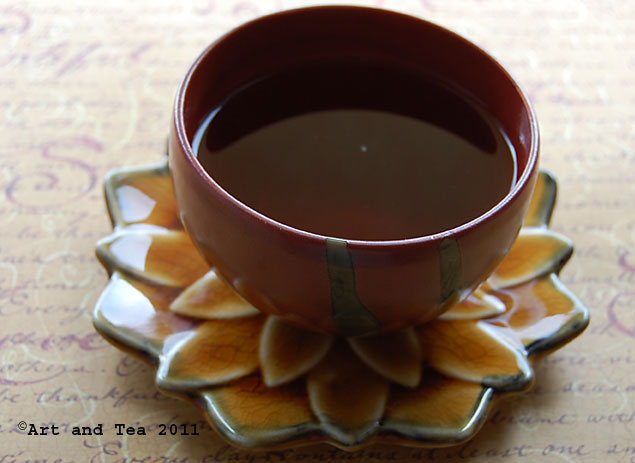
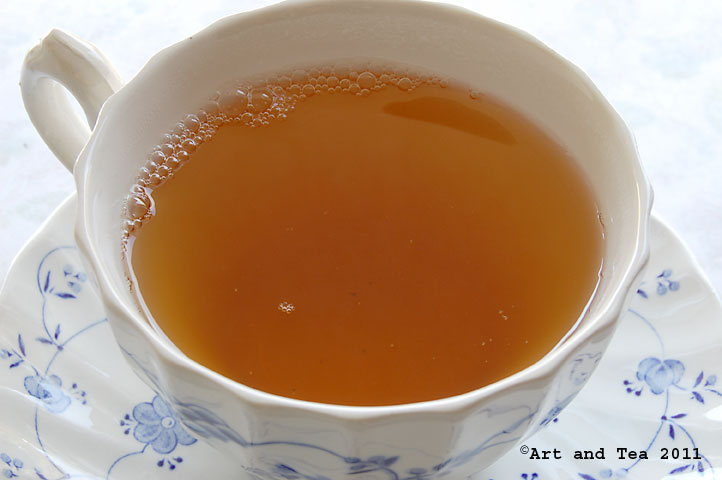
The tea liquor’s aroma is rich with a hint of malt and red wine. The flavor is silky smooth with a thick mouthfeel and a sweetness that lingers on my palate. It has a richness that would stand up well to any additions but if you are going to do that, I recommend steeping the leaves for longer than 4 minutes. As always, experiment and see what works best for you.

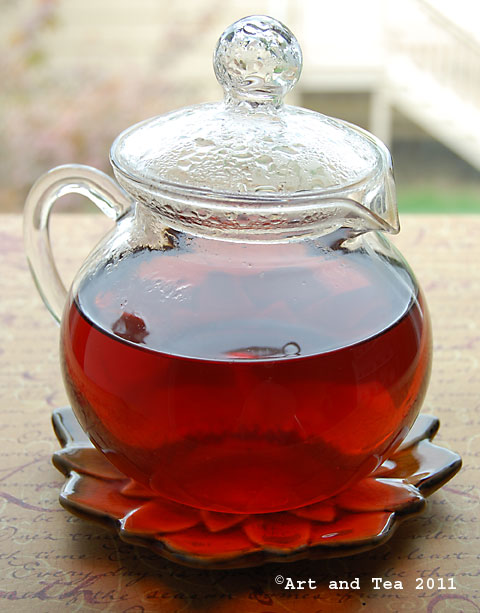
Even on this grey, drizzly day, the tea glows like rich antiqued copper in my glass teapot.
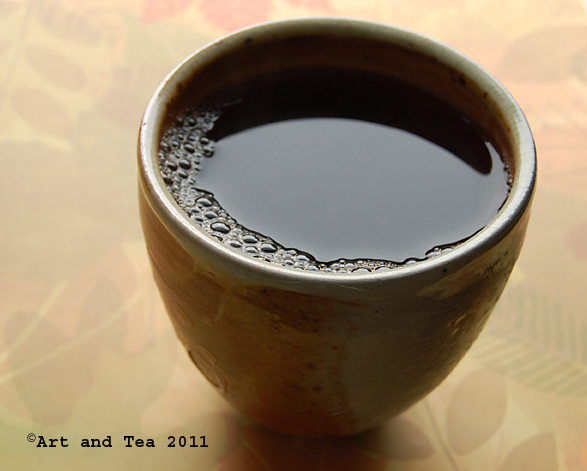
This tea is a great choice for anyone who doesn’t like the characteristic astringency of Assam. Speaking of astringency, one thing to watch out for is no matter how you steep the loose tea leaves, make sure that all of the leaf, including the smallest bits which might escape from your infuser, are removed from the tea. Those small bits not removed will continue to steep in your tea and lend more astringency to the flavor.

My parents are visiting me next weekend so there won’t be a new tea review next Saturday. However, I will search my archives and post another “oldie but goody.” Until next time, dear tea friends, I wish you many delicious cuppas…

October by Robert Frost

O hushed October morning mild,

Thy leaves have ripened to the fall;

Tomorrow’s wind, if it be wild,

Should waste them all.

The crows above the forest call;

Tomorrow they may form and go.

O hushed October morning mild,

Begin the hours of this day slow.

Make the day seem to us less brief.

Hearts not averse to being beguiled,

Beguile us in the way you know.

Release one leaf at break of day;

At noon release another leaf;

One from our trees, one far away.

Retard the sun with gentle mist;

Enchant the land with amethyst.

Slow, slow!

For the grapes’ sake, if they were all,

Whose leaves already are burnt with frost,

Whose clustered fruit must else be lost–

For the grapes’ sake along the wall.

Saturday Morning Tea

Fall has arrived under a grey blanket sky. We’re in a rainy weather pattern here in New England and I don’t think we’re supposed to see the sun for a week. It’s a good day for a rich, warm Assam black tea in my morning cup, this one from the Banaspaty estate, a small organic tea garden tucked into the hills of Kabi Anglong district in northeast India.

This particular Assam is a broken leaf tea so I steeped it for only 3 minutes in boiling point (212 F) water. Assams have such a gorgeous russet color, don’t they? It reminds me of the warm colors of the setting sun.

The wet leaf has a pronounced malty aroma, foretelling of its rich malty flavor notes. As I took my first sip, I detected a crisp astringency that could be enjoyed plain or toned down with a splash of milk.

There’s nothing like a pot of tea to brighten up a gloomy day.

As my tea cooled, some fruity hints were revealed, darkly sweet like the sweetness of raisins. We’ve just received a big shipment from India so I look forward to reviewing more Assams in the weeks to come. Shall I make October Assam month? Or do you like to read about a different type of tea every week? I welcome your feedback!

Have a wonderful week, dear tea friends…

“The ordinary acts we practice every day at home are of more importance to the soul than their simplicity might suggest.”  ~Thomas Moore

Saturday Morning Tea

The first day of fall is only days away and here in New England, temps have dropped almost 20 degrees literally overnight. Even though fall is one of my most favorite seasons, spring is, too, and I’ve chosen a tea this morning that reminds me of those promising days when the soil is just warming up and the tea bushes have started their growth cycle. Yes, one of my most favorite teas – a first flush Darjeeling! This one is from the Makaibari estate, an organic, biodynamic, Fair Trade tea garden in northeast India.

I’ve written about it before here.

As the tea steeps (3 minutes in 212 F water) in my glass teapot, you can see the green bits of leaf that are a good indicator of its first flush designation. Some folks actually believe they’ve received a green tea when they look at the first flush leaf. Yes, it is processed as a black tea but it seems that this first leaf growth, or flush, retains its greenish color, unlike a second flush tea.

As I lift the lid of my teapot, a faint aroma of nuts arises from the light amber tea liquor.

My teapot wears a necklace of pearl bubbles that adorns its glowing, inviting color. As I pour my first cup, I also detect a whisper of ripe fruit.

What strikes me first and foremost about the flavor is its amazing smoothness. Usually, not always, first flushes exhibit a healthy level of astringency. While it is there in this tea, I might say that it is bright rather than astringent. There is also a honey-like sweetness and a bit of fruitiness that lingers in my mouth.

As I wave goodbye to the very last days of summer, I now look forward to cozy sweaters and dark, rich cups of tea. How about you?

Until next week, dear tea friends…

Let us, then, be up and doing

With a heart for any fate;

Still achieving, still pursuing,

Learn to labor and to wait.

                               ~Henry Wadsworth Longfellow

Saturday Morning Tea

A happy Labor Day weekend to one and all! Are you saying to yourself: now where did the summer go? Those long, hazy days seem to always fly by, quickly fading into the coolness of the fall.

This morning I’m enjoying a cup of Ceylon black tea from the Manikkanda estate. It has a leaf style designated as “FF” or “Fancy Flowery”, a special production from this particular estate. I believe the FF means that there is an abundance of golden tip, or new growth.

Historically named Ceylon as a British crown colony, the name is an English translation of the word Ceilão, a name given to the island by the Portugese in 1505. The island officially became known as the “Free, Sovereign and Independent Republic of Sri Lanka” in 1972 and then in 1978 to the “Democratic Socialist Republic of Sri Lanka”. A Sanskrit word, Sri Lanka translates to “venerable island” in English.

The Manikkanda tea estate is located in the southwestern Galle district, a district of the Southern province at the southernmost point on the island.

I steeped the leaves for 4 minutes in boiling point (212 F) water, producing a rich russet liquor with a brisk aroma.

Look at that gorgeous color, a deep glowing fall color.

The tea liquor wakes up my palate with its brisk astringency and sweet flavor. I’m enjoying my tea plain but I bet it would taste great if you wanted to added milk and/or sweetener. This tea would also make a wonderful iced tea for those remaining warm days of late summer.

Enjoy this long weekend, dear tea friends!

“September’s song is a two-part harmony, as summer’s lighthearted serenade ends and a deeper melody begins.” 

~Sarah Ban Breathnach

Saturday Morning Tea

I’ve felt a shift in the air this week as we enter the second part of August. The sun sets earlier, the nights are cooler and I’ve even caught the faint whiff of woodsmoke as folks start to get a little cozier in the evenings by the fireplace. Lowe’s has row upon row of chrysanthemum pots in beautiful fall colors and rich burgundy blooms now adorn my front porch.

With a cooler breeze wafting in my windows, it’s the perfect morning for an Assam tea. Just as I love first flush Darjeelings in the springtime, I always enjoy Assam teas best in the fall. Their rich warmth is a wonderful balance to the cooler temps here in New England.

The Assam tea growing region is located in northeast India and the teas produced in that area were my first tea love. Their dark, full body reminds me so much of the tea my Mom used to drink when I was young. As the granddaughter of Irish immigrants, she always enjoyed her “cuppa”. And, of course, that’s what I was served whenever I wasn’t feeling well. So, as I grew up, I always associated black tea with comfort and feeling better.

My morning tea is an Assam from the Marangi estate, a 700 acre tea garden located in the hills of Assam. Every season there are a few outstanding teas that embody the best qualities of an Assam tea. This tea is definitely one of those teas!

The leaf is generously laced with golden tip, indicating a premium tea. I find that the golden tip also smooths out the astringency level in the tea liquor. This tea is a fine example of that as it is just smooth as silk.

I steeped the leaves for 5 minutes in boiling point (212 F) water. While the tea is very hearty and would stand up well to milk or cream, I’m drinking mine straight up.

The aroma is rich and malty which carries on into the complex flavor. Layers of malt are enhanced with a hint of dried fruit sweetness. This tea is a real treat!

Note to self: this would be the perfect birthday gift for my Assam loving friends. For myself, it would make the perfect companion to a cinnamon crunch bagel from Panera Bread!

What is your favorite tea in the fall?

“Autumn to winter, winter to spring,

Spring into summer, summer into fall—

So rolls the changing year, and so we change;

Motion so swift, we know not that we move.

~Dinah Mulock Craik