Saturday Morning Tea

Hello, my dear tea friends! Today started out with more camera problems, this time with the batteries. It’s not my month for smooth camera operations, is it? Anyway, I managed to get my camera to work after a half hour of charging a battery which appeared to be fully charged. I’ll have to investigate further later. Now it’s time for a cup of tea!

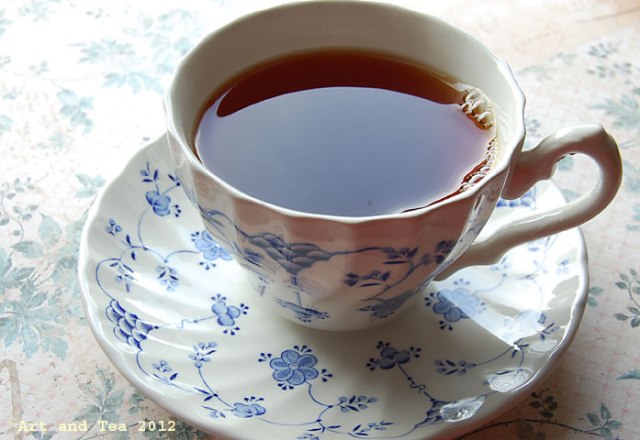
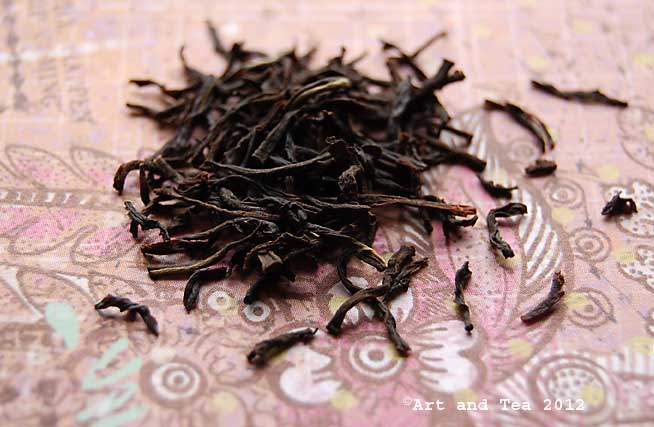
This week’s tea looks like a white tea and even tastes like one, however, it is a black tea, specifically a second flush Darjeeling from the Margaret’s Hope estate called “White Delight”.

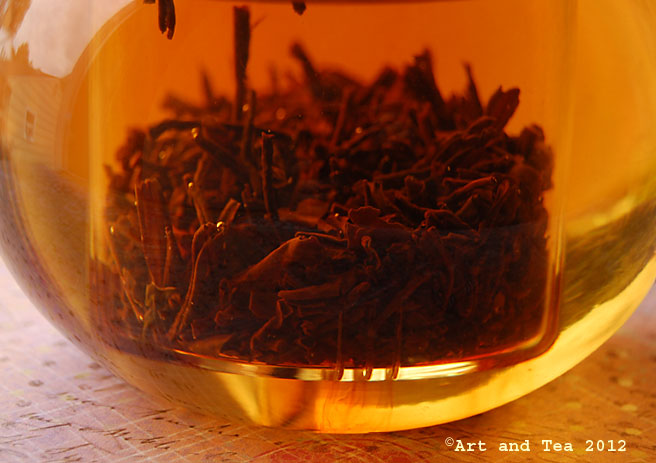
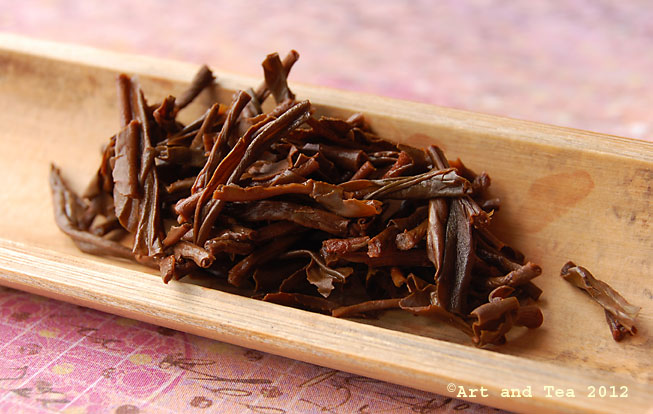
As you can see from the photo above, the lovely, variegated-colored leaf is enormous. I steeped the leaves for my normal 3 minutes in boiling point (212F) water but I think this tea could stand a longer steep time. It’s incredibly smooth with none of the characteristic Darjeeling “bite”.

You can read more about the well-respected Margaret’s Hope estate in my post here.
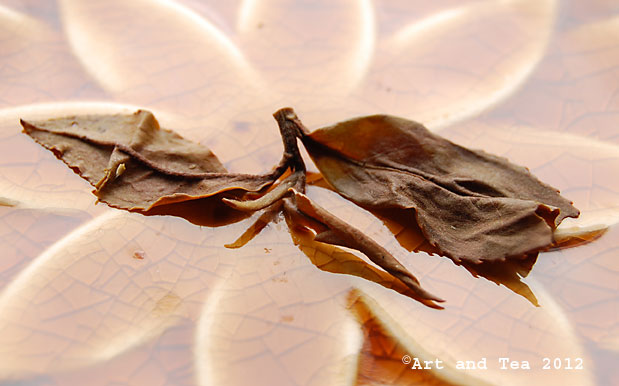
I tried to capture a full leaf set so you can see what is meant by a “fine plucking”, two leaves and a bud. The bud is the brand new growth and, as you can see above, there are 2 little bud leaves there. Think of when you pinch a plant to encourage branching. I do this with my coleus plants. Pinch the tip and 2 branches will grow where there was once one.

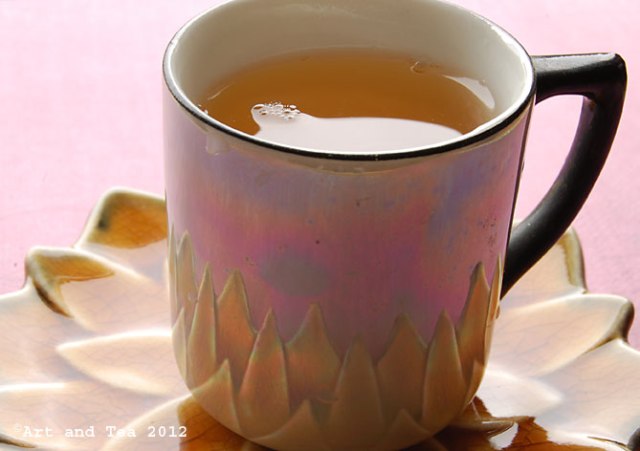
The color of the tea liquor is amazing, a deep golden yellow with a tinge of peachy-pink, like the blush of a ripe fruit.

The fragrant aroma smells of apricots which carries into the flavor, along with hints of melon and muscatel. The muscatel is the only hint that this is a second flush Darjeeling. The rest of the flavor notes speak to me of high-quality white tea. I have been told that the estate Manager decided to name it “White Delight” because it is so reminiscent of a white tea.
Sometimes I recommend a second flush Darjeeling for those who like to put milk in their Darjeeling cuppa. This would not be a tea for that. Even though it’s bursting with flavor, it’s just too mild for anything beyond a drop of honey.

The sky looks like a soft gray blanket today and rain has been falling softly on and off all morning. It’s a great day to curl up inside with a good book and a pot of tea.

As always, thanks for stopping by and have a wonderful week!

“The only noise now was the rain, pattering softly with the magnificent indifference of nature for the tangled passions of humans.”

~Sherwood Smith
Saturday Morning Tea

Good morning, dear tea friends! I hope that everyone had a wonderful week. This morning I am finally able to return to that Mangalam estate Assam and share a cup of it with you.

This is a clonal tea which means that it came from a tea bush created from cuttings of a superior tea bush. Have you ever clipped a cutting from a friend’s houseplant, placed it in water until roots started growing and then planted it in soil in its own pot? I would imagine the process is very similar to that.

You can read more about the Mangalam estate as well as how the tea bush is indigenous to this part of northeast India in my post here.

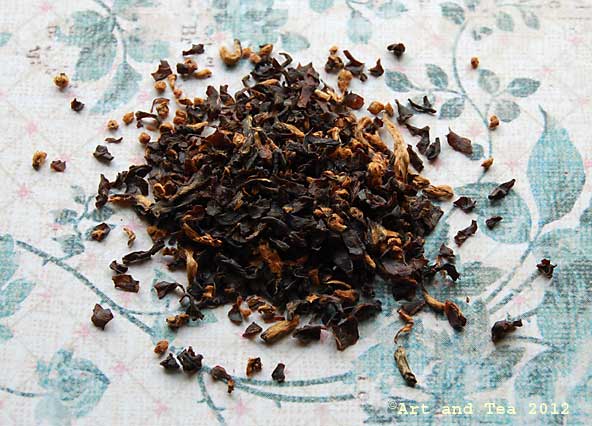
This broken leaf tea has a lot of yellow tip, making it a higher grade offering and also giving it more complexity of flavor. I steeped the leaves for 3 minutes in boiling point (212F) water.

The fragrant aroma is rich and malty, enticing me to take my first sip. The flavor is thick and stout with a lovely smoothness that allows the sweet, dried fruit notes to come forward. The fruity nuance lingers in my mouth.

The dark-amber tea liquor would stand up very well to a longer infusion and the addition of milk and sweetener, if you like that.

I tend to shy away from the sometimes pronounced astringency of an Assam tea. I find this cup to be well-balanced with just a hint of astringency. It’s the perfect cup of Assam for me!

We are deeply entrenched in the long, hot and hazy days of summer still, however, I have noticed that it’s not as light out in the mornings anymore. The days grow shorter but there’s still no hint of the cooler weather to come. My garden is bursting with blooms – hydrangea, coneflower, roses, hibiscus, petunias and snapdragons. Even the chrysanthemums are starting to show a peek of their rusty bronzes and burgundies. I just love this colorful time of year!

As always, thanks for joining me and sharing a cup of tea. Have a great week!

“Summer afternoon—summer afternoon; to me those have always been the two most beautiful words in the English language.” 

~Henry James

Saturday Morning Tea

Good morning, dear tea friends! It’s great to be back here with you, enjoying a cup of tea again. Today’s tea is of the spider leaf variety, a Ceylon black tea from the Tea Bank estate, located in the Ruhuna district, on the southern end of the island of Sri Lanka. Spider leaf, or spider leg teas, are so named because of their long twisted shape.

Tea growing in Sri Lanka was started in the late 1800s by a Scottish gentleman by the name of James Taylor. Up until that time, coffee was the number one crop until a rust fungus killed the majority of coffee plants. Starting with a basic tea cultivation knowledge learned in Northern India and 19 acres of land, he soon turned a small business into a very successful one, selling his tea for the first time at the London auction by 1873.

I steeped the tea for 4 minutes in boiling point (212F) water. Usually, I find this Ceylon black leaf style to exhibit characteristics more reminiscent of a China black tea, however, this particular tea definitely smells and tastes like a Ceylon.

Its deep amber liquor has a light cedar-y aroma which is present in the taste. The flavor is very smooth and rich with just a whisper of caramel and raisin. I drank it plain, however, it would stand up very well to milk and sweetener with a longer steep time.

We’re experiencing another wave of heat this weekend, with temps approaching 90. I personally don’t mind the heat. It’s the humidity that I find hardest to tolerate. So, I’ve got all of the fans going – ceiling, window and one directly on me to stay cool while I venture into my studio for an afternoon of play.

Have a great week!

“Synchronicity holds the promise that if we will change within, the patterns in our outer life will change also.” 

~Jean Shinoda Bolen, Author and Wise Woman

Saturday Morning Tea on Sunday

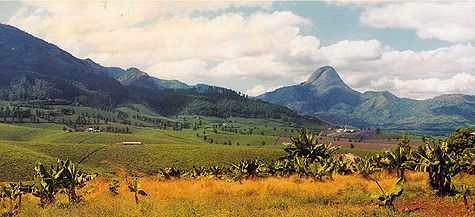
Happy Sunday, dear tea friends! I was called out of town yesterday so here I am on this Sunday morning instead, to share a cup of tea with you. This morning’s tea is from the country of Mozambique, located on the southeastern coast of Africa. It was grown at the Monte Branco tea estate.

Mount Murresse and tea plantations near Gurue, Zambezia Province, northern Mozambique (from wikipedia)

Bantu-speaking people, along with Swahili and Arabs, migrated into this area between the first and fifth centuries until the Portugese explorer, Vasco de Gama, arrived in 1498 and Portugal colonized it in 1505. They finally gained their independence in 1975.

I’ve read that most of the tea produced in Mozambique, about 90%, is exported from the country.

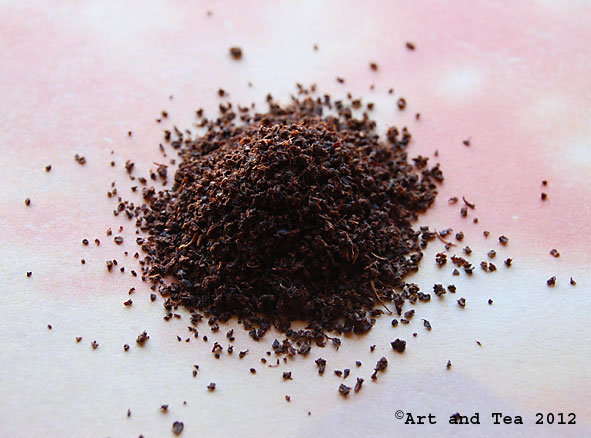
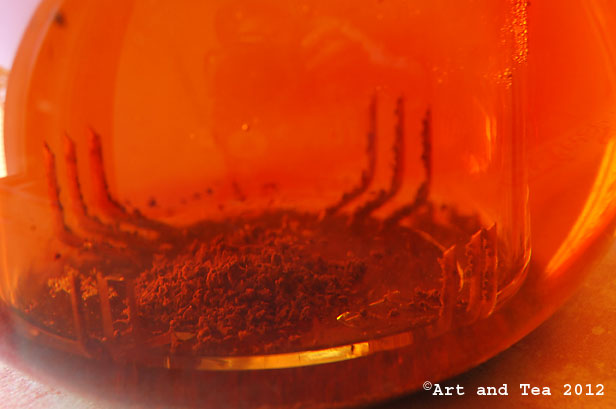
As you can see, this tea has been processed into a very finely particled leaf. I steeped it in boiling point (212F) water for 2 minutes.

The aroma drifting from the steeping tea is very sweet with a light floral undertone. Usually, with a leaf this small, the tea can have a sharp tang and overbrew quickly. Not so with this tea. It’s incredibly smooth with no astringency whatsoever.

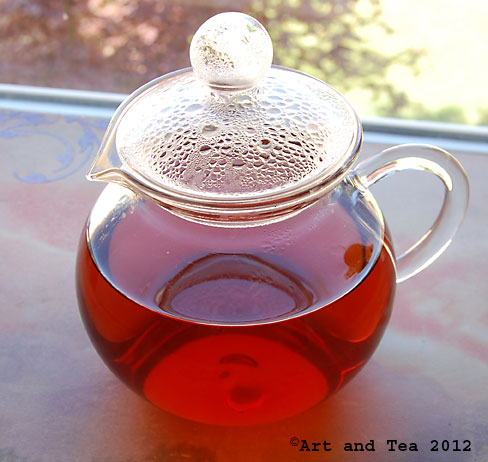
The dark amber liquor is rich and quite sweet with notes of vanilla and nutmeg. As I drink my second cup, I’m still so amazed at how smooth this tea is.

This tea would make a great iced tea. I’m going to try it this week and will let you know how it turns out. Until our next cup of tea, dear friends…

Have a fabulous week!

Saturday Morning Tea

Good morning, dear tea friends! In my quest to find an enjoyable, caffeine-free cuppa for my evenings, I’m doing a cupping on some Earl Greys: Rooibos Earl Grey, Decaffeinated Earl Grey and Premium Decaffeinated Earl Grey.

I’m using 3 cupping sets I’ve borrowed from work. These cupping sets are great. Having 3 parts – a steeping cup, a lid and a tasting bowl – they’re specifically made for the purpose of steeping a group of teas to compare and contrast them. Each cup has a 6 ounce capacity and little “teeth” on the rim opposite the handle.

I spooned a teaspoon of tea leaves into each cup and steeped for 5 minutes in boiling point (212F) water.

Once my timer sounded, I gently started pouring the tea from the cup into the bowl making sure I was holding the lid on securely as I poured. The tea will pour out into the bowl through the little “teeth”. I layed the cup into the bowl with the top of the cup tilted down so that the rest of the tea would pour out.

To complete the process, I inverted each cup while holding the lid securely and tapped gently on its bottom. This will release the leaves onto the lid so the steeped leaf for each tea may be viewed next to its tea liquor. It’s a little tricky at first to do this but after you’ve done it a couple of times, it’s easy to get into the rhythm of it.

If more than one person is partaking in the cupping, use a spoon for each bowl so you can place a couple of spoonfuls in your cup, try that tea and so on as you make your way down the line. Since it was just me, I sipped directly out of each teabowl.

It’s a good idea to have a small notebook handy so you can jot down your thoughts about each tea.

I found the Rooibos Earl Grey to be very smooth with a lighter bergamot flavor. The vanilla/citrus-y notes of the Rooibos came through in the cup, pleasantly co-existing with the bergamot.

The Decaffeinated Earl Grey had a very sharp taste, most likely indicating that it really couldn’t take as long of a steeping time as the other two. So, next time I’ll try 3-4 minutes for this tea. The bergamot flavor, however, was very light, even oversteeped.

The Premium Decaffeinated Earl Grey was smooth with a stronger bergamot flavor and a sweetness I found very appealing.

My favorite is the Rooibos Earl Grey.

Have you ever done a cupping like this? If so, please share your experience!

Have a great week!