Saturday Morning Tea

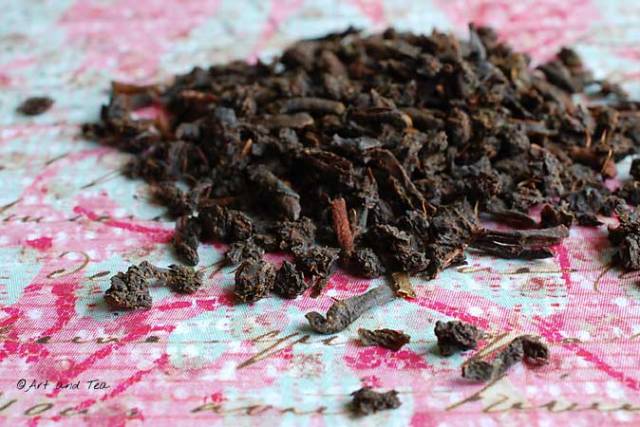
Rwanda OP Dry Leaf 8-10-13

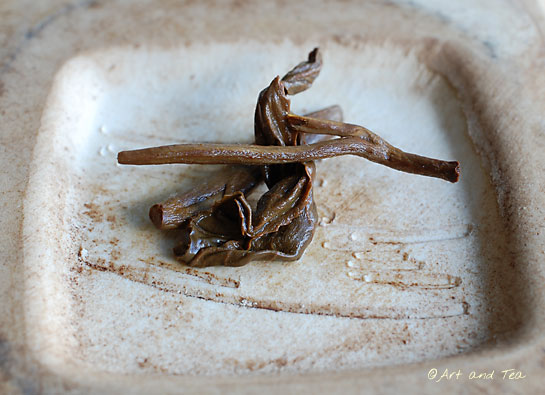
Good morning, dear tea friends! I continue my journey through the tea producing countries in Africa with a visit to Rwanda. In my cup this morning is an OP (Orange Pekoe) black tea selection.

Tea growing in Rwanda started in 1952 and has grown steadily ever since. The tea is planted at two different elevations – on hillsides at an altitude of 6,000-8,000 feet and in well drained marshes at an altitude of 5,000-6,000 feet. I have read that there are 11 tea estates in the country and each estate is located right by a tea processing factory as the tea must start its processing within a few hours of plucking.
Rwanda OP Tea Steeping 8-10-13

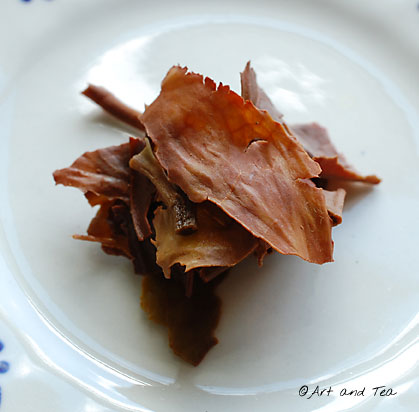
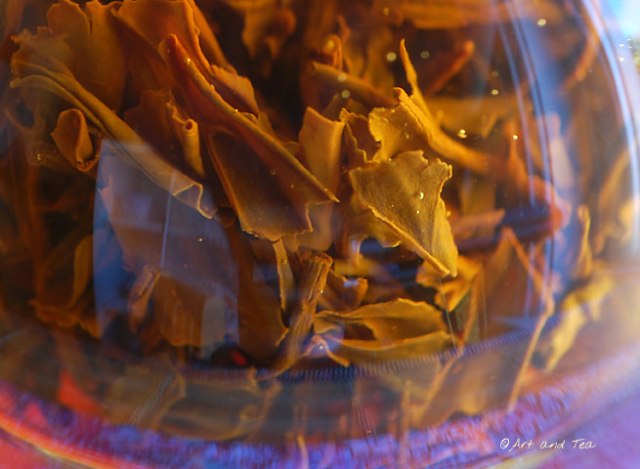
I steeped the large rolled leaf for 5 minutes in boiling point (212F) water. You can see the leaf starting to unfurl as it steeps.

Rwanda OP Wet Leaf 8-10-13

Back in April, the Rwanda Ministry of Agriculture unveiled plans to increase tea production in their country. You can read more about that here. It sounds like they have some challenges to make that happen, like infrastructure access and resistance of some farms to grow tea.

Rwanda OP in Teapot 8-10-13

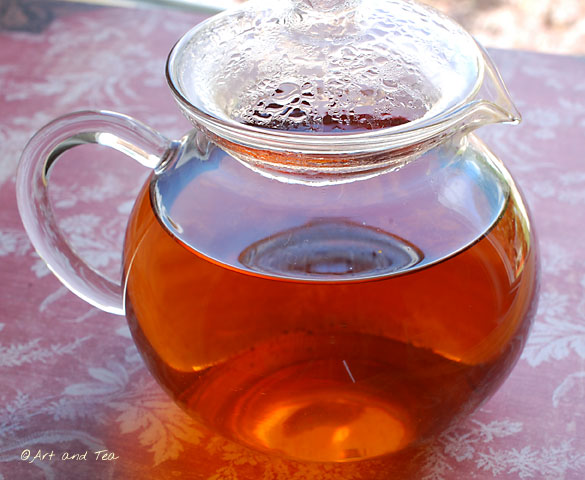
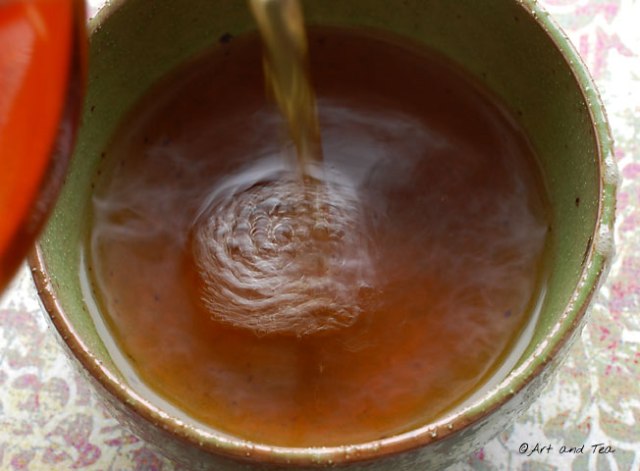
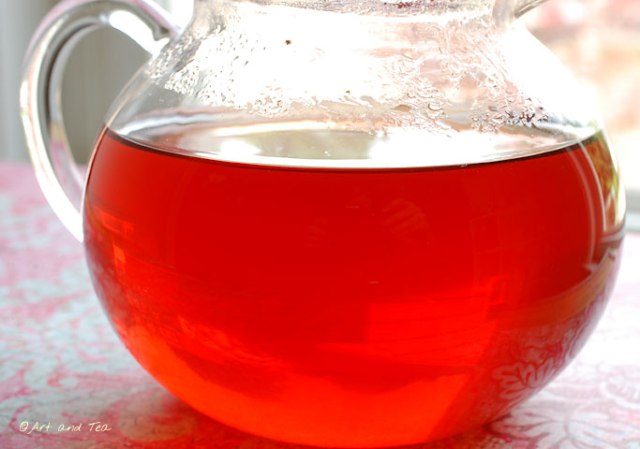
The glowing amber tea liquor has a toasty fragrance, which I find comforting. The flavor is strong yet smooth with light nuances of cocoa thickness and toastiness. I think this tea could be steeped longer than 5 minutes as I only detected a mild tang in the flavor. I’m going to try 6 minutes next time I brew a cup.

Rwanda OP in Teamug 8-10-13

I think this tea is a fabulous value and would make a great everyday tea. At a longer steep time, it would stand up well to milk and sweetener, too.

It’s a beautiful summer day with high wispy clouds sailing across a deep azure sky.  I think I’ll pull on my walking shoes and go for a hike on the bike path along the lake. Have a wonderful weekend!

“All truly great thoughts are conceived by walking.”

~Friedrich Nietzsche

Saturday Morning Tea

Marinyn Est Kenya Dry Leaf 080313

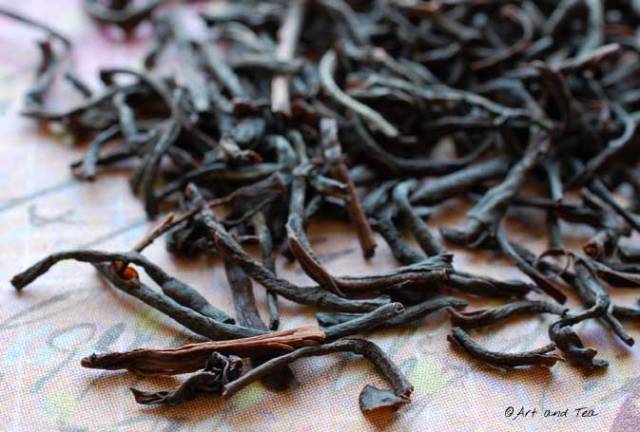
Good morning, dear tea friends! I’m continuing my exploration of African black teas this morning with a visit to Kenya, the Marinyn Estate, to be exact. This tea has some nice tip mixed in with the leaf, as you can see in my photo above. The tip is the newest growth on the tea plant and is covered by tiny white hairs.

Tea has been grown in Kenya for 110 years, however, it wasn’t until 1924 when the crop was commercialized, leading this country to be the third largest tea producer in the world today, behind China and India. The land has the ideal climate for tea growing – long sunny days with well distributed rainfall and rich red volcanic soil.

Marinyn Est Kenya Steep 080313

I steeped the leaf for 4 minutes in boiling point water.

Marinyn Est Kenya Wet Leaf 080313

I found a tiny leaf tip as well as a larger leaf that had been rolled. As the leaf steeped these rolled leaves unfurled to reveal a set of accordion pleats. The leaf is rolled during the tea processing to release its volatile oils for flavor.

Marinyn Est Kenya in Teapot 080313

The tea liquor is a rich, medium-amber color with a mellow aroma and a hint of tang. The flavor is smooth and well-balanced with light sweet malty notes. I enjoyed the tea plain in my cup but I think that it would stand up well to a light addition of milk and sweetener.

Marinyn Est Kenya in Teamug 080313

This is one of my favorite teamugs, given to me by my daughter, Aimee. I love the way the glaze drips down the side of the mug like rain upon a window. Beautiful color!

The skies are starting to cloud up, a great day for taking photos outside in my garden. The perennial hibiscus are blooming in gorgeous colors of mulberry and pale pink. What do you have planned this weekend?

Thanks for stopping by and sharing a cuppa with me.  Have a wonderful week!

“There is something in the nature of tea that leads us into a world of quiet contemplation of life.”

~Lin Yutang, The Importance of Living

Saturday Morning Tea

LupondeEstDry072713

Good morning, dear tea friends! I’ve been told that this season has not been a very good one for Indian teas, Darjeelings and Assams alike. So, I decided that I would expand my horizons and start exploring the African teas, which I’ve been told are excellent this year, at reasonable prices. I’d like to introduce you to a black tea from the country of Tanzania – Luponde Estate GFOP Organic.

LupondeEstSteep072713

I quote from the Luponde website:

“The Luponde Tea Estate is one of the oldest organic tea estates in the world and the climate is perfect for growing tender leaves and flowers which are handpicked, bringing you the highest quality single estate teas. The estate is situated in the stunning Livingstonia Mountains in Southern Tanzania and at an altitude of 7,000 feet. Tea was first planted on the estate in 1954 and today covers 2,212 hectares. There are 730 hectares of planted tea, of which 401 are organic and there are currently 20 hectares of herbal plants. The estate produces on average 2 million kilograms of black tea a year and the majority of this is tea bag grade. The Luponde estate is the only steady source of income for the people who live in this area and in peak season 80 kilograms of wet leaf will be picked per day by one person.”

You may read more about this tea estate here.

LupondeEstWet072713

I steeped the leaf for 4 minutes in boiling point (212F) water. The aroma of the brewing leaves was of a lemony freshness, portending its crisp flavor.

LupondeEstTeapot072713

Look at that gorgeous deep amber color! Magnificent.

The smooth flavor is well balanced with notes of lemon and cedar.  If you like a more pronounced briskness, steep the leaves for 5 minutes. Fair warning though. We recently did that at work and one of my colleagues remarked that it tasted like he was licking a cedar block. Oh my.

This tea would make a wonderful iced tea. Its flavor reminds me of a high quality Ceylon black tea.

LupondeEstTeacup072713

On this beautiful summer day, I’ve captured a puffy white cloud in my teacup.

Have a wonderful week!

“So fine was the morning except for a streak of wind here and there that the sea and sky looked all one fabric, as if sails were stuck high up in the sky, or the clouds had dropped down into the sea.”

~Virginia Woolf, To The Lighthouse

Saturday Morning Tea

Puttabong2ndFlDry071313

Good morning, dear tea friends! It’s wonderful to be back here with you enjoying a cup of tea again. My first 2nd flush Darjeeling tea review from the 2013 season, this selection is from the Puttabong Estate.

Also known as the Tukvar Estate, it was first planted in 1852 and is nestled in the foothills of the Himalayan mountains near Kanchendzonga peak. With altitudes ranging from 1,500 to 6,500 feet above sea level, it is one of the highest elevation tea gardens in Darjeeling district, in northeastern India.  Its tea plants consist mainly of clonal bushes and China jat, meaning tea bushes with origins from China.

Puttabong2ndFlSteep071313

Look how dark the tea leaf and steeping liquor is when compared to a first flush Darjeeling, whose color has been compared to apple juice. This tea was harvested in later spring as compared to the first flush early spring harvest. What a difference a few months can make!

Puttabong2ndFlWet071313

The dark chocolate color of the leaf contains no green bits as a first flush does.

This tea has an interesting leaf designation called Kakra. I’ve read that this word translates to “dehydrated leaf”. Free of pesticides, the tea leaf is allowed to be attacked by a green fly, which looks similar to an aphid. The fly bites the leaf and starts sucking on its juices. This causes the leaf to start to oxidize on the plant. Only the leaves that have been exposed to the green fly, identified by their yellowish color, are plucked. So, in essence, the leaf undergoes a double oxidation – on the plant and then during its regular processing. Isn’t that cool?

Puttabong2ndFlTeapot071313

I steeped the leaves for 3 minutes in boiling point (212F) water. The glowing dark-amber tea liquor has a rich aroma of fruits and chestnuts, reminiscent of a darker Oolong tea. This brings up an interesting point as I’ve read that the tea leaf that goes on to become Oriental Beauty Oolong from Taiwan has also been exposed to the ministrations of the green fly.

Puttabong2ndFlTeabowl071313

I find the flavor, whose richness literally bursts in my mouth, also reminiscent of an Oolong tea in its nutty, almost woody quality. I also detected faint notes of fruit in the smooth cup.

We’ve been getting rain almost everyday here in New England this past week  and the gardens are bursting with rich color, just like the rich flavor of this tea. In my garden, I have coneflower, hydrangea, roses, tall phlox, astilbe and even some chrysanthemum starting to bloom. I hope that you’re enjoying the season wherever you may be with lots of cups/glasses of tea to keep you company. Have a wonderful week!

“Be gentle with yourself. You are a child of the universe no less than the trees and the stars; you have a right to be here. And whether or not it is clear to you, no doubt the universe is unfolding as it should.”

~Max Ehrmann

Saturday Morning Tea

AislabyEstCeylonDry062213

Good morning, dear tea friends! Now that summer has officially arrived, the temperature has started to creep up again into the 80s and it’s time for a refreshing glass of iced tea. I think that Ceylon black teas taste fabulous iced so this morning’s tea is just that, from the Aislaby Estate in southeastern Uva province, Sri Lanka.

AislabyEstCeylonSteep062213

I have read that Uva province is the second least populated of Sri Lanka’s provinces, with only 1.1 million people. They have two main agricultural crops there: tea, grown in the hills, and sugar, grown on the plains. This particular tea estate has been owned by a British planting family that emigrated to Sri Lanka in the 1880s and has owned the estate since the 1920s.

AislabyEstCeylonWet062213

The leaf is graded as pekoe (pronounced pe, as in pet, and koe, rhymes with toe), the definition being “a grade of black tea consisting of the leaves around the buds.” As I took photographs of both the dry and wet leaf, its chunkiness reminded me of a CTC grade, with its granular appearance.

AislabyEstCeylonTeapot06221

To steep my tea leaves for iced tea, I used double the amount I normally would as for hot tea preparation, so 2 rounded teaspoons in my little glass teapot. I steeped for 3 minutes in boiling point (212F) water.

As the tea steeped to a beautiful deep amber color, a pronounced minty aroma wafted up from my teapot.

AislabyEstCeylonTeaglass062

After steeping, I poured the hot tea into a Pyrex glass filled with ice cubes. The Pyrex brand of glass is a borosilicate glass (mainly silica and boron oxide), a glass resistant to thermal shock.  Once the tea had cooled down, I then filled my Mermaid glass (which isn’t boro glass).

The tea tastes rich and full-bodied with an interesting, pronounced wintergreen minty note. Some of my favorite Ceylon teas have this flavor note and I find it especially refreshing in an iced tea. I imagine adding a slice of lemon or some lemon balm leaves to add a citrus note to the mint. Fabulous!

My company is shutting down for our annual vacation June 29-July 7. I’m traveling to Michigan that week to visit with my family. So, there won’t be a new Saturday Morning Tea post for 3 weeks. That said, I’ll be happy to rerun some posts the next two weeks.

Thanks so much for joining me today and I look forward to sharing another cup of tea with you in July!

“Summer afternoon-summer afternoon; to me those have always been the two most beautiful words in the English language.”

~Henry James