Saturday Morning Tea

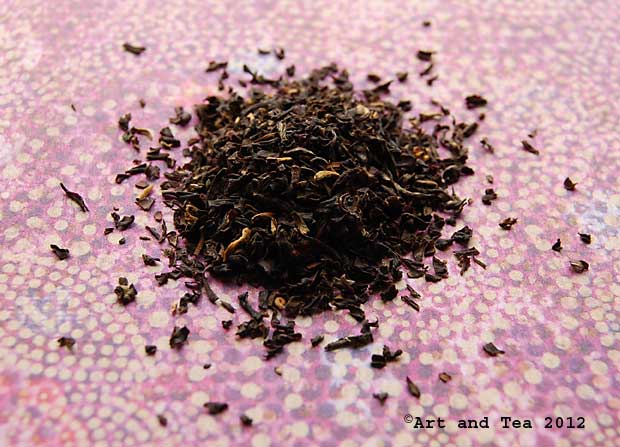
Nilgiri BOP Dry Leaf 03-15-14

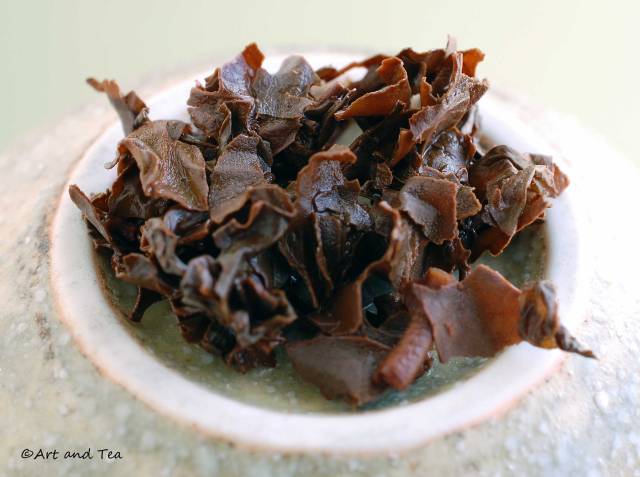
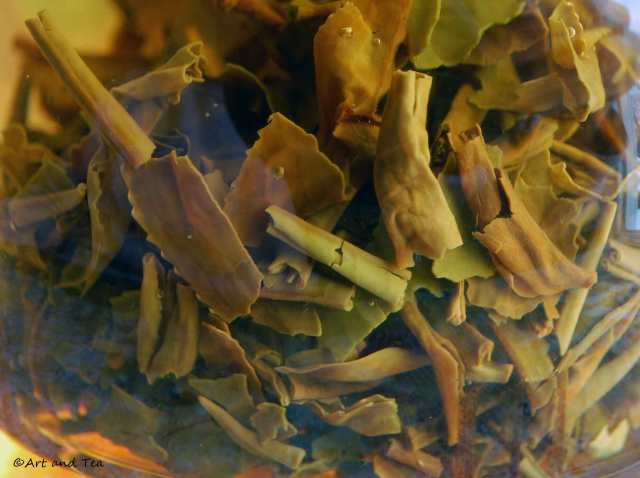
Good morning, dear tea friends! I’m enjoying another Nilgiri black tea in my cup on this almost spring, blue sky morning. It’s a blend of teas from that district in southern India and is called Nilgiri BOP, or Nilgiri Broken Orange Pekoe, meaning a broken leaf tea, as you can see in the picture above.
Nilgiri BOP Steep 03-15-14

I have read that the majority of tea produced in the Nilgiri district in Tamil Nadu state in southern India is from small, independent growers. After the leaf is plucked, they then sell the leaf to the processing factories owned by the larger tea gardens, or plantations, as they are called. Over 50% of the tea produced is exported, mostly sold at auction.

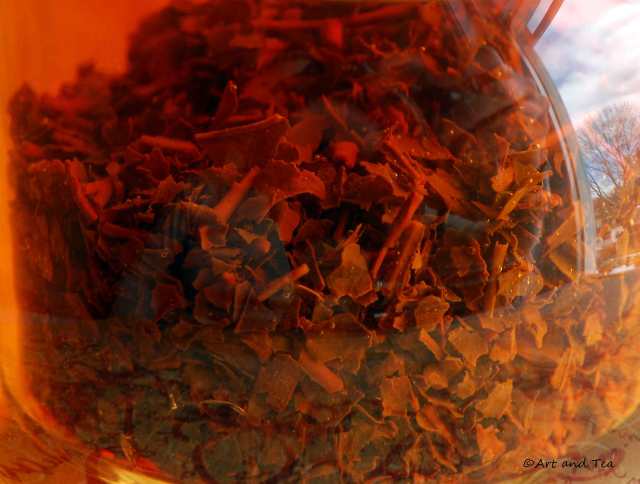
I steeped the leaves for 3 1/2 minutes in boiling point (212F) water.

Nilgiri BOP Wet Leaf 03-15-14

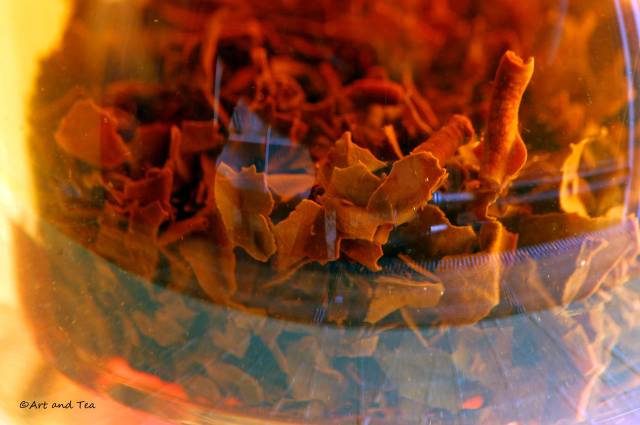
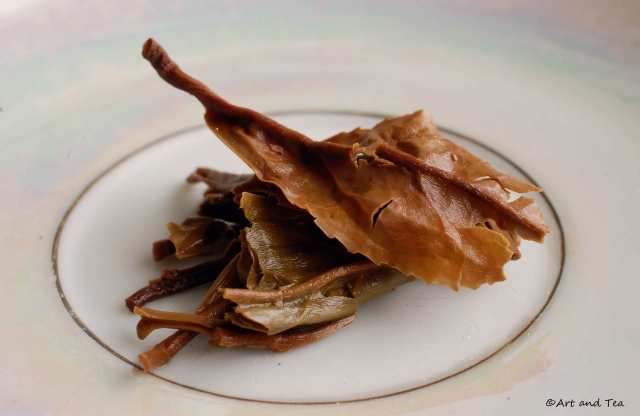
The steeping hasn’t changed the look of the leaf at all except for perhaps the beautiful blue sky reflections patched on the russet bits of leaf.

Their ideal climate allows for year-round plucking and processing, making a higher yielding crop than in Darjeeling. That said, the highest quality teas are produced during the cooler months – late November to mid February.

I have read that Nilgiri teas do not cloud when iced.  Does anyone have any experience with that? I’ll have to try it.
Nilgiri BOP Teapot 03-15-14

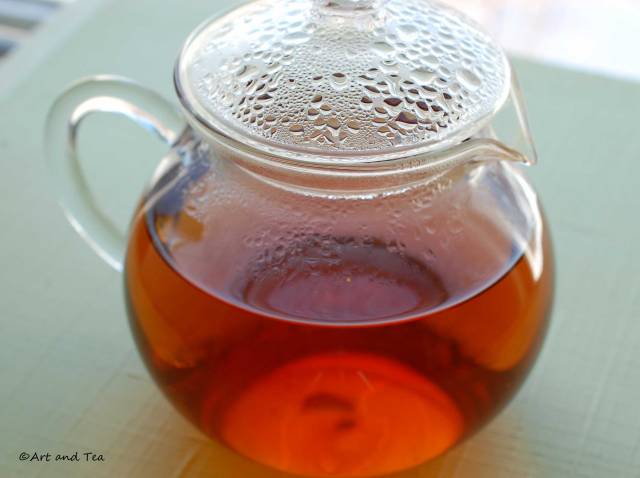
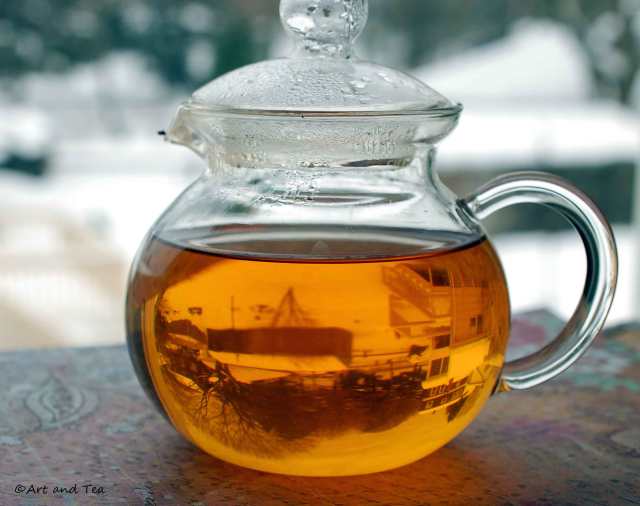
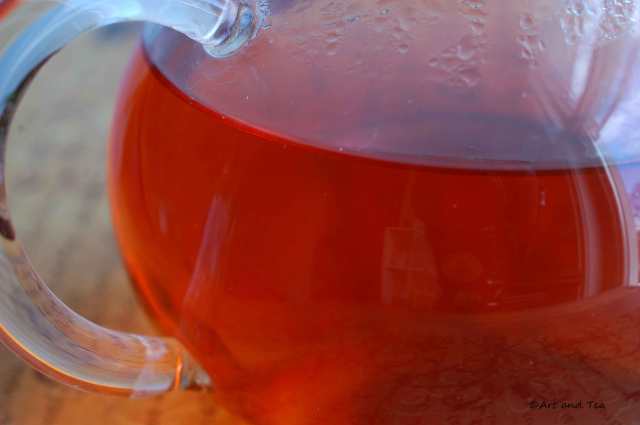
As I lifted the infuser from my glass teapot, I was greeted by the aroma of warm sugar and toast with a hint of citrus.

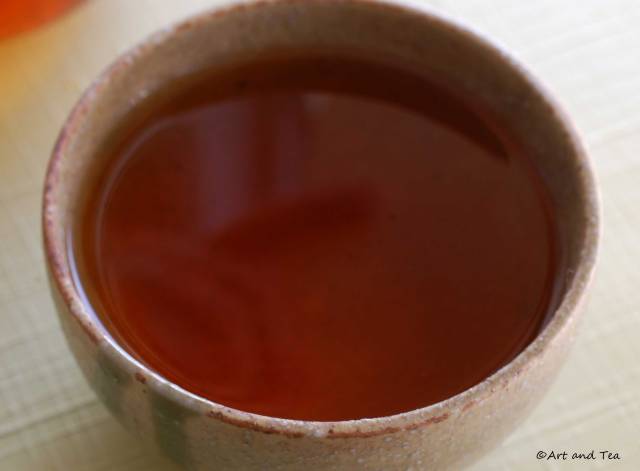
The flavor is silky smooth and lightly sweet with notes of mellow toastiness and a whisper of tangy citrus and honey.
Nilgiri BOP Tea Bowl 03-15-14

It would be fun to experiment and push the steeping time on this tea. How long do you brew it for?

It’s been a long, brutal winter here in New England. Here it is the middle of March and it was 13 degrees when I left for work yesterday morning. Ugh. But there’s hope for us….the huge piles of snow are slowly but surely diminishing, helped along by today’s 50 degree temps. I’m looking forward to getting outside for a walk and some deep breaths of fresh, warmer air.

Until the next time we share a cuppa, Happy Spring to all! I’ve heard whispers of some first flush teas on their way to us…

“No matter how long the winter, spring is sure to follow.”   ~Proverb 

Saturday Morning Tea

Iyerpadi Estate Nilgiri Dry Leaf 03-01-14

Good morning, dear tea friends! Happy month of spring! March is arriving in true lion style with frigid temps here in New England, despite the sun shining in a deep blue sky. The days are getting longer though and filled with hope for warmer weather soon.

I’m continuing my exploration of teas from the Nilgiri Mountains in southern India. In my cup today is an organic black tea from the Iyerpadi Estate.

Iyerpadi Estate Nilgiri Steep 03-01-14

In the first half of the 19th century, South India was focused on growing coffee. Then, between 1860 and 1890, the Coffee Blight wiped out the whole crop completely in the Nilgiris (translation: “Blue Mountains”) and the Anamallais. The tea plant had been introduced in the early 19th century in that area but it wasn’t until the coffee crop was gone that the focus turned to tea.

I steeped the chocolate brown leaves for 4 minutes in boiling point (212F) water.

Iyerpadi Estate Nilgiri Wet Leaf 03-01-14

Iyerpadi Estate, located on the slopes of the Anamallais (translation: “Hill of the Elephants”), was opened around the birth of the 20th century. One of the original owners was a Coimbatore barrister by the name of Narasiyer, and his nephew, Meenachi Iyer, who some say was the first Indian planter, became the estate manager. I’ve also read that the estate is in the area of the Indira Gandhi Wildlife Sanctuary, the largest and well preserved sanctuary in Tamil Nadu state.

Iyerpadi Estate Nilgiri Teapot 03-01-14

The deep amber liquor has a sweet aroma with brisk hints and toasty mellowness. The flavor is silky smooth with medium body and creamy lemon notes. This tea reminds me of a Ceylon tea, however, it has a deeper, smoother flavor. I think it would stand up to a drop of milk if steeped at a minute or so longer, however, it’s plenty sweet on its own. With its brisk, citrus character, it would make a fabulous iced tea.

Iyerpadi Estate Nilgiri Tea Bowl 03-01-14

It’s a wonderful feeling when you try something for the first time and find it quite delicious.

This weekend my company is having a tea tasting at the 185th Massachusetts Camellia show being held at the Tower Hill Botanic Garden in Boylston, MA. I’ll be there tomorrow from 12-3pm serving tea. So, if you’re in the area, please stop by and enjoy some tea and lovely flowers!

Have a wonderful week, dear tea friends, and hopefully, the next time we meet and enjoy tea together here, spring will be in the air.

“Spring drew on . . . and a greenness grew over those brown [garden] beds, which, freshening daily, suggested the thought that Hope traversed them at night, and left each morning brighter traces of her steps.”

~Charlotte Bronte, Jane Eyre

Saturday Morning Tea

Havukal Estate Nilgiri Dry Leaf 02-15-14Good morning, dear tea friends! The world outside is a mass of cotton white, including the sky, which speaks of more white to come, snow that is, another 5 or 6 inches to add to the large mounds already there. Spring is still slumbering away under its thick snowy blanket. I hope it wakes up soon…

My morning tea is from Nilgiri in southern India, a selection from the Havukal Estate. I confess that I don’t really drink Nilgiri teas at all and have decided to remedy that by exploring some selections in the coming weeks before the first flush Darjeelings arrive and I get swept away by them.

Havukal Estate Nilgiri Steep 02-15-14

The Havukal tea garden is located outside of Kotagiri in southern India. Surrounded by boulders and native plants called vetiver, which help prevent soil erosion, the estate has been owned and managed by the Thangavelu family since 1957. In reading about the estate practices, it sounds like the family has a good working relationship with their employees and listen to their feedback about ways to improve how they do things on the estate. A network of stone drains runs throughout the garden, and the water running through them is constantly filtered and monitored. I sense a great synergy at work in this tea garden settled high in the mountains.

Havukal Estate Nilgiri Wet Leaf 02-15-14Using one teaspoon per cup, I steeped the leaves for 4 minutes in boiling point (212F) water. The fragrant, fruity aroma reminds me of a Darjeeling tea with its light notes of muscatel.

Havukal Estate Nilgiri Teapot 02-15-14

The light amber tea liquor reflects the frozen world outside, suspended in my glass teapot. As I took my first sip, I was pleasantly surprised by its silky smooth quality. It might look and smell like a Darjeeling but it doesn’t have that astringent bite at all. Citrus hints and notes of fruit dance across my tongue and delight my taste buds. The finish lends a fleeting whisper of almond as it departs.

Havukal Estate Nilgiri Teacup 02-15-14I look forward to exploring more tea selections from the Nilgiri Mountains!

As I approach my 7th blog anniversary in a couple of months, I’ve made a decision that I’ve been contemplating for awhile now. I’m going to be sharing a new tea review every other week instead of every week. As much as I enjoy sharing my love of tea, it’s time to make room in my life for some new things. On the week I won’t have a new review, I’ll be happy to rerun posts from the past. Thanks for understanding, my dear tea friends.

“May the wind under your wings bear you where the sun sails and the moon walks.”

~J.R.R. Tolkien, The Hobbit

Saturday Morning Tea

Tonganagaon Est Assam Dry Leaf 01-18-14

Good morning, dear tea friends! I’m glad to be back with a new tea post to share with you. My poor desktop is gone, replaced by my laptop, which is actually much faster. My biggest challenge was finding a new photo editing software that didn’t break the bank. I’m trying out Photoshop Elements on a free trial and, so far, it’s doing everything I’d like it to do. I hadn’t realized how slow my old desktop was. She served me well for 15 years. Ok, on to tea…

This morning’s tea is an Assam tea from the Tonganagaon Estate. This black tea from northeastern India has been cultivated without the use of synthetic pesticides and herbicides so it’s a certified organic tea. I couldn’t find much information about this tea garden other than it’s small and located near the Namdapha National Park, one of the richest areas of biodiversity in all of India.

Tonganagaon Est Assam Steep 01-18-14

I steeped the variegated, tippy leaves for 4 minutes in boiling point (212F) water. If you enjoy milk in your tea, I recommend steeping for a minute or so longer. A pronounced toasty aroma wafted up from my glass teapot as the leaves steeped.

Tonganagaon Est Assam Wet Leaf 01-18-14

This tea is considered a whole leaf tea but all I saw were large broken pieces of leaf. I think that a tea can be designated as whole leaf if the leaf bits are above a certain size as they’re running them through sieves during processing.

Tonganagaon Est Assam Teapot 01-18-14The tea liquor is a gorgeous, glowing orange. The flavor is silky smooth with light notes of spice and malt, along with some toasty nuances. This is the most complex organic Assam tea I’ve tasted in a long time, quite a pleasure.

Tonganagaon Est Assam Teamug 01-18-14

A little while ago, it was teeming rain and now big fat flakes of snow seem to be pouring out of the sky, coating everything with an icy white frosting. I’m spending an afternoon with my family this afternoon, celebrating another birthday and looking forward to a wonderful year to come!

Have a great week and enjoy your tea!

“With mirth and laughter let old wrinkles come.”  ~William Shakespeare

Saturday Morning Tea

A good morning to you, dear tea friends! I’m still experiencing computer issues, unfortunately, but there is some good news to report. My tech savvy friend is coming over today to see if my computer can be brought back to life. If not, I’ll have to make some decisions and move forward. As my tea post library is rich and full, I leave you with a Yunnan tea review from a couple of years ago. Enjoy!

A couple of days ago, we did a Yunnan black tea cupping at work, comparing 8 of our current Yunnan selections. I enjoy the cuppings very much because I find it so interesting to taste the teas side by side and discern their similarities and differences, especially within a category. So, with that cupping still fresh in my mind, I chose one of those Yunnan teas as my morning tea today. It’s the only broken leaf one of the group, called Yunnan FBOP(Flowery Broken Orange Pekoe).

From mountainous Yunnan province in southwestern China, this black tea consists of mainly dark leaf with a small amount of yellowish tip sprinkled in. Yunnan teas have traditionally been plucked from very large, old tea trees but I have heard that some of those trees are being cut down or cut in half to make way for monoculture plantings. Hearing that makes me sad but I also know that demand is up for these teas and perhaps that is how they’re accommodating that demand.

I steeped the leaves for only 3 minutes in boiling point (212 F) water. The aroma wafting up from the steeping leaves is sweet and earthy.

The Chinese have traditionally called black tea “red tea” and you can certainly see why as the tea glows a gorgeous russet color in my glass teapot.

The flavor is so incredibly sweet with notes of pepper and earth and a whisper of smoke. The sweet and smoke linger in my mouth reminding me of sweet pipe tobacco. This tea would stand up to milk well but I don’t recommend any sugar because it is plenty sweet already.

I like my wide mouth tea bowl because it allows the tea to cool quickly, revealing the flavor notes. I find it hard to pick out all of the flavor notes when the tea is really hot. How about you?

We had a dusting of snow fall from a gray blanket sky this morning, however, it must be warming up outside because the snow is gone and everything just looks damp now as I gaze out my window. I’ve recently ordered some metalworking supplies, a disk cutter and a dapping set. I’m looking forward to getting back into my studio after an incredibly long period of drought. Way too long…

Happy tea drinking!

“Clouds come floating into my life, no longer to carry rain or usher storm, but to add color to my sunset sky.” ~Rabindranath Tagore