Saturday Morning Tea

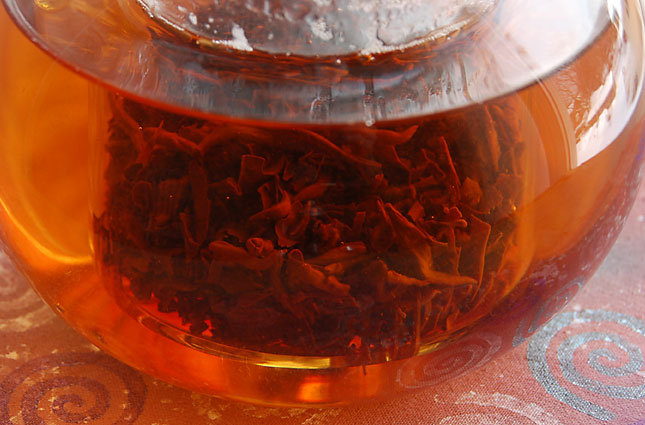
Fall has arrived under a grey blanket sky. We’re in a rainy weather pattern here in New England and I don’t think we’re supposed to see the sun for a week. It’s a good day for a rich, warm Assam black tea in my morning cup, this one from the Banaspaty estate, a small organic tea garden tucked into the hills of Kabi Anglong district in northeast India.

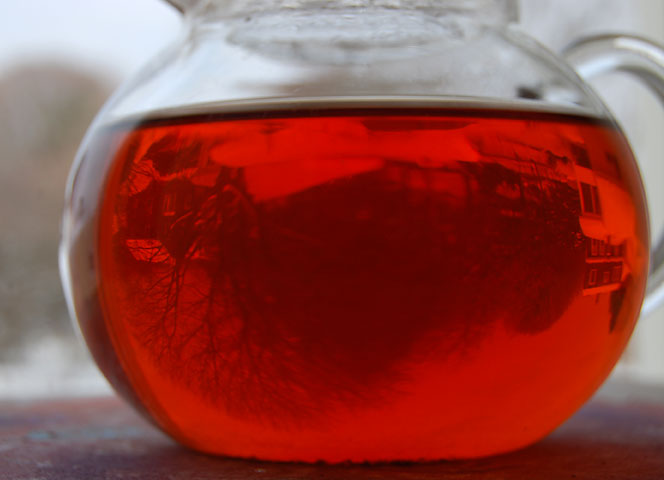
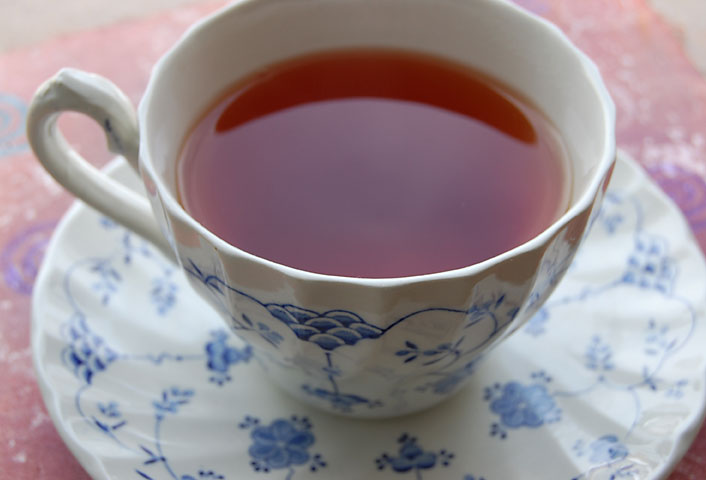
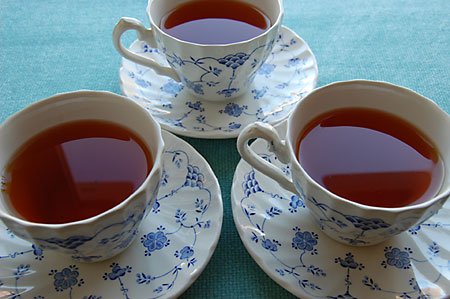
This particular Assam is a broken leaf tea so I steeped it for only 3 minutes in boiling point (212 F) water. Assams have such a gorgeous russet color, don’t they? It reminds me of the warm colors of the setting sun.

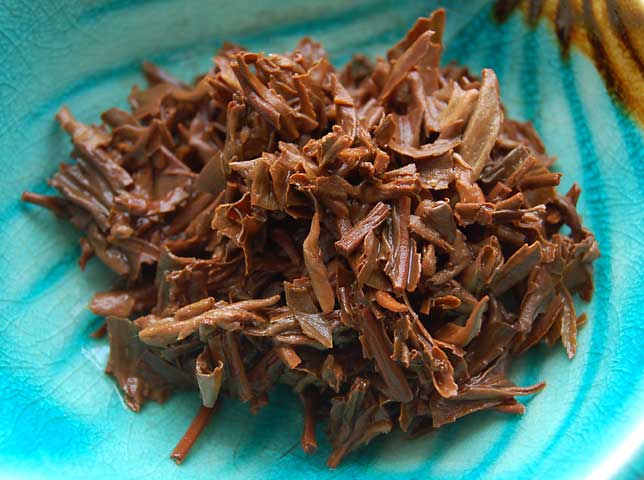
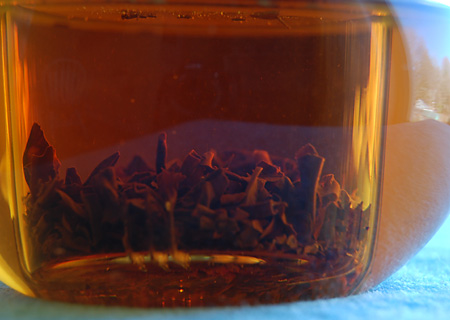
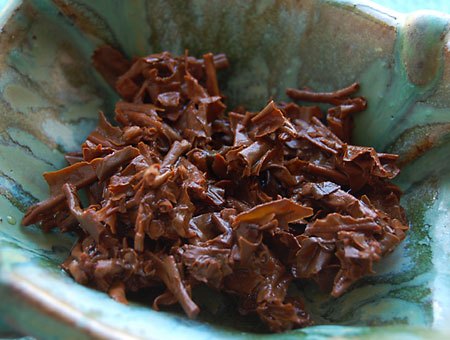
The wet leaf has a pronounced malty aroma, foretelling of its rich malty flavor notes. As I took my first sip, I detected a crisp astringency that could be enjoyed plain or toned down with a splash of milk.
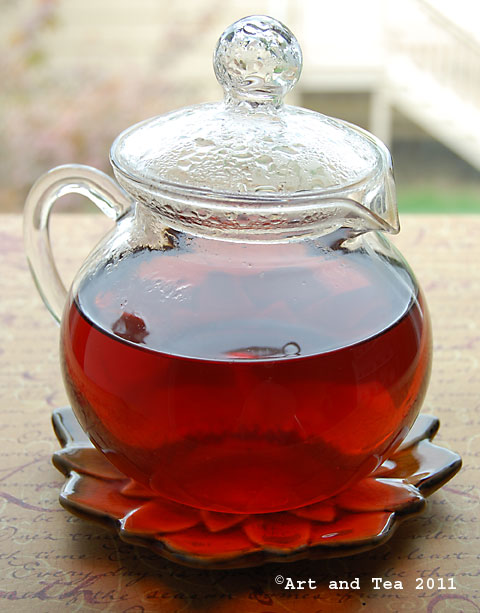
There’s nothing like a pot of tea to brighten up a gloomy day.
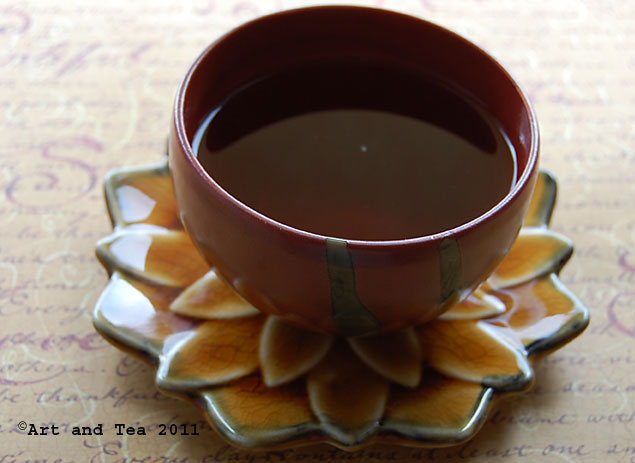
As my tea cooled, some fruity hints were revealed, darkly sweet like the sweetness of raisins. We’ve just received a big shipment from India so I look forward to reviewing more Assams in the weeks to come. Shall I make October Assam month? Or do you like to read about a different type of tea every week? I welcome your feedback!

Have a wonderful week, dear tea friends…

“The ordinary acts we practice every day at home are of more importance to the soul than their simplicity might suggest.”  ~Thomas Moore

Saturday Morning Tea

I’ve felt a shift in the air this week as we enter the second part of August. The sun sets earlier, the nights are cooler and I’ve even caught the faint whiff of woodsmoke as folks start to get a little cozier in the evenings by the fireplace. Lowe’s has row upon row of chrysanthemum pots in beautiful fall colors and rich burgundy blooms now adorn my front porch.

With a cooler breeze wafting in my windows, it’s the perfect morning for an Assam tea. Just as I love first flush Darjeelings in the springtime, I always enjoy Assam teas best in the fall. Their rich warmth is a wonderful balance to the cooler temps here in New England.

The Assam tea growing region is located in northeast India and the teas produced in that area were my first tea love. Their dark, full body reminds me so much of the tea my Mom used to drink when I was young. As the granddaughter of Irish immigrants, she always enjoyed her “cuppa”. And, of course, that’s what I was served whenever I wasn’t feeling well. So, as I grew up, I always associated black tea with comfort and feeling better.

My morning tea is an Assam from the Marangi estate, a 700 acre tea garden located in the hills of Assam. Every season there are a few outstanding teas that embody the best qualities of an Assam tea. This tea is definitely one of those teas!

The leaf is generously laced with golden tip, indicating a premium tea. I find that the golden tip also smooths out the astringency level in the tea liquor. This tea is a fine example of that as it is just smooth as silk.

I steeped the leaves for 5 minutes in boiling point (212 F) water. While the tea is very hearty and would stand up well to milk or cream, I’m drinking mine straight up.

The aroma is rich and malty which carries on into the complex flavor. Layers of malt are enhanced with a hint of dried fruit sweetness. This tea is a real treat!

Note to self: this would be the perfect birthday gift for my Assam loving friends. For myself, it would make the perfect companion to a cinnamon crunch bagel from Panera Bread!

What is your favorite tea in the fall?

“Autumn to winter, winter to spring,

Spring into summer, summer into fall—

So rolls the changing year, and so we change;

Motion so swift, we know not that we move.

~Dinah Mulock Craik

Saturday Morning Tea

As I sip my tea this morning, I’m mesmerized by the 2 foot long icicles drip, drip, dripping from my neighbor’s roof. With a snowstorm arriving regularly every week, it’s hard to imagine that spring will ever arrive. This last one brought 14 inches of snow to my neighborhood. My garden lies in a deep sleep under an immense world of white.

Inside, however, it’s nice and toasty and my hands draw warmth from the hearty Assam tea in my cup. It’s a single estate Assam from the Doomni estate, a black tea.

The Doomni tea estate is one of 3 tea gardens located in the Nalbari district of western Assam in northeast India. The leaf has been plucked and processed with a bounty of golden tips which lend a complexity and depth to the flavor of the tea.

I steeped the leaves for 4 minutes in boiling point (212 F) water.

Ahhh, what a rich aroma greeted me as I lifted my infuser out!

The first word that popped into my mind as I took a sip was

stout

The dark amber liquor is very hearty yet smooth with notes of rich maltiness. This tea would take milk very well. I recommend steeping the leaves longer if you plan on adding that. I used to always add milk to my Assam tea but have moved away from doing that unless the tea is really astringent. With most Assam teas, you can pull back on the steeping time to control that astringency.

This is the perfect “wake you up in the morning” tea. With its thick liquor, it is the tea equivalent of a pint of Guinness stout.

Well, I’ve finished my teapot and am ready to start my day!

What helps you to start your day?

“It is a good to have an end to journey towards; but it is the journey that matters in the end.” ~Ursula K. LeGuin

Saturday Morning Tea

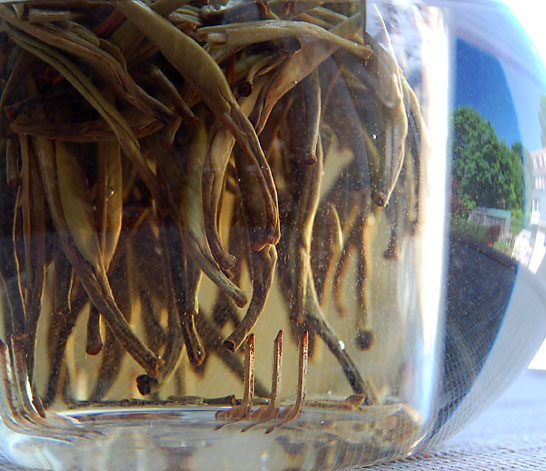
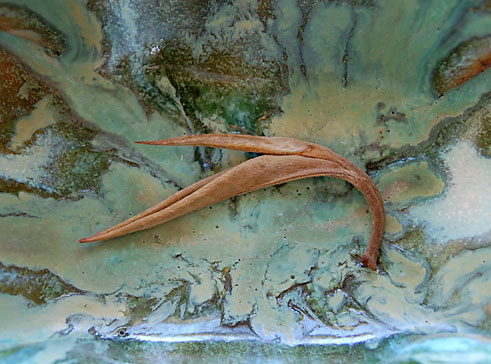
For my morning tea on this bright spring morning, I’ve chosen an Assam tea. Wait a minute, you might be saying as you look at my photo, that doesn’t look like an Assam tea at all! That’s because it is a white Assam. Located in northeast India, Assam is most noted for its full-bodied, rich black teas. This unique white tea is from the Mothola estate.

I have read that this tea estate was flooded back in the 60s when the banks of the Brahmaputra river eroded and water swept through the estate. Through the combined efforts of the workers and management, they were able to restore 1000 acres to grow tea once again.

This tea is meticulously crafted using only the tips of the Assamica variety of the Camellia Sinensis tea plant. Native to this lowland region, this variety has large leaves and grows to be a small tree.

When these indigenous tea plants were first identified by Major Robert Bruce around 1823, many believed that they were not capable of producing quality tea as the China variety was. You can read more about that here.

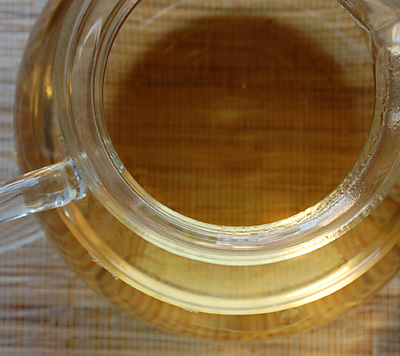
I steeped the leaves for 4 minutes in 180 degree F water. The glowing gold liquor has a distinct malty aroma, immediately identifying it as an Assam tea. However, that’s where the similarity ends.

The flavor is delicate and sweet with complex malty notes. A hint of fruitiness makes a brief appearance across my tongue.

This tea is exquisite and can be compared to a specialty white tea from China. While I do love their white teas, this tea has an extra special something that calls me back for more.

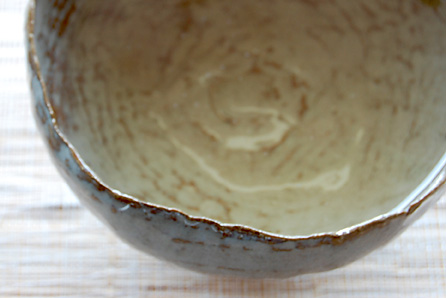
As my hands wrap lightly around my hand-crafted teabowl, I watch the trees dance in the wind outside my window. It’s a perfect day to work in the garden.

Enjoy your weekend!

I wandered lonely as a cloud

that floats on high o’er vales and hills,

when all at once I saw a crowd,

a host of golden daffodils:

beside the lake, beneath the trees,

fluttering and dancing in the breeze….

for oft, when on my couch I lie

in vacant or in pensive mood

they flash upon that inward eye

which is the bliss of solitude;

and then my heart with pleasure fills,

and dances with the daffodils.

~William Wordsworth

Saturday Morning Tea

Happy first day of Spring, my friends! Outside my window, birds flit across the bright blue sky, welcoming the season with their lovely songs.

For my morning cuppa, I chose a black tea from Assam in northeastern India. It’s from the Harishpur estate.  The Assam tea growing region is the only area in the world, besides southern China, that has native tea plants.

I chose this particular tea because of some correspondence I had with a customer this past week. He had purchased this tea and found it had an unpleasant burnt aftertaste. So, we decided to do some testing by steeping the leaves at 3, 4 and 5 minutes, respectively. I repeated this test at home this morning.

Usually, I will steep a whole leaf Assam, as this is, for 4-5 minutes, reserving a 3 minute steep for the broken leaf teas. What I found out this morning from my testing is how very individual teas really are and it’s important to experiment with steeping times for each tea.

The 3 minute steep was rich yet quite smooth with some malty and fruity notes. No need for milk or sweetener, the tea tasted wonderful plain. I didn’t detect any aftertaste.

The 4 minute steep, while retaining some of the flavor notes of the 3 min. steep, was starting to exhibit a sharp astringency which I’ve always described as a taste I can feel in my teeth.

The 5 minute steep was incredibly astringent and left a sharp, yes, almost burnt taste in my mouth for awhile. Even when I put a little milk in it, it was still in my opinion, oversteeped.

As you can see, the tea liquor is the same color – a deep amber – no matter how long the steeping time.

One of the things I love about my job (and there are many things!) is that I have the opportunity to converse with tea lovers from all over the country. Each moment is a learning experience and my tea journey is constantly expanding with new knowledge and ways of seeing the world.

I encourage you to be open and experiment with your teas and would love to hear of your experiences!

“How gently the winds blow!  Scarce can these tranquil air currents be called winds.  They seem the very breath of Nature, whispering peace to every living thing.” ~John Muir