Saturday Morning Tea

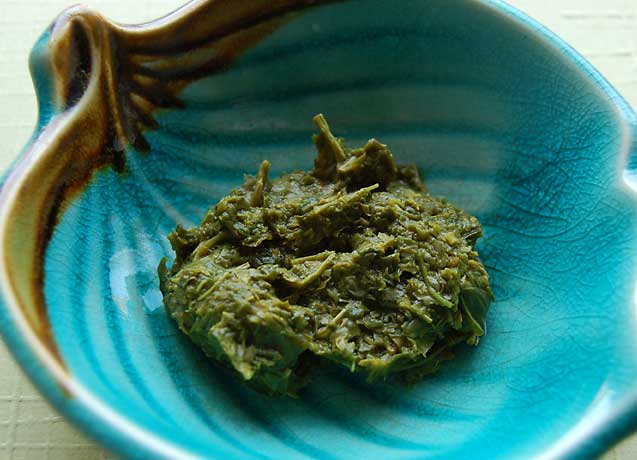
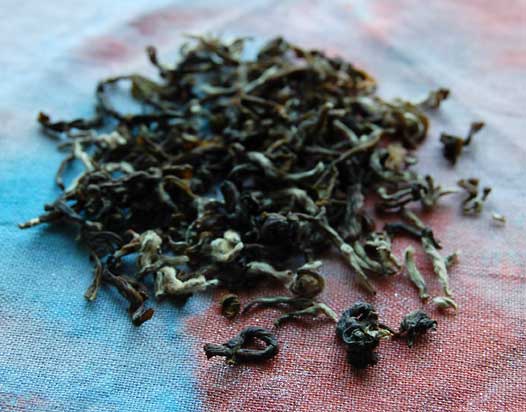
Good morning, dear tea friends! I’ve returned from my trip to New Mexico and am glad to be here, sharing a cup of tea with you once again. As promised, today I am brewing up a pot of Chinese green tea called Pi Lo Chun Bao Wei.

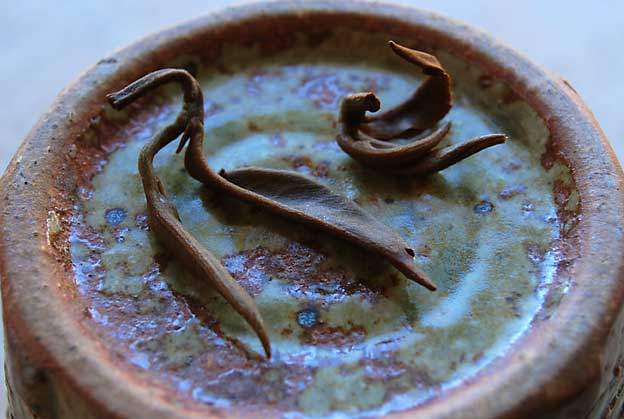
Pi Lo Chun, or Green Snail Spring, is a well-known China green tea from Jiangsu province. Its distinct spiral leaf shape is created during the firing step of its processing. After the fresh leaf is plucked, usually in the morning, it is brought to the factory in either baskets or cloth pouches to protect the leaf and allow for air circulation. Once at the factory, the leaf is spread out on floor mats to air-dry and reduce the moisture content of the leaf.

As Pi Lo Chun leaf must be manipulated during the next step, the firing step, it is placed in short, round metal drums which are placed over a heat source. A gentle twist and roll motion of the hand as heat is applied coaxes the leaf into its characteristic shape, resembling a tiny fiddlehead fern shape. In fixing the leaf into a specific shape, its chi, or energy, remains fixed in the leaf until the moment of steeping when it is released into the cup of tea.

I steeped the leaves for 3 minutes in 180 degree F water. The pale golden liquor gives off a distinctly sweet aroma.

As I take my first sip, a pronounced licorice/anise flavor note surprises me in its intensity. It mellows out as my tea cools revealing a light floral note of honeysuckle. As I usually find a Pi Lo Chun to have fruity notes, this is quite unique. And yummy. Interestingly enough, there are no vegetal notes in this green tea.

As the days shorten and the nights wrap us in a longer, darker cloak, I find myself turning inward in solitude and reflecting upon the year that is flowing towards its end. I find my center and a measure of comfort in the following enduring prayer.

All shall be well,

And all shall be well,

And all manner of things shall be well.

~Dame Julian of Norwich, a 13th century English mystic

Saturday Morning Tea

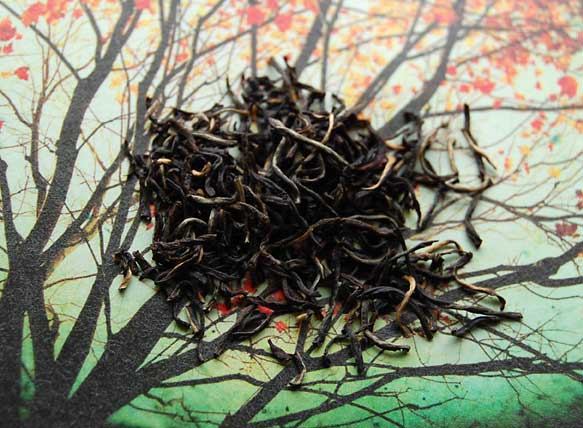
This morning we travel to the Yunnan province of China for a cup of black tea called Yunnan Golden Snail. A careful plucking of the top leaves on the tea bush is handcrafted into beautiful curls. The leaf looks like the black tea version of Pi Lo Chun, a China green tea whose name translates to Green Snail Spring. You can read my review of that tea here.

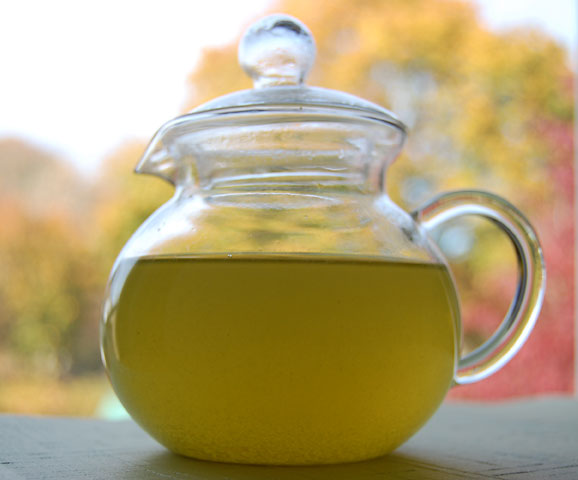
I steeped the leaves in boiling point (212 degrees F) water for 4 minutes. Unlike the twisted, “spider leg” tea leaves from last week, these leaves fully unfurled during steeping in what’s called the “agony of the leaf”.

My teapot shows the tree in my neighbor’s backyard that still holds a lot of its golden leaf. I just love those colors against the brilliant blue late autumn sky!

Oh, just look at that gorgeous leaf! It imparts a light smoky aroma, reminiscent of cooked bacon. This smoky quality comes through in the flavor as well. It’s not the fireplace smoky of Lapsang Souchong nor is it the tobacco smoky of gunpowder tea. It’s definitely…bacon…mmmm…and to a confirmed vegetarian like myself, an interesting treat to taste that once again.

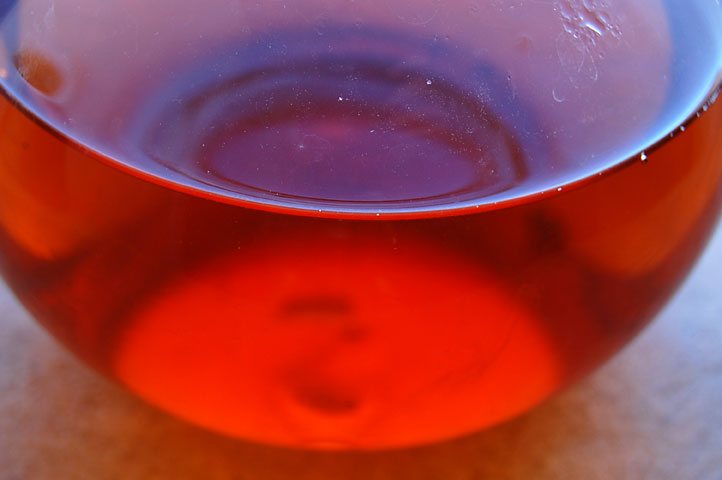
The russet liquor glows in my teapot as I pour my first cup. Notes of spice and raisin fill my mouth with a bright astringency in the finish that lingers very nicely. This tea tastes great plain but would definitely stand up to a dollop of milk, if desired.

I sit and gaze out the window, my cup warming my hands, and think of my coming trip to New Mexico. I leave in 2 days time to visit my son and his family, including my brand new grandson, Landon, who came into this world last Monday. My son now has his own son and the circle of life continues…

I won’t return from my trip until next Sunday evening so I’m sorry to say that there won’t be any Saturday Morning Tea post next week. However, I will look forward to sharing another cup of tea with you in 2 weeks time when I believe it will be time to review another Pi Lo Chun tea. What do you think? As always, if you ever have any requests for tea reviews or questions about tea, I am always happy to receive them.

Happy tea drinking, dear friends!

“Let us imagine care of the soul, then, as an application of poetics to everyday life.” ~Thomas Moore

Saturday Morning Tea

This morning we travel from Japan, where we’ve been tea-wise for the last month, to Sri Lanka. In contrast to the vegetal greens I’ve been enjoying, this morning I chose a dark, rich black tea with beautiful silver tips from New Vithanakande.

Its FBOPF leaf style, designated for this long, wiry, twisted leaf, is unique for a Ceylon tea. You know the tea that comes in teabags from the grocery store, the kind that we might have drunk when we were sick as kids? Well, that leaf style is called “fannings”, a very finely-particled leaf that fits into those bags easily and steeps very quickly. Astoundingly, this leaf has that same designation which is what the last “F” stands for. It’s because this skinny leaf can fit through the smallest sieves during the leaf sorting process. Amazing, huh?

The good news is that, unlike last week, this leaf fits nicely into my glass infuser and doesn’t fall through the narrow slits at all. The leaf swells during steeping but doesn’t unfurl from its tightly rolled shape.

Glorious color!

The wet leaf looks like a bunch of twigs but it’s actually twisted tea leaves. The aroma is bright with a sweet molasses note.

This tea is grown in the Ratnapura district, located in southern Sri Lanka. I’ve read that this district is the home of gem mining as well as a crossroads where hill country and plains come together. This tea is processed at a factory supporting 6,000 small landholders and their families. You can read more about it here. In this respect, the tea is similar to a Japanese tea in that it is named after the place that processes the tea not the tea garden.

The rich, dark amber liquor has the brightness of a Ceylon tea along with notes of caramel and molasses, a rich, sweet taste. I put a drop of milk in my second cup to smooth out the brightness.

One of my favorite color combinations – a blend of orange and dusky purple, like dark clouds against an autumn sunset.

A light gray blanket of clouds hangs from the sky, lighting the last of the dark copper leaves clinging to the tree branches. Despite the gloominess of the day, my thoughts are on next spring as I hope to plant some daffodil and tulip bulbs into the earth today.

My hours at work have lengthened as the light of the days grows shorter. This has resulted in much less time in my studio which I’m sure you’ve noticed as I haven’t posted any artwork in awhile. Sometimes when I stop and think about it, a wave of sadness washes over me and I yearn for a stretch of time where I had nothing to do except to play in my studio. But it is what it is and I take comfort in creating some holiday gifts from my pointy sticks in the evenings, hot cup of tea by my side.

Today is my granddaughter Ella’s second birthday and I am looking forward to traveling out to New Mexico very soon to see her and also my new grandson, Landon, who is due to arrive in this world this week. I take so much joy in these blessed family events!

Have a wonderful weekend, dear tea friends.

“But if you have nothing at all to create, then perhaps you create yourself.” ~Carl Jung

Saturday Morning Tea

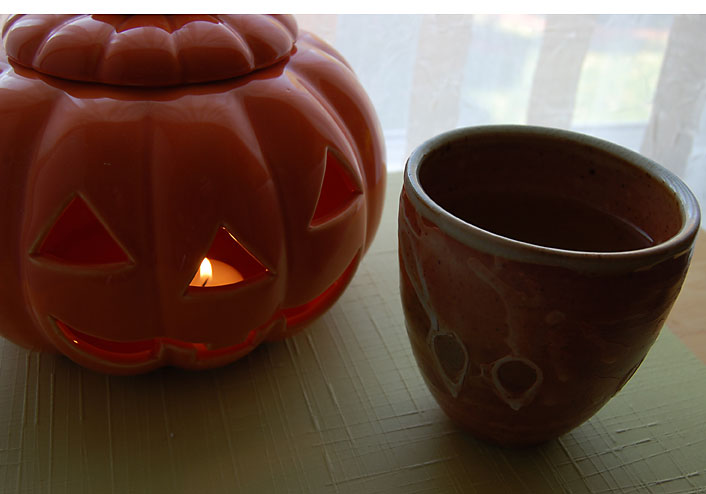
Some of the trees in my neighborhood are looking downright skeletal now as the fall winds blow in chillier temps and winter creeps closer. All Hallow’s Eve marks a threshold into a darker time of year, a time when we focus inward and reach for warmth.

In this last installment of my Japanese tea series, I am reaching for warmth this morning in a cup of Japanese green tea called Sencha Tokujyo Ohashiri, a competition grade Sencha.

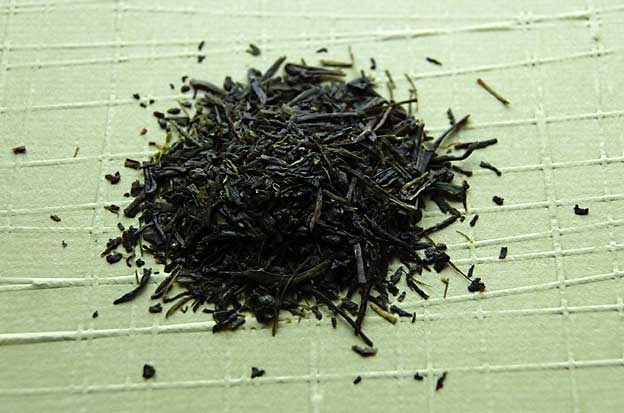
Japanese teas are recognizable by their grassy, needle-like shape. The shape is attained by sending the leaf through a series of rolling machines. Paddles move the tea back and forth over metal ridges while heat is applied so the leaf is slowly formed into its needle shape.

Most Japanese green tea is processed to a half finished state called aracha. Aracha is kept stable in refrigerated, vacuum sealed bags until it is ready to be purchased by tea masters who will refine it and finish its processing.

I found this particular sencha leaf to be incredibly fine and it clogged the slits in my glass infuser basket. It’s probably best to steep the leaves directly in water and then strain as well as you can. The fine dust from the tea leaves settles to the bottom of my teamug.

The most well known Japanese green tea is Sencha which is harvested after Shincha, the first tea of the spring. With each subsequent harvest, the tea becomes stronger and darker with leaves of lesser quality and price.

The spring green liquor of this tea has a strong vegetal aroma which carries on into its flavor. A refreshing pungency cleanses my mouth with each sip.

The basic steps to creating aracha, or crude tea are: plucking, steaming plus 4 steps of rolling/drying/shaping. At the end of this processing, the moisture content of the leaf is approximately 13 percent.

Refining of the leaf brings it into the final stages of sorting, separating and drying which transforms the leaf and brings out the flavor, color and glossy finish. Now the finished leaf is called shiagecha. It is common practice for tea artisans to purchase aracha to refine it in their workshops.

I hope you’ve enjoyed my series on Japanese tea. I know that I really enjoyed exploring a type of tea in more depth and learning more about the country and history of the tea. I look forward to doing this again with another type of tea.

Ooooooooooo………Happy Halloween!

“A house is never still in darkness to those who listen intently; there is a whispering in distant chambers, an unearthly hand presses the snib of the window, the latch rises.  Ghosts were created when the first man awoke in the night.” ~J.M. Barrie

Saturday Morning Tea

This morning I am enjoying a very unique Japanese green tea with 3 distinct components, a sencha green tea, a matcha green tea and puffed brown rice.

I introduce you to Matcha Gen-Mai Cha, the 4th tea in my Japanese tea series.

Even though Japan is now an industrialized nation with its bustling, crowded cities, underneath this is a culture based on Zen practices devoted to moments of simplicity and beauty as captured in the tea ceremony, or Chanoyu. Matcha, or powdered, tea is the tea that is traditionally used in this ceremony.

In this tea, the Matcha is dusted over the sencha leaf and the puffed brown rice. The addition of toasted, puffed brown rice to green tea is a popular beverage enjoyed in Japan. Gen-Mai Cha translates to brown rice tea.

This tea leaf looks like cooked greens with rice krispies added to it.

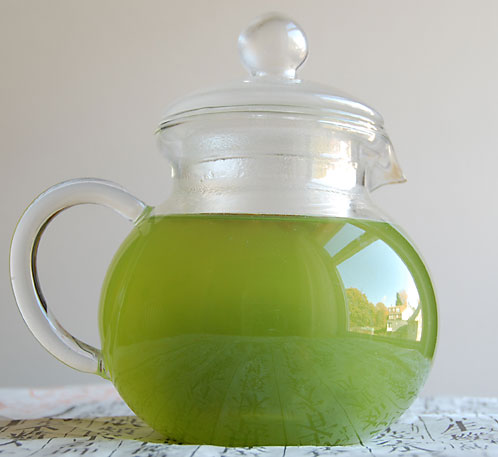
The liquor color is like none other I’ve ever seen in steeped tea. To be honest, it reminds me of the Gatorade drinks my kids used to drink after sports. The Matcha powder makes the tea more opaque.

With 80% of Japan’s 4 major islands being mountainous, efficiency is key in utilizing every piece of land available for tea cultivation. In contrast to China’s isolated mountain tea gardens, Japanese tea gardens are arranged in orderly, well manicured rows on gently rolling hillsides, close to rivers and streams to provide moisture for the tea bushes.

Except for very special, extremely expensive tea, most tea in Japan is harvested with shearing machines, either handheld by 2 workers on either side of the tea row or by a large volume machine which fits perfectly between rows set apart to accommodate the machine. The machines can yield 200-300 lbs. of tea per day as opposed to the 20-30 lbs. hand plucked.

The predominant aroma and flavor of this tea is of toasty rice. The vegetal quality of the tea comes through in wisps along with a lovely sweetness.

So warming. Mmmm…

This weekend my family is visiting from Michigan. It’s the perfect time of year to visit southern New England. The fall colors are at their peak – golds, russets, flaming orange and deep burgundy. I just love this colorful time of year!

Have a lovely weekend, dear tea friends.

“Call it a clan, call it a network, call it a tribe, call it a family.  Whatever you call it, whoever you are, you need one.”

~Jane Howard