Saturday Morning Tea

Good morning, dear tea friends! This is the time of year when new lots of China teas arrive, one of them being a favorite of mine called Pi Lo Chun Bao Wei, a green tea. Please enjoy my review of this tea from last November and then next week I’ll review the new lot to see how the two compare. Enjoy your week!

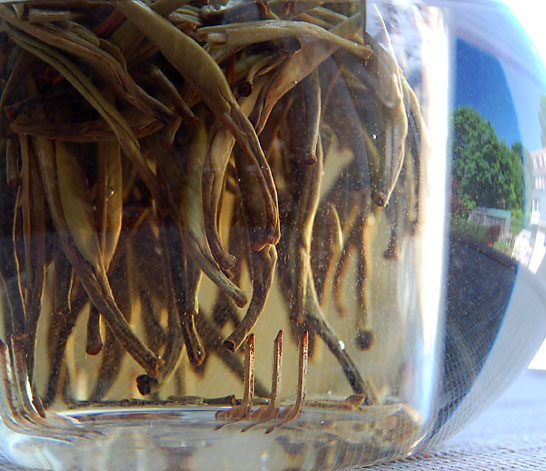
I’ve returned from my trip to New Mexico and am glad to be here, sharing a cup of tea with you once again. As promised, today I am brewing up a pot of Chinese green tea called Pi Lo Chun Bao Wei.

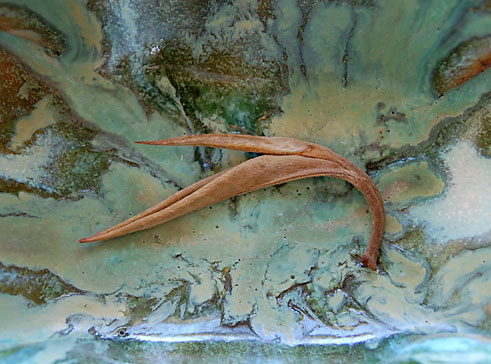
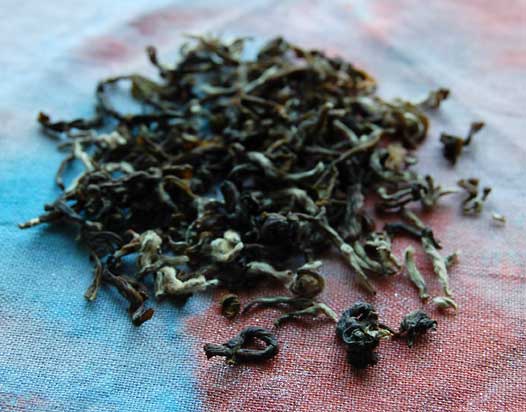
Pi Lo Chun, or Green Snail Spring, is a well-known China green tea from Jiangsu province. Its distinct spiral leaf shape is created during the firing step of its processing. After the fresh leaf is plucked, usually in the morning, it is brought to the factory in either baskets or cloth pouches to protect the leaf and allow for air circulation. Once at the factory, the leaf is spread out on floor mats to air-dry and reduce the moisture content of the leaf.

As Pi Lo Chun leaf must be manipulated during the next step, the firing step, it is placed in short, round metal drums which are placed over a heat source. A gentle twist and roll motion of the hand as heat is applied coaxes the leaf into its characteristic shape, resembling a tiny fiddlehead fern shape. In fixing the leaf into a specific shape, its chi, or energy, remains fixed in the leaf until the moment of steeping when it is released into the cup of tea.

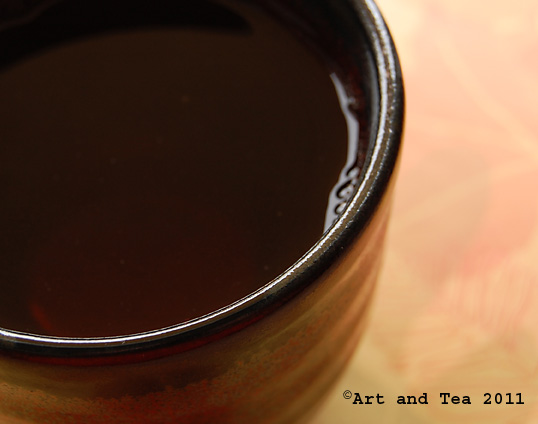
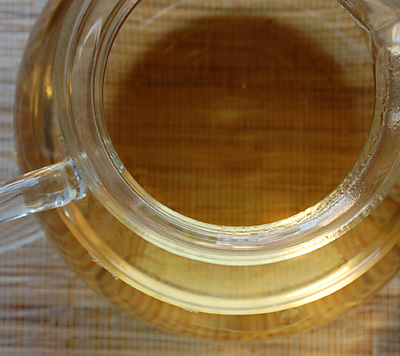
I steeped the leaves for 3 minutes in 180 degree F water. The pale golden liquor gives off a distinctly sweet aroma.

As I take my first sip, a pronounced licorice/anise flavor note surprises me in its intensity. It mellows out as my tea cools revealing a light floral note of honeysuckle. As I usually find a Pi Lo Chun to have fruity notes, this is quite unique. And yummy. Interestingly enough, there are no vegetal notes in this green tea.

As the days shorten and the nights wrap us in a longer, darker cloak, I find myself turning inward in solitude and reflecting upon the year that is flowing towards its end. I find my center and a measure of comfort in the following enduring prayer.

All shall be well,

And all shall be well,

And all manner of things shall be well.

~Dame Julian of Norwich, a 13th century English mystic
Saturday Morning Tea

Good morning, dear tea friends! For this last Saturday in October, I’ve chosen an Assam which has been described as “a stout cup”. I wanted to review an Assam that knocks your socks off in strength and body.

Meet Langharjan estate TGFBOP Tippy.

Langharjan estate is located near the town of Naharkatiya in extreme northeastern India.

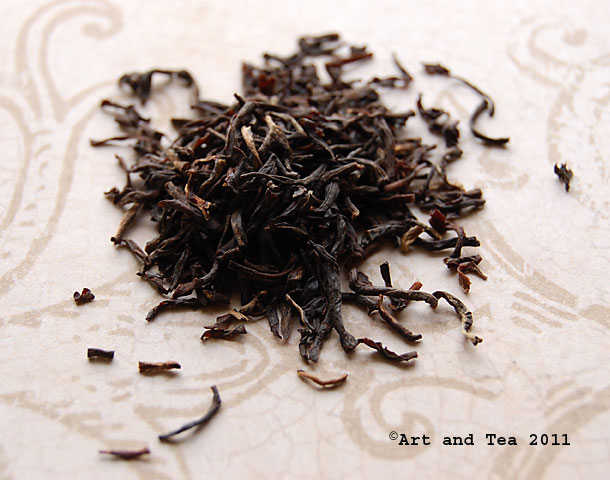
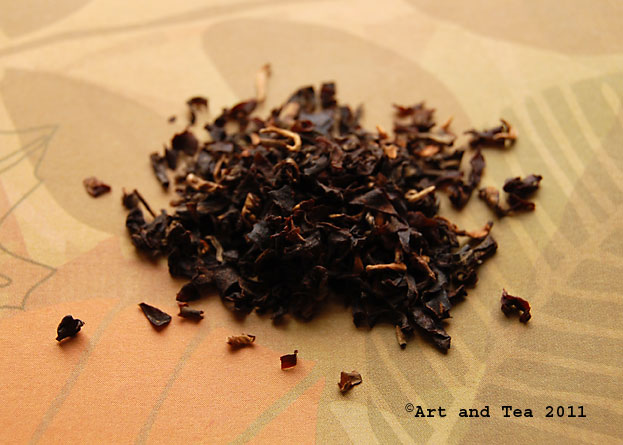
As you can see from the dry leaf above and its leaf designation, TGFBOP or “Tippy Golden Flowery Broken Orange Pekoe”, this is a tea with a lot of leaf tip. I find that the tippier Assams are a lot smoother. And this one is so incredibly smooth.

I steeped the leaves for 4 minutes in boiling point (212F) water.

The aroma is lightly malty and rich with a hint of toastiness.

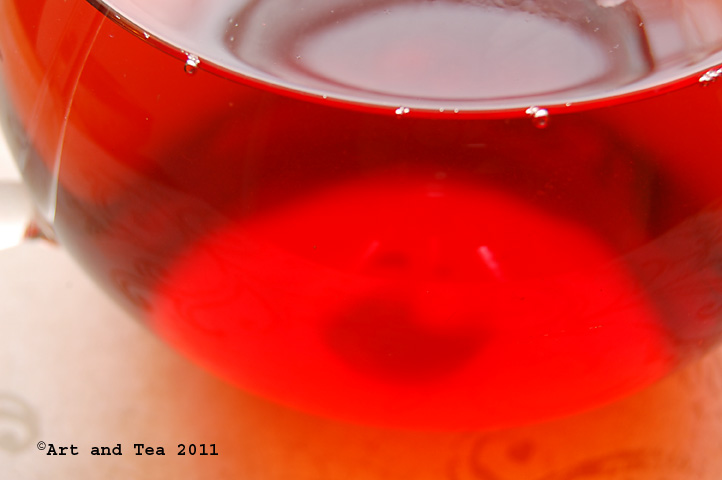
Despite the greyness of the day outside, my teapot glows as if a fire is burning inside of it.

This tea delivers in every way. Rich, malty, smooth as silk, my type of Assam. You could probably coax some astringency out of it by pushing the steep time to 5+ minutes. At that point though you might want to add some milk or cream.

Unbelievably, especially after the winter we had last year, a snowstorm is predicted for our area tonight and into tomorrow. I am not ready for this type of weather again so soon! I will need many cups of tea for comfort as the white stuff descends upon us so unseasonably early.

Stay warm, dear friends, with your hands curled around your favorite cup of tea!

“I like living.  I have sometimes been wildly, despairingly, acutely miserable, racked with sorrow, but through it all I still know quite certainly that just to be alive is a grand thing.” ~Agatha Christie

Saturday Morning Tea

Good morning, dear tea friends! In continuing Assam month here at Art and Tea, I have an unusual Assam filling my cup today, a first flush selection from the Amgoorie estate.

Most Assams are harvested during the summer months, or the second flush season. They are well known and loved for their characteristic full-bodied, hearty, malty flavor profile. This first flush was harvested in the springtime, the first growth of the tea leaves. While the characteristic Assam flavor notes are still there, it usually has a much lighter body.

Even though it’s a whole leaf tea, I steeped the leaves in boiling point (212F) water for only 3 minutes because it’s a first flush and since I wasn’t planning on adding milk. It can be steeped for a longer time if adding milk and/or sweetener, or if you like a brighter quality to your plain tea.

I found this photo of the Amgoorie estate factory. Being a confessed clean freak myself, I’m greatly comforted to know how clean their operation is there. Yes, tea leaves are usually sorted and piled on floors.

The wet leaf has a hint of cocoa aroma that is revealed in its flavor as well. The tea liquor is quite smooth with a fuller body than what I was expecting.

The color in my glass teapot reflects the myriad of oranges and reds flaming across our New England fields and forests.

The flavor is lightly malty with a kick of brightness in the finish.

The last 2 weeks have taken me on a journey I’ve never experienced before. Someone very close to me had major surgery and was in a Boston hospital for 10 days, 5 of those in the ICU. I was brought to a place of seeing and then knowing how your life can change forever in an instant revelation of news we all dread to hear. I felt my heart crack wide open as I traveled each step of the recommended path with my beloved friend and observed the compassionate caring of everyone there to help him through the long process. He is finally home and the healing has begun. Nothing is certain in this life, things change constantly and the best we can do is to live and treasure the moments each one at a time. Until next week, dear tea friends…

“It is by going down into the abyss that we recover the treasures of life. Where you stumble, there lies your treasure.” ~Joseph Campbell

Saturday Morning Tea

Good morning! I apologize for not having a new tea review for all of you today. A dear friend of mine has been in the ICU all week and I am headed into Boston to be with him. Please enjoy this tea review from last fall and I’ll be with you all next week to share a review of a new first flush Assam from the Amgoorie estate. Thanks for understanding, dear tea friends.

I was up quite early today for a Saturday. The day dawned bright and clear and as I sipped my tea, I thought of that fateful day 9 years ago. Another beautiful, clear September morning that turned dark and sad as the events of the day unfolded.

I raise my teacup and dedicate my thoughts today in memory of all those lives lost that day…

I’m sipping a China green tea called Jade Cloud Mist. Harvested in the spring in An Hui province, the leaf is exquisite.

The leaf is a very fine plucking of the new growth found at the tips of the tea plant stems.

Simply gorgeous.

I steeped the leaves for 3 minutes in 180 degree F water. A pronounced vegetal aroma wafted up from my glass teapot as I poured my first cup.

Even though the tea liquor is a very pale sage green, the mouth feel is very full and buttery smooth with light notes of asparagus.

A sweetness lingers with every sip.

So pale, so light, yet so very flavorful. A real treat for those who cherish their green tea.

“…to go into yourself and see how deep the place is from which your life flows…….perhaps you will discover that you are called to be an artist….” ~Rainer Maria Rilke

Saturday Morning Tea

Good morning! Enjoy this “oldie but goodie” tea post on a wonderful and unique white tea from Assam. See you next week, dear tea friends, when I share a brand new Assam tea review.

For my morning tea on this bright spring morning, I’ve chosen an Assam tea. Wait a minute, you might be saying as you look at my photo, that doesn’t look like an Assam tea at all! That’s because it is a white Assam. Located in northeast India, Assam is most noted for its full-bodied, rich black teas. This unique white tea is from the Mothola estate.

I have read that this tea estate was flooded back in the 60s when the banks of the Brahmaputra river eroded and water swept through the estate. Through the combined efforts of the workers and management, they were able to restore 1000 acres to grow tea once again.

This tea is meticulously crafted using only the tips of the Assamica variety of the Camellia Sinensis tea plant. Native to this lowland region, this variety has large leaves and grows to be a small tree.

When these indigenous tea plants were first identified by Major Robert Bruce around 1823, many believed that they were not capable of producing quality tea as the China variety was. You can read more about that here.

I steeped the leaves for 4 minutes in 180 degree F water. The glowing gold liquor has a distinct malty aroma, immediately identifying it as an Assam tea. However, that’s where the similarity ends.

The flavor is delicate and sweet with complex malty notes. A hint of fruitiness makes a brief appearance across my tongue.

This tea is exquisite and can be compared to a specialty white tea from China. While I do love their white teas, this tea has an extra special something that calls me back for more.

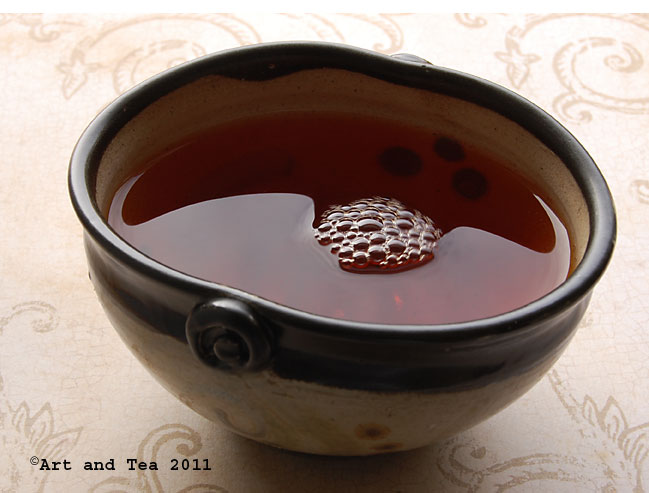
As my hands wrap lightly around my hand-crafted teabowl, I watch the trees dance in the wind outside my window. It’s a perfect day to work in the garden.

Enjoy your weekend!

I wandered lonely as a cloud

that floats on high o’er vales and hills,

when all at once I saw a crowd,

a host of golden daffodils:

beside the lake, beneath the trees,

fluttering and dancing in the breeze….

for oft, when on my couch I lie

in vacant or in pensive mood

they flash upon that inward eye

which is the bliss of solitude;

and then my heart with pleasure fills,

and dances with the daffodils.

~William Wordsworth