Saturday Morning Tea

Good morning, my dear tea friends! My camera is finally up and running with a new memory card so I can now share a new cuppa with you all. I’m a creature of habit and when my routine encounters a snag, I find it very discombobulating. Thank goodness for tea, right?

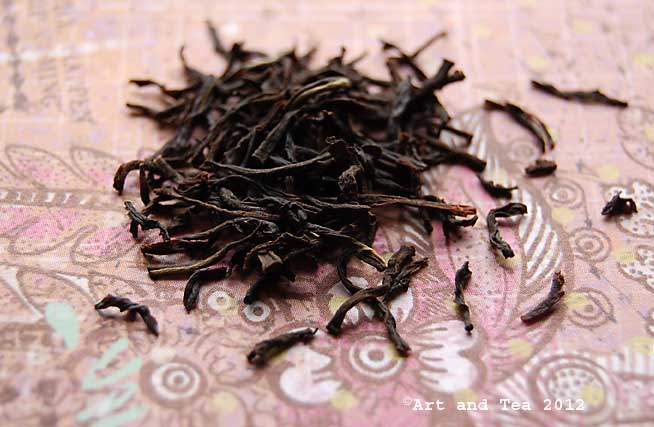
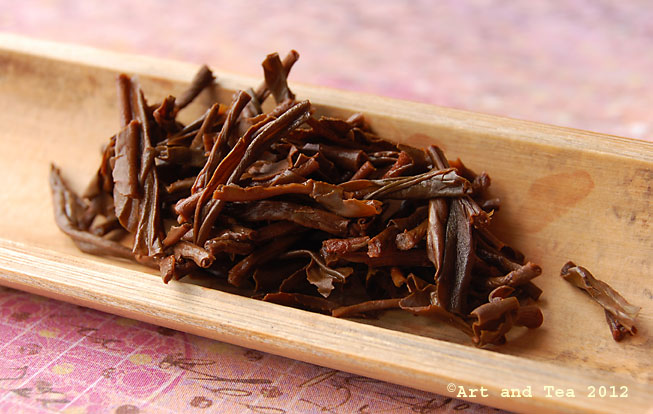
I was going to brew up a pot of that Assam from a couple of weeks ago but this tea caught my interest. A 2012 second flush offering from the Castleton estate called “Moonlight”. The leaf is incredibly bold and the color variations are gorgeous. If you’re interested, I reviewed last year’s second flush offering from this estate here.
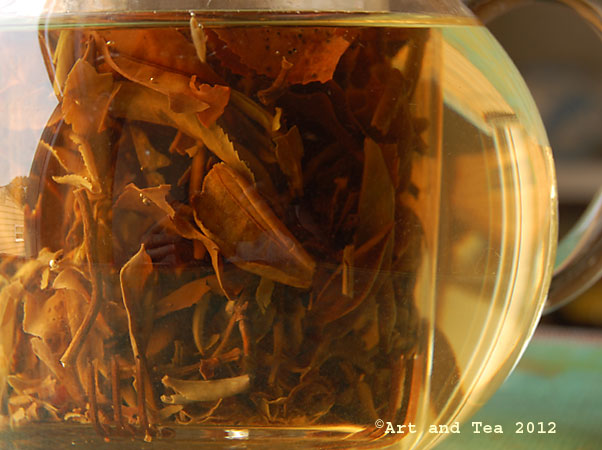
I used 3 times as much tea as I normally do (in other words, 3 teaspoons for my little teapot) and steeped it for 3 minutes in boiling point (212F) water.
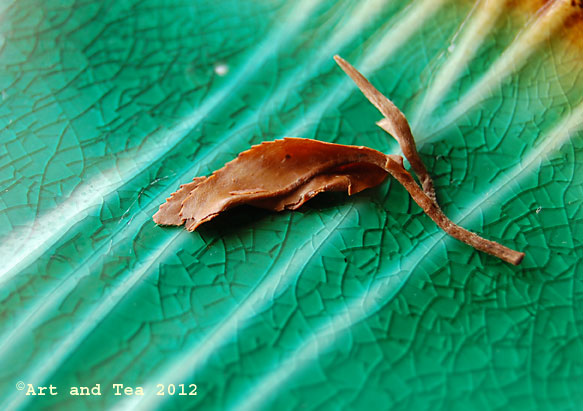
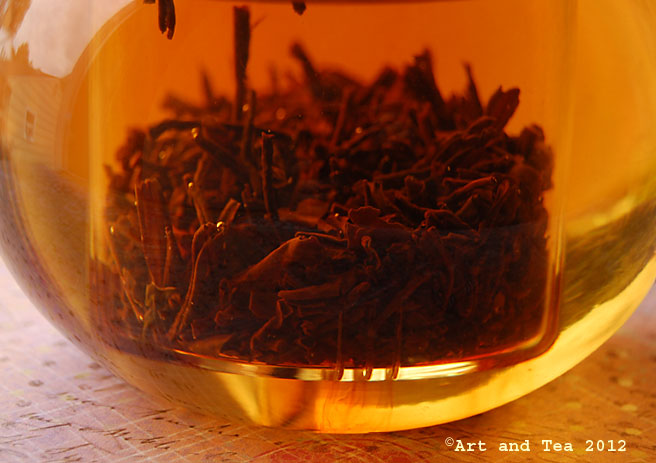
As I lifted the infuser from my glass teapot, the aroma of fresh apricots filled my senses. Mmmm….
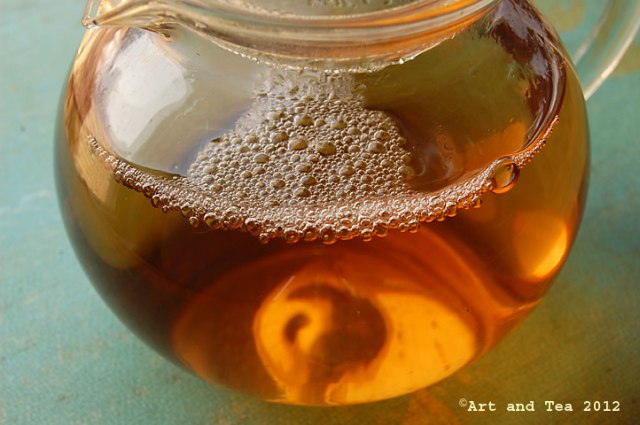
The whisky-colored liquor is smooth and delicate, not at all your typical second flush Darjeeling. The apricot aroma followed through into the flavor along with some nuances of melon and a gentle floral note that lingers.
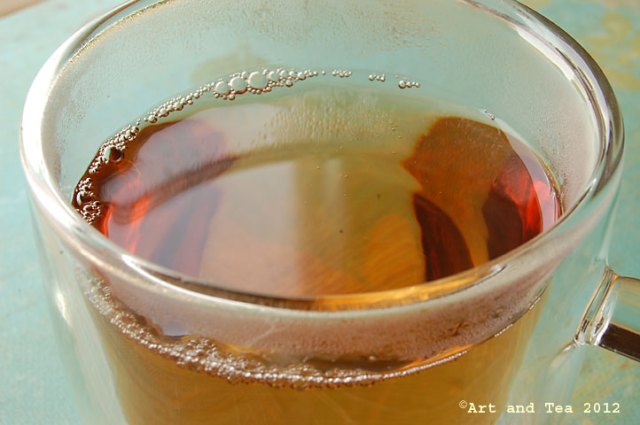
I found this tea unique for a second flush offering. I wonder what flavor notes might be revealed if I steep it longer? Hmmm…

As always, thanks for joining me on this weekly tea adventure. Have a wonderful week!

“Art must take reality by surprise.” ~Francoise Sagan
Saturday Morning Tea

Good morning, dear tea friends! I’m still working on getting my camera fixed so I share a post with you from last summer. Enjoy!

I sit here quietly and sip my tea, the sounds of summer all around me – the faint buzzing of a lawn mower, the electric sound of the cicadas in the trees, the caw-caw of one crow to another as they fly over my house. As we enter the warm, hazy days of late summer, the fuschia impatiens dress my garden in their rich color.

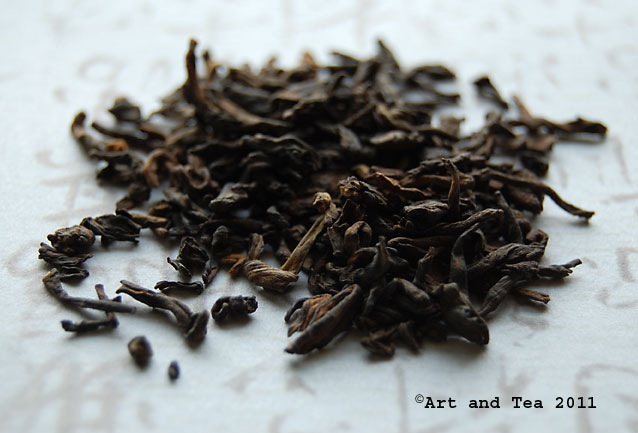
In my cup this morning is a very dark tea, a China tea called Organic Pu-Erh 2nd Grade. Back in June, I wrote about the 1st grade here.

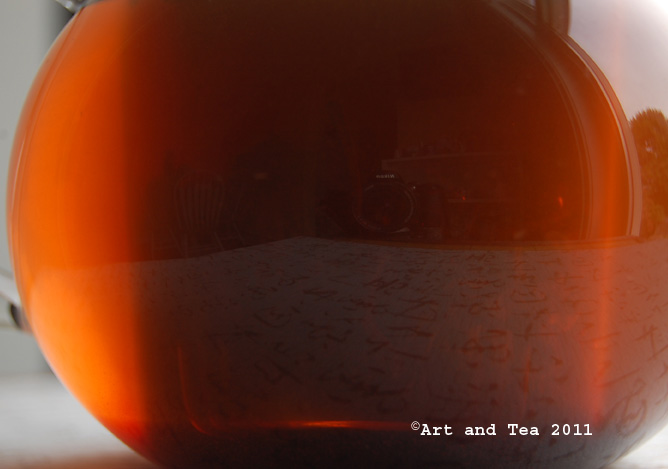
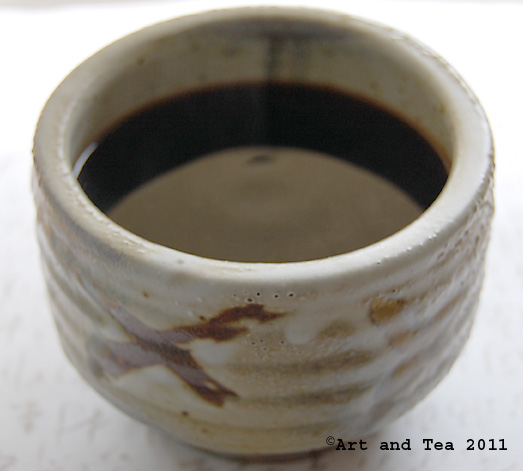
I steeped the leaves for 8 minutes in boiling point (212 F) water and, as you can see, the water quickly gets very murky on its way to becoming as black as night. Pu-Erh goes through a “composting” step during its processing. The leaves are piled into heaps, much like a compost pile, creating a heat in its core and transforming the leaves into this very unique tea.

Everything about this tea is so dark – the dry leaf, the wet leaf and the tea liquor after steeping. A rich, sweet, earthy aroma rises from my glass teapot as I remove the infuser basket.

I find that if I gaze at the tea liquor long enough, I can see a mulberry tinge around its edges. Can you see it?

The flavor is mellow and quite smooth, not as strong as its aroma. Characteristic notes of autumn leaf and forest floor mingle with a sweet molasses syrup flavor. I find myself enjoying it more and more with each sip.

While I was visiting my family in Michigan last month, we visited a quaint little village called Saugatuck, located on a river very near Lake Michigan. As we were strolling the shops, I came upon a pottery shop and purchased a few teabowls there. The artist’s name is Jeff Blandford and his business is called Volmod Ceramics. Voluptuous. Modern. Ceramic. He had some really cool pieces. As he was ringing my purchase, he told me that the teabowls I chose were created during a very creative time at the end of his student days at Michigan State University, over 3 years ago. So, I’d like to think that these lovely teabowls were sitting on the shelf patiently waiting for me to come along and bring them home to Massachusetts with me so I could enjoy many tea moments with them.

Until next week, dear tea friends…

“The world is round and the place which may seem like the end may also be only the beginning.”   ~Ivy Baker Priest

Saturday Morning Tea

Good morning, dear tea friends! My morning tea is an Assam from the Mangalam estate, however, after I took all of my photos and inserted the card into my computer, it couldn’t read the card! Oh dear. When I inserted it back into my camera, it said that the card was damaged. So, change of plans this morning. One of my favorite herbal teas is Ginger Root so I’ll rerun my review of it. I’ll be back as soon as I get a new card for my camera. Enjoy!

My morning tea today is not a tea at all but an herbal which has a long history of many uses worldwide: culinary, medicinal and as a delicacy. The dried root of the ginger plant also makes a wonderfully spicy beverage when infused!

Technically known as the rhizome of the ginger plant, Zingiber officinale, this was grown in the Jinxuan Province of China. Ginger cultivation began in China and Southeast Asia and then spread to other parts of the world such as the Caribbean and Africa.

Its characteristic odor and taste comes from the volatile oils found in the root.

I steeped the ginger pieces for 8 minutes in boiling water. As it brewed, the water became cloudy, giving my glass teapot a mysterious, underwater appearance.

The aroma of the infused “tea” is fresh and spicy. Sometimes, herbals can be confused with real tea which comes from the camellia sinensis plant. Just like tea, each herbal comes from its own specific plant. Almost all herbals, not tea, are caffeine free.

The frosty, lemon-colored liquor tastes quite zesty with tart notes of lemon. Ginger “tea” is often used to soothe nausea and motion sickness. I am enjoying it for its delicious flavor.

Ginger has a distinctive warming quality to it, making it perfect for sipping on a cold winter’s day. That said, its warmth also has a refreshing quality that is cooling me down on this hot, muggy morning.

Try adding a splash of infused ginger to your next glass of iced tea and spice it up!

“In the sacred traditions, the first thing you do in the morning is ask for blessings from the four elements: earth, air, fire, and water. Because all of the work you are going to do that day will change the universe.”

~Laura Esquivel, Writer

Saturday Morning Tea

Good morning, dear tea friends! It’s great to be back here with you, enjoying a cup of tea again. Today’s tea is of the spider leaf variety, a Ceylon black tea from the Tea Bank estate, located in the Ruhuna district, on the southern end of the island of Sri Lanka. Spider leaf, or spider leg teas, are so named because of their long twisted shape.

Tea growing in Sri Lanka was started in the late 1800s by a Scottish gentleman by the name of James Taylor. Up until that time, coffee was the number one crop until a rust fungus killed the majority of coffee plants. Starting with a basic tea cultivation knowledge learned in Northern India and 19 acres of land, he soon turned a small business into a very successful one, selling his tea for the first time at the London auction by 1873.

I steeped the tea for 4 minutes in boiling point (212F) water. Usually, I find this Ceylon black leaf style to exhibit characteristics more reminiscent of a China black tea, however, this particular tea definitely smells and tastes like a Ceylon.

Its deep amber liquor has a light cedar-y aroma which is present in the taste. The flavor is very smooth and rich with just a whisper of caramel and raisin. I drank it plain, however, it would stand up very well to milk and sweetener with a longer steep time.

We’re experiencing another wave of heat this weekend, with temps approaching 90. I personally don’t mind the heat. It’s the humidity that I find hardest to tolerate. So, I’ve got all of the fans going – ceiling, window and one directly on me to stay cool while I venture into my studio for an afternoon of play.

Have a great week!

“Synchronicity holds the promise that if we will change within, the patterns in our outer life will change also.” 

~Jean Shinoda Bolen, Author and Wise Woman

Saturday Morning Tea

Good morning, dear tea friends! As promised, this morning’s tea is a white tea from the Arya estate in Darjeeling, located in northeastern India.

Called Arya Pearl, its processing is as precious as its name. The full leaf sets are plucked at dawn when the dew is still wet on the leaves. After drying in the sun for several hours they are then carefully rolled in silk cloth and then allowed more drying time.

How does this white tea differ from the China Pai Mu Tan I reviewed last week, I wonder?

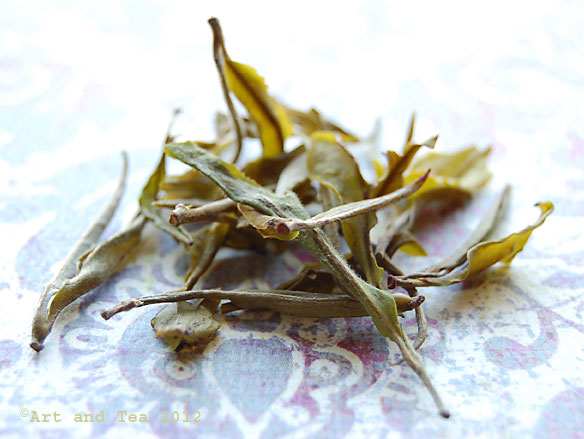
Aside from the obvious – grown in different countries – I immediately see a difference in the appearance of the leaf. While both teas are composed of the new growth plucking, the Arya Pearl’s leaves appear to be greener whereas the Pai Mu Tan had more of a white-ish appearance because of the abundance of fine white hairs all over the leaves. I don’t see as many white hairs on the Arya Pearl leaf, do you?

The wet leaf is very similar, with the Arya Pearl being a little longer and thinner.

I found the most pronounced difference to be in the flavor of the hot tea. The Arya Pearl has a strong vegetal aroma and flavor when it is hot. That was all I could taste. As the tea cooled down, however, more notes came out, including that sugar cookie note I really like.

I steeped the leaves for 8 minutes in 180F water. If you plan on re-steeping the leaves, you want to reduce the time on that first steeping.

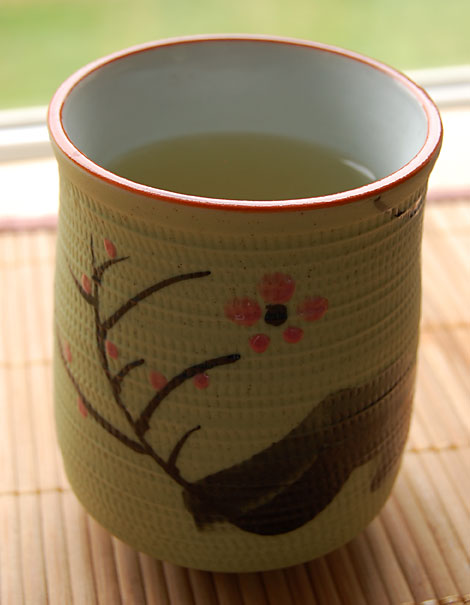
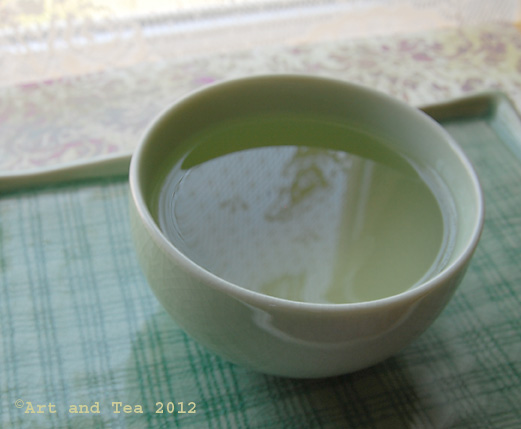
The tea liquor is the same light straw color with a hint of green.

As I enjoy my second cup, the tea has cooled down considerably and I’m discovering some tropical fruity notes.

Tea continues to amaze and delight me in my journey with it. Not only can two teas from the same category taste different from one another but the same tea can exhibit different flavor notes at different temperatures! Have you ever experienced that? If so, I’d love to hear your tea story.

My company is closed this week for our annual vacation. I’ll be heading to Michigan soon to visit with my family so there won’t be a tea post next Saturday. Enjoy your tea and I’ll see you in 2 weeks.

Happy 236th birthday to the USA!

“When in the Course of human events it becomes necessary for one people to dissolve the political bands which have connected them with another and to assume among the powers of the earth, the separate and equal station to which the Laws of Nature and of Nature’s God entitle them, a decent respect to the opinions of mankind requires that they should declare the causes which impel them to the separation.

~first paragraph, Declaration of Independence, 1776