Summer Earrings

Or more aptly titled – what I made during my summer time off… I found these fabulous glass chili pepper  beads at a bead show a couple of years ago and scooped them right up. Combined with some copper wirework and teal beaded rings, they’re very swingy.

These earrings were created during a fun color mixing session with polymer clay. The discs were made from a sheet using the Stroppel cane, Alice Stroppel’s wonderful technique using cane scraps. The oblong cane slices remind me of pills from a Mario Bros. video game my kids used to play when they were young. Very colorful!

Marbled drops created during another polymer clay playtime session. The agate rounds I found at Munro’s in Michigan last spring and complement the drops very nicely, I think.
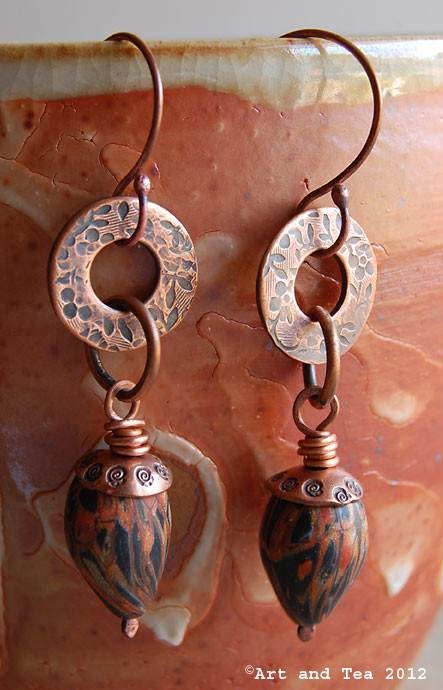
More polyclay drops, these ones I created from extrusions. The bead caps were made with my new disc cutter and a tiny spiral stamp. A bit wonky looking but ok with the primitive tribal feel. The copper washers were textured from a brass plate.

These earring components were created from a polymer clay sheet that was painted with alcohol ink, sprinkled with mica powder and then run through my pasta machine when everything dried. They remind me of raku pottery. A glass blossom dangles from a delicate sterling chain.
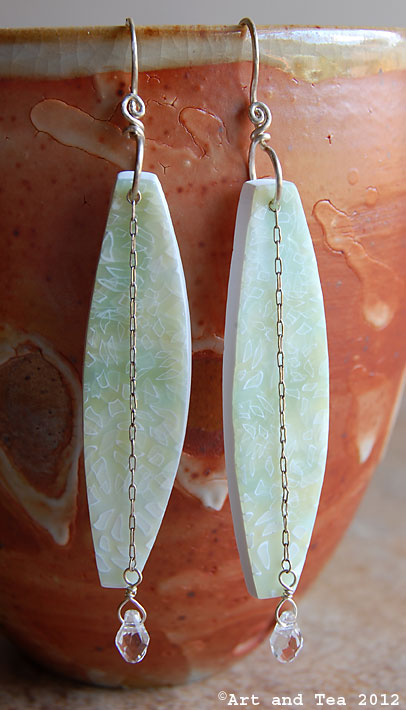
These polyclay components were created using Randee Ketzel’s Snowflake Jade cane tutorial. I just love the depth achieved from layering with translucent clay. Swarovski crystal raindrops dangle from the delicate sterling chain.

More Snowflake Jade components paired with Swarovski opaque white crystal beads and sterling silver wire.
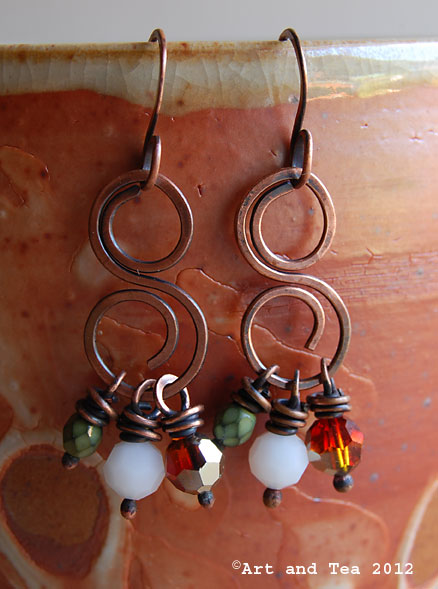
These earrings were created to go with my “Spacetime” necklace I have yet to introduce to you.

I recently purchased some of Christi Friesen’s Swellegant metal patinas and colorants and started my experimentation with some 16-gauge copper wire spirals. The next 4 earring pairs were created with those spiral dangles.
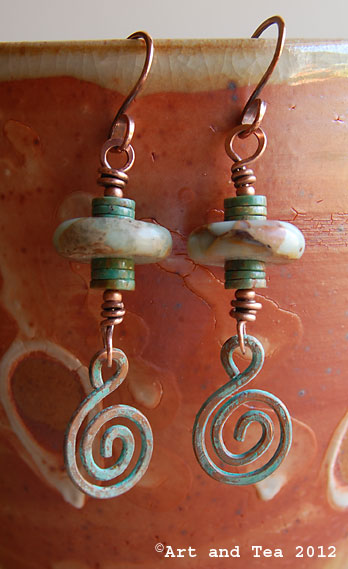
I think the blue-green patina looks so yummy on the copper! Here we have African opal and turquoise heishi.
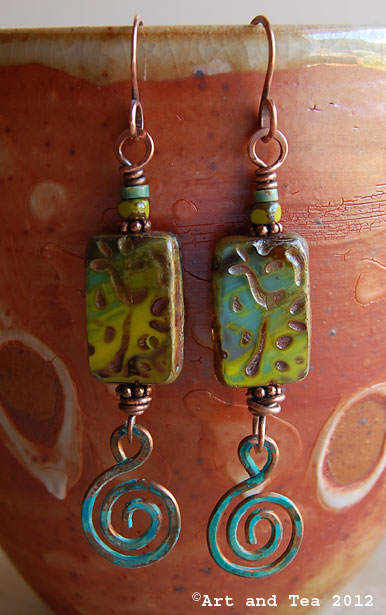
Some Czech glass beads and turquoise heishi.

Some gorgeous enameled copper spiral shell beads by Maryann Carroll along with turquoise heishi.

As always, thanks for stopping by!

Saturday Morning Tea

Good morning, dear tea friends! Another week has gone by and now it’s September already. While I love the hot, sunny days of summer, I always look forward to the flame of colors that autumn sweeps in. In anticipation of those cooler days ahead, I’m enjoying a cup of a thick, rich China black tea, called Chingwo Congou Super Grade.

This tea is a popular style from Fujian province in southern China. I have read that most Chingwo (Ching Wo) teas are grown from a cultivar called Da Baicha. The mountainous area of northern Fujian provides a perfect climate for this particular cultivar. I’ve also read that while Keemun teas are considered the “Burgundies”, Chingwo teas are named the “Clarets”.

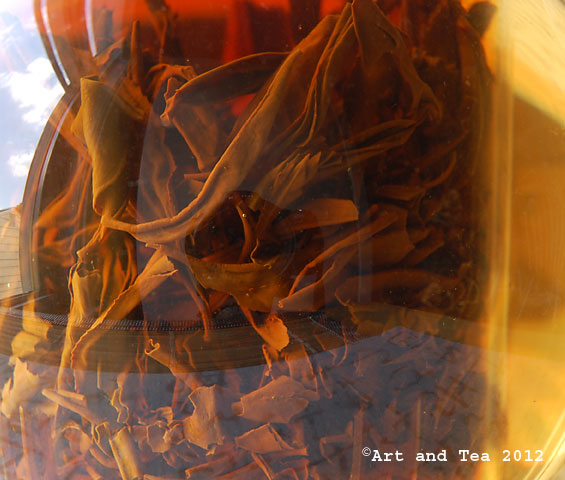
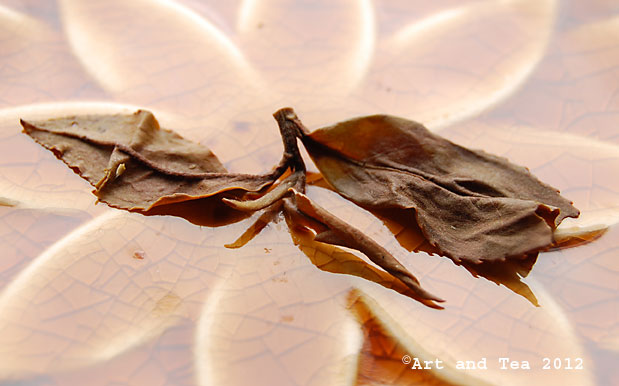
The long, beautifully intact leaves look like accordion pleated silk.

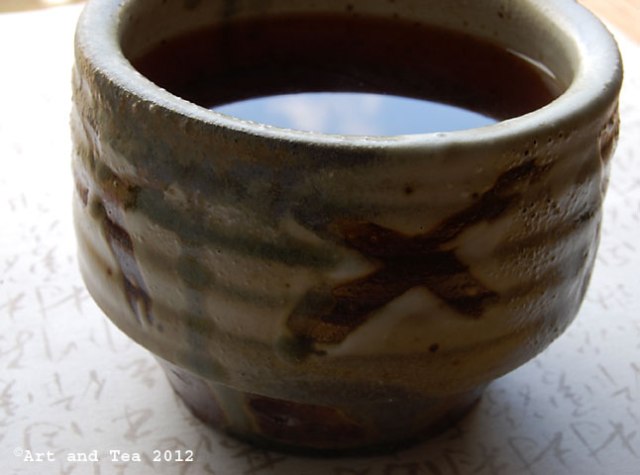
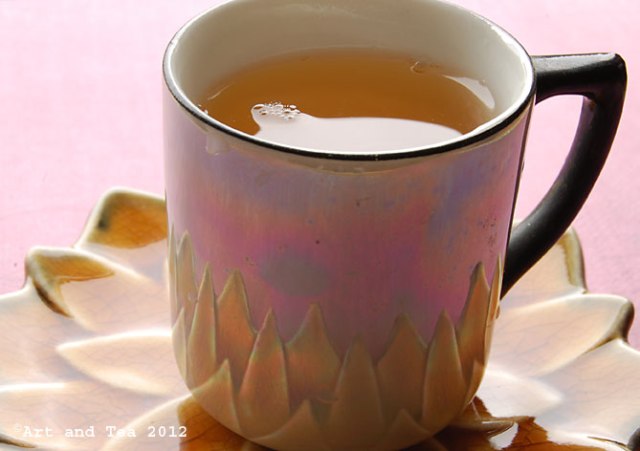
I steeped the leaves for 5 minutes in boiling point (212F) water. The dark copper tea liquor has a warm, fragrant aroma of toast with a hint of cocoa.

The tea is super smooth and mellow with notes of red wine and a suggestion of dark chocolate. I bet you could steep the leaves for much longer than 5 minutes. A great tea to leave steeping while you go do something else.

As always, thanks for popping by and sharing a cuppa with me. I’m going to start sharing my creative work again. I have been making pieces this summer, just haven’t had any time to photograph them! Soon, soon… I leave you with a wonderful quote by Eleanor Roosevelt. Have a great week!

You gain strength, courage and confidence by every experience in which you really stop to look fear in the face. You are able to say to yourself, “I lived through this horror. I can take the next thing that comes along.” You must do the thing you think you cannot do.  ~Eleanor Roosevelt

Saturday Morning Tea

Good morning, dear tea friends! This morning I’m venturing off the tea path and onto the herbal path. In my cup is an herbal that is grown in Australia, called Lemon Myrtle.

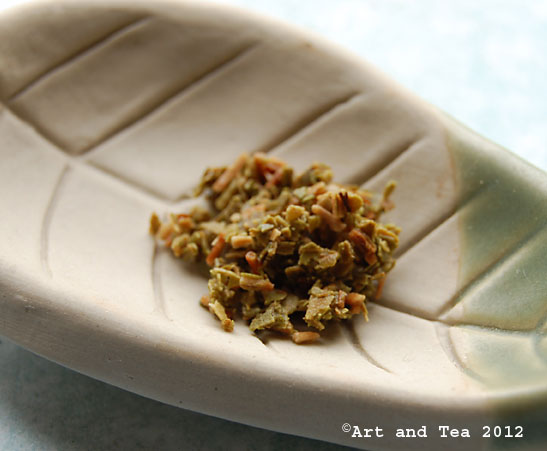
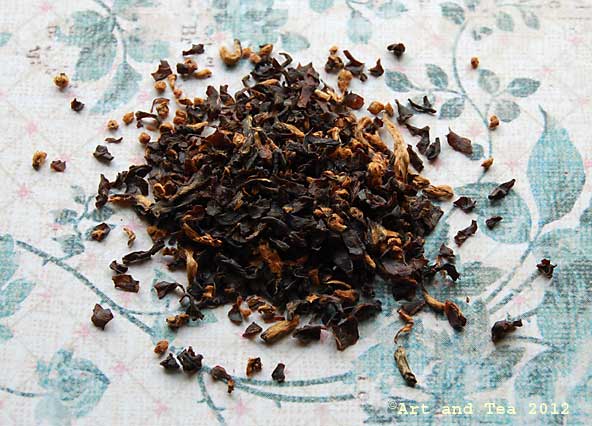
As you can see, the leaf is chopped very fine, and causes a murky look to the steep. I think I’m going to use my filter papers the next time I make this. I used boiling point (212F) water and steeped for 6 minutes.

Found in the sub-tropical rainforests of Queensland, Australia, Lemon Myrtle is a tree that may be cultivated in a home garden where it will grow to about 1 1/2 – 2 feet. It grows a lot larger in the wild.

The aroma is fresh and lemony with a vegetal whisper. The flavor is quite lemony and tart with a smoothness that I wasn’t expecting in a citrus beverage. Personally, I might add a little sweetener to lessen the tartness.

Lemon Myrtle is a wonderful source of citral essential oil, known for its anti-microbial action.

This is a great caffeine-free herbal tea to enjoy when you don’t want the kick of caffeine!

As always, thanks for visiting and sharing a cup of tea with me. Next week I’m going to share a cup of a rich, chocolate-y China black.

Have a great week!

Saturday Morning Tea

Hello, my dear tea friends! Today started out with more camera problems, this time with the batteries. It’s not my month for smooth camera operations, is it? Anyway, I managed to get my camera to work after a half hour of charging a battery which appeared to be fully charged. I’ll have to investigate further later. Now it’s time for a cup of tea!

This week’s tea looks like a white tea and even tastes like one, however, it is a black tea, specifically a second flush Darjeeling from the Margaret’s Hope estate called “White Delight”.

As you can see from the photo above, the lovely, variegated-colored leaf is enormous. I steeped the leaves for my normal 3 minutes in boiling point (212F) water but I think this tea could stand a longer steep time. It’s incredibly smooth with none of the characteristic Darjeeling “bite”.

You can read more about the well-respected Margaret’s Hope estate in my post here.

I tried to capture a full leaf set so you can see what is meant by a “fine plucking”, two leaves and a bud. The bud is the brand new growth and, as you can see above, there are 2 little bud leaves there. Think of when you pinch a plant to encourage branching. I do this with my coleus plants. Pinch the tip and 2 branches will grow where there was once one.

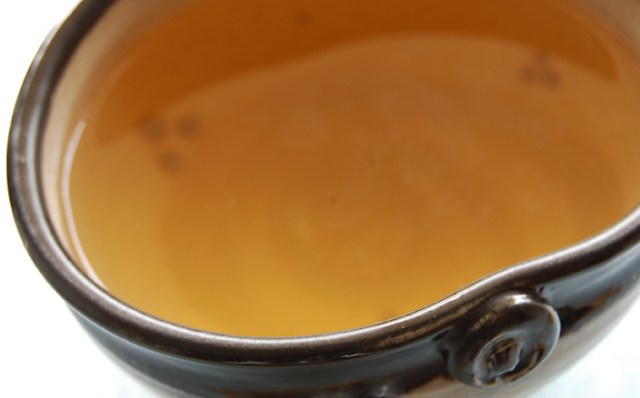
The color of the tea liquor is amazing, a deep golden yellow with a tinge of peachy-pink, like the blush of a ripe fruit.

The fragrant aroma smells of apricots which carries into the flavor, along with hints of melon and muscatel. The muscatel is the only hint that this is a second flush Darjeeling. The rest of the flavor notes speak to me of high-quality white tea. I have been told that the estate Manager decided to name it “White Delight” because it is so reminiscent of a white tea.

Sometimes I recommend a second flush Darjeeling for those who like to put milk in their Darjeeling cuppa. This would not be a tea for that. Even though it’s bursting with flavor, it’s just too mild for anything beyond a drop of honey.

The sky looks like a soft gray blanket today and rain has been falling softly on and off all morning. It’s a great day to curl up inside with a good book and a pot of tea.

As always, thanks for stopping by and have a wonderful week!

“The only noise now was the rain, pattering softly with the magnificent indifference of nature for the tangled passions of humans.”

~Sherwood Smith

Saturday Morning Tea

Good morning, dear tea friends! I hope that everyone had a wonderful week. This morning I am finally able to return to that Mangalam estate Assam and share a cup of it with you.

This is a clonal tea which means that it came from a tea bush created from cuttings of a superior tea bush. Have you ever clipped a cutting from a friend’s houseplant, placed it in water until roots started growing and then planted it in soil in its own pot? I would imagine the process is very similar to that.

You can read more about the Mangalam estate as well as how the tea bush is indigenous to this part of northeast India in my post here.

This broken leaf tea has a lot of yellow tip, making it a higher grade offering and also giving it more complexity of flavor. I steeped the leaves for 3 minutes in boiling point (212F) water.

The fragrant aroma is rich and malty, enticing me to take my first sip. The flavor is thick and stout with a lovely smoothness that allows the sweet, dried fruit notes to come forward. The fruity nuance lingers in my mouth.

The dark-amber tea liquor would stand up very well to a longer infusion and the addition of milk and sweetener, if you like that.

I tend to shy away from the sometimes pronounced astringency of an Assam tea. I find this cup to be well-balanced with just a hint of astringency. It’s the perfect cup of Assam for me!

We are deeply entrenched in the long, hot and hazy days of summer still, however, I have noticed that it’s not as light out in the mornings anymore. The days grow shorter but there’s still no hint of the cooler weather to come. My garden is bursting with blooms – hydrangea, coneflower, roses, hibiscus, petunias and snapdragons. Even the chrysanthemums are starting to show a peek of their rusty bronzes and burgundies. I just love this colorful time of year!

As always, thanks for joining me and sharing a cup of tea. Have a great week!

“Summer afternoon—summer afternoon; to me those have always been the two most beautiful words in the English language.” 

~Henry James