Saturday Morning Tea

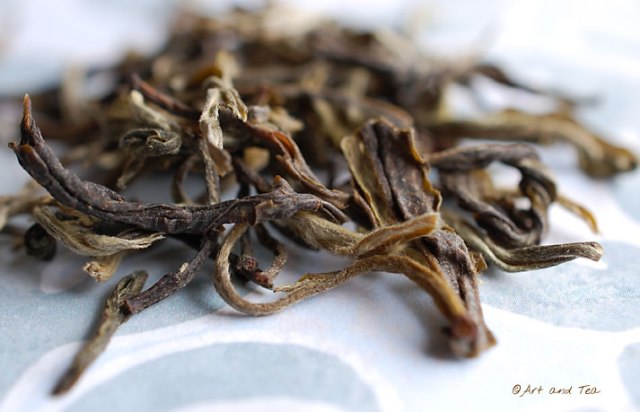
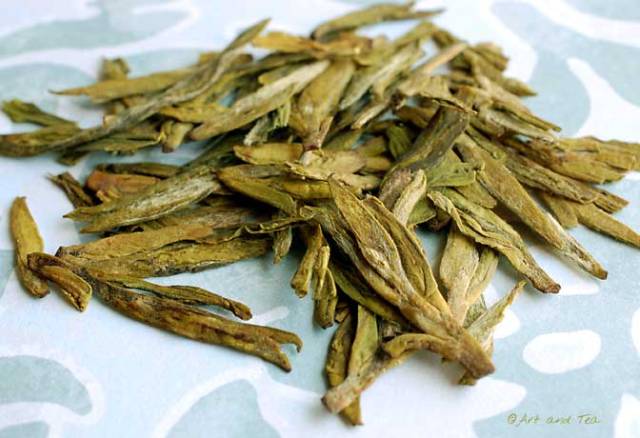
Long Jing Te Ji Dry Leaf 10-26-13

Good morning, dear tea friends! This morning’s tea is a well-known China green tea called Lung Jing, or Lung Ching, this particular lot called Lung Jing Te Ji. Te Ji means “superior grade.”
Long Jing Te Ji Steep 10-26-13

Lung Jing (Lung Ching, Long Jing) tea has a distinctive flat shape due to its unique processing. This flat shape is intentionally caused by the motion of the charcoal pan when the leaf is heated/fired to stop oxidation. Its name means “Dragon’s Well”, referring to the place where it has been traditionally grown. Legend has it that a Taoist priest in the 3rd century advised the local villagers to pray to the dragon of a local well to bring rain and end their drought. It worked and the well was named after that dragon. The Dragon’s Well monastery still stands in that spot to this day.

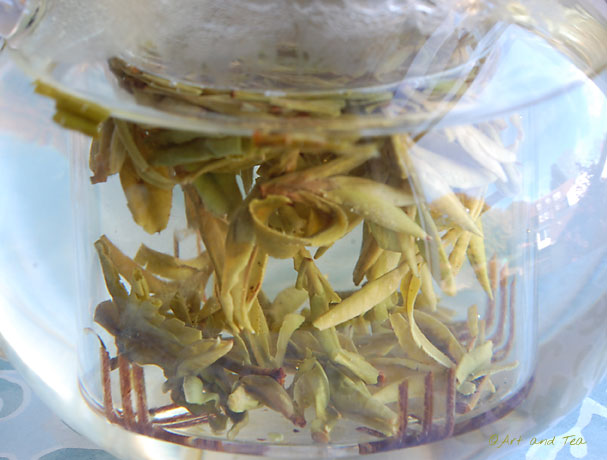
Long Jing Te Ji Wet Leaf 10-26-13

I steeped the leaf for 3 minutes in 180F water. After steeping, the leaf softened and revealed the beautiful, individual bud sets of this fine tea.

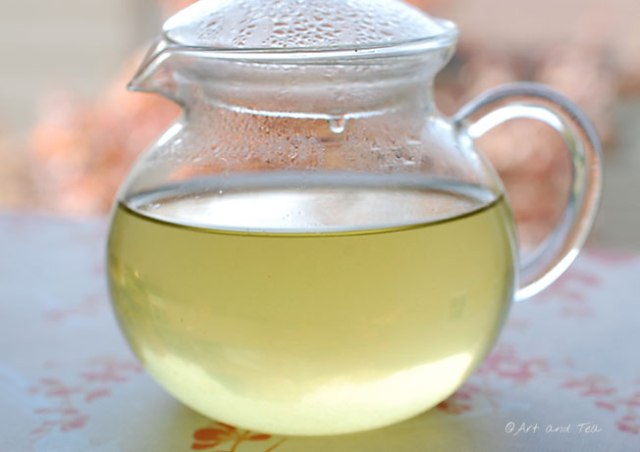
Long Jing Te Ji Teapot 10-26-13

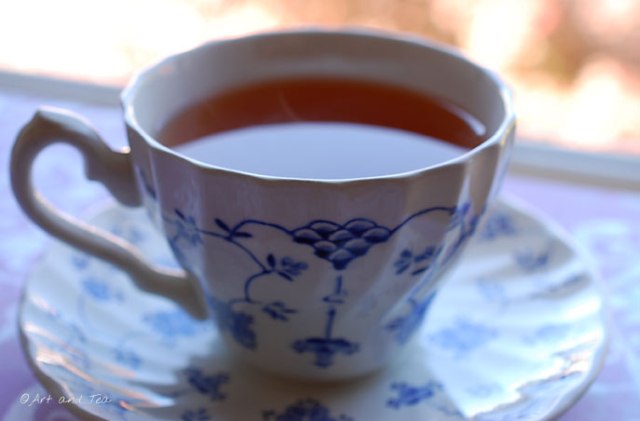
The pale yellow-jade tea liquor has a nutty aroma with a light vegetal undertone. The flavor is clean and refreshing with notes of chestnut and sweet baby corn. The smoothness yields to a whisper of tang in the finish.

I could drink this lovely green tea all day.

Long Jing Te Ji Teabowl 10-26-13

I pulled out my Volmod Ceramics tea bowl to hold and honor this most excellent tea. I purchased it on a trip to Saugatuck, MI with my parents a couple of summers ago. So, not only do I get to enjoy a delicious tea this morning but in holding my tea bowl in my hands, I remembered some warm and wonderful memories.

Have a great week!

“Nothing is ever really lost to us as long as we remember it.”

~L.M. Montgomery
Saturday Morning Tea

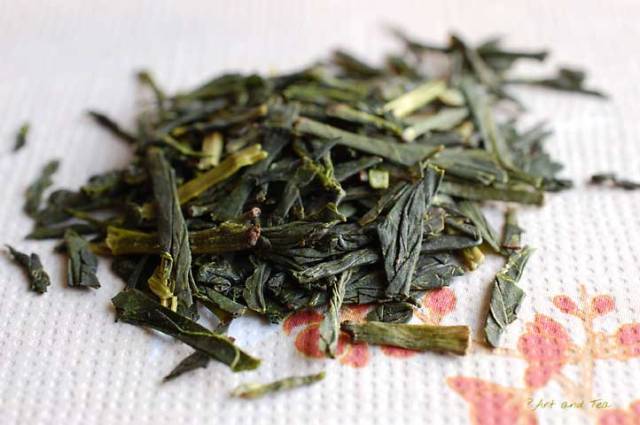
Iccha Kariban Dry Leaf 10-19-13

Good morning, dear tea friends! Another week has come and gone and we’re savoring some glorious fall weather here in New England. This morning’s tea is a Japanese green tea called Iccha Kariban. Its name loosely translates to “flower fragrance”.

Iccha Kariban Steep 10-19-13

Grown in the Kagoshima prefecture, located on the southwest tip of the island of Kyushu in Japan, this tea is the result of experimenting with select cultivars to create a unique batch of tea. It has been likened to a Taiwanese Pouchong.

Iccha Kariban Wet Leaf 10-19-13

I steeped the leaf for 3 minutes in 175F water. The wet leaf looks like steamed greens, which I have found is unique to Japanese greens.

A gentle floral fragrance drifted up from my glass teapot as I poured my first cup.

Iccha Kariban Teapot 10-19-13

The cup is smooth and light with flavor very much like a floral Pouchong or a lightly oxidized Oolong, like a Jade or Spring Dragon. That said, its flavor is much more vegetal with a little brothiness, distinguishing it as a Japanese green tea.

Iccha Kariban Teamug 10-19-13

I talk to many folks who would like to try a green tea for its health benefits, however, they’re not a fan of its vegetal, grassy taste. This would be a great tea to try as the pronounced floral quality places the vegetal taste more in the background than being one of the primary flavor notes.

I think the Tea Masters have done a lovely job of coming up with a unique Japanese green tea! Have a wonderful week.

“Human life is inherently creative. It’s why we all have different résumés. … It’s why human culture is so interesting and diverse and dynamic.”

~Ken Robinson

Saturday Morning Tea

White Mao Feng Dry Leaf 10-12-13Good morning, dear tea friends! As I sip my tea and glance out my window, I spy a flock of pigeons wheeling around against a sky of pale gray clouds. The high dome of cloud cover filters and softens the light so the changing fall colors on the trees really pop in fiery tones of red, orange and yellow. I’m not sure where that pigeon flock live. I see them now and again congregating on my neighbor’s high pitched roof.

This morning’s tea is from the Hunan province of China, a white tea called Organic China Mao Feng White tea. My first experience with a Mao Feng (translates to Hairy Mountain, hairy referring to the downy white hairs on the leaf) leaf was with a green tea and then with a black tea. Traditionally, Mao Feng, which refers to the large leaf’s processing and shape, was always processed as a green tea but is now being produced in black and white tea as well.

White Mao Feng Steep 10-12-13 I steeped the leaf for 4 minutes in 180F water. Because of the enormous size, I used approximately 2-3 teaspoons per cup in my glass teapot. It’s challenging to measure out tea leaf this big with a spoon so I pinch it and estimate. A tea scale would come in very handy with this tea. It’s on my wish list!

White Mao Feng Wet Leaf 10-12-13This particular leaf is a great example of how it’s twisted during processing. The length of the leaf, its twisted shape and the downy white hairs all contribute to its unique Mao Feng designation.

White Mao Feng Teapot 10-12-13

The tea liquor is a light golden color with a wonderful fruity aroma. I detected honeydew melon notes with my first sip and, as I sipped some more, the flavor progressed with some delicate peachy notes. The pronounced fruity flavor lingers long into the finish.

White Mao Feng Teabowl 10-12-13

The tea is light enough to show the interesting cracks in one of my favorite handmade bowls.

With the cool, cloudy weather outside, it’s the perfect afternoon to curl up with a good story and a big pot of tea. Have a great week!

“You can never get a cup of tea large enough or a book long enough to suit me.”

~C.S. Lewis

Saturday Morning Tea

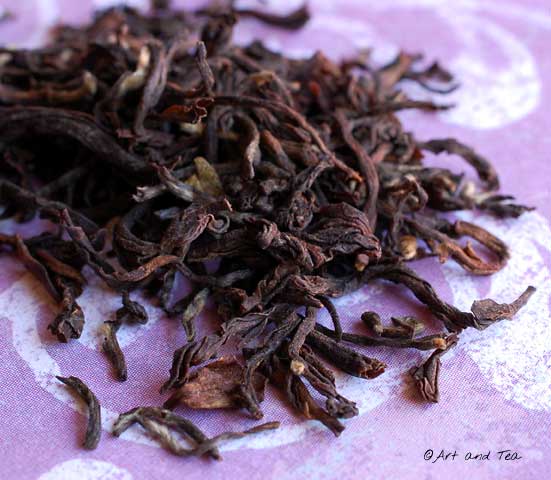
Jungpana Estate 2nd Flush Darjeeling Dry 09-28-13

Good morning, dear tea friends! With almost a week past the autumnal equinox, the shadow of darkness falls earlier in the evenings. That said, when the sun is shining, the days are glorious and the trees look dipped in fire. I love this autumn time of year.

Speaking of glorious, my morning tea is a high-end second flush Darjeeling from the Jungpana Estate. The price per packet might take your breath away, however, the price per teacup is only .76 and compared with a latte price from the local Starbucks, it’s quite a bargain for such an amazing cup.

JungpanaEstate 2nd Flush Darjeeling Steep 09-28-13

Referred to as “an island in the mountains”, the Jungpana Estate is located in a rugged terrain surrounded by pine forests in northeastern India. There is a sad legend on how the area received its name. From their website:

Legend has it that many years ago a British hunter was roaming the Himalayas with his faithful gurkha Jung Bahadur by his side when they were attacked by a leopard.

In trying to save his master Jung Bahadur was severely mauled before his master dispensed with the beast. Jung Bahadur was weak and thirsty and asked his master for ‘pana’, or, water. He was carried to a nearby stream and given water to drink but died in his master’s arms soon thereafter.

Eversince that moment, the area has been known as JUNGPANA, or, where Jung Bahadur had his last drink of water. The tea estate planted later, carries the name till today.
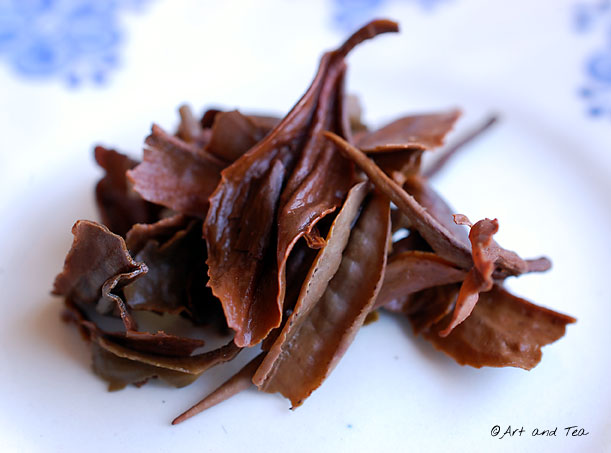
Jungpana Estate 2nd Flush Darjeeling Wet 09-28-13
The leaves consist of new tip growth and leaf, some intact, some broken. I steeped them for 3 minutes using boiling point (212F) water. As I lifted the infuser after steeping, I noted the fragrant aroma of peach nectar rising from my glass teapot.
JungpanaEstate 2nd Flush Darjeeling Teapot 09-28-1
The amber-colored tea liquor is rich and fruity with pronounced notes of peach and muscatel. As the tea cooled, some toasty nuances came out along with a gentle astringency in the finish.
Jungpana Estate 2nd Flush Teacup 09-28-1
Tomorrow I’m going on a fabulous fall adventure – apple picking with family and friends. Mmmm, I can already smell that apple pie baking…
Have a wonderful week filled with many cups of delicious tea!
“Delicious autumn! My very soul is wedded to it, and if I were a bird I would fly about the earth seeking the successive autumns.”
~George Eliot

Prayers for Peace

Prayers For Peace Necklace 1

Whenever I turn on the news, it seems like there’s more and more violence happening in the world. I always feel so helpless in the face of all of the sadness and suffering going on. What can I do to help? I am one person, living a quiet, middle-aged life in my little corner of this world.

I thought about this as I beaded the triangles for this necklace, one by one. As I got into the meditative rhythm of adding one bead at a time, I found myself moving to a deeper place, a silent place, and I started to send out positive thoughts and prayers for healing. On the path of those thoughts and prayers, this necklace was born. I call it Prayers for Peace.

Prayers For Peace Necklace 2

I was inspired to create these beaded triangles when I received my copy of the wonderful Contemporary Geometric Beadwork by the fabulous Kate McKinnon and her beady tribe.

I started out with an exploration of colors and patterns.

Beaded Triangles

I then moved on to the creation of a more organized beaded piece – a necklace.

Prayers For Peace Necklace 3

I chose a warm color and a cool color to represent the energies of light and dark and the healthy balance of these energies. Like yin and yang.

Prayers For Peace Necklace 4

The biggest challenge with this piece came after I had beaded all of the triangles. Now how do I connect them together to form a necklace? I thought about this for awhile and had come up with several options when one day I experienced a serendipitous moment whiling creating some headpins with silver wire. How about if I use a headpin as a sort of hinge attachment? And it worked.  Most excellent.

Prayers For Peace Necklace 5

Using the same headpins, I then created some chain links and a triangle shaped clasp link.

I’m really enjoying my foray into the geometric beady world these days. Stay tuned for further adventures as I explore beading a cuff with “horns and wings”. Think Klingon warrior and the colors of tea!

“We have to continually be jumping off cliffs and developing our wings on the way down.”

~Kurt Vonnegut