Saturday Morning Tea

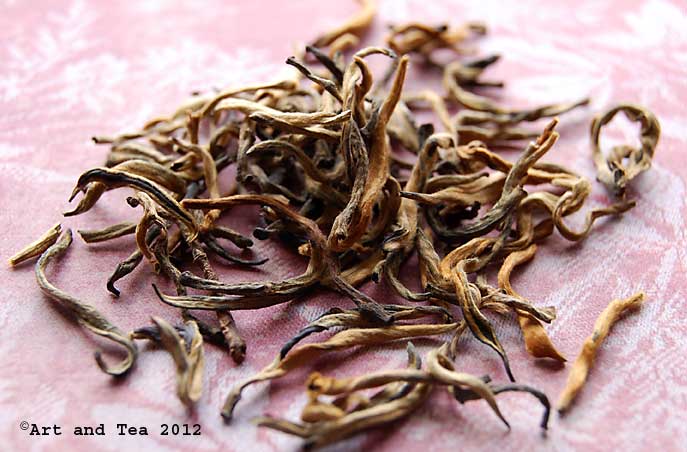
Even though I reviewed a Yunnan black tea very recently, I just couldn’t resist this morning’s tea. Just enjoy gazing upon that gorgeous leaf filled with warm golden tips, named quite fittingly Golden Tip Yunnan.

As evidenced by the intact tip, this tea is plucked and processed meticulously by hand. It shows that very special care.

In steeping the leaf, I used boiling point water (212F) for 5 minutes.

Ah, there are those little swords again except this time in a black tea. I know I’ve said it many times before but it constantly amazes me how many different kinds of tea can come from one kind of plant.

In Yunnan province, ancient tea plants have grown into large trees producing enormous sized leaves. These leaves are traditionally used to produce Pu-erh tea. I imagine a grove of venerable old trees having seen many changes around them over the centuries.

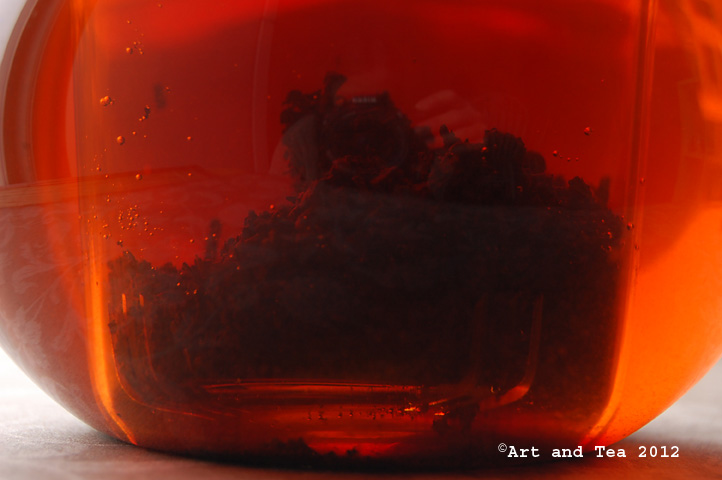
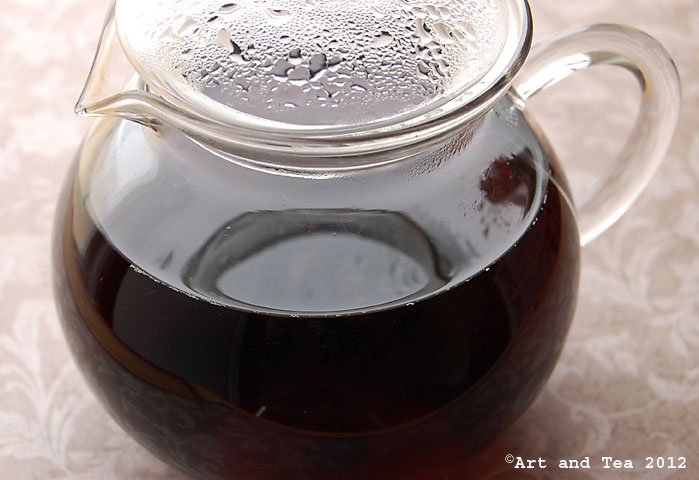
The tea liquor glows like a sunset in my glass teapot. An aroma of sweet peach nectar arises as I pour my first cup. My first sip is like ambrosia on my tongue with notes of peach and spice. Full-bodied and complex, the rich flavor lingers on my tongue like a fine wine.
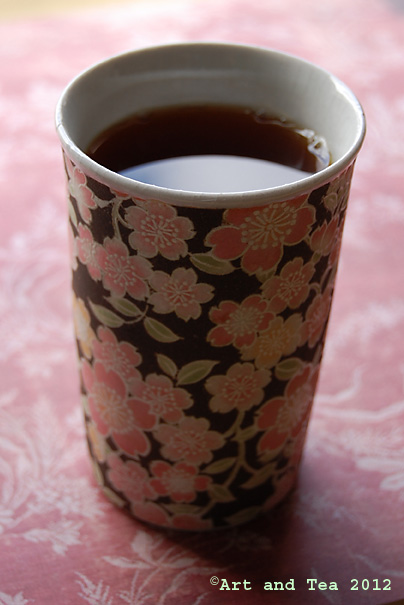
It has now been one year since the earthquake in Japan and I honor them by enjoying my tea in one of my Japanese mugs. The cherry blossoms symbolize new growth and hope for continued healing in their country. I have heard positive reports for the 2012 tea harvest over there and hope that I will have the opportunity to review some new Japanese teas here soon.

Time to go pour another cup! Enjoy your week, dear friends.

“I find hope in the darkest of days, and focus in the brightest.  I do not judge the universe.”  ~Dalai Lama

Excavations

I’ve always been drawn to digging. When I was a kid, I made several attempts to dig to China, much to my mother’s chagrin. I didn’t get too far though, probably about a foot down into the earth. Obviously, I didn’t make it to China but I did find all sorts of neat things buried in our backyard – earthworms, old rusted bottlecaps, sticks and stones and roots. I think that’s when my love of gardening was born. I loved the feel of plunging my hands into the dirt and smelling its rich, earthy scent. Finding what was below the surface of things resonated with me then as it does with me now.

Many years later, my love of digging led me to pick up my carving tool and start experimenting with digging into multi-colored layers of polymer clay. I gouged through the layers both before and after baking the clay to reveal what’s hidden below the surface. The gouge marks leave jagged edges which I don’t smooth by sanding. I leave the clay rough which speaks to me of the organic process of a spiritual journey and digging into/peeling away the layers of the psyche to discover your inner core. The process can be sharp-edged and painful at times but what is ultimately revealed has a beauty all its own, rich and colorful and unique.

To create my bracelet, I chose a color palette that made me happy and then mixed my colors in polymer clay. I always like to mix my own colors as I feel it lends a uniqueness to my piece. Plus I just loooove mixing colors! I made a sheet out of each one of my mixed colors and then cut some circles out of each sheet. I randomly stacked the circles and then loaded the “log of circles” into my clay extruder. I extruded the clay using a round die and then cut the resulting snake into equal pieces which I lined up horizontally on a sheet of polymer clay. I apologize that I don’t know who originally invented this extrusion technique. It has become quite popular in creating canes. When you cut the snake into equal size pieces and then bunch the snakes up, the cut ends reveal bulls eyes in color variations of your chosen color palette. What I was interested in here, however, was not the cut ends but gouging into the length of the snake.

An unexpected and delightful surprise occurred when I cut the tall thin rectangles for my bracelet components. I discovered that there were small gaps where the snakes abutted on the clay backing, perfect for stringing a cord through. To finish the bracelet, I did a little beadwork over the silver crimps and attached a multi-strand tube clasp. The silver clasp was so bright that I immersed it in liver of sulfur to darken it. It’s still not dark enough for my taste so I’ll repeat that again very soon.

I created other components from my excavation work that day. I’m working on a necklace right now and will happily share my results once it’s finished. I’m so happy to be sharing my artwork with you once again! As always, thanks for stopping by.

Saturday Morning Tea

Good morning, dear tea friends! You must be wondering about the picture above – now where are the tea leaves? They are there. They’ve just been compressed. If you look closely, you can see the outline of a few leaves. The tea in my cup this morning is called Pu-Erh Mini Squares.

I know, I know, it sounds kinda like a breakfast cereal. But, of course, it’s not, it is a rich, full-bodied China tea from the mountainous Simao region of Yunnan province.

As I’ve written about before, Pu-ehr tea is divided up into 2 classifications, raw and cooked, depending upon the processing method. This particular tea falls into the cooked category. It undergoes a double fermentation not unlike what happens in a compost pile. The leaves actually begin to decompose, giving them a strong earthy taste when steeped. For this particular tea, the leaves have been steamed after processing and then pressed into a large, flat “cake”. After it dried, the “cake” was then cut up into small squares, each square perfect for preparing a 6-8 ounce cup of tea.

To aid in full flavor extraction during steeping, I broke the square up into little pieces. This is fairly easy to do with your hand. If you experience any difficulty, I find that a hammer helps to start that process. Please watch out for your fingers! I steeped the broken pieces for 5 minutes in boiling point (212 F) water.

This traditional compressed form of tea has been produced in China for hundreds of years. It was the most common form transported on the ancient caravan routes because it was less susceptible to physical damage and easier to transport.

The tea is so incredibly dark, like the darkest chocolate. A sweet earthy aroma rises from my glass teapot as I pour my first cup.

Although this tea has that quite distinct Pu-Erh flavor of earth and forest floors, it is lighter than other Pu-Erh teas I’ve tried. And it is so incredibly sweet and smooth. There is also a whisper of dark cocoa that lingers in my mouth with each sip. I’m quite enjoying this tea!

I’m spending the day today with my daughter and granddaughter. A girls day! I’m so looking forward to it. More good news – I might have an art post to share with you this week. Stay tuned…

Have a wonderful week and enjoy your tea!